
Eikandō Temple
About Eikandō Temple
Description
Eikandō Temple, also known as Zenrin-ji, is one of those places that quietly steals your heart before you even realize it’s happening. It’s not just another temple in Kyoto—though Kyoto has plenty—it’s a living, breathing reflection of centuries of devotion, artistry, and the very essence of Japanese aesthetic sensibility. The temple belongs to the Jōdo-shū (Pure Land) sect of Buddhism and was founded by Shinshō, a disciple of the great monk Kūkai, way back in the Heian period. That’s over a thousand years of history, and you can feel it in every moss-covered stone and whispering maple leaf.
What makes Eikandō stand out isn’t just its age or religious significance, but its atmosphere. There’s something deeply human about it—peaceful but not sterile, sacred but still approachable. The temple’s most famous treasure is the Amida Buddha statue, which is unique because the Buddha looks over his shoulder rather than straight ahead. It’s called the “Mikaeri Amida,” or “Looking-Back Amida,” and honestly, the first time you see it, it feels like the statue is catching your eye mid-thought. Some say it symbolizes compassion that watches over those who’ve fallen behind on the path to enlightenment. I like to think it’s a reminder to slow down and look back once in a while—to appreciate where you’ve come from before rushing ahead.
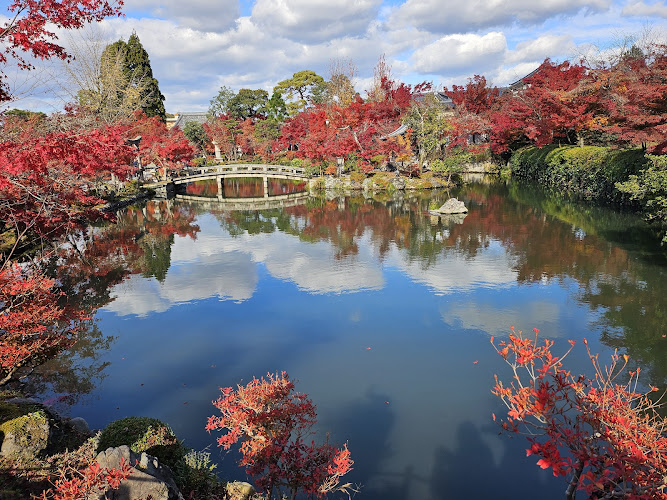
Walking through the temple grounds, you’ll find a blend of architecture, art, and nature that somehow feels perfectly balanced. There’s a pond garden reflecting the pagoda and maple trees, wooden corridors that creak softly underfoot, and halls filled with ancient calligraphy and paintings. In autumn, the place transforms into a kaleidoscope of red and gold leaves, and during the evening illuminations, the reflections on the water are almost unreal. It’s no wonder so many people consider Eikandō one of Kyoto’s most beautiful temples—it’s not just a sight, it’s an experience.
Key Features
- Amida Buddha Statue: The famous “Looking-Back Amida” statue, an exquisite and rare depiction of Buddha glancing over his shoulder.
- Autumn Foliage: Renowned across Japan for its breathtaking maple leaves, especially during November’s illumination events.
- Pagoda Views: The Tahōtō Pagoda offers a panoramic view of Kyoto, particularly stunning when framed by autumn colors.
- Historic Architecture: A collection of halls and corridors dating back centuries, showcasing traditional Japanese craftsmanship.
- Serene Pond Garden: A tranquil garden with koi ponds and stone bridges, perfect for quiet reflection or photography.
- Cultural Heritage: Houses valuable Buddhist artworks, scriptures, and calligraphy that reflect the temple’s long spiritual lineage.
- Evening Illuminations: Seasonal light-ups that transform the temple grounds into a glowing wonderland after dusk.
Best Time to Visit
If you visit Kyoto in autumn, Eikandō should be at the top of your list. The temple’s maples are legendary, and the colors usually peak from mid to late November. During this period, the evening illuminations give the whole complex a dreamlike glow. But here’s the thing—while autumn gets all the attention, Eikandō is quietly beautiful year-round. Spring brings soft cherry blossoms, summer offers lush greenery and fewer crowds, and winter dusts the rooftops with snow, turning the temple into a serene monochrome painting.
That said, if you’re not a fan of crowds (and who is, really?), try visiting early in the morning. The air is cool, the light is gentle, and you can actually hear the rustle of leaves instead of the chatter of tour groups. I once went just after sunrise on a chilly November morning, and there were only a handful of people there. The stillness was almost sacred—it felt like the temple was letting me in on a secret.
How to Get There
Reaching Eikandō is fairly straightforward, though it does require a bit of walking, which, honestly, is part of the charm. The temple sits just north of Nanzen-ji, another major Kyoto landmark, and the two are connected by a scenic path along the Philosopher’s Walk. You can take the Kyoto City Subway Tozai Line to Keage Station and walk about 15 minutes, or catch a bus from Kyoto Station that drops you near Nanzen-ji. From there, it’s a leisurely stroll through quiet residential streets and temple gates. The journey itself feels meditative—like a gentle transition from the bustle of the city into a world of calm.
For those who prefer a bit of spontaneity, renting a bicycle is a great option. Kyoto is wonderfully bike-friendly, and cycling along the canal toward Eikandō offers glimpses of everyday life—locals walking their dogs, tiny cafés opening for the day, and the scent of incense drifting from nearby shrines. It’s these small, unscripted moments that make a visit to Eikandō feel so personal.
Tips for Visiting
First things first: wear comfortable shoes. The temple grounds are spread out and involve a fair bit of walking, including some stairs if you plan to climb up to the pagoda. If you’re visiting during the autumn illumination, expect crowds—arrive early or late in the evening to get the best experience (and the best photos). The lighting typically starts around sunset, but lines can form well before that.
Photography is allowed in most outdoor areas, but be respectful—this is still an active place of worship. Inside the halls, you might be asked to refrain from taking pictures, especially near sacred artifacts. And if you’re visiting in summer, bring water and maybe a small towel; Kyoto’s humidity can be relentless.
Accessibility-wise, it’s worth noting that some areas of Eikandō have steps and uneven paths, so it might not be fully wheelchair-friendly. Restrooms are available, though, and well-maintained. There’s also a small gift shop where you can pick up charms, incense, or beautifully crafted postcards that make thoughtful souvenirs.
Here’s a personal tip: take a moment to just sit by the pond. Don’t rush to the next photo spot. Watch the koi swim lazily under the maple branches, listen to the faint ringing of the temple bell, and let yourself breathe. That’s when Eikandō really works its magic—not in the grand views or the famous statue, but in those quiet, fleeting moments when time seems to slow down.
And if you’re planning to explore more of Kyoto’s temples, consider visiting Eikandō as part of a route that includes Nanzen-ji and the Philosopher’s Walk. It’s a beautiful way to spend a half-day, especially in the fall. Bring a snack or stop at a local tea house afterward—you’ll want a moment to digest the experience, both literally and figuratively.
Ultimately, Eikandō Temple isn’t just a place to see—it’s a place to feel. Whether you’re a history buff, a photography lover, or just someone looking for a bit of peace, it offers a kind of quiet beauty that stays with you long after you’ve left. And maybe, just maybe, you’ll find yourself glancing back at it in your memories, just like the Buddha himself.
Key Features
- Key Features
- Best Time to Visit
- How to Get There
- Tips for Visiting
More Details
Updated December 1, 2025
Table of Contents
Description
Eikandō Temple, also known as Zenrin-ji, is one of those places that quietly steals your heart before you even realize it’s happening. It’s not just another temple in Kyoto—though Kyoto has plenty—it’s a living, breathing reflection of centuries of devotion, artistry, and the very essence of Japanese aesthetic sensibility. The temple belongs to the Jōdo-shū (Pure Land) sect of Buddhism and was founded by Shinshō, a disciple of the great monk Kūkai, way back in the Heian period. That’s over a thousand years of history, and you can feel it in every moss-covered stone and whispering maple leaf.
What makes Eikandō stand out isn’t just its age or religious significance, but its atmosphere. There’s something deeply human about it—peaceful but not sterile, sacred but still approachable. The temple’s most famous treasure is the Amida Buddha statue, which is unique because the Buddha looks over his shoulder rather than straight ahead. It’s called the “Mikaeri Amida,” or “Looking-Back Amida,” and honestly, the first time you see it, it feels like the statue is catching your eye mid-thought. Some say it symbolizes compassion that watches over those who’ve fallen behind on the path to enlightenment. I like to think it’s a reminder to slow down and look back once in a while—to appreciate where you’ve come from before rushing ahead.
Walking through the temple grounds, you’ll find a blend of architecture, art, and nature that somehow feels perfectly balanced. There’s a pond garden reflecting the pagoda and maple trees, wooden corridors that creak softly underfoot, and halls filled with ancient calligraphy and paintings. In autumn, the place transforms into a kaleidoscope of red and gold leaves, and during the evening illuminations, the reflections on the water are almost unreal. It’s no wonder so many people consider Eikandō one of Kyoto’s most beautiful temples—it’s not just a sight, it’s an experience.
Key Features
- Amida Buddha Statue: The famous “Looking-Back Amida” statue, an exquisite and rare depiction of Buddha glancing over his shoulder.
- Autumn Foliage: Renowned across Japan for its breathtaking maple leaves, especially during November’s illumination events.
- Pagoda Views: The Tahōtō Pagoda offers a panoramic view of Kyoto, particularly stunning when framed by autumn colors.
- Historic Architecture: A collection of halls and corridors dating back centuries, showcasing traditional Japanese craftsmanship.
- Serene Pond Garden: A tranquil garden with koi ponds and stone bridges, perfect for quiet reflection or photography.
- Cultural Heritage: Houses valuable Buddhist artworks, scriptures, and calligraphy that reflect the temple’s long spiritual lineage.
- Evening Illuminations: Seasonal light-ups that transform the temple grounds into a glowing wonderland after dusk.
Best Time to Visit
If you visit Kyoto in autumn, Eikandō should be at the top of your list. The temple’s maples are legendary, and the colors usually peak from mid to late November. During this period, the evening illuminations give the whole complex a dreamlike glow. But here’s the thing—while autumn gets all the attention, Eikandō is quietly beautiful year-round. Spring brings soft cherry blossoms, summer offers lush greenery and fewer crowds, and winter dusts the rooftops with snow, turning the temple into a serene monochrome painting.
That said, if you’re not a fan of crowds (and who is, really?), try visiting early in the morning. The air is cool, the light is gentle, and you can actually hear the rustle of leaves instead of the chatter of tour groups. I once went just after sunrise on a chilly November morning, and there were only a handful of people there. The stillness was almost sacred—it felt like the temple was letting me in on a secret.
How to Get There
Reaching Eikandō is fairly straightforward, though it does require a bit of walking, which, honestly, is part of the charm. The temple sits just north of Nanzen-ji, another major Kyoto landmark, and the two are connected by a scenic path along the Philosopher’s Walk. You can take the Kyoto City Subway Tozai Line to Keage Station and walk about 15 minutes, or catch a bus from Kyoto Station that drops you near Nanzen-ji. From there, it’s a leisurely stroll through quiet residential streets and temple gates. The journey itself feels meditative—like a gentle transition from the bustle of the city into a world of calm.
For those who prefer a bit of spontaneity, renting a bicycle is a great option. Kyoto is wonderfully bike-friendly, and cycling along the canal toward Eikandō offers glimpses of everyday life—locals walking their dogs, tiny cafés opening for the day, and the scent of incense drifting from nearby shrines. It’s these small, unscripted moments that make a visit to Eikandō feel so personal.
Tips for Visiting
First things first: wear comfortable shoes. The temple grounds are spread out and involve a fair bit of walking, including some stairs if you plan to climb up to the pagoda. If you’re visiting during the autumn illumination, expect crowds—arrive early or late in the evening to get the best experience (and the best photos). The lighting typically starts around sunset, but lines can form well before that.
Photography is allowed in most outdoor areas, but be respectful—this is still an active place of worship. Inside the halls, you might be asked to refrain from taking pictures, especially near sacred artifacts. And if you’re visiting in summer, bring water and maybe a small towel; Kyoto’s humidity can be relentless.
Accessibility-wise, it’s worth noting that some areas of Eikandō have steps and uneven paths, so it might not be fully wheelchair-friendly. Restrooms are available, though, and well-maintained. There’s also a small gift shop where you can pick up charms, incense, or beautifully crafted postcards that make thoughtful souvenirs.
Here’s a personal tip: take a moment to just sit by the pond. Don’t rush to the next photo spot. Watch the koi swim lazily under the maple branches, listen to the faint ringing of the temple bell, and let yourself breathe. That’s when Eikandō really works its magic—not in the grand views or the famous statue, but in those quiet, fleeting moments when time seems to slow down.
And if you’re planning to explore more of Kyoto’s temples, consider visiting Eikandō as part of a route that includes Nanzen-ji and the Philosopher’s Walk. It’s a beautiful way to spend a half-day, especially in the fall. Bring a snack or stop at a local tea house afterward—you’ll want a moment to digest the experience, both literally and figuratively.
Ultimately, Eikandō Temple isn’t just a place to see—it’s a place to feel. Whether you’re a history buff, a photography lover, or just someone looking for a bit of peace, it offers a kind of quiet beauty that stays with you long after you’ve left. And maybe, just maybe, you’ll find yourself glancing back at it in your memories, just like the Buddha himself.
Key Highlights
- Key Features
- Best Time to Visit
- How to Get There
- Tips for Visiting
Location
Places to Stay Near Eikandō Temple
Find and Book a Tour
Explore More Travel Guides
No reviews found! Be the first to review!
Traveler Reviews for Eikandō Temple
There are no reviews yet. Be the first one to write one.
Have you visited Eikandō Temple? Help other travelers by sharing your review.
You Might Also Like
Kiyomizu-dera
Arashiyama Monkey Park Iwatayama
Ginkaku-ji
Find Accommodations Nearby
Recommended Tours & Activities
Visitor Reviews
There are no reviews yet. Be the first one to write one.
Share Your Experience
Have you visited Eikandō Temple? Help other travelers by leaving a review.