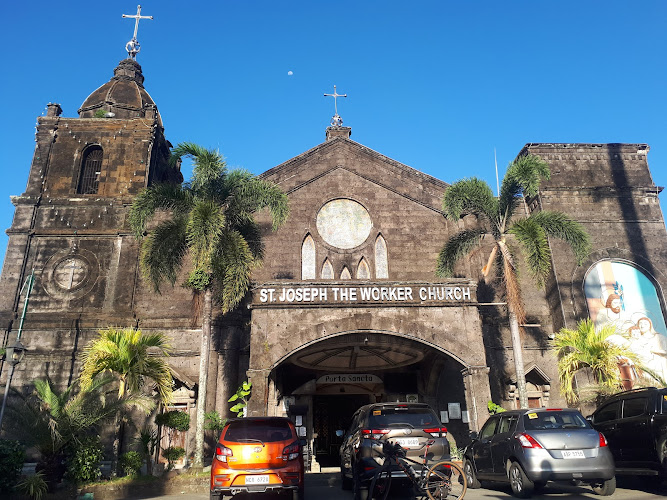
St. Joseph the Worker Parish Church in the City of San José del Monte, Bulacán (Diocese of Malolos) is a welcoming parish that blends historical roots with active community life. Dating back to the 18th century origins of the settlement, the church has evolved through reconstruction and renovations into a prominent local landmark along the National Highway in Poblacion. What makes it special is the combination of its preserved classic church architecture elements and a lively parish atmosphere — daily masses, devotional celebrations, and colorful feast day processions dedicated to Saint Joseph the Worker. Visitors will appreciate both the quiet interior for reflection and the energetic parish events that reveal local religious traditions and community bonds. Its convenient location in SJDM makes it an easy stop for travelers exploring Bulacan: attend a service to witness local Catholic practice, admire the church’s nave and altar details, and stroll the surrounding town to sample nearby eateries and markets. Whether you seek spiritual solace, architectural sight-seeing, or cultural immersion, St. Joseph the Worker Parish offers an authentic slice of provincial Filipino Catholic life.
Highlights & Key Features
Historic parish with origins tracing to 18th–19th century foundations
Active parish calendar: daily masses, feast day processions, devotions
Prominent location on National Highway in Poblacion, SJDM for easy access
Classic church architecture with a serene interior for prayer and reflection
Strong community ties — vibrant local traditions and Filipino Catholic practices
Visitor Guide & Information
Description
St. Joseph the Worker Parish Church stands as a beacon of faith and community spirit in the City of San José del Monte, Bulacán, serving the faithful under the Diocese of Malolos. This modern place of worship has become more than just a religious sanctuary – it’s evolved into a genuine tourist destination that attracts visitors from across the Philippines and beyond. The church represents the growing Catholic presence in this rapidly developing city, and honestly, there’s something really special about experiencing Mass here that you won’t find in older, more traditional churches.
I remember visiting during one of my trips to Bulacán, and what struck me immediately was how the church manages to blend contemporary architectural elements with the solemnity that you’d expect from a Catholic place of worship. The parish serves a thriving community in San José del Monte, which has transformed from a quiet municipality into one of the fastest-growing cities in the province. And the church has grown right alongside it, becoming a cornerstone of spiritual life for thousands of families.
What makes this particular church interesting for travelers is its role as both a house of worship and a community gathering place. You’ll find that the atmosphere here is welcoming and unpretentious – locals are genuinely friendly and often curious about visitors who’ve made the journey to experience their parish. The church grounds are well-maintained, and you can tell that the parishioners take immense pride in their spiritual home.
The dedication to St. Joseph the Worker is particularly meaningful. As the patron saint of workers and laborers, this dedication resonates deeply with the hardworking communities of San José del Monte. Many of the city’s residents are employed in various industries throughout Bulacán and neighboring areas, making this patronage especially appropriate and personal for the congregation.
Key Features
Visitors to St. Joseph the Worker Parish Church will discover several noteworthy features that enhance the overall experience:
• Full accessibility for persons with disabilities, including wheelchair-accessible entrances, parking areas, and restroom facilities – something that unfortunately isn’t always common in Philippine churches, especially newer ones
• Ample parking space for visitors arriving by private vehicle, which is honestly a godsend considering how challenging parking can be at many religious sites during peak hours
• Clean, well-maintained restroom facilities available for parishioners and visitors, making longer stays more comfortable
• A spacious worship area that can accommodate large congregations, particularly important during major religious celebrations and feast days
• Modern sound system that ensures homilies and liturgical celebrations can be heard clearly throughout the church interior
• Active community programs that visitors might occasionally witness, offering insight into Filipino Catholic parish life
• Beautiful religious statuary and iconography that provides excellent photography opportunities for those interested in religious art
• Air-conditioned interior that provides relief from Bulacán’s tropical heat, particularly appreciated during midday visits
• Well-lit grounds that make evening visits safe and pleasant, especially during special novenas or evening masses
• A sense of genuine community that’s palpable when you attend services here – you really feel the warmth of Filipino hospitality
Best Time to Visit
Timing your visit to St. Joseph the Worker Parish Church can significantly impact your experience. The feast day of St. Joseph the Worker falls on May 1st, coinciding with Labor Day in the Philippines, and this is undoubtedly the most spectacular time to visit. The celebrations are grand, with special masses, processions, and community festivities that showcase the best of Filipino Catholic tradition. But be prepared for crowds – and I mean serious crowds. If you’re not comfortable in densely packed spaces, you might want to consider alternatives.
For a more contemplative experience, weekday mornings offer a quieter atmosphere where you can appreciate the church’s architecture and spiritual ambiance without the weekend rush. Early morning masses, typically held between 5:30 and 6:00 AM, attract devoted parishioners but aren’t overwhelmingly crowded. There’s something peaceful about attending these early services, watching the sun rise while participating in prayer with local worshippers.
The Christmas season, particularly from mid-December through early January, transforms the church into a beautifully decorated celebration of the Nativity. Simbang Gabi, the traditional nine-day series of dawn masses leading up to Christmas, is a uniquely Filipino experience worth witnessing. These masses start around 4:00 or 5:00 AM, and yes, that’s early, but the atmosphere is magical with the pre-dawn darkness, the community gathering, and the anticipation of Christmas.
Holy Week presents another powerful time to visit, with the elaborate observances of the Passion of Christ. From Palm Sunday through Easter Sunday, the church conducts various traditional ceremonies that provide deep insight into Filipino Catholic devotion. The Visita Iglesia tradition on Maundy Thursday sees many faithful visiting seven churches – St. Joseph the Worker often features on these spiritual journeys.
Weather-wise, the dry season from November to April generally offers more comfortable conditions for travel to San José del Monte. The wet season, while making the surrounding landscape greener, can complicate travel plans with afternoon downpours. I learned this the hard way during one June visit when what should have been a twenty-minute drive turned into an hour-long slog through flooded roads.
How to Get There
Reaching St. Joseph the Worker Parish Church requires some planning, but the journey is fairly straightforward once you understand the routes. San José del Monte is located in the northern part of Bulacán province, relatively close to Metro Manila, making it accessible for day trips.
If you’re driving from Manila, take the North Luzon Expressway (NLEX) and exit at the Sta. Rita or Bocaue toll gates, depending on your specific route to San José del Monte. The drive typically takes about 45 minutes to an hour under normal traffic conditions, though you should account for Metro Manila’s notorious rush hour congestion if traveling during weekday mornings (6:00-9:00 AM) or evenings (5:00-8:00 PM). GPS navigation works well in this area, and most mapping applications will provide accurate directions.
Public transportation is definitely an option, though it requires more patience. From various points in Metro Manila, you can take buses heading to San José del Monte or nearby towns in Bulacán. Victory Liner and other provincial bus companies service this route regularly. From major transport hubs like Cubao or Caloocan, look for buses with signboards indicating San José del Monte or “SJDM” as locals abbreviate it. Once you arrive at the city proper, tricycles and jeepneys can take you to the church – just mention “St. Joseph the Worker Parish” or show the driver the location on your phone.
Ride-hailing services like Grab operate in San José del Monte, though availability might be less consistent than in Metro Manila. Booking a return trip might require some waiting time, so plan accordingly.
For international visitors staying in Manila hotels, arranging a private car hire for the day might be the most convenient option. This eliminates the stress of navigating unfamiliar roads and gives you flexibility with your schedule.
Tips for Visiting
Making the most of your visit to St. Joseph the Worker Parish Church involves some practical considerations that’ll enhance your experience considerably.
Dress modestly and respectfully – this isn’t just about following rules, it’s about showing respect for the sacred space and the worshipping community. For women, that means covering shoulders and avoiding shorts or very short skirts. Men should wear shirts (sleeveless shirts are generally frowned upon inside the church) and avoid wearing hats inside. Filipinos tend to dress nicely for church, so you won’t look out of place in smart casual attire.
Arrive early for masses, especially on Sundays and feast days. The church fills up quickly, and you don’t want to be scrambling for a seat or standing in the back. I’ve found that arriving 15-20 minutes before the scheduled mass time usually guarantees a decent seat and gives you time to settle in and prepare spiritually.
Silence your mobile phone before entering. This seems obvious, but it’s worth emphasizing. And while photography is generally permitted outside of mass times, always ask permission before taking photos, especially during services. Some moments are meant to be experienced rather than documented, and constantly raising your phone during mass can be distracting to others.
Take advantage of the accessible facilities. If you or anyone in your group has mobility challenges, the church’s wheelchair accessibility features are genuinely helpful and well-implemented. Don’t hesitate to ask the church staff for assistance – Filipino hospitality extends fully to houses of worship.
Bring water, especially if visiting during the hotter months. While the church interior is air-conditioned, you’ll likely spend time outdoors on the grounds, and Bulacán’s heat can be intense. There are usually vendors near churches selling refreshments, but having your own supply is smart.
Consider timing your visit with a meal in San José del Monte. The city has developed numerous dining options, from local eateries serving traditional Bulacán cuisine to more modern restaurants. Experiencing the local food culture adds another dimension to your visit.
Participate respectfully if you’re attending mass. You don’t need to be Catholic to attend, but following the congregation’s lead in standing, sitting, and kneeling shows respect. If you’re not receiving communion, you can remain in your pew or join the line and cross your arms over your chest to receive a blessing instead.
Engage with locals if opportunities arise naturally. Filipinos are generally warm and curious about visitors, and brief conversations before or after mass can provide wonderful insights into the community and local culture. I’ve had some of my most memorable travel moments through these spontaneous exchanges.
Cash is king for any donations or purchases of religious items. While the Philippines is increasingly digital, church donations and nearby vendors typically operate on cash basis.
Check the mass schedule before visiting. The parish typically posts schedules, and knowing the timing helps you plan whether you want to attend a service or simply visit the church during quieter hours.
Be patient with yourself and the experience. Visiting a working parish church as a tourist is different from visiting a historical landmark or museum. You’re entering a living, breathing community space where real faith is practiced daily. That authenticity is exactly what makes St. Joseph the Worker Parish Church worth visiting.
St. Joseph the Worker Parish Church stands as a beacon of faith and community spirit in the City of San José del Monte, Bulacán, serving the faithful under the Diocese of Malolos. This modern place of worship has become more than just a religious sanctuary – it’s evolved into a genuine tourist destination that attracts visitors from across the Philippines and beyond. The church represents the growing Catholic presence in this rapidly developing city, and honestly, there’s something really special about experiencing Mass here that you won’t find in older, more traditional churches.
I remember visiting during one of my trips to Bulacán, and what struck me immediately was how the church manages to blend contemporary architectural elements with the solemnity that you’d expect from a Catholic place of worship. The parish serves a thriving community in San José del Monte, which has transformed from a quiet municipality into one of the fastest-growing cities in the province. And the church has grown right alongside it, becoming a cornerstone of spiritual life for thousands of families.
What makes this particular church interesting for travelers is its role as both a house of worship and a community gathering place. You’ll find that the atmosphere here is welcoming and unpretentious – locals are genuinely friendly and often curious about visitors who’ve made the journey to experience their parish. The church grounds are well-maintained, and you can tell that the parishioners take immense pride in their spiritual home.
The dedication to St. Joseph the Worker is particularly meaningful. As the patron saint of workers and laborers, this dedication resonates deeply with the hardworking communities of San José del Monte. Many of the city’s residents are employed in various industries throughout Bulacán and neighboring areas, making this patronage especially appropriate and personal for the congregation.
Key Features
Visitors to St. Joseph the Worker Parish Church will discover several noteworthy features that enhance the overall experience:
• Full accessibility for persons with disabilities, including wheelchair-accessible entrances, parking areas, and restroom facilities – something that unfortunately isn’t always common in Philippine churches, especially newer ones
• Ample parking space for visitors arriving by private vehicle, which is honestly a godsend considering how challenging parking can be at many religious sites during peak hours
• Clean, well-maintained restroom facilities available for parishioners and visitors, making longer stays more comfortable
• A spacious worship area that can accommodate large congregations, particularly important during major religious celebrations and feast days
• Modern sound system that ensures homilies and liturgical celebrations can be heard clearly throughout the church interior
• Active community programs that visitors might occasionally witness, offering insight into Filipino Catholic parish life
• Beautiful religious statuary and iconography that provides excellent photography opportunities for those interested in religious art
• Air-conditioned interior that provides relief from Bulacán’s tropical heat, particularly appreciated during midday visits
• Well-lit grounds that make evening visits safe and pleasant, especially during special novenas or evening masses
• A sense of genuine community that’s palpable when you attend services here – you really feel the warmth of Filipino hospitality
Best Time to Visit
Timing your visit to St. Joseph the Worker Parish Church can significantly impact your experience. The feast day of St. Joseph the Worker falls on May 1st, coinciding with Labor Day in the Philippines, and this is undoubtedly the most spectacular time to visit. The celebrations are grand, with special masses, processions, and community festivities that showcase the best of Filipino Catholic tradition. But be prepared for crowds – and I mean serious crowds. If you’re not comfortable in densely packed spaces, you might want to consider alternatives.
For a more contemplative experience, weekday mornings offer a quieter atmosphere where you can appreciate the church’s architecture and spiritual ambiance without the weekend rush. Early morning masses, typically held between 5:30 and 6:00 AM, attract devoted parishioners but aren’t overwhelmingly crowded. There’s something peaceful about attending these early services, watching the sun rise while participating in prayer with local worshippers.
The Christmas season, particularly from mid-December through early January, transforms the church into a beautifully decorated celebration of the Nativity. Simbang Gabi, the traditional nine-day series of dawn masses leading up to Christmas, is a uniquely Filipino experience worth witnessing. These masses start around 4:00 or 5:00 AM, and yes, that’s early, but the atmosphere is magical with the pre-dawn darkness, the community gathering, and the anticipation of Christmas.
Holy Week presents another powerful time to visit, with the elaborate observances of the Passion of Christ. From Palm Sunday through Easter Sunday, the church conducts various traditional ceremonies that provide deep insight into Filipino Catholic devotion. The Visita Iglesia tradition on Maundy Thursday sees many faithful visiting seven churches – St. Joseph the Worker often features on these spiritual journeys.
Weather-wise, the dry season from November to April generally offers more comfortable conditions for travel to San José del Monte. The wet season, while making the surrounding landscape greener, can complicate travel plans with afternoon downpours. I learned this the hard way during one June visit when what should have been a twenty-minute drive turned into an hour-long slog through flooded roads.
How to Get There
Reaching St. Joseph the Worker Parish Church requires some planning, but the journey is fairly straightforward once you understand the routes. San José del Monte is located in the northern part of Bulacán province, relatively close to Metro Manila, making it accessible for day trips.
If you’re driving from Manila, take the North Luzon Expressway (NLEX) and exit at the Sta. Rita or Bocaue toll gates, depending on your specific route to San José del Monte. The drive typically takes about 45 minutes to an hour under normal traffic conditions, though you should account for Metro Manila’s notorious rush hour congestion if traveling during weekday mornings (6:00-9:00 AM) or evenings (5:00-8:00 PM). GPS navigation works well in this area, and most mapping applications will provide accurate directions.
Public transportation is definitely an option, though it requires more patience. From various points in Metro Manila, you can take buses heading to San José del Monte or nearby towns in Bulacán. Victory Liner and other provincial bus companies service this route regularly. From major transport hubs like Cubao or Caloocan, look for buses with signboards indicating San José del Monte or “SJDM” as locals abbreviate it. Once you arrive at the city proper, tricycles and jeepneys can take you to the church – just mention “St. Joseph the Worker Parish” or show the driver the location on your phone.
Ride-hailing services like Grab operate in San José del Monte, though availability might be less consistent than in Metro Manila. Booking a return trip might require some waiting time, so plan accordingly.
For international visitors staying in Manila hotels, arranging a private car hire for the day might be the most convenient option. This eliminates the stress of navigating unfamiliar roads and gives you flexibility with your schedule.
Tips for Visiting
Making the most of your visit to St. Joseph the Worker Parish Church involves some practical considerations that’ll enhance your experience considerably.
Dress modestly and respectfully – this isn’t just about following rules, it’s about showing respect for the sacred space and the worshipping community. For women, that means covering shoulders and avoiding shorts or very short skirts. Men should wear shirts (sleeveless shirts are generally frowned upon inside the church) and avoid wearing hats inside. Filipinos tend to dress nicely for church, so you won’t look out of place in smart casual attire.
Arrive early for masses, especially on Sundays and feast days. The church fills up quickly, and you don’t want to be scrambling for a seat or standing in the back. I’ve found that arriving 15-20 minutes before the scheduled mass time usually guarantees a decent seat and gives you time to settle in and prepare spiritually.
Silence your mobile phone before entering. This seems obvious, but it’s worth emphasizing. And while photography is generally permitted outside of mass times, always ask permission before taking photos, especially during services. Some moments are meant to be experienced rather than documented, and constantly raising your phone during mass can be distracting to others.
Take advantage of the accessible facilities. If you or anyone in your group has mobility challenges, the church’s wheelchair accessibility features are genuinely helpful and well-implemented. Don’t hesitate to ask the church staff for assistance – Filipino hospitality extends fully to houses of worship.
Bring water, especially if visiting during the hotter months. While the church interior is air-conditioned, you’ll likely spend time outdoors on the grounds, and Bulacán’s heat can be intense. There are usually vendors near churches selling refreshments, but having your own supply is smart.
Consider timing your visit with a meal in San José del Monte. The city has developed numerous dining options, from local eateries serving traditional Bulacán cuisine to more modern restaurants. Experiencing the local food culture adds another dimension to your visit.
Participate respectfully if you’re attending mass. You don’t need to be Catholic to attend, but following the congregation’s lead in standing, sitting, and kneeling shows respect. If you’re not receiving communion, you can remain in your pew or join the line and cross your arms over your chest to receive a blessing instead.
Engage with locals if opportunities arise naturally. Filipinos are generally warm and curious about visitors, and brief conversations before or after mass can provide wonderful insights into the community and local culture. I’ve had some of my most memorable travel moments through these spontaneous exchanges.
Cash is king for any donations or purchases of religious items. While the Philippines is increasingly digital, church donations and nearby vendors typically operate on cash basis.
Check the mass schedule before visiting. The parish typically posts schedules, and knowing the timing helps you plan whether you want to attend a service or simply visit the church during quieter hours.
Be patient with yourself and the experience. Visiting a working parish church as a tourist is different from visiting a historical landmark or museum. You’re entering a living, breathing community space where real faith is practiced daily. That authenticity is exactly what makes St. Joseph the Worker Parish Church worth visiting.
Key Highlights
Historic parish with origins tracing to 18th–19th century foundations
Active parish calendar: daily masses, feast day processions, devotions
Prominent location on National Highway in Poblacion, SJDM for easy access
Classic church architecture with a serene interior for prayer and reflection
Strong community ties — vibrant local traditions and Filipino Catholic practices
Location
Places to Stay Near St. Joseph the Worker Parish Church – City of San José del Monte, Bulacán (Diocese of Malolos)
St. Joseph the Worker Parish Church sits right in the heart of San Jose del Monte, Bulacan. It’s one of those places that just feels like it’s been through a lot—and it has.
This historic church, part of the Diocese of Malolos, has been burned down three times during wars and uprisings, yet it’s still standing. The original chapel went up in 1751, made from light materials, and then later rebuilt in stone between 1842 and 1854.
If you step inside, you’ll spot the elegant mix of classic architecture and careful restoration. There’s something about that old bell—the church still uses one of the oldest in the Philippines—that makes you pause and imagine all the prayers it’s summoned over the centuries.
Whether you’re here for the history, the architecture, or just to soak up the atmosphere, this parish really gives you a window into Bulacan’s spiritual roots.
Every May 1st, the church hosts its parish fiesta for St. Joseph the Worker. That’s Labor Day, so the whole thing feels extra lively.
But honestly, even on a regular day, there’s a sense of community here that’s hard to miss.
Key Takeaways
St. Joseph the Worker Parish Church is among Bulacan’s oldest, originally built in 1751 and rebuilt in stone by 1854.
The church survived three fires during wars and rebellions, and still houses one of the oldest bells in the Philippines.
You can catch active worship services at this historic Catholic church under the Diocese of Malolos in San Jose del Monte.
About St. Joseph the Worker Parish Church – City of San José del Monte, Bulacán (Diocese of Malolos)
It’s weathered fires, wars, and all sorts of upheavals, yet it’s still a central part of the community.
History and Significance
The parish started out in 1751, just a simple chapel made from light materials. Eventually, folks wanted something sturdier.
They kicked off construction on the stone church in 1842. Twelve years later—by 1854—the new building was finally ready.
But this place isn’t just about dates and stones. It’s lived through some of the Philippines’ roughest chapters.
Fire hit the church three separate times. The first was during the Spanish-Filipino War (1896–1898).
The second burning came during the Japanese occupation, 1941 to 1945. The third was in 1950, right in the middle of the Hukbalahap Rebellion.
Every single time, the community rebuilt. That kind of persistence says a lot about the faith here.
The parish feast falls on May 1st—Labor Day—which is fitting, since the church is dedicated to St. Joseph the Worker, patron saint of laborers.
What Makes It Special
Despite renovations, the church has kept its old-world charm. You’ll see that classic 19th-century style that makes colonial churches in the Philippines so unique.
The original bell is a real highlight. It’s still in use, and it’s one of the oldest you’ll find anywhere in the country.
When it rings, it’s wild to think you’re hearing the same sound people heard generations ago.
The church isn’t just for Sunday Mass, either. It’s a genuine gathering spot for locals and visitors alike.
The building’s survival through wars and fires gives it a weight you can almost feel when you walk in.
What to See and Do
If you’re looking for a peaceful spot to reflect, this church is a good bet. It’s also a piece of history that’s seen more than its fair share of drama.
You’ll want to take your time exploring the architecture and maybe catch the church during a quieter moment.
Main Attractions and Highlights
The original bell is a showstopper. It’s survived three fires and still hangs proudly in the church.
You can check it out up close and imagine the stories it could tell.
The stone church itself dates back to 1854, but the parish’s story starts in 1751. Take a stroll around inside and you’ll spot all sorts of 19th-century details that have somehow survived wars and time.
The church’s resilience—rebuilt after each fire—means a lot to the people of SJDM. If you’re into Philippine history, it’s worth a visit just for that.
The parish fiesta on May 1st is a big deal. If you’re around then, you’ll catch all the local traditions and festivities.
Best Time to Visit
If you want a quiet visit, try weekday mornings. The church fills up quickly during Sunday Mass, and honestly, it looks bigger from the outside than it feels inside.
May 1st is the liveliest day of the year here. The fiesta brings out everyone, so expect crowds, but also a lot of energy.
If you’re after the historic vibe, any regular day will do—the bell and stonework aren’t going anywhere.
Major holidays can get packed, so plan accordingly. It’s always smart to check the current Mass schedule if you want to join a service.
Visitor Information
The church is right along the National Highway in Poblacion, San Jose del Monte City. It’s pretty easy to spot, whether you’re coming from Manila or somewhere else in Bulacan.
A few tips make visiting this historic parish a little smoother.
Location and How to Get There
You’ll find St. Joseph the Worker Parish Church on the National Highway in Poblacion, San Jose del Monte.
The bell tower stands out above the busy street, so it’s tough to miss.
If you’re driving from Manila, take the North Luzon Expressway and exit at San Jose del Monte. Just follow the signs to the city center—the church is right in the old town area.
Public transport is totally doable. Buses from Quezon City or Manila will drop you nearby, or you can hop on a jeepney from other Bulacan towns.
Local tricycles make the last stretch easy if you’re coming in from the highway.
Parking can be a challenge during Mass or the fiesta on May 1st, so keep that in mind if you’re bringing a car.
Tips for Visitors
Dress modestly when you visit St. Joseph the Worker Parish Church in San José del Monte. It’s an active place of worship for the local congregation, so covering your shoulders and knees is just respectful—especially if you’re heading inside during a service.
Honestly, if you want to soak in the church’s architecture or check out that centuries-old bell, swing by on a weekday morning. It’s usually calm, almost serene.
Sundays? Well, it’s packed. The energy is something else, but moving around is tricky. Sometimes you just want to stand back and watch the community in action.
Before you go, check the mass schedules—those can change, and you don’t want to show up right in the middle of a wedding or something. The parish office is your best bet for up-to-date info, especially if you need details about accessibility.
Don’t rush through—pause at the bell tower and take a closer look at the original bell. That thing survived three fires, which is wild when you think about it.
The stonework dates back to 1842–1854 and, honestly, you can really see the old-school craftsmanship. If you’re at all into Philippine church history, chat with a local about the church’s part in the wars and rebellions—it’s got stories.
Explore verified points of interest within walking or short transit distance.
No neighboring places mapped within 5 km yet.
Find Places to Stay Nearby
Stay22 provides this accommodation search. We may earn a commission if you book through it; verify current prices and terms with the provider.
🗺️
Interactive accommodation map requires marketing cookies to display live rates.
Recommended Experiences & Activities
GetYourGuide provides this tour inventory. We may earn a commission if you book through it; verify current availability, prices, and terms with the provider.
Top Viator Experiences & Guided Tours in SJDM
We may earn a commission if you book through links on this page at no extra cost to you. All tours feature verified customer reviews and flexible cancellation options.