Baguio Cathedral and Diocesan Shrine of Our Lady of the Atonement
About Baguio Cathedral and Diocesan Shrine of Our Lady of the Atonement
Description
The Baguio Cathedral, formally known as the Diocesan Shrine of Our Lady of the Atonement, is one of those places that quietly gets under your skin. It’s not flashy in a theme-park way, but it leaves a mark. Founded in 1936, the cathedral has watched Baguio grow from a sleepy mountain town into the busy, sometimes chaotic city it is now. And yet, it still feels like a pause button.
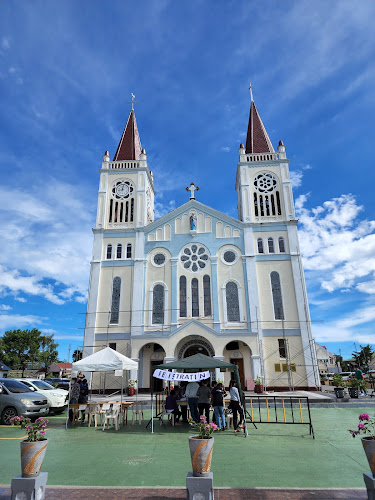
Most travelers notice the pink façade first. It’s an unusual color for a Catholic cathedral, and honestly, the first time I saw it years ago, I thought my eyes were playing tricks on me because of the mountain light. But no, it’s really pink. Soft pink, to be exact. Paired with the large rose window and the twin peaked belfries, the whole structure feels European in spirit but unmistakably Filipino in soul.
Perched on a hill overlooking Session Road, the cathedral requires a climb. There are stairs. Quite a few of them. And yes, they can leave you a bit breathless, especially if you just came from a long bus ride from Manila. But that climb is part of the experience. Each step pulls you a little farther away from jeepney horns and street vendors and a little closer to quiet. Or at least a different kind of noise—the low murmur of prayer, the shuffle of feet, the occasional church bell.
Inside, the mood shifts. The air feels cooler, calmer. Light filters through stained glass in a way that makes even non-religious visitors slow down. And I’ve watched that happen many times. People walk in with phones raised, ready for photos, then after a minute or two, the phones drop. Something about the place asks for respect, without demanding it.
This cathedral is both a religious center and a major tourist attraction. That balance doesn’t always work elsewhere, but here it mostly does. You’ll see locals attending Mass with quiet focus, tourists sitting in the back pews just absorbing the moment, and sometimes children running a bit too fast until a parent gives them the look. It feels lived-in. Real.
And while it’s officially dedicated to Our Lady of the Atonement, many visitors come for reasons that are harder to name. Some are grateful. Some are grieving. Some just need a break from the road. The cathedral seems to accept all of that without judgment, which is maybe why people keep coming back.
Key Features
- Distinctive pink façade that stands out against Baguio’s often gray, misty skies
- Large rose window that casts soft, colored light into the main nave
- Twin peaked belfries that give the cathedral its recognizable skyline profile
- Hilltop location with elevated views over parts of the city
- Wide stairway leading up from Session Road, a bit of a workout but worth it
- Wheelchair-accessible entrance and facilities, which is not always a given in older churches
- Regular Mass schedules serving both locals and visiting Catholics
- Onsite restrooms, helpful if you’ve been walking around all day
- Peaceful interior atmosphere that invites reflection, even if you’re not religious
Best Time to Visit
Baguio weather has a mind of its own, but that’s part of the charm. The best time to visit the Baguio Cathedral is during the dry months, usually from November to May. Mornings are ideal. The light is kinder, the air feels fresher, and the crowds are manageable. If you come too late in the afternoon, especially on weekends, expect more people and less quiet.
Sundays are tricky. On one hand, the cathedral is most alive then. On the other, it’s busy. Very busy. If you want to attend Mass, come early. If you just want to look around and take photos, avoid peak Mass hours unless you’re okay with standing at the back and waiting.
December has its own energy. The Christmas season brings more visitors, more lights, and a certain warmth that contrasts nicely with Baguio’s cold evenings. But also more people. Always more people. I once made the mistake of visiting during Holy Week without checking the schedule. Let’s just say I learned patience that day.
If you enjoy quieter moments, try a weekday morning. There’s something special about sitting inside while the city wakes up outside. You might hear distant traffic, maybe a bell ringing somewhere, and it all blends into a strange kind of peace.
How to Get There
The cathedral sits right near the heart of Baguio, so getting there isn’t complicated, but it can take a bit of navigation if it’s your first time. Most travelers end up on Session Road at some point. From there, the stairway up to the cathedral is hard to miss. Just look up. You’ll see it.
If you’re coming by taxi, drivers know the place well. You can be dropped off close to the entrance, which is helpful if stairs aren’t your thing. Jeepneys also pass nearby, though you may still need to walk a short distance. And walk you will, because Baguio is a walking city whether you plan it or not.
For those staying nearby, the cathedral is an easy stop between meals, shopping, or other attractions. I’ve often ducked in on my way somewhere else, telling myself it’ll be five minutes, and then stayed half an hour. That happens.
Parking can be limited during peak times, so if you’re driving, patience helps. Or just park a little farther away and enjoy the walk. The cool air makes it easier than you’d expect.
Tips for Visiting
First tip: dress respectfully. This is an active place of worship, not just a photo spot. Sleeveless tops and very short shorts might earn you a few looks. Nothing dramatic, but it’s better to be considerate.
Second, watch your timing. If you want photos of the interior without too many people in the frame, arrive between Mass schedules. Staff and volunteers are generally polite but firm about maintaining order during services.
Third, take a moment on the steps. Seriously. Don’t rush straight inside. Turn around, look down at the city, breathe. That view, combined with the mountain air, is part of the experience. I’ve had some of my clearest travel thoughts sitting right there, pretending to rest my legs.
If you’re traveling with elderly companions or anyone with mobility issues, note that wheelchair-accessible entrances and restrooms are available. Ask around if you’re unsure. People are usually helpful, even if they seem busy.
Photography is allowed, but be discreet. No flash during Mass, and avoid blocking aisles. And sometimes, the best memory is the one you don’t capture on your phone. I know, that sounds preachy, but it’s true.
Lastly, don’t expect perfection. The cathedral is old. There may be areas under maintenance, crowds that test your patience, or moments when the noise from outside sneaks in. But that’s part of its reality. It’s not a museum. It’s a living place.
The Baguio Cathedral and Diocesan Shrine of Our Lady of the Atonement offers travelers more than a checklist stop. It offers a pause. And in a trip filled with itineraries and schedules, that pause can end up being the part you remember most. If you let it.
Key Features
- Distinctive pink façade that stands out against Baguio’s often gray, misty skies
- Large rose window that casts soft, colored light into the main nave
- Twin peaked belfries that give the cathedral its recognizable skyline profile
- Hilltop location with elevated views over parts of the city
- Wide stairway leading up from Session Road, a bit of a workout but worth it
- Wheelchair-accessible entrance and facilities, which is not always a given in older churches
- Regular Mass schedules serving both locals and visiting Catholics
- Onsite restrooms, helpful if you’ve been walking around all day
More Details
Updated December 31, 2025
Table of Contents
- Description
- Key Features
- Best Time to Visit
- How to Get There
- Tips for Visiting
- Key Highlights
- Location
- Places to Stay Near Baguio Cathedral and Diocesan Shrine of Our Lady of the Atonement
- Find and Book a Tour
- Explore More Travel Guides
- Nearby Places You Might Like
- Traveler Reviews for Baguio Cathedral and Diocesan Shrine of Our Lady of the Atonement
- Share Your Experience
Description
The Baguio Cathedral, formally known as the Diocesan Shrine of Our Lady of the Atonement, is one of those places that quietly gets under your skin. It’s not flashy in a theme-park way, but it leaves a mark. Founded in 1936, the cathedral has watched Baguio grow from a sleepy mountain town into the busy, sometimes chaotic city it is now. And yet, it still feels like a pause button.
Most travelers notice the pink façade first. It’s an unusual color for a Catholic cathedral, and honestly, the first time I saw it years ago, I thought my eyes were playing tricks on me because of the mountain light. But no, it’s really pink. Soft pink, to be exact. Paired with the large rose window and the twin peaked belfries, the whole structure feels European in spirit but unmistakably Filipino in soul.
Perched on a hill overlooking Session Road, the cathedral requires a climb. There are stairs. Quite a few of them. And yes, they can leave you a bit breathless, especially if you just came from a long bus ride from Manila. But that climb is part of the experience. Each step pulls you a little farther away from jeepney horns and street vendors and a little closer to quiet. Or at least a different kind of noise—the low murmur of prayer, the shuffle of feet, the occasional church bell.
Inside, the mood shifts. The air feels cooler, calmer. Light filters through stained glass in a way that makes even non-religious visitors slow down. And I’ve watched that happen many times. People walk in with phones raised, ready for photos, then after a minute or two, the phones drop. Something about the place asks for respect, without demanding it.
This cathedral is both a religious center and a major tourist attraction. That balance doesn’t always work elsewhere, but here it mostly does. You’ll see locals attending Mass with quiet focus, tourists sitting in the back pews just absorbing the moment, and sometimes children running a bit too fast until a parent gives them the look. It feels lived-in. Real.
And while it’s officially dedicated to Our Lady of the Atonement, many visitors come for reasons that are harder to name. Some are grateful. Some are grieving. Some just need a break from the road. The cathedral seems to accept all of that without judgment, which is maybe why people keep coming back.
Key Features
- Distinctive pink façade that stands out against Baguio’s often gray, misty skies
- Large rose window that casts soft, colored light into the main nave
- Twin peaked belfries that give the cathedral its recognizable skyline profile
- Hilltop location with elevated views over parts of the city
- Wide stairway leading up from Session Road, a bit of a workout but worth it
- Wheelchair-accessible entrance and facilities, which is not always a given in older churches
- Regular Mass schedules serving both locals and visiting Catholics
- Onsite restrooms, helpful if you’ve been walking around all day
- Peaceful interior atmosphere that invites reflection, even if you’re not religious
Best Time to Visit
Baguio weather has a mind of its own, but that’s part of the charm. The best time to visit the Baguio Cathedral is during the dry months, usually from November to May. Mornings are ideal. The light is kinder, the air feels fresher, and the crowds are manageable. If you come too late in the afternoon, especially on weekends, expect more people and less quiet.
Sundays are tricky. On one hand, the cathedral is most alive then. On the other, it’s busy. Very busy. If you want to attend Mass, come early. If you just want to look around and take photos, avoid peak Mass hours unless you’re okay with standing at the back and waiting.
December has its own energy. The Christmas season brings more visitors, more lights, and a certain warmth that contrasts nicely with Baguio’s cold evenings. But also more people. Always more people. I once made the mistake of visiting during Holy Week without checking the schedule. Let’s just say I learned patience that day.
If you enjoy quieter moments, try a weekday morning. There’s something special about sitting inside while the city wakes up outside. You might hear distant traffic, maybe a bell ringing somewhere, and it all blends into a strange kind of peace.
How to Get There
The cathedral sits right near the heart of Baguio, so getting there isn’t complicated, but it can take a bit of navigation if it’s your first time. Most travelers end up on Session Road at some point. From there, the stairway up to the cathedral is hard to miss. Just look up. You’ll see it.
If you’re coming by taxi, drivers know the place well. You can be dropped off close to the entrance, which is helpful if stairs aren’t your thing. Jeepneys also pass nearby, though you may still need to walk a short distance. And walk you will, because Baguio is a walking city whether you plan it or not.
For those staying nearby, the cathedral is an easy stop between meals, shopping, or other attractions. I’ve often ducked in on my way somewhere else, telling myself it’ll be five minutes, and then stayed half an hour. That happens.
Parking can be limited during peak times, so if you’re driving, patience helps. Or just park a little farther away and enjoy the walk. The cool air makes it easier than you’d expect.
Tips for Visiting
First tip: dress respectfully. This is an active place of worship, not just a photo spot. Sleeveless tops and very short shorts might earn you a few looks. Nothing dramatic, but it’s better to be considerate.
Second, watch your timing. If you want photos of the interior without too many people in the frame, arrive between Mass schedules. Staff and volunteers are generally polite but firm about maintaining order during services.
Third, take a moment on the steps. Seriously. Don’t rush straight inside. Turn around, look down at the city, breathe. That view, combined with the mountain air, is part of the experience. I’ve had some of my clearest travel thoughts sitting right there, pretending to rest my legs.
If you’re traveling with elderly companions or anyone with mobility issues, note that wheelchair-accessible entrances and restrooms are available. Ask around if you’re unsure. People are usually helpful, even if they seem busy.
Photography is allowed, but be discreet. No flash during Mass, and avoid blocking aisles. And sometimes, the best memory is the one you don’t capture on your phone. I know, that sounds preachy, but it’s true.
Lastly, don’t expect perfection. The cathedral is old. There may be areas under maintenance, crowds that test your patience, or moments when the noise from outside sneaks in. But that’s part of its reality. It’s not a museum. It’s a living place.
The Baguio Cathedral and Diocesan Shrine of Our Lady of the Atonement offers travelers more than a checklist stop. It offers a pause. And in a trip filled with itineraries and schedules, that pause can end up being the part you remember most. If you let it.

Key Highlights
- Distinctive pink façade that stands out against Baguio’s often gray, misty skies
- Large rose window that casts soft, colored light into the main nave
- Twin peaked belfries that give the cathedral its recognizable skyline profile
- Hilltop location with elevated views over parts of the city
- Wide stairway leading up from Session Road, a bit of a workout but worth it
- Wheelchair-accessible entrance and facilities, which is not always a given in older churches
- Regular Mass schedules serving both locals and visiting Catholics
- Onsite restrooms, helpful if you’ve been walking around all day
Location
Places to Stay Near Baguio Cathedral and Diocesan Shrine of Our Lady of the Atonement
Find and Book a Tour
Explore More Travel Guides
No reviews found! Be the first to review!
Traveler Reviews for Baguio Cathedral and Diocesan Shrine of Our Lady of the Atonement
There are no reviews yet. Be the first one to write one.
Have you visited Baguio Cathedral and Diocesan Shrine of Our Lady of the Atonement? Help other travelers by sharing your review.
Find Accommodations Nearby
Recommended Tours & Activities
Visitor Reviews
There are no reviews yet. Be the first one to write one.
Share Your Experience
Have you visited Baguio Cathedral and Diocesan Shrine of Our Lady of the Atonement? Help other travelers by leaving a review.