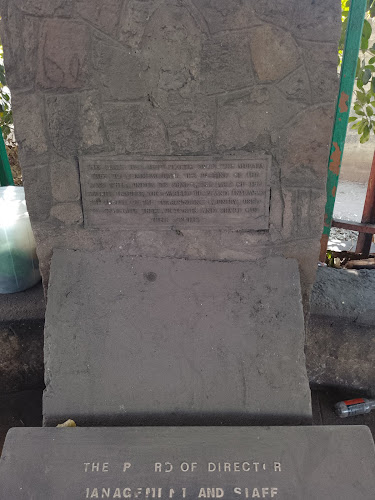
The Slave Tree is a historic national monument located on Makoli Avenue in central Ndola, Zambia, marking the somber legacy of the 19th-century Central African slave trade. Once a monumental mupapa (pod mahogany) tree where Swahili-Arab slave traders camped, held councils, and auctioned captives, the site is honored today by a thriving memorial fig tree that grew upon the original trunk, standing as an enduring symbol of freedom and resilience.
Highlights & Key Features
Historic 19th-Century Slave Trade Camp: Historic gathering place where Swahili-Arab traders camped and auctioned enslaved captives from the surrounding region.
Living Memorial Fig Tree: Thriving strangler fig tree that grew upon the original mupapa (pod mahogany) trunk, preserved as the continuing national monument.
Civic Symbol on City Coat of Arms: Revered civic landmark commemorated directly on the official municipal coat of arms of the City of Ndola.
Commemorative Historical Plaque: Bronze national monument plaque marking the historical abolition and the resilience of the Zambian people.
Visitor Guide & Information
## Overview of the Slave Tree Monument
The **Slave Tree** is one of the most historically significant and somber national monuments in the Republic of Zambia. Located near the intersection of Makoli Avenue and Moffat Avenue in the city center of Ndola—the administrative capital of Zambia’s Copperbelt Province—the tree stands as a physical witness to the devastating nineteenth-century East and Central African slave trade that tore through the interior of the African continent prior to the advent of colonial governance.
Declared a National Monument by the Zambian National Heritage Conservation Commission, the site commemorates the suffering and endurance of indigenous African communities who were captured, marched, and traded through regional caravan routes. Today, the monument serves as an educational touchstone for students, historians, and international visitors, symbolizing the triumph of freedom and human dignity over the atrocities of human chattel bondage.
## Nineteenth-Century Slave Trade History
To understand the historical weight of the Slave Tree, one must examine the geopolitical and commercial dynamics of nineteenth-century Central Africa:
– **Swahili-Arab Trading Caravans:** Throughout the 1800s, heavily armed trading caravans dispatched from the island of Zanzibar and the Swahili coast of modern-day Tanzania penetrated deep into the interior of the Congo basin and the Luapula and Copperbelt regions of Zambia. These traders, led by prominent caravan leaders such as Tippu Tip and local warlords, sought two immensely valuable commodities: elephant ivory and enslaved human laborers.
– **The Stockade at Ndola:** Long before modern Ndola was founded as an industrial copper mining town in 1904, the site of the Slave Tree was an open woodland clearing along ancient trading footpaths. Swahili-Arab traders established a fortified stockade (*boma*) beneath the sprawling, shady branches of an enormous indigenous tree.
– **A Site of Captivity and Commerce:** Beneath this canopy, slave raiders rested their armed guards, held military war councils with local chiefs, divided plunder, and conducted auctions of captive men, women, and children seized from surrounding Lamba, Bemba, and neighboring ethnic communities. Captives were bound with wooden yokes, ropes, and iron chains before being forced on grueling foot marches spanning hundreds of miles eastward to the Indian Ocean coast, from where survivors were shipped to slave markets in the Middle East and Indian Ocean plantations.
– **Abolition and Pacification:** The arrival of British South Africa Company administration and European missionaries in the late 1890s and early 1900s gradually dismantled the Swahili trading networks, bringing an end to open slave raiding across the Copperbelt.
## The Botany of the Monument: Mupapa and the Strangler Fig
A fascinating botanical narrative surrounds the physical identity of the Slave Tree:
– **The Original Mupapa Tree:** The historical tree under which the slave trade was conducted was a magnificent **mupapa** (*Afzelia quanzensis*), commonly known in English as the pod mahogany. A slow-growing, deep-rooted hardwood native to Central and Southern African savannas, the mupapa produces dense, wide-spreading horizontal branches and compound foliage that provided vast circular shade against the intense tropical sun.
– **The Parasitic Strangler Fig:** Sometime during the late nineteenth or early twentieth century, a bird deposited the seed of a wild strangler fig (*Ficus* species) within the upper branch forks of the mature mupapa tree. As the fig germinated, it sent aerial roots downward toward the soil, wrapping tightly around the mupapa’s trunk in an intricate network of living timber.
– **The 2007 Fall and Regeneration:** Over decades, the vigorous strangler fig gradually enclosed the aging mupapa, while subterranean termites progressively weakened the heartwood of the ancient mahogany. In 2007, during a severe storm, the original mupapa trunk finally collapsed. However, the resilient strangler fig tree that had enveloped it had established deep, independent root systems of its own. Today, that majestic fig tree occupies the exact historical footprint, continuing to thrive as the living monument and sheltering the historic ground beneath its canopy.
## Civic Significance and the Ndola Coat of Arms
The Slave Tree holds a profound place in the civic identity and heraldry of Ndola:
– **The Municipal Coat of Arms:** The stylized silhouette of the historic tree is prominently rendered in the center of the official municipal coat of arms of the City of Ndola. Its inclusion serves as a perpetual reminder of the town’s humble, forested beginnings and the enduring resilience of its people who survived the dark era of the caravan trade to build one of Africa’s leading industrial and mining cities.
– **The Commemorative Plaque:** A permanent bronze plaque mounted on a low stone plinth stands beside the fenced tree enclosure. The inscription reads:
> *”This plate has been placed on this mupapa tree to commemorate the passing of the days when, under its shade, the last of the Swahili traders, who warred upon and enslaved the people of the surrounding country, used to celebrate their victories and share out their spoils.”*
## Visiting the Monument and Surrounding Sites
– **Location:** The monument is situated in an open sidewalk parklet at the intersection of Makoli Avenue, Moffat Avenue, and Livingstone Road in central Ndola.
– **Visitor Experience:** The monument is enclosed by a protective metal fence designed to safeguard the living tree roots and historical plaque from vehicular traffic and urban wear. Visitors can view the tree and read the plaque freely from the perimeter sidewalk.
– **Photography:** The expansive canopy and intertwined trunk of the fig tree provide compelling photographic subjects, particularly during morning hours when angled sunlight filters through the broad green leaves.
– **Nearby Cultural Attractions:** Visitors exploring Ndola’s heritage can combine a visit to the Slave Tree with the **Copperbelt Museum** (located less than one kilometer away, showcasing regional ethnography, mineral collections, and colonial artifacts) and the **Dag Hammarskjöld Memorial Crash Site**, located ten kilometers outside Ndola, commemorating the 1961 plane crash that claimed the life of the United Nations Secretary-General.
## Practical Visitor Logistics
– **Access:** The site is easily accessible on foot from downtown Ndola hotels, government offices, and the Ndola Railway Station.
– **Safety and Etiquette:** The monument is situated in a busy, peaceful civic district. Visitors should approach the site with the quiet respect appropriate for a memorial dedicated to the victims of the historical slave trade.
Community & Insider Notes
Last modified March 30, 2026
## Overview of the Slave Tree Monument
The **Slave Tree** is one of the most historically significant and somber national monuments in the Republic of Zambia. Located near the intersection of Makoli Avenue and Moffat Avenue in the city center of Ndola—the administrative capital of Zambia’s Copperbelt Province—the tree stands as a physical witness to the devastating nineteenth-century East and Central African slave trade that tore through the interior of the African continent prior to the advent of colonial governance.
Declared a National Monument by the Zambian National Heritage Conservation Commission, the site commemorates the suffering and endurance of indigenous African communities who were captured, marched, and traded through regional caravan routes. Today, the monument serves as an educational touchstone for students, historians, and international visitors, symbolizing the triumph of freedom and human dignity over the atrocities of human chattel bondage.
## Nineteenth-Century Slave Trade History
To understand the historical weight of the Slave Tree, one must examine the geopolitical and commercial dynamics of nineteenth-century Central Africa:
– **Swahili-Arab Trading Caravans:** Throughout the 1800s, heavily armed trading caravans dispatched from the island of Zanzibar and the Swahili coast of modern-day Tanzania penetrated deep into the interior of the Congo basin and the Luapula and Copperbelt regions of Zambia. These traders, led by prominent caravan leaders such as Tippu Tip and local warlords, sought two immensely valuable commodities: elephant ivory and enslaved human laborers.
– **The Stockade at Ndola:** Long before modern Ndola was founded as an industrial copper mining town in 1904, the site of the Slave Tree was an open woodland clearing along ancient trading footpaths. Swahili-Arab traders established a fortified stockade (*boma*) beneath the sprawling, shady branches of an enormous indigenous tree.
– **A Site of Captivity and Commerce:** Beneath this canopy, slave raiders rested their armed guards, held military war councils with local chiefs, divided plunder, and conducted auctions of captive men, women, and children seized from surrounding Lamba, Bemba, and neighboring ethnic communities. Captives were bound with wooden yokes, ropes, and iron chains before being forced on grueling foot marches spanning hundreds of miles eastward to the Indian Ocean coast, from where survivors were shipped to slave markets in the Middle East and Indian Ocean plantations.
– **Abolition and Pacification:** The arrival of British South Africa Company administration and European missionaries in the late 1890s and early 1900s gradually dismantled the Swahili trading networks, bringing an end to open slave raiding across the Copperbelt.
## The Botany of the Monument: Mupapa and the Strangler Fig
A fascinating botanical narrative surrounds the physical identity of the Slave Tree:
– **The Original Mupapa Tree:** The historical tree under which the slave trade was conducted was a magnificent **mupapa** (*Afzelia quanzensis*), commonly known in English as the pod mahogany. A slow-growing, deep-rooted hardwood native to Central and Southern African savannas, the mupapa produces dense, wide-spreading horizontal branches and compound foliage that provided vast circular shade against the intense tropical sun.
– **The Parasitic Strangler Fig:** Sometime during the late nineteenth or early twentieth century, a bird deposited the seed of a wild strangler fig (*Ficus* species) within the upper branch forks of the mature mupapa tree. As the fig germinated, it sent aerial roots downward toward the soil, wrapping tightly around the mupapa’s trunk in an intricate network of living timber.
– **The 2007 Fall and Regeneration:** Over decades, the vigorous strangler fig gradually enclosed the aging mupapa, while subterranean termites progressively weakened the heartwood of the ancient mahogany. In 2007, during a severe storm, the original mupapa trunk finally collapsed. However, the resilient strangler fig tree that had enveloped it had established deep, independent root systems of its own. Today, that majestic fig tree occupies the exact historical footprint, continuing to thrive as the living monument and sheltering the historic ground beneath its canopy.
## Civic Significance and the Ndola Coat of Arms
The Slave Tree holds a profound place in the civic identity and heraldry of Ndola:
– **The Municipal Coat of Arms:** The stylized silhouette of the historic tree is prominently rendered in the center of the official municipal coat of arms of the City of Ndola. Its inclusion serves as a perpetual reminder of the town’s humble, forested beginnings and the enduring resilience of its people who survived the dark era of the caravan trade to build one of Africa’s leading industrial and mining cities.
– **The Commemorative Plaque:** A permanent bronze plaque mounted on a low stone plinth stands beside the fenced tree enclosure. The inscription reads:
> *”This plate has been placed on this mupapa tree to commemorate the passing of the days when, under its shade, the last of the Swahili traders, who warred upon and enslaved the people of the surrounding country, used to celebrate their victories and share out their spoils.”*
## Visiting the Monument and Surrounding Sites
– **Location:** The monument is situated in an open sidewalk parklet at the intersection of Makoli Avenue, Moffat Avenue, and Livingstone Road in central Ndola.
– **Visitor Experience:** The monument is enclosed by a protective metal fence designed to safeguard the living tree roots and historical plaque from vehicular traffic and urban wear. Visitors can view the tree and read the plaque freely from the perimeter sidewalk.
– **Photography:** The expansive canopy and intertwined trunk of the fig tree provide compelling photographic subjects, particularly during morning hours when angled sunlight filters through the broad green leaves.
– **Nearby Cultural Attractions:** Visitors exploring Ndola’s heritage can combine a visit to the Slave Tree with the **Copperbelt Museum** (located less than one kilometer away, showcasing regional ethnography, mineral collections, and colonial artifacts) and the **Dag Hammarskjöld Memorial Crash Site**, located ten kilometers outside Ndola, commemorating the 1961 plane crash that claimed the life of the United Nations Secretary-General.
## Practical Visitor Logistics
– **Access:** The site is easily accessible on foot from downtown Ndola hotels, government offices, and the Ndola Railway Station.
– **Safety and Etiquette:** The monument is situated in a busy, peaceful civic district. Visitors should approach the site with the quiet respect appropriate for a memorial dedicated to the victims of the historical slave trade.
Historic 19th-Century Slave Trade Camp: Historic gathering place where Swahili-Arab traders camped and auctioned enslaved captives from the surrounding region.
Living Memorial Fig Tree: Thriving strangler fig tree that grew upon the original mupapa (pod mahogany) trunk, preserved as the continuing national monument.
Civic Symbol on City Coat of Arms: Revered civic landmark commemorated directly on the official municipal coat of arms of the City of Ndola.
Commemorative Historical Plaque: Bronze national monument plaque marking the historical abolition and the resilience of the Zambian people.
Explore verified points of interest within walking or short transit distance.
No neighboring places mapped within 5 km yet.
Find Places to Stay Nearby
Stay22 provides this accommodation search. We may earn a commission if you book through it; verify current prices and terms with the provider.
🗺️
Interactive accommodation map requires marketing cookies to display live rates.
Recommended Experiences & Activities
GetYourGuide provides this tour inventory. We may earn a commission if you book through it; verify current availability, prices, and terms with the provider.
Top Viator Experiences & Guided Tours in Ndola
We may earn a commission if you book through links on this page at no extra cost to you. All tours feature verified customer reviews and flexible cancellation options.
 Real Journey Travels