
Schmitt-Presser Museum
About Schmitt-Presser Museum
Description
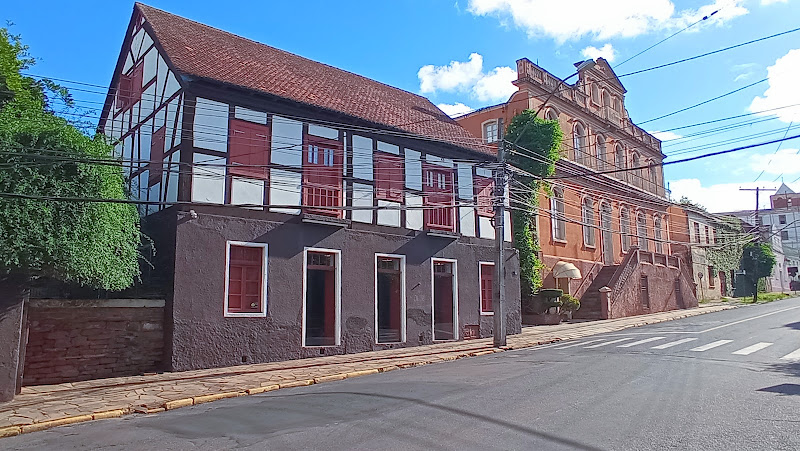
The Schmitt-Presser Museum sits in the cultural fold of Novo Hamburgo, Rio Grande do Sul, and serves as a quiet but compelling lesson in German-Brazilian history. More than a building, the museum acts like a conversation with the past: wooden beams creak, objects whisper family routines, and the architecture—especially the traditional enxaimel timber-frame elements—speaks to immigrant building techniques that shaped whole neighborhoods. Travelers who wander in will find community memory carefully preserved in rooms that once sheltered everyday life, not grand events. It has that particular kind of authenticity that doesn't shout; it invites a slow look instead.
The museum is commonly described as a community museum and local heritage site, and those labels fit. Exhibits focus on domestic life, local artisanship, and the adaptation of German traditions to southern Brazil. There is an intimate, house-museum scale to the place. This means visitors get close to objects: sewing machines, cookware, photographs, household furniture, and occasionally school artifacts. Items are curated to tell family stories and community shifts rather than to wow with blockbuster displays. Frankly, that is its charm. For those who like context and small anecdotes, it's gold.
The site is friendly to families and children, which makes it a practical stop for travelers who are touring Novo Hamburgo with kids in tow. There are accessible facilities including a wheelchair accessible restroom, so mobility needs are considered. On the flip side, there is no on-site restaurant, so the typical visit is paired with a stop at a local café or bistro nearby. The museum’s modest infrastructure emphasizes history and learning over comfort luxuries. That said, the restrooms are clean and well maintained, a surprisingly important detail after several hours of sightseeing.
Expect docent-led stories when available; volunteers and staff often fill the role of local storytellers, offering context that guidebooks miss. The mood inside is conversational and often nostalgic. One local guide likes to point out small, almost invisible marks on doorframes—height lines etched by children over decades—and the room goes quiet. It’s not a place for loud tours and flash photography; it’s a place to listen. For many visitors, the highlight is simply sensing the continuity of everyday life across generations. That feeling lingers.
Key Features
- Historic enxaimel timber-frame architecture showcasing German immigrant construction techniques
- Community-focused exhibits with household objects, photographs, and oral histories
- Family-friendly layout, suitable for children and school groups
- Wheelchair accessible restroom and visitor facilities—basic but functional
- Small-scale guided tours and volunteer-staffed interpretation for richer context
- No on-site restaurant, encouraging exploration of local cafés and eateries nearby
- Quiet, reflective atmosphere ideal for slower, curiosity-driven visits
- Educational programming available at times, including local heritage workshops
Best Time to Visit
The best times to visit are the milder shoulder seasons: spring (September to November) and autumn (March to May). In these months the weather in Rio Grande do Sul tends to be pleasant—cool mornings, comfortably warm afternoons—and walking around Novo Hamburgo feels easy. Weekdays in mid-morning are quieter, which lets visitors linger without being rushed. Weekend afternoons can be busier with family groups and school tours, so if someone prefers a contemplative visit, weekdays are better.
Summer brings hotter temperatures and occasional heavy rain. Not ideal if someone hopes to stroll scenic neighborhoods afterward. Winter is cooler and sometimes damp, which may make wooden buildings feel a bit more austere but also atmospheric if one likes that. For photographers, late afternoon light through old windows can be lovely, though the museum is not heavily lit for dramatic photos—so moderate expectations on flash-free images are wise.
How to Get There
The Schmitt-Presser Museum is accessible from central Novo Hamburgo by a short drive or public transit ride. Many visitors opt to combine a visit with a walking tour of Hamburgo Velho, the historic neighborhood where the community roots are most visible. Local buses run regularly and drop passengers within comfortable walking distance; bus lines and local transit apps will show stops near cultural zones. Taxis and ride-hailing services are plentiful in the city and are a convenient option for those short hops, especially for travelers with limited time.
Driving is straightforward for those with a rental car. Parking near the museum tends to be street parking or small municipal lots; availability depends on the time of day. No dedicated large parking lot on site, so those who arrive by car should allow a few extra minutes to find a spot. Cyclists will find the surrounding streets manageable; just take care on busier stretches. For the adventurous traveler who enjoys strolling, the museum can be part of a walking route through historic streets, cafés, and small artisan shops that reflect the area’s German-Brazilian heritage.
Tips for Visiting
Plan for about 60 to 90 minutes. The museum is compact, but that’s deceptive—there's more to read and absorb than it looks. People who rush through will miss the quiet, revealing details. Those who linger will walk away with a sense of the families who built and lived in the neighborhood.
Bring local-currency cash. While the museum often accepts card payments for entry or donations, smaller purchases like postcards or occasional entrance fees can be cash-preferred. Also, donations are usually welcome; community museums run on modest budgets and your contribution helps preserve the house and arrange future exhibitions.
Guided tours are recommended when available. Staff and volunteers carry oral histories and tiny anecdotes that don't appear on labels. Those stories change the visit from a list of objects to real lives. If a tour isn't available in the visitor’s language, staff are generally helpful and can point out highlights to prioritize.
Wear comfortable shoes. The building’s floors are wooden and slightly uneven in places. It’s part of the experience, but it means caution is wise—especially for visitors with mobility issues. On that note, the museum does offer a wheelchair accessible restroom, but visitors with mobility concerns should call ahead to confirm access and any assistance available. It’s a small museum, and sometimes staffing levels vary.
Families: bring a mix of activity options for kids. The museum is kid-friendly and many children find the household objects fascinating, but quiet time is expected. A quick scavenger list—find an old sewing machine, spot a wooden toy, notice a picture frame—goes a long way to keep little ones engaged.
No restaurant on site. This is important. Visitors who plan to spend part of a day in the area should consider packing a snack or planning a café stop nearby. The neighborhood has simple eateries where local flavors can be sampled—small bakeries and coffee shops, mostly. The lack of an on-site café means more time exploring the surrounding streets and supporting small local businesses, which is actually kind of nice.
Photography: casual photos are usually okay, but flash photography is often discouraged to preserve artifacts. Always check signage and ask staff before photographing fragile objects up close. The best photos tend to be atmospheric shots of wooden beams, doorways, and family portraits that hang in the dimmer corners.
Combine the visit. The Schmitt-Presser Museum pairs well with other nearby cultural stops focused on German immigration and community life in Novo Hamburgo. It works best as a part of a half-day or full-day exploration rather than a standalone detour. A slow itinerary is recommended—museum, then café, then a walk through the neighborhood—and the experience feels more cohesive that way.
Finally, curiosity pays. Ask questions. The staff are proud of the local stories, and often they'll share tidbits not written on placards. One frequent visitor recalls learning about a neighbor who once crafted tiny wooden toys in the evening after a full day of farm work—simple things, but they suddenly make the museum feel lived-in. Those are the stories that linger.
In short, the Schmitt-Presser Museum is for travelers who enjoy history close up, who appreciate the texture of everyday artifacts, and who like to discover how immigrant traditions were woven into local life. It’s modest, accessible, and full of quiet revelations. Go with time, curiosity, and a willingness to listen. The rest will follow.
Key Features
- Historic enxaimel timber-frame architecture showcasing German immigrant construction techniques
- Community-focused exhibits with household objects, photographs, and oral histories
- Family-friendly layout, suitable for children and school groups
- Wheelchair accessible restroom and visitor facilities—basic but functional
- Small-scale guided tours and volunteer-staffed interpretation for richer context
- No on-site restaurant, encouraging exploration of local cafés and eateries nearby
- Quiet, reflective atmosphere ideal for slower, curiosity-driven visits
- Educational programming available at times, including local heritage workshops
More Details
Updated August 30, 2025
Table of Contents
Description
The Schmitt-Presser Museum sits in the cultural fold of Novo Hamburgo, Rio Grande do Sul, and serves as a quiet but compelling lesson in German-Brazilian history. More than a building, the museum acts like a conversation with the past: wooden beams creak, objects whisper family routines, and the architecture—especially the traditional enxaimel timber-frame elements—speaks to immigrant building techniques that shaped whole neighborhoods. Travelers who wander in will find community memory carefully preserved in rooms that once sheltered everyday life, not grand events. It has that particular kind of authenticity that doesn’t shout; it invites a slow look instead.
The museum is commonly described as a community museum and local heritage site, and those labels fit. Exhibits focus on domestic life, local artisanship, and the adaptation of German traditions to southern Brazil. There is an intimate, house-museum scale to the place. This means visitors get close to objects: sewing machines, cookware, photographs, household furniture, and occasionally school artifacts. Items are curated to tell family stories and community shifts rather than to wow with blockbuster displays. Frankly, that is its charm. For those who like context and small anecdotes, it’s gold.
The site is friendly to families and children, which makes it a practical stop for travelers who are touring Novo Hamburgo with kids in tow. There are accessible facilities including a wheelchair accessible restroom, so mobility needs are considered. On the flip side, there is no on-site restaurant, so the typical visit is paired with a stop at a local café or bistro nearby. The museum’s modest infrastructure emphasizes history and learning over comfort luxuries. That said, the restrooms are clean and well maintained, a surprisingly important detail after several hours of sightseeing.
Expect docent-led stories when available; volunteers and staff often fill the role of local storytellers, offering context that guidebooks miss. The mood inside is conversational and often nostalgic. One local guide likes to point out small, almost invisible marks on doorframes—height lines etched by children over decades—and the room goes quiet. It’s not a place for loud tours and flash photography; it’s a place to listen. For many visitors, the highlight is simply sensing the continuity of everyday life across generations. That feeling lingers.
Key Features
- Historic enxaimel timber-frame architecture showcasing German immigrant construction techniques
- Community-focused exhibits with household objects, photographs, and oral histories
- Family-friendly layout, suitable for children and school groups
- Wheelchair accessible restroom and visitor facilities—basic but functional
- Small-scale guided tours and volunteer-staffed interpretation for richer context
- No on-site restaurant, encouraging exploration of local cafés and eateries nearby
- Quiet, reflective atmosphere ideal for slower, curiosity-driven visits
- Educational programming available at times, including local heritage workshops
Best Time to Visit
The best times to visit are the milder shoulder seasons: spring (September to November) and autumn (March to May). In these months the weather in Rio Grande do Sul tends to be pleasant—cool mornings, comfortably warm afternoons—and walking around Novo Hamburgo feels easy. Weekdays in mid-morning are quieter, which lets visitors linger without being rushed. Weekend afternoons can be busier with family groups and school tours, so if someone prefers a contemplative visit, weekdays are better.
Summer brings hotter temperatures and occasional heavy rain. Not ideal if someone hopes to stroll scenic neighborhoods afterward. Winter is cooler and sometimes damp, which may make wooden buildings feel a bit more austere but also atmospheric if one likes that. For photographers, late afternoon light through old windows can be lovely, though the museum is not heavily lit for dramatic photos—so moderate expectations on flash-free images are wise.
How to Get There
The Schmitt-Presser Museum is accessible from central Novo Hamburgo by a short drive or public transit ride. Many visitors opt to combine a visit with a walking tour of Hamburgo Velho, the historic neighborhood where the community roots are most visible. Local buses run regularly and drop passengers within comfortable walking distance; bus lines and local transit apps will show stops near cultural zones. Taxis and ride-hailing services are plentiful in the city and are a convenient option for those short hops, especially for travelers with limited time.
Driving is straightforward for those with a rental car. Parking near the museum tends to be street parking or small municipal lots; availability depends on the time of day. No dedicated large parking lot on site, so those who arrive by car should allow a few extra minutes to find a spot. Cyclists will find the surrounding streets manageable; just take care on busier stretches. For the adventurous traveler who enjoys strolling, the museum can be part of a walking route through historic streets, cafés, and small artisan shops that reflect the area’s German-Brazilian heritage.
Tips for Visiting
Plan for about 60 to 90 minutes. The museum is compact, but that’s deceptive—there’s more to read and absorb than it looks. People who rush through will miss the quiet, revealing details. Those who linger will walk away with a sense of the families who built and lived in the neighborhood.
Bring local-currency cash. While the museum often accepts card payments for entry or donations, smaller purchases like postcards or occasional entrance fees can be cash-preferred. Also, donations are usually welcome; community museums run on modest budgets and your contribution helps preserve the house and arrange future exhibitions.
Guided tours are recommended when available. Staff and volunteers carry oral histories and tiny anecdotes that don’t appear on labels. Those stories change the visit from a list of objects to real lives. If a tour isn’t available in the visitor’s language, staff are generally helpful and can point out highlights to prioritize.
Wear comfortable shoes. The building’s floors are wooden and slightly uneven in places. It’s part of the experience, but it means caution is wise—especially for visitors with mobility issues. On that note, the museum does offer a wheelchair accessible restroom, but visitors with mobility concerns should call ahead to confirm access and any assistance available. It’s a small museum, and sometimes staffing levels vary.
Families: bring a mix of activity options for kids. The museum is kid-friendly and many children find the household objects fascinating, but quiet time is expected. A quick scavenger list—find an old sewing machine, spot a wooden toy, notice a picture frame—goes a long way to keep little ones engaged.
No restaurant on site. This is important. Visitors who plan to spend part of a day in the area should consider packing a snack or planning a café stop nearby. The neighborhood has simple eateries where local flavors can be sampled—small bakeries and coffee shops, mostly. The lack of an on-site café means more time exploring the surrounding streets and supporting small local businesses, which is actually kind of nice.
Photography: casual photos are usually okay, but flash photography is often discouraged to preserve artifacts. Always check signage and ask staff before photographing fragile objects up close. The best photos tend to be atmospheric shots of wooden beams, doorways, and family portraits that hang in the dimmer corners.
Combine the visit. The Schmitt-Presser Museum pairs well with other nearby cultural stops focused on German immigration and community life in Novo Hamburgo. It works best as a part of a half-day or full-day exploration rather than a standalone detour. A slow itinerary is recommended—museum, then café, then a walk through the neighborhood—and the experience feels more cohesive that way.
Finally, curiosity pays. Ask questions. The staff are proud of the local stories, and often they’ll share tidbits not written on placards. One frequent visitor recalls learning about a neighbor who once crafted tiny wooden toys in the evening after a full day of farm work—simple things, but they suddenly make the museum feel lived-in. Those are the stories that linger.
In short, the Schmitt-Presser Museum is for travelers who enjoy history close up, who appreciate the texture of everyday artifacts, and who like to discover how immigrant traditions were woven into local life. It’s modest, accessible, and full of quiet revelations. Go with time, curiosity, and a willingness to listen. The rest will follow.
Key Highlights
- Historic enxaimel timber-frame architecture showcasing German immigrant construction techniques
- Community-focused exhibits with household objects, photographs, and oral histories
- Family-friendly layout, suitable for children and school groups
- Wheelchair accessible restroom and visitor facilities—basic but functional
- Small-scale guided tours and volunteer-staffed interpretation for richer context
- No on-site restaurant, encouraging exploration of local cafés and eateries nearby
- Quiet, reflective atmosphere ideal for slower, curiosity-driven visits
- Educational programming available at times, including local heritage workshops
Location
Places to Stay Near Schmitt-Presser Museum
Find and Book a Tour
Explore More Travel Guides
No reviews found! Be the first to review!
Traveler Reviews for Schmitt-Presser Museum
There are no reviews yet. Be the first one to write one.
Have you visited Schmitt-Presser Museum? Help other travelers by sharing your review.
You Might Also Like
Swan Novo Hamburgo

Novo Hamburgo
93351-325
Find Accommodations Nearby
Recommended Tours & Activities
Visitor Reviews
There are no reviews yet. Be the first one to write one.
Share Your Experience
Have you visited Schmitt-Presser Museum? Help other travelers by leaving a review.