
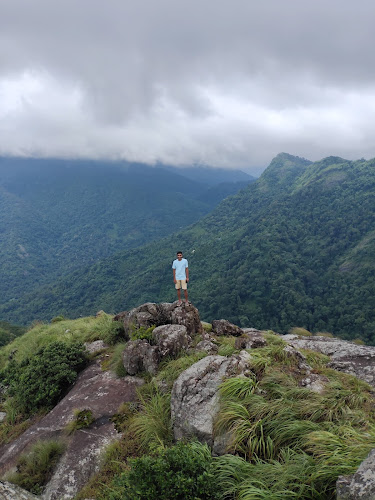
Rajathottam view Point
About Rajathottam view Point
Rajathottam View Point is one of those places that quietly grows on you. It doesn’t scream for attention, it doesn’t have fancy boards or over-polished facilities, but once you stand there and actually look around, it sinks in. This is a raw, open stretch of nature that feels honest. Travelers who enjoy viewpoints with a bit of effort involved, some uneven ground underfoot, and a sense of discovery usually walk away happy. It sits high enough to give sweeping views of rolling hills, patches of forest, and farmland far below, and on clear days the layers of landscape feel almost endless.
The area around Rajathottam View Point still feels largely untouched, which is part of the charm and, yeah, part of the challenge too. There are no manicured paths or railings everywhere. You come here to walk, climb a little, pause often, and just breathe. I remember my first visit; I underestimated the wind. It came out of nowhere, strong and cool, and for a second I had to laugh at myself for not carrying a light jacket. But that wind, combined with the open view, made the place feel alive. And alive is the right word.
For travelers who enjoy hiking and casual climbing, this viewpoint offers a satisfying mix. It’s not extreme, but it’s not a lazy walk either. Families come here for picnics, couples come for the views, and solo travelers come to clear their heads. Some visitors do feel underwhelmed if they expect polished tourism infrastructure. But if you’re the kind of person who likes places that feel a bit real, a bit imperfect, Rajathottam View Point fits nicely into that box.
Description
Rajathottam View Point functions both as a nature preserve and a tourist attraction, though it leans much more toward the nature side of that equation. The landscape is defined by rocky outcrops, grassy patches, and panoramic sightlines that change mood depending on the time of day. Early mornings are quiet and slightly misty, while late afternoons glow warm and dramatic. And sunsets? They’re the kind that make people fall silent without even realizing it.
The viewpoint overlooks a wide stretch of terrain, including agricultural lands and distant hills. There’s a sense of scale here that photos rarely capture properly. Standing at the edge, you get that gentle reminder of how small daily worries actually are. I’ve seen people sit for long stretches without touching their phones, which says a lot these days. And honestly, that alone makes the visit worth it.
Facilities are minimal. There’s space to sit, to spread out a picnic cloth, and to walk around safely if you’re paying attention. Accessibility is limited, so travelers should plan accordingly. This is not a place designed for wheelchairs or smooth, paved access. It rewards those who are comfortable walking on uneven ground and don’t mind a little dust on their shoes. But that rawness is exactly why many people keep coming back.
Key Features
- Wide, uninterrupted views of hills, fields, and natural terrain
- Popular picnic spot with open spaces to relax and eat
- Opportunities for hiking and light climbing
- Natural, undeveloped surroundings with minimal human interference
- Strong breeze and cooler air compared to lower elevations
- Changing scenery throughout the day, especially during sunrise and sunset
One thing worth mentioning is how social the place can feel without being crowded. People tend to spread out. You’ll see small groups chatting quietly, someone sketching, kids running around carefully, and the occasional serious hiker eyeing the terrain. It feels communal but not noisy. And I like that balance.
Best Time to Visit
The best time to visit Rajathottam View Point is early morning or late afternoon. Mornings offer cooler temperatures and softer light, which makes walking and hiking far more pleasant. There’s also a calmness then, before the day fully wakes up. Late afternoons, especially closer to sunset, bring warmer colors and dramatic shadows across the landscape. That’s when photographers tend to show up, quietly hunting for the perfect angle.
Season-wise, the months after the monsoon are usually the most rewarding. The greenery looks fuller, the air feels cleaner, and the views stretch farther. Summers can be hot, especially around midday, and there’s less shade than you might expect. If you do visit during summer, go early and carry enough water. Trust me on that. I once thought one bottle was enough. It wasn’t.
During the rainy season, the area becomes lush but also slippery. The rocks and paths can be tricky, so extra caution is needed. Some people love this time because the landscape feels dramatic and fresh. Others prefer to wait it out. There’s no right answer, really. Just know what you’re walking into.
How to Get There
Reaching Rajathottam View Point usually involves a mix of road travel and a short walk or hike. The roads leading close to the viewpoint are generally manageable, but the final stretch may not be smooth. Depending on where you’re coming from, private vehicles are often the most convenient option. Local transport can get you part of the way, but be prepared to walk the remaining distance.
The approach itself is part of the experience. As you get closer, the surroundings slowly shift from busy roads to quieter stretches. Trees thin out, the horizon opens up, and you start to feel that you’re heading somewhere different. That transition is something I always notice, and it sets the mood nicely.
Once you arrive near the viewpoint, there’s usually informal space to park, though it’s not a structured parking lot. Again, this place isn’t about polished convenience. It’s about access to nature, plain and simple. Wear comfortable footwear, because you’ll need it almost immediately.
Tips for Visiting
If you’re planning a visit to Rajathottam View Point, a little preparation goes a long way. First, carry water. More than you think you’ll need. There aren’t vendors or stalls right at the viewpoint, and the walking can sneak up on you. Snacks are also a good idea, especially if you’re planning a picnic.
Footwear matters here. Flip-flops might seem tempting, but they’re not your friend on uneven terrain. Choose shoes with decent grip. And if you’re visiting during or after rains, be extra careful on rocky sections. I’ve seen more than one person nearly lose their balance, and it’s not fun.
Bring a light jacket or shawl, even if the weather seems warm when you leave. The wind at the viewpoint can be surprisingly strong and cool. It’s refreshing, yes, but it can also catch you off guard.
Respect the place. Carry your trash back with you. There aren’t formal waste bins everywhere, and leaving litter really ruins the experience for everyone. Plus, this area thrives because it’s relatively untouched. Let’s keep it that way.
If you’re visiting with kids, keep an eye on them near the edges. There are open viewpoints without barriers, and while that adds to the natural feel, it also means you need to be alert. Same goes for anyone attempting light climbing. Know your limits. There’s no prize for going too far.
Lastly, give yourself time. Don’t rush in and rush out. Sit for a while. Let your eyes adjust to the distance. Watch the light change. I’ve learned that the best moments here aren’t always the ones you plan. They’re the quiet ones in between, when you’re just standing there, thinking about nothing in particular. And honestly, that’s the real magic of Rajathottam View Point.
Key Features
- Wide, uninterrupted views of hills, fields, and natural terrain
- Popular picnic spot with open spaces to relax and eat
- Opportunities for hiking and light climbing
- Natural, undeveloped surroundings with minimal human interference
- Strong breeze and cooler air compared to lower elevations
- Changing scenery throughout the day, especially during sunrise and sunset
More Details
Updated December 31, 2025
Rajathottam View Point is one of those places that quietly grows on you. It doesn’t scream for attention, it doesn’t have fancy boards or over-polished facilities, but once you stand there and actually look around, it sinks in. This is a raw, open stretch of nature that feels honest. Travelers who enjoy viewpoints with a bit of effort involved, some uneven ground underfoot, and a sense of discovery usually walk away happy. It sits high enough to give sweeping views of rolling hills, patches of forest, and farmland far below, and on clear days the layers of landscape feel almost endless.
The area around Rajathottam View Point still feels largely untouched, which is part of the charm and, yeah, part of the challenge too. There are no manicured paths or railings everywhere. You come here to walk, climb a little, pause often, and just breathe. I remember my first visit; I underestimated the wind. It came out of nowhere, strong and cool, and for a second I had to laugh at myself for not carrying a light jacket. But that wind, combined with the open view, made the place feel alive. And alive is the right word.
For travelers who enjoy hiking and casual climbing, this viewpoint offers a satisfying mix. It’s not extreme, but it’s not a lazy walk either. Families come here for picnics, couples come for the views, and solo travelers come to clear their heads. Some visitors do feel underwhelmed if they expect polished tourism infrastructure. But if you’re the kind of person who likes places that feel a bit real, a bit imperfect, Rajathottam View Point fits nicely into that box.
Table of Contents
Description
Rajathottam View Point functions both as a nature preserve and a tourist attraction, though it leans much more toward the nature side of that equation. The landscape is defined by rocky outcrops, grassy patches, and panoramic sightlines that change mood depending on the time of day. Early mornings are quiet and slightly misty, while late afternoons glow warm and dramatic. And sunsets? They’re the kind that make people fall silent without even realizing it.
The viewpoint overlooks a wide stretch of terrain, including agricultural lands and distant hills. There’s a sense of scale here that photos rarely capture properly. Standing at the edge, you get that gentle reminder of how small daily worries actually are. I’ve seen people sit for long stretches without touching their phones, which says a lot these days. And honestly, that alone makes the visit worth it.
Facilities are minimal. There’s space to sit, to spread out a picnic cloth, and to walk around safely if you’re paying attention. Accessibility is limited, so travelers should plan accordingly. This is not a place designed for wheelchairs or smooth, paved access. It rewards those who are comfortable walking on uneven ground and don’t mind a little dust on their shoes. But that rawness is exactly why many people keep coming back.
Key Features
- Wide, uninterrupted views of hills, fields, and natural terrain
- Popular picnic spot with open spaces to relax and eat
- Opportunities for hiking and light climbing
- Natural, undeveloped surroundings with minimal human interference
- Strong breeze and cooler air compared to lower elevations
- Changing scenery throughout the day, especially during sunrise and sunset
One thing worth mentioning is how social the place can feel without being crowded. People tend to spread out. You’ll see small groups chatting quietly, someone sketching, kids running around carefully, and the occasional serious hiker eyeing the terrain. It feels communal but not noisy. And I like that balance.
Best Time to Visit
The best time to visit Rajathottam View Point is early morning or late afternoon. Mornings offer cooler temperatures and softer light, which makes walking and hiking far more pleasant. There’s also a calmness then, before the day fully wakes up. Late afternoons, especially closer to sunset, bring warmer colors and dramatic shadows across the landscape. That’s when photographers tend to show up, quietly hunting for the perfect angle.
Season-wise, the months after the monsoon are usually the most rewarding. The greenery looks fuller, the air feels cleaner, and the views stretch farther. Summers can be hot, especially around midday, and there’s less shade than you might expect. If you do visit during summer, go early and carry enough water. Trust me on that. I once thought one bottle was enough. It wasn’t.
During the rainy season, the area becomes lush but also slippery. The rocks and paths can be tricky, so extra caution is needed. Some people love this time because the landscape feels dramatic and fresh. Others prefer to wait it out. There’s no right answer, really. Just know what you’re walking into.
How to Get There
Reaching Rajathottam View Point usually involves a mix of road travel and a short walk or hike. The roads leading close to the viewpoint are generally manageable, but the final stretch may not be smooth. Depending on where you’re coming from, private vehicles are often the most convenient option. Local transport can get you part of the way, but be prepared to walk the remaining distance.
The approach itself is part of the experience. As you get closer, the surroundings slowly shift from busy roads to quieter stretches. Trees thin out, the horizon opens up, and you start to feel that you’re heading somewhere different. That transition is something I always notice, and it sets the mood nicely.
Once you arrive near the viewpoint, there’s usually informal space to park, though it’s not a structured parking lot. Again, this place isn’t about polished convenience. It’s about access to nature, plain and simple. Wear comfortable footwear, because you’ll need it almost immediately.
Tips for Visiting
If you’re planning a visit to Rajathottam View Point, a little preparation goes a long way. First, carry water. More than you think you’ll need. There aren’t vendors or stalls right at the viewpoint, and the walking can sneak up on you. Snacks are also a good idea, especially if you’re planning a picnic.
Footwear matters here. Flip-flops might seem tempting, but they’re not your friend on uneven terrain. Choose shoes with decent grip. And if you’re visiting during or after rains, be extra careful on rocky sections. I’ve seen more than one person nearly lose their balance, and it’s not fun.
Bring a light jacket or shawl, even if the weather seems warm when you leave. The wind at the viewpoint can be surprisingly strong and cool. It’s refreshing, yes, but it can also catch you off guard.
Respect the place. Carry your trash back with you. There aren’t formal waste bins everywhere, and leaving litter really ruins the experience for everyone. Plus, this area thrives because it’s relatively untouched. Let’s keep it that way.
If you’re visiting with kids, keep an eye on them near the edges. There are open viewpoints without barriers, and while that adds to the natural feel, it also means you need to be alert. Same goes for anyone attempting light climbing. Know your limits. There’s no prize for going too far.
Lastly, give yourself time. Don’t rush in and rush out. Sit for a while. Let your eyes adjust to the distance. Watch the light change. I’ve learned that the best moments here aren’t always the ones you plan. They’re the quiet ones in between, when you’re just standing there, thinking about nothing in particular. And honestly, that’s the real magic of Rajathottam View Point.
Key Highlights
- Wide, uninterrupted views of hills, fields, and natural terrain
- Popular picnic spot with open spaces to relax and eat
- Opportunities for hiking and light climbing
- Natural, undeveloped surroundings with minimal human interference
- Strong breeze and cooler air compared to lower elevations
- Changing scenery throughout the day, especially during sunrise and sunset
Location
Places to Stay Near Rajathottam view Point
Find and Book a Tour
Explore More Travel Guides
No reviews found! Be the first to review!
Traveler Reviews for Rajathottam view Point
There are no reviews yet. Be the first one to write one.
Have you visited Rajathottam view Point? Help other travelers by sharing your review.
You Might Also Like
Malegaon backwaters
Great Himalayan National Park

Sonapur Beach
Find Accommodations Nearby
Recommended Tours & Activities
Visitor Reviews
There are no reviews yet. Be the first one to write one.
Share Your Experience
Have you visited Rajathottam view Point? Help other travelers by leaving a review.