Patek Philippe Museum
About Patek Philippe Museum
Description
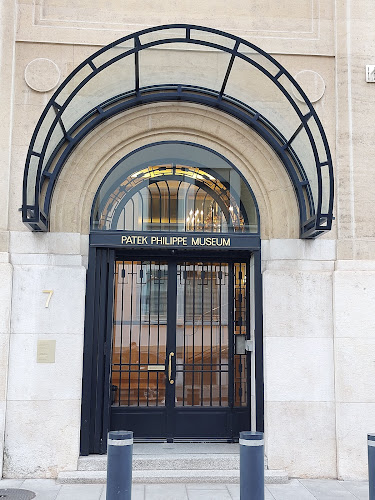
The Patek Philippe Museum in Geneva, Switzerland is a deep-dive into the art and craft of timekeeping, tracing watchmaking from the 16th century up through the modern masterpieces that define a name synonymous with horological excellence. Housed in a quietly elegant building, the museum displays the private collection of one of the world’s most revered manufacturers alongside historical timepieces, automata, enamel work and an archive that reads like a who’s-who of watchmaking. It is less a flashy showroom and more a quiet cabinet of curiosities for people who like gears, guilloché, and the odd bit of human obsession with measuring time.
On first approach, visitors note a restraint that is almost Patek-like: the rooms are curated with an eye for sequence and story rather than spectacle. The exhibits are arranged so that watchmaking history becomes a narrative: early portable clocks and 16th-century timepieces give context to the 18th- and 19th-century advances, which in turn show the mechanical feats that culminated in the modern complications and haute horlogerie for which Geneva and the Patek Philippe name are celebrated. The collection spans pocket watches, desk regulators, early automata and pocket-sized gems bedecked with enamel and miniature painting. There are pieces that are best appreciated close-up—so plan to move slowly, because even the most casual observer tends to linger.
What makes this museum stand out is not just the sheer quality of the objects but the way they are presented. The display cases emphasize craftsmanship: enamel work so fine one feels like putting on a loupe, dials with hand-painted scenes, and movements finished in a way that speaks to centuries of refinement. Many of the watches are historically significant creations, representing breakthroughs in complication, finishing, or aesthetic. The Stern family collection—key to the museum’s identity—brings together private and company histories with broader Swiss watchmaking milestones. For anyone curious about how a complicated minute repeater or perpetual calendar came to be, the Patek Philippe Museum is a place where theory becomes tangible.
Accessibility and visitor services are sensible rather than ostentatious. There is an audio guide to help orient newcomers and to add context without turning the visit into a lecture. The museum offers onsite services and basic amenities, including restrooms and a wheelchair accessible entrance and restroom, which is worth knowing if mobility is a concern. There is no full-service restaurant onsite, so plan meals accordingly, but families will find the museum fairly welcoming; exhibits include objects that can capture the imagination of younger visitors, especially the automata and intricately decorated timepieces.
Practicality crops up surprisingly often in the museum’s rhythm: many visitors spend an hour or two, but those with a real appetite for watchmaking—collectors, designers, or curious engineers—often linger much longer. The layout encourages layered visits; a quiet first pass, then a second, closer look at a handful of favorites. The museum’s library and archives may not be on full display, but their presence informs the curatorial choices: the story told here is researched, referenced and presented with respect for technical detail and historical nuance. For those who want to geek out over escapements, finishes, and historical provenance, this is an unusually generous public collection.
That said, the Patek Philippe Museum is not purely for specialists. Its appeal is broader: design lovers admire the enamel artistry and miniature paintings, history buffs appreciate the lineage of inventions, and travelers who enjoy small-museum intimacy find the experience rewarding. But a note of honesty—some visitors find it dense. The displays can be technical and the pacing deliberate. If a museum visit is usually measured in hurried photo-ops, the Patek Philippe Museum will likely slow that trend down. It rewards quiet attention and a willingness to read labels—and, yes, to stand a little closer to a case than many other museums encourage.
There are moments that create lasting impressions: an automaton that still performs its tiny mechanical theatre after centuries, a pocket watch dial with enamel so finely rendered that one could almost forget it is wearable, a movement whose hand-finished bridges and polished screws change the light in a way that feels almost theatrical. Small human stories appear in the margins: the maker who signed his trade with a tiny flourish, the family who treasured a single watch across generations, the patron who commissioned an enamel portrait to remember an ancestor. These human touches are what convert a room full of instruments into a narrative of human ingenuity.
For a traveler planning a Geneva itinerary, the museum functions as both destination and detour. It pairs surprisingly well with a walk through the districts that witnessed Geneva’s watchmaking ascent; the experience is enhanced when one considers the local culture that supported centuries of micro-craft. It’s an object lesson in how regional craft develops into an international reputation. Visitors who arrive with some curiosity but no prior knowledge will still leave with a sense of how Swiss watchmaking evolved, why techniques like enameling and automata mattered, and how brands like Patek Philippe contributed to the very idea of collectible, complicated timepieces.
There’s also a subtle lesson about value. Many people arrive thinking of luxury watches as status objects; many leave with a more nuanced appreciation for craftsmanship, patience, and incremental improvement. That shift happens quietly, through a display case rather than a sales pitch. The museum’s tone is educational rather than promotional; a well-maintained balance that makes the story credible.
Because the collection is strong and specific, repeat visits make sense. The first visit gives the arc: origins, breakthroughs, modern mastery. A return visit rewards curiosity—pay attention to the enamel techniques, or focus on the evolution of movement finishing, for example. For photographers and notebook-takers, the museum can feel like a treasure trove, but visitors should check the current policy on photography and flash; rules can vary depending on exhibitions and conservation needs.
Expect a variety of visitor experiences. Many come away impressed and inspired; others might find the content too specialized or the museum’s atmosphere a little austere. Crowds ebb and flow—peak seasons and weekends bring more people, which can make the intimate rooms feel, well, less intimate. Yet even with a modest crowd, the sense of reverence for the objects remains palpable. For someone who enjoys mechanical detail and design history, the Patek Philippe Museum offers one of the most concentrated looks at watchmaking art available in Geneva, if not in Europe.
Finally, this is a museum that pays attention to the small things. Expect careful lighting, clearly labeled exhibits, and an audio guide that helps bridge the gap between casual curiosity and deeper interest. Those who come prepared—basic knowledge of watch terms or an appetite for mechanical stories—will find themselves rewarded. But even those who arrive with no prior background can find pleasure simply in the visual richness: enamel miniatures, jeweled movements, and the subtle choreography of springs and gears. It’s a museum that asks for a little patience and gives back a lot in understanding and appreciation of time itself.
Key Features
More Details
Updated August 30, 2025
Table of Contents
Description
The Patek Philippe Museum in Geneva, Switzerland is a deep-dive into the art and craft of timekeeping, tracing watchmaking from the 16th century up through the modern masterpieces that define a name synonymous with horological excellence. Housed in a quietly elegant building, the museum displays the private collection of one of the world’s most revered manufacturers alongside historical timepieces, automata, enamel work and an archive that reads like a who’s-who of watchmaking. It is less a flashy showroom and more a quiet cabinet of curiosities for people who like gears, guilloché, and the odd bit of human obsession with measuring time.
On first approach, visitors note a restraint that is almost Patek-like: the rooms are curated with an eye for sequence and story rather than spectacle. The exhibits are arranged so that watchmaking history becomes a narrative: early portable clocks and 16th-century timepieces give context to the 18th- and 19th-century advances, which in turn show the mechanical feats that culminated in the modern complications and haute horlogerie for which Geneva and the Patek Philippe name are celebrated. The collection spans pocket watches, desk regulators, early automata and pocket-sized gems bedecked with enamel and miniature painting. There are pieces that are best appreciated close-up—so plan to move slowly, because even the most casual observer tends to linger.
What makes this museum stand out is not just the sheer quality of the objects but the way they are presented. The display cases emphasize craftsmanship: enamel work so fine one feels like putting on a loupe, dials with hand-painted scenes, and movements finished in a way that speaks to centuries of refinement. Many of the watches are historically significant creations, representing breakthroughs in complication, finishing, or aesthetic. The Stern family collection—key to the museum’s identity—brings together private and company histories with broader Swiss watchmaking milestones. For anyone curious about how a complicated minute repeater or perpetual calendar came to be, the Patek Philippe Museum is a place where theory becomes tangible.
Accessibility and visitor services are sensible rather than ostentatious. There is an audio guide to help orient newcomers and to add context without turning the visit into a lecture. The museum offers onsite services and basic amenities, including restrooms and a wheelchair accessible entrance and restroom, which is worth knowing if mobility is a concern. There is no full-service restaurant onsite, so plan meals accordingly, but families will find the museum fairly welcoming; exhibits include objects that can capture the imagination of younger visitors, especially the automata and intricately decorated timepieces.
Practicality crops up surprisingly often in the museum’s rhythm: many visitors spend an hour or two, but those with a real appetite for watchmaking—collectors, designers, or curious engineers—often linger much longer. The layout encourages layered visits; a quiet first pass, then a second, closer look at a handful of favorites. The museum’s library and archives may not be on full display, but their presence informs the curatorial choices: the story told here is researched, referenced and presented with respect for technical detail and historical nuance. For those who want to geek out over escapements, finishes, and historical provenance, this is an unusually generous public collection.
That said, the Patek Philippe Museum is not purely for specialists. Its appeal is broader: design lovers admire the enamel artistry and miniature paintings, history buffs appreciate the lineage of inventions, and travelers who enjoy small-museum intimacy find the experience rewarding. But a note of honesty—some visitors find it dense. The displays can be technical and the pacing deliberate. If a museum visit is usually measured in hurried photo-ops, the Patek Philippe Museum will likely slow that trend down. It rewards quiet attention and a willingness to read labels—and, yes, to stand a little closer to a case than many other museums encourage.
There are moments that create lasting impressions: an automaton that still performs its tiny mechanical theatre after centuries, a pocket watch dial with enamel so finely rendered that one could almost forget it is wearable, a movement whose hand-finished bridges and polished screws change the light in a way that feels almost theatrical. Small human stories appear in the margins: the maker who signed his trade with a tiny flourish, the family who treasured a single watch across generations, the patron who commissioned an enamel portrait to remember an ancestor. These human touches are what convert a room full of instruments into a narrative of human ingenuity.
For a traveler planning a Geneva itinerary, the museum functions as both destination and detour. It pairs surprisingly well with a walk through the districts that witnessed Geneva’s watchmaking ascent; the experience is enhanced when one considers the local culture that supported centuries of micro-craft. It’s an object lesson in how regional craft develops into an international reputation. Visitors who arrive with some curiosity but no prior knowledge will still leave with a sense of how Swiss watchmaking evolved, why techniques like enameling and automata mattered, and how brands like Patek Philippe contributed to the very idea of collectible, complicated timepieces.
There’s also a subtle lesson about value. Many people arrive thinking of luxury watches as status objects; many leave with a more nuanced appreciation for craftsmanship, patience, and incremental improvement. That shift happens quietly, through a display case rather than a sales pitch. The museum’s tone is educational rather than promotional; a well-maintained balance that makes the story credible.
Because the collection is strong and specific, repeat visits make sense. The first visit gives the arc: origins, breakthroughs, modern mastery. A return visit rewards curiosity—pay attention to the enamel techniques, or focus on the evolution of movement finishing, for example. For photographers and notebook-takers, the museum can feel like a treasure trove, but visitors should check the current policy on photography and flash; rules can vary depending on exhibitions and conservation needs.
Expect a variety of visitor experiences. Many come away impressed and inspired; others might find the content too specialized or the museum’s atmosphere a little austere. Crowds ebb and flow—peak seasons and weekends bring more people, which can make the intimate rooms feel, well, less intimate. Yet even with a modest crowd, the sense of reverence for the objects remains palpable. For someone who enjoys mechanical detail and design history, the Patek Philippe Museum offers one of the most concentrated looks at watchmaking art available in Geneva, if not in Europe.
Finally, this is a museum that pays attention to the small things. Expect careful lighting, clearly labeled exhibits, and an audio guide that helps bridge the gap between casual curiosity and deeper interest. Those who come prepared—basic knowledge of watch terms or an appetite for mechanical stories—will find themselves rewarded. But even those who arrive with no prior background can find pleasure simply in the visual richness: enamel miniatures, jeweled movements, and the subtle choreography of springs and gears. It’s a museum that asks for a little patience and gives back a lot in understanding and appreciation of time itself.

Key Highlights
Patek Philippe Museum
Location
Places to Stay Near Patek Philippe Museum
Find and Book a Tour
Explore More Travel Guides
No reviews found! Be the first to review!
Traveler Reviews for Patek Philippe Museum
There are no reviews yet. Be the first one to write one.
Have you visited Patek Philippe Museum? Help other travelers by sharing your review.
Find Accommodations Nearby
Recommended Tours & Activities
Visitor Reviews
There are no reviews yet. Be the first one to write one.
Share Your Experience
Have you visited Patek Philippe Museum? Help other travelers by leaving a review.