
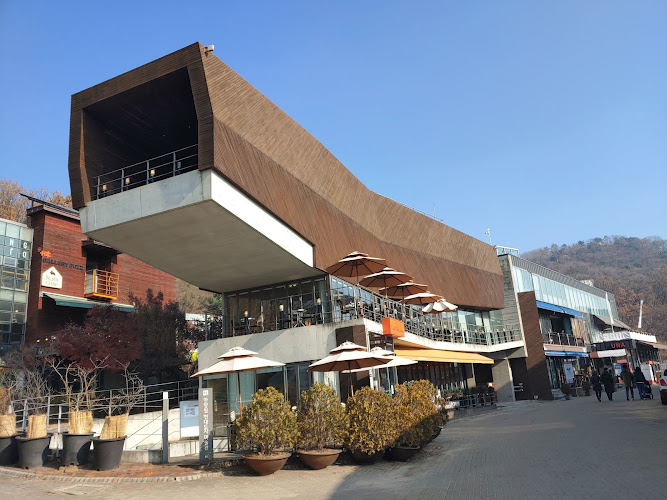
Paju Heyri Art Village
About Paju Heyri Art Village
Description
Paju Heyri Art Village is one of those places that quietly messes with your expectations. It’s not a museum you breeze through in an hour, and it’s not a theme park either. It’s a working artistic community, home to more than 380 artists—painters, sculptors, filmmakers, architects, potters, and a few creatives who don’t really fit a label and are proud of it. And yes, you feel that immediately when you walk around. This isn’t polished perfection. It’s creative life, happening in real time.
The village was built with intention. Artists actually live and work here, which sounds romantic, but also means you’ll stumble upon studios that feel deeply personal. One minute you’re admiring a concrete building that looks like it came straight out of a design magazine, and the next you’re peeking into a pottery studio where someone’s hands are covered in clay and they don’t even look up. I remember visiting on a cloudy afternoon and thinking, well, this could either be boring or brilliant. It turned out to be both in small ways, which made it feel honest.
Architecturally, Heyri is bold. Some buildings feel almost confrontational, like they’re daring you to understand them. Others are gentle, low, and quiet. The layout encourages wandering. You won’t find a single “main attraction” that everyone lines up for. Instead, you piece together your own experience—galleries, book cafes, performance halls, outdoor sculptures, and odd little corners that seem accidental but probably aren’t.
For travelers, especially those already exploring Paju or doing a day trip from Seoul, Heyri Art Village offers a slower pace. And slower can be good. But it’s also not a guaranteed love-at-first-sight place. Some visitors expect constant stimulation and leave a bit confused. Others, myself included, enjoy that confusion. It invites you to think, to linger, to maybe sit on a bench longer than planned.
The vibe changes depending on the day. Weekends can feel lively, with families, couples, and school groups drifting around. On weekdays, it’s quieter, almost meditative. You hear footsteps, wind, and occasionally music drifting from a performance space. And yes, there are cafes and small restaurants scattered around, which helps when your feet get tired and your brain feels full.
What stands out most is that Heyri doesn’t try too hard to please. It exists on its own terms. That’s refreshing in a world where many tourist attractions feel overly designed to sell you souvenirs. Here, art is the point, even when it’s awkward or challenging.
Key Features
- A community of over 380 working artists across multiple disciplines
- Striking modern architecture designed by Korean and international architects
- Art galleries, small museums, performance spaces, and private studios
- Outdoor sculptures integrated into walking paths and open spaces
- Independent bookstores, art-focused cafes, and design shops
- Family-friendly areas and creative spaces suitable for kids
- Wheelchair-accessible entrances, restrooms, and parking areas
- Onsite services and facilities that support long, unhurried visits
- A calm alternative to busier cultural attractions near Seoul
Best Time to Visit
The best time to visit Paju Heyri Art Village depends on what kind of experience you want. Spring and autumn are the obvious winners weather-wise. Mild temperatures make wandering around enjoyable, and the natural light during these seasons is honestly perfect for photography. I once visited in late October, leaves crunching underfoot, and the whole place felt like a moody art film set. Not bad at all.
Summer can be tricky. It gets hot, and while there are indoor spaces, the village is spread out. If you go in summer, aim for early morning or late afternoon. Winter, on the other hand, is quiet. Some galleries may close earlier, and the cold can feel sharp between buildings. But if you like empty spaces and a contemplative mood, winter has its own strange charm. Just dress well. Seriously.
Weekdays are ideal if you dislike crowds and want a more personal connection with the place. You’re more likely to have a quiet conversation with a gallery staff member or see an artist going about their day. Weekends bring energy and events, but also more noise and foot traffic. Neither is wrong. It’s more about what you’re in the mood for.
How to Get There
Getting to Paju Heyri Art Village is relatively straightforward, especially if you’re starting from Seoul. Many travelers opt for public transportation, combining subway and bus routes. It takes a bit of patience, sure, but it’s manageable. And honestly, that slight effort makes arriving feel more rewarding.
Taxis and ride-hailing services are also common, especially if you’re traveling with family or prefer convenience over cost. Driving is another option, with parking available on-site. If you’re already exploring other parts of Paju, having a car can make the day smoother, letting you hop between attractions without checking timetables every five minutes.
One small tip from experience: download an offline map or screenshot directions before you go. Cell service is generally fine, but having a backup saves you that mild panic moment when your phone freezes and you’re standing at a bus stop pretending you know what you’re doing.
Tips for Visiting
First, give yourself time. This is not a rush-through destination. Plan at least half a day, more if you enjoy galleries or slow walks. Wear comfortable shoes. I say this like a broken record, but the paths and distances add up quickly.
Second, manage expectations. Not every gallery will resonate with you. Some might feel closed off or too abstract. That’s okay. Skip what doesn’t click and move on. The beauty of Heyri Art Village is choice.
Third, bring curiosity. Read plaques. Step into spaces even if you’re unsure. Some of my favorite moments came from places I almost skipped. Like that tiny film archive I wandered into by accident and stayed way longer than planned.
If you’re visiting with kids, look for hands-on art spaces and outdoor areas. The village is generally good for children, but it’s still an art-focused environment, so balancing exploration with snack breaks helps. Speaking of snacks, cafes can get busy on weekends. Eating slightly earlier or later than peak hours saves time and frustration.
Accessibility is thoughtfully considered here, with wheelchair-accessible entrances, restrooms, and parking, which makes the village more inclusive than many similar attractions. Payment is easy, too—credit cards, debit cards, and mobile payments are widely accepted.
And finally, don’t over-plan. Let yourself get a little lost. Sit on a bench. Watch people. Art villages like Heyri reward openness more than strict schedules. You might leave with photos, or ideas, or just a quieter mind. And sometimes, that’s exactly what a trip should give you.
Key Features
- A community of over 380 working artists across multiple disciplines
- Striking modern architecture designed by Korean and international architects
- Art galleries, small museums, performance spaces, and private studios
- Outdoor sculptures integrated into walking paths and open spaces
- Independent bookstores, art-focused cafes, and design shops
- Family-friendly areas and creative spaces suitable for kids
- Wheelchair-accessible entrances, restrooms, and parking areas
- Onsite services and facilities that support long, unhurried visits
More Details
Updated January 1, 2026
Table of Contents
Description
Paju Heyri Art Village is one of those places that quietly messes with your expectations. It’s not a museum you breeze through in an hour, and it’s not a theme park either. It’s a working artistic community, home to more than 380 artists—painters, sculptors, filmmakers, architects, potters, and a few creatives who don’t really fit a label and are proud of it. And yes, you feel that immediately when you walk around. This isn’t polished perfection. It’s creative life, happening in real time.
The village was built with intention. Artists actually live and work here, which sounds romantic, but also means you’ll stumble upon studios that feel deeply personal. One minute you’re admiring a concrete building that looks like it came straight out of a design magazine, and the next you’re peeking into a pottery studio where someone’s hands are covered in clay and they don’t even look up. I remember visiting on a cloudy afternoon and thinking, well, this could either be boring or brilliant. It turned out to be both in small ways, which made it feel honest.
Architecturally, Heyri is bold. Some buildings feel almost confrontational, like they’re daring you to understand them. Others are gentle, low, and quiet. The layout encourages wandering. You won’t find a single “main attraction” that everyone lines up for. Instead, you piece together your own experience—galleries, book cafes, performance halls, outdoor sculptures, and odd little corners that seem accidental but probably aren’t.
For travelers, especially those already exploring Paju or doing a day trip from Seoul, Heyri Art Village offers a slower pace. And slower can be good. But it’s also not a guaranteed love-at-first-sight place. Some visitors expect constant stimulation and leave a bit confused. Others, myself included, enjoy that confusion. It invites you to think, to linger, to maybe sit on a bench longer than planned.
The vibe changes depending on the day. Weekends can feel lively, with families, couples, and school groups drifting around. On weekdays, it’s quieter, almost meditative. You hear footsteps, wind, and occasionally music drifting from a performance space. And yes, there are cafes and small restaurants scattered around, which helps when your feet get tired and your brain feels full.
What stands out most is that Heyri doesn’t try too hard to please. It exists on its own terms. That’s refreshing in a world where many tourist attractions feel overly designed to sell you souvenirs. Here, art is the point, even when it’s awkward or challenging.
Key Features
- A community of over 380 working artists across multiple disciplines
- Striking modern architecture designed by Korean and international architects
- Art galleries, small museums, performance spaces, and private studios
- Outdoor sculptures integrated into walking paths and open spaces
- Independent bookstores, art-focused cafes, and design shops
- Family-friendly areas and creative spaces suitable for kids
- Wheelchair-accessible entrances, restrooms, and parking areas
- Onsite services and facilities that support long, unhurried visits
- A calm alternative to busier cultural attractions near Seoul
Best Time to Visit
The best time to visit Paju Heyri Art Village depends on what kind of experience you want. Spring and autumn are the obvious winners weather-wise. Mild temperatures make wandering around enjoyable, and the natural light during these seasons is honestly perfect for photography. I once visited in late October, leaves crunching underfoot, and the whole place felt like a moody art film set. Not bad at all.
Summer can be tricky. It gets hot, and while there are indoor spaces, the village is spread out. If you go in summer, aim for early morning or late afternoon. Winter, on the other hand, is quiet. Some galleries may close earlier, and the cold can feel sharp between buildings. But if you like empty spaces and a contemplative mood, winter has its own strange charm. Just dress well. Seriously.
Weekdays are ideal if you dislike crowds and want a more personal connection with the place. You’re more likely to have a quiet conversation with a gallery staff member or see an artist going about their day. Weekends bring energy and events, but also more noise and foot traffic. Neither is wrong. It’s more about what you’re in the mood for.
How to Get There
Getting to Paju Heyri Art Village is relatively straightforward, especially if you’re starting from Seoul. Many travelers opt for public transportation, combining subway and bus routes. It takes a bit of patience, sure, but it’s manageable. And honestly, that slight effort makes arriving feel more rewarding.
Taxis and ride-hailing services are also common, especially if you’re traveling with family or prefer convenience over cost. Driving is another option, with parking available on-site. If you’re already exploring other parts of Paju, having a car can make the day smoother, letting you hop between attractions without checking timetables every five minutes.
One small tip from experience: download an offline map or screenshot directions before you go. Cell service is generally fine, but having a backup saves you that mild panic moment when your phone freezes and you’re standing at a bus stop pretending you know what you’re doing.
Tips for Visiting
First, give yourself time. This is not a rush-through destination. Plan at least half a day, more if you enjoy galleries or slow walks. Wear comfortable shoes. I say this like a broken record, but the paths and distances add up quickly.
Second, manage expectations. Not every gallery will resonate with you. Some might feel closed off or too abstract. That’s okay. Skip what doesn’t click and move on. The beauty of Heyri Art Village is choice.
Third, bring curiosity. Read plaques. Step into spaces even if you’re unsure. Some of my favorite moments came from places I almost skipped. Like that tiny film archive I wandered into by accident and stayed way longer than planned.
If you’re visiting with kids, look for hands-on art spaces and outdoor areas. The village is generally good for children, but it’s still an art-focused environment, so balancing exploration with snack breaks helps. Speaking of snacks, cafes can get busy on weekends. Eating slightly earlier or later than peak hours saves time and frustration.
Accessibility is thoughtfully considered here, with wheelchair-accessible entrances, restrooms, and parking, which makes the village more inclusive than many similar attractions. Payment is easy, too—credit cards, debit cards, and mobile payments are widely accepted.
And finally, don’t over-plan. Let yourself get a little lost. Sit on a bench. Watch people. Art villages like Heyri reward openness more than strict schedules. You might leave with photos, or ideas, or just a quieter mind. And sometimes, that’s exactly what a trip should give you.
Key Highlights
- A community of over 380 working artists across multiple disciplines
- Striking modern architecture designed by Korean and international architects
- Art galleries, small museums, performance spaces, and private studios
- Outdoor sculptures integrated into walking paths and open spaces
- Independent bookstores, art-focused cafes, and design shops
- Family-friendly areas and creative spaces suitable for kids
- Wheelchair-accessible entrances, restrooms, and parking areas
- Onsite services and facilities that support long, unhurried visits
Location
Places to Stay Near Paju Heyri Art Village
Find and Book a Tour
Explore More Travel Guides
No reviews found! Be the first to review!
Traveler Reviews for Paju Heyri Art Village
There are no reviews yet. Be the first one to write one.
Have you visited Paju Heyri Art Village? Help other travelers by sharing your review.
You Might Also Like
89 Samneung-ro, Jori-eup
Soulone Botanical garden
1652 Beopheung-ri, Tanhyeon-myeon
Find Accommodations Nearby
Recommended Tours & Activities
Visitor Reviews
There are no reviews yet. Be the first one to write one.
Share Your Experience
Have you visited Paju Heyri Art Village? Help other travelers by leaving a review.