
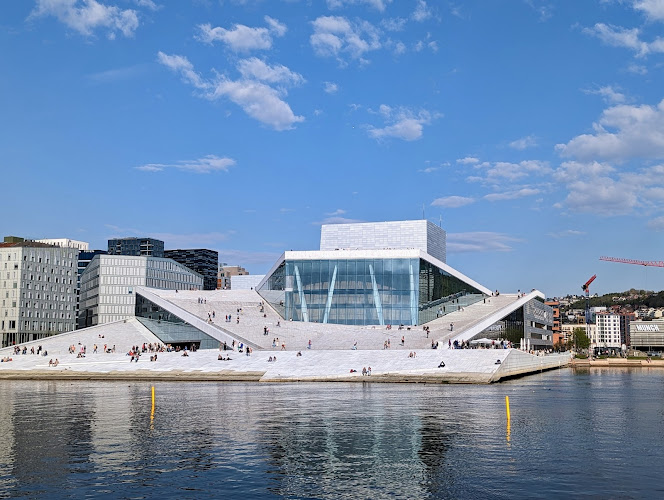
Oslo Opera House
About Oslo Opera House
Description
The Oslo Opera House stands like a shimmering iceberg at the edge of the Oslofjord, its marble roof sloping gently into the water as if inviting you to walk right up and become part of the landscape. Designed by the Norwegian architectural firm Snøhetta, this modern masterpiece isn’t just a place for opera lovers—it’s a space that blurs the line between art, architecture, and everyday life. Locals often wander across its roof on sunny days, sipping coffee while taking in the panoramic views of the city and fjord. And honestly, there’s something oddly calming about the way the building seems to rise out of the sea, all clean lines and pale stone, like a frozen wave caught mid-motion.
Inside, the atmosphere shifts dramatically. The white, angular exterior gives way to warm oak interiors that wrap around the main hall like a giant wooden shell. The acoustics are superb—some say you can hear a pin drop from the back row—and the performances range from grand opera to contemporary dance. Even if you’re not into opera (I wasn’t, at first), there’s something magnetic about the energy here. You can feel the creative pulse of Oslo in every corner, from the bustling foyer to the quiet rehearsal studios tucked behind the scenes.
What makes the Oslo Opera House truly special, though, is how accessible it feels. It’s not one of those intimidating cultural landmarks where you feel underdressed if you’re not in evening wear. People come in sneakers, families bring their kids, and tourists wander in just to snap photos or grab a drink at the bar. It’s a living, breathing part of the city—modern Norway in architectural form.
Key Features
- Architectural Design: Created by Snøhetta, the building’s sloping roof allows visitors to walk up and enjoy 360-degree views of Oslo and the fjord.
- Performances: Home to the Norwegian National Opera and Ballet, the venue hosts a mix of classical and modern productions throughout the year.
- Accessibility: Fully accessible with wheelchair-friendly entrances, restrooms, and parking areas.
- Amenities: Includes an onsite bar, restaurant, and restrooms, making it easy to spend an entire evening here.
- Family Friendly: Good for kids, with changing tables available and plenty of open space to explore.
- Payment Options: Accepts credit cards, debit cards, and mobile payments.
- Public Space: The roof and surrounding plaza are open to the public—no ticket required.
What I love most about this place is how it transforms depending on the time of day. In the morning, joggers and photographers claim the roof. By afternoon, it’s filled with families and travelers soaking up the sun. And when night falls, the glass façade glows like a lantern, reflecting off the water—it’s pure magic. You don’t even have to go inside to feel part of the experience.
Best Time to Visit
If you’re planning a trip, spring and early summer are ideal. The days are long, the air is crisp, and the light over the fjord is unbelievable—like someone turned the saturation up just enough to make everything look cinematic. I once visited in late May, and the reflection of the sunset on the marble roof was so bright I had to squint. But that’s part of the charm—it’s raw, natural beauty interacting with human design.
Winter has its own appeal too. The snow adds another layer to the building’s icy aesthetic, and stepping inside from the cold to the warmth of the oak interior feels almost poetic. The performances during the winter season are particularly memorable, especially around Christmas when the opera house hosts festive concerts. Just be sure to bundle up—the wind off the fjord can be biting.
For photographers, golden hour is unbeatable. The way the light hits the marble creates this soft, glowing effect that makes every shot look like a postcard. And if you’re lucky, you might catch a performance rehearsal echoing faintly from within, adding an unexpected soundtrack to your visit.
How to Get There
Reaching the Oslo Opera House is straightforward, and that’s part of what makes it so appealing to travelers. It’s located right in central Oslo, within walking distance from the main train station. If you’re arriving by train, just head toward the waterfront—you can’t miss the angular white structure rising from the fjord. I remember the first time I saw it; I thought it looked like a glacier had drifted into the city and decided to stay.
Public transportation in Oslo is efficient and easy to navigate. Trams, buses, and even ferries connect to the area, and there’s paid parking nearby if you’re driving. That said, walking or biking is the best way to experience the surrounding Bjørvika neighborhood, which has evolved into a hub of modern architecture, art installations, and cozy cafes. You’ll probably end up stopping for a coffee or two before even reaching the opera house—it’s that kind of place.
For those coming straight from the airport, the Airport Express Train (Flytoget) gets you to the city center in about 20 minutes. From there, it’s just a short stroll to the water’s edge. And honestly, that short walk might be one of the most scenic introductions to Oslo you could ask for.
Tips for Visiting
Here’s the thing about the Oslo Opera House—it’s easy to underestimate how much time you’ll want to spend there. What starts as a quick photo stop often turns into hours of wandering, people-watching, and admiring the interplay of light and architecture. So, plan accordingly.
- Walk the Roof: Don’t skip it. The slope is gentle enough for most people, and the view from the top is incredible. Just watch your step if it’s wet or icy—it can get slippery.
- Catch a Performance: Even if you’re not an opera enthusiast, the experience is worth it. The acoustics alone are reason enough to go. And if you’re lucky, you might score last-minute tickets at the box office.
- Book Ahead: For major productions, tickets sell out quickly—especially on weekends. It’s worth checking the schedule in advance.
- Grab a Drink or Meal: The onsite bar and restaurant serve excellent local fare. I once tried a reindeer dish there that completely changed my opinion of game meat.
- Dress Comfortably: There’s no strict dress code, so don’t stress about formalwear unless you’re attending a gala night. Locals often show up in casual attire.
- Bring a Camera: The reflections, the textures, the skyline—it’s a photographer’s dream. Even smartphone shots turn out beautifully here.
- Visit at Different Times: The mood of the place changes dramatically throughout the day. Morning light, afternoon bustle, evening glow—all worth experiencing.
One thing I learned the hard way: the marble can be blindingly bright under the midday sun. Sunglasses are a must. And if you’re traveling with kids, they’ll love running around the open plaza and exploring the gentle slopes of the roof—it’s like a giant playground made of stone. Just keep an eye on them near the edges.
For those who appreciate architecture, take a moment to notice the details. The way the marble panels are arranged, the subtle shifts in texture, the way the building interacts with the water—it’s all deliberate. Snøhetta designed it to feel both monumental and approachable, and somehow, it works. You can sense that balance between strength and softness, tradition and innovation.
In the end, visiting the Oslo Opera House isn’t just about seeing a building or watching a show. It’s about experiencing how design can shape emotion. It’s about standing on a rooftop, wind in your hair, staring out over the fjord and realizing that art doesn’t always need to be confined to a stage—it can be the stage itself. And that’s what makes this place unforgettable.
Key Features
- Key Features
- Best Time to Visit
- How to Get There
- Tips for Visiting
More Details
Updated October 8, 2025
Table of Contents
Description
The Oslo Opera House stands like a shimmering iceberg at the edge of the Oslofjord, its marble roof sloping gently into the water as if inviting you to walk right up and become part of the landscape. Designed by the Norwegian architectural firm Snøhetta, this modern masterpiece isn’t just a place for opera lovers—it’s a space that blurs the line between art, architecture, and everyday life. Locals often wander across its roof on sunny days, sipping coffee while taking in the panoramic views of the city and fjord. And honestly, there’s something oddly calming about the way the building seems to rise out of the sea, all clean lines and pale stone, like a frozen wave caught mid-motion.
Inside, the atmosphere shifts dramatically. The white, angular exterior gives way to warm oak interiors that wrap around the main hall like a giant wooden shell. The acoustics are superb—some say you can hear a pin drop from the back row—and the performances range from grand opera to contemporary dance. Even if you’re not into opera (I wasn’t, at first), there’s something magnetic about the energy here. You can feel the creative pulse of Oslo in every corner, from the bustling foyer to the quiet rehearsal studios tucked behind the scenes.
What makes the Oslo Opera House truly special, though, is how accessible it feels. It’s not one of those intimidating cultural landmarks where you feel underdressed if you’re not in evening wear. People come in sneakers, families bring their kids, and tourists wander in just to snap photos or grab a drink at the bar. It’s a living, breathing part of the city—modern Norway in architectural form.
Key Features
- Architectural Design: Created by Snøhetta, the building’s sloping roof allows visitors to walk up and enjoy 360-degree views of Oslo and the fjord.
- Performances: Home to the Norwegian National Opera and Ballet, the venue hosts a mix of classical and modern productions throughout the year.
- Accessibility: Fully accessible with wheelchair-friendly entrances, restrooms, and parking areas.
- Amenities: Includes an onsite bar, restaurant, and restrooms, making it easy to spend an entire evening here.
- Family Friendly: Good for kids, with changing tables available and plenty of open space to explore.
- Payment Options: Accepts credit cards, debit cards, and mobile payments.
- Public Space: The roof and surrounding plaza are open to the public—no ticket required.
What I love most about this place is how it transforms depending on the time of day. In the morning, joggers and photographers claim the roof. By afternoon, it’s filled with families and travelers soaking up the sun. And when night falls, the glass façade glows like a lantern, reflecting off the water—it’s pure magic. You don’t even have to go inside to feel part of the experience.
Best Time to Visit
If you’re planning a trip, spring and early summer are ideal. The days are long, the air is crisp, and the light over the fjord is unbelievable—like someone turned the saturation up just enough to make everything look cinematic. I once visited in late May, and the reflection of the sunset on the marble roof was so bright I had to squint. But that’s part of the charm—it’s raw, natural beauty interacting with human design.
Winter has its own appeal too. The snow adds another layer to the building’s icy aesthetic, and stepping inside from the cold to the warmth of the oak interior feels almost poetic. The performances during the winter season are particularly memorable, especially around Christmas when the opera house hosts festive concerts. Just be sure to bundle up—the wind off the fjord can be biting.
For photographers, golden hour is unbeatable. The way the light hits the marble creates this soft, glowing effect that makes every shot look like a postcard. And if you’re lucky, you might catch a performance rehearsal echoing faintly from within, adding an unexpected soundtrack to your visit.
How to Get There
Reaching the Oslo Opera House is straightforward, and that’s part of what makes it so appealing to travelers. It’s located right in central Oslo, within walking distance from the main train station. If you’re arriving by train, just head toward the waterfront—you can’t miss the angular white structure rising from the fjord. I remember the first time I saw it; I thought it looked like a glacier had drifted into the city and decided to stay.
Public transportation in Oslo is efficient and easy to navigate. Trams, buses, and even ferries connect to the area, and there’s paid parking nearby if you’re driving. That said, walking or biking is the best way to experience the surrounding Bjørvika neighborhood, which has evolved into a hub of modern architecture, art installations, and cozy cafes. You’ll probably end up stopping for a coffee or two before even reaching the opera house—it’s that kind of place.
For those coming straight from the airport, the Airport Express Train (Flytoget) gets you to the city center in about 20 minutes. From there, it’s just a short stroll to the water’s edge. And honestly, that short walk might be one of the most scenic introductions to Oslo you could ask for.
Tips for Visiting
Here’s the thing about the Oslo Opera House—it’s easy to underestimate how much time you’ll want to spend there. What starts as a quick photo stop often turns into hours of wandering, people-watching, and admiring the interplay of light and architecture. So, plan accordingly.
- Walk the Roof: Don’t skip it. The slope is gentle enough for most people, and the view from the top is incredible. Just watch your step if it’s wet or icy—it can get slippery.
- Catch a Performance: Even if you’re not an opera enthusiast, the experience is worth it. The acoustics alone are reason enough to go. And if you’re lucky, you might score last-minute tickets at the box office.
- Book Ahead: For major productions, tickets sell out quickly—especially on weekends. It’s worth checking the schedule in advance.
- Grab a Drink or Meal: The onsite bar and restaurant serve excellent local fare. I once tried a reindeer dish there that completely changed my opinion of game meat.
- Dress Comfortably: There’s no strict dress code, so don’t stress about formalwear unless you’re attending a gala night. Locals often show up in casual attire.
- Bring a Camera: The reflections, the textures, the skyline—it’s a photographer’s dream. Even smartphone shots turn out beautifully here.
- Visit at Different Times: The mood of the place changes dramatically throughout the day. Morning light, afternoon bustle, evening glow—all worth experiencing.
One thing I learned the hard way: the marble can be blindingly bright under the midday sun. Sunglasses are a must. And if you’re traveling with kids, they’ll love running around the open plaza and exploring the gentle slopes of the roof—it’s like a giant playground made of stone. Just keep an eye on them near the edges.
For those who appreciate architecture, take a moment to notice the details. The way the marble panels are arranged, the subtle shifts in texture, the way the building interacts with the water—it’s all deliberate. Snøhetta designed it to feel both monumental and approachable, and somehow, it works. You can sense that balance between strength and softness, tradition and innovation.
In the end, visiting the Oslo Opera House isn’t just about seeing a building or watching a show. It’s about experiencing how design can shape emotion. It’s about standing on a rooftop, wind in your hair, staring out over the fjord and realizing that art doesn’t always need to be confined to a stage—it can be the stage itself. And that’s what makes this place unforgettable.
Key Highlights
- Key Features
- Best Time to Visit
- How to Get There
- Tips for Visiting
Location
Places to Stay Near Oslo Opera House
Find and Book a Tour
Explore More Travel Guides
No reviews found! Be the first to review!
Traveler Reviews for Oslo Opera House
There are no reviews yet. Be the first one to write one.
Have you visited Oslo Opera House? Help other travelers by sharing your review.
You Might Also Like

The Norwegian Museum of Cultural History

Norwegian Museum of Science and Technology

Norway's Home Front Museum
Find Accommodations Nearby
Recommended Tours & Activities
Visitor Reviews
There are no reviews yet. Be the first one to write one.
Share Your Experience
Have you visited Oslo Opera House? Help other travelers by leaving a review.