
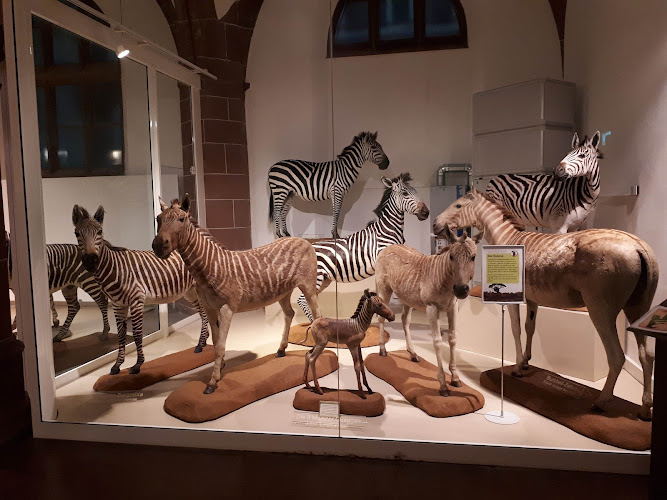
Natural History Museum Mainz
About Natural History Museum Mainz
Description
The Natural History Museum Mainz presents itself as a surprising mix of calm, curiosity and occasional chaos — the kind of place that makes people slow their pace and peer twice. A striking glass tower marks the building from the street, a modern throat of light that fronts a sprawling collection of animals, fossils and vivid displays of natural phenomena. From the outside the architecture promises clarity; inside the museum keeps its promises and then some, with cabinets full of specimens that chart life in the Rhineland-Palatinate and beyond.
Visitors will find an extensive collection that ranges from local river finds to more exotic skeletons and mineral specimens. There are taxidermied mammals arranged in lifelike poses, carefully prepared bird displays that still make shoulders lift, and fossil cases where ancient seas whisper through polished ammonites and ancient bones. But the museum does not rely only on static displays. It layers scientific context, regional natural history, and — refreshingly — tactile moments where kids and adults can touch, measure, and sometimes piece together a story for themselves.
What sets this museum apart from many municipal natural history venues is that glass tower. It allows daylight to flood key exhibition spaces, lending the collections a different feel depending on the hour and the weather. Bright mornings turn the fossil cases into little theaters of shadow and texture; overcast afternoons soften the colors and invite a slower, more reflective visit. The tower also gives a small, unexpected perk: a sense of orientation. When the crowd gets thick, one can find a quiet balcony to regroup and plan the next gallery to explore.
The Natural History Museum Mainz places particular emphasis on the region — not as a museum-of-only-local-interest but as a way to connect big-picture earth history to the Rhine valley and Mainz city life. There are displays devoted to river ecology, the geology beneath the city, and specimens recovered from nearby sites. That local thread is satisfying for first-time tourists who want to understand how Mainz fits into broader environmental and geological stories. It helps the museum feel relevant instead of merely encyclopedic.
Practical things: the building is set up with accessibility in mind. Wheelchair-accessible entrances, parking, and restrooms are in place, which matters more than people often admit. Restrooms are available on site, but there is no full-service restaurant, so plan snack breaks accordingly. Benches and seating spots are sprinkled throughout the galleries, though on busy weekends those spaces can fill up. Staff are generally helpful and used to family groups and school visits, making the museum reliably family-friendly and welcoming to diverse visitors.
And yes, children take to it. Many exhibits were clearly designed while someone was thinking about how to keep small people engaged: short, punchy labels; hands-on boxes; puzzle stations; and the occasional model to climb around. Families will often spend the most time in the interactive zones, where a restless child can become a mini-paleontologist in ten minutes flat. The museum is also explicitly welcoming toward LGBTQ+ visitors and provides a comfortable atmosphere for transgender guests, which many regulars appreciate even if it’s not always shouted from the rooftops.
For travellers, the Natural History Museum Mainz is an efficient stop that rewards curiosity. It is large enough to absorb an hour or three, depending on how deep a visitor wants to dig, and compact enough to pair with other Mainz attractions in a single day. The exhibits are organized to let a casual passerby get a snapshot of natural history and let a more dedicated naturalist linger over cabinets of bones, minerals and fossils. There are rotating temporary exhibitions too, so repeat visits can feel fresh when a new theme arrives.
There are, naturally, a few caveats. The absence of a restaurant means longer visits require planning; bringing a water bottle and a small snack is a wise move. And while many of the explanatory panels are informative, some visitors have wanted more multilingual material or audio options — a fair wish in a city that draws international tourists. The museum does offer guided activities and educational programming, though times and availability may vary, so check for announcements on the day of the visit if those matter to you.
Little-known details that seasoned visitors tend to treasure: look for the regional geology sections (they're quietly rich and often overlooked), and allow time for the fossil cabinets — they reward patient inspection. The mineral collection catches light in subtle ways that make photography worthwhile if one has the patience to angle shots without reflecting the glass. Also, museum staff occasionally display newly prepared specimens or conservation work in progress; catching one of those demo moments feels slightly like being let behind the curtains of science, which is always a thrill.
On a personal note — well, the author prefers to keep to third person, yet cannot resist saying that a midweek morning visit once revealed the museum at its best: only a handful of school groups, quiet footsteps, natural light slanting through the tower and a small child exclaiming at the size of a mammoth molar. That memory sticks because the museum has these pockets of intimacy amongst its cabinets of knowledge. It’s not a showy blockbuster institution, but it is thoughtful, grounded and often unexpectedly moving.
In short, the Natural History Museum Mainz works as a dependable stop for travelers who love animals, fossils and the geological backstory of a city. It blends regional focus with broader natural history, offers practical accessibility, and delivers a hands-on feel that families and curious adults appreciate. Plan a little time, bring water, and keep an eye out for those quieter corners where the museum quietly reveals its best stories.
Key Features
More Details
Updated August 30, 2025
Table of Contents
Description
The Natural History Museum Mainz presents itself as a surprising mix of calm, curiosity and occasional chaos — the kind of place that makes people slow their pace and peer twice. A striking glass tower marks the building from the street, a modern throat of light that fronts a sprawling collection of animals, fossils and vivid displays of natural phenomena. From the outside the architecture promises clarity; inside the museum keeps its promises and then some, with cabinets full of specimens that chart life in the Rhineland-Palatinate and beyond.
Visitors will find an extensive collection that ranges from local river finds to more exotic skeletons and mineral specimens. There are taxidermied mammals arranged in lifelike poses, carefully prepared bird displays that still make shoulders lift, and fossil cases where ancient seas whisper through polished ammonites and ancient bones. But the museum does not rely only on static displays. It layers scientific context, regional natural history, and — refreshingly — tactile moments where kids and adults can touch, measure, and sometimes piece together a story for themselves.
What sets this museum apart from many municipal natural history venues is that glass tower. It allows daylight to flood key exhibition spaces, lending the collections a different feel depending on the hour and the weather. Bright mornings turn the fossil cases into little theaters of shadow and texture; overcast afternoons soften the colors and invite a slower, more reflective visit. The tower also gives a small, unexpected perk: a sense of orientation. When the crowd gets thick, one can find a quiet balcony to regroup and plan the next gallery to explore.
The Natural History Museum Mainz places particular emphasis on the region — not as a museum-of-only-local-interest but as a way to connect big-picture earth history to the Rhine valley and Mainz city life. There are displays devoted to river ecology, the geology beneath the city, and specimens recovered from nearby sites. That local thread is satisfying for first-time tourists who want to understand how Mainz fits into broader environmental and geological stories. It helps the museum feel relevant instead of merely encyclopedic.
Practical things: the building is set up with accessibility in mind. Wheelchair-accessible entrances, parking, and restrooms are in place, which matters more than people often admit. Restrooms are available on site, but there is no full-service restaurant, so plan snack breaks accordingly. Benches and seating spots are sprinkled throughout the galleries, though on busy weekends those spaces can fill up. Staff are generally helpful and used to family groups and school visits, making the museum reliably family-friendly and welcoming to diverse visitors.
And yes, children take to it. Many exhibits were clearly designed while someone was thinking about how to keep small people engaged: short, punchy labels; hands-on boxes; puzzle stations; and the occasional model to climb around. Families will often spend the most time in the interactive zones, where a restless child can become a mini-paleontologist in ten minutes flat. The museum is also explicitly welcoming toward LGBTQ+ visitors and provides a comfortable atmosphere for transgender guests, which many regulars appreciate even if it’s not always shouted from the rooftops.
For travellers, the Natural History Museum Mainz is an efficient stop that rewards curiosity. It is large enough to absorb an hour or three, depending on how deep a visitor wants to dig, and compact enough to pair with other Mainz attractions in a single day. The exhibits are organized to let a casual passerby get a snapshot of natural history and let a more dedicated naturalist linger over cabinets of bones, minerals and fossils. There are rotating temporary exhibitions too, so repeat visits can feel fresh when a new theme arrives.
There are, naturally, a few caveats. The absence of a restaurant means longer visits require planning; bringing a water bottle and a small snack is a wise move. And while many of the explanatory panels are informative, some visitors have wanted more multilingual material or audio options — a fair wish in a city that draws international tourists. The museum does offer guided activities and educational programming, though times and availability may vary, so check for announcements on the day of the visit if those matter to you.
Little-known details that seasoned visitors tend to treasure: look for the regional geology sections (they’re quietly rich and often overlooked), and allow time for the fossil cabinets — they reward patient inspection. The mineral collection catches light in subtle ways that make photography worthwhile if one has the patience to angle shots without reflecting the glass. Also, museum staff occasionally display newly prepared specimens or conservation work in progress; catching one of those demo moments feels slightly like being let behind the curtains of science, which is always a thrill.
On a personal note — well, the author prefers to keep to third person, yet cannot resist saying that a midweek morning visit once revealed the museum at its best: only a handful of school groups, quiet footsteps, natural light slanting through the tower and a small child exclaiming at the size of a mammoth molar. That memory sticks because the museum has these pockets of intimacy amongst its cabinets of knowledge. It’s not a showy blockbuster institution, but it is thoughtful, grounded and often unexpectedly moving.
In short, the Natural History Museum Mainz works as a dependable stop for travelers who love animals, fossils and the geological backstory of a city. It blends regional focus with broader natural history, offers practical accessibility, and delivers a hands-on feel that families and curious adults appreciate. Plan a little time, bring water, and keep an eye out for those quieter corners where the museum quietly reveals its best stories.
Key Highlights
Natural History Museum Mainz
Location
Places to Stay Near Natural History Museum Mainz
Find and Book a Tour
Explore More Travel Guides
No reviews found! Be the first to review!
Traveler Reviews for Natural History Museum Mainz
There are no reviews yet. Be the first one to write one.
Have you visited Natural History Museum Mainz? Help other travelers by sharing your review.
You Might Also Like
Mainzer Fastnachtsmuseum
Landesmuseum Mainz
Johannes Gutenberg University Mainz Botanical Garden
Find Accommodations Nearby
Recommended Tours & Activities
Visitor Reviews
There are no reviews yet. Be the first one to write one.
Share Your Experience
Have you visited Natural History Museum Mainz? Help other travelers by leaving a review.