
Johannes Gutenberg University Mainz Botanical Garden
About Johannes Gutenberg University Mainz Botanical Garden
Key Features
More Details
Updated June 11, 2025
HAAS ARCHITEKTEN: Botanischer Garten Mainz
## Visiting the Johannes Gutenberg University Mainz Botanic Garden in Mainz: what to see, how to get there, and what makes it different
If you like botanical gardens that feel “alive” in the scientific sense (labeled collections, ongoing research, conservation projects), the Botanic Garden on the campus of Johannes Gutenberg University Mainz is worth planning into a Mainz day. It’s designed as an educational and scientific garden, and the university explicitly frames it around research, teaching, and public learning—not just leisure strolling.
Below is a practical, publish-ready guide you can use as-is—based only on verifiable sources.
—
## Quick facts for planning
### Location + contact
The garden is on the university campus at:
– Address: Anselm-Franz-von-Bentzel-Weg 9 b, 55128 Mainz, Germany
– Phone: +49 6131-39 22251
– Email: [email protected]
### Official opening times (important nuance: outdoor grounds vs. greenhouses)
The garden publishes separate hours for outdoor grounds and the greenhouse area:
– Outdoor grounds: 7:30 am–6:00 pm daily
– Greenhouses: Saturday–Thursday 7:30 am–3:30 pm; Friday 7:30 am–1:00 pm
Why this matters: visitors often assume greenhouse access matches the outdoor grounds—here it doesn’t. If you care most about tropical/subtropical collections, plan earlier in the day.
### Getting there by bus from Mainz Hauptbahnhof
The garden’s own directions call out two useful lines from the main station:
– Line 57 (direction “Bretzenheim”) → stop “Botanischer Garten”
– Line 9 (direction “Jakob-Heinz-Straße / Arena”) → stop “Colonel-Kleinmann-Weg”
—
## What makes this botanical garden different
Many city botanical gardens lead with aesthetics; this one leads with mission.
### It’s explicitly positioned as a research + teaching collection
The university describes the garden as an “educational and scientific garden” with broad horticultural variety (including mosses, ferns, and seed plants), and ties its work to research and preservation of biodiversity.
### It’s plugged into national + global botanic-garden networks
The garden states it is active within the German Association of Botanic Gardens and part of the global network Botanic Gardens Conservation International (BGCI).
That usually signals a higher emphasis on documented provenance, conservation standards, and collection management than “display-first” gardens.
### It operates a formal seed list program (Index Seminum) and has done so for decades
The garden notes it has offered a Seed List (Index Seminum) since 1950, distributed to around 400 botanic gardens worldwide, with seeds supplied for non-commercial purposes aligned to biodiversity conventions.
For visitors, that’s a clue you’re walking through a living library that’s actively exchanged and curated, not a static park.
—
## What to prioritize once you’re inside
### 1) Greenhouses: tropical plants + “useful plants” angle
The garden highlights greenhouse focus on tropical plant diversity and relationships, and also mentions tropical/subtropical agricultural crops (a practical, human-history layer many gardens underplay).
Pro tip: go greenhouse-first if you arrive late morning or afternoon—those hours cut off earlier than the outdoor grounds.
### 2) Outdoor collections tuned to local climate
The garden emphasizes that Mainz’s mild, relatively dry, wine-growing-region climate allows some warmth-loving plants to be grown outdoors year-round.
That’s worth calling out in your article because it can shape expectations: you may see outdoor plantings you’d normally expect behind glass in cooler/wetter regions.
### 3) Special collections and highlights (as stated by the garden)
The garden itself calls out several collection “high points,” including:
– Families of flowering plants
– Trees and shrubs of the temperate zone of the Northern Hemisphere
– Temperate plants from Mediterranean climate zones and the Southern Hemisphere
– Tropical and subtropical agricultural crops
– A developing “Plants of the Orient” themed collection
– A major research collection of Salvia (sage), described as “one of Europe’s largest”
If you’re writing for engaged readers (not just casual visitors), these specifics add substance and help people decide if it matches their interests.
—
## Use the Garden Explorer to make your visit less random
The garden’s “Garden Explorer” tool is positioned as a way to explore the full living collection: search by common/scientific name, query by location in the garden, use the map, and follow thematic tours.
How to use this in your article (practically):
– Suggest readers pick one plant group they care about (e.g., sages, Mediterranean plants, tropical crops), then use the Explorer to route themselves.
– This works especially well for repeat visitors: you can turn a “walk” into a focused mini-field trip.
—
## Guided tours and events: what’s confirmed
A university accessibility page (last updated 2020) describes public guided tours as typically led by staff, institute members, friends-of-the-garden members, or advanced students; tours run about 90 minutes, no appointment necessary, and cost €3 per adult, free for children and members of the “Freundeskreis.” Gutenberg University Mainz
Outdated-data flag: that page is dated (2020). Use it as a baseline, but advise readers to verify current tour schedules on the garden’s current events/program pages before planning around a specific tour. Gutenberg University Mainz
—
## Accessibility and inclusive visiting notes (wheelchair, toilets, surfaces)
If you publish travel content seriously, accessibility details shouldn’t be an afterthought—and here we have unusually specific information.
### Wheelchair access (what’s explicitly stated)
The accessibility page notes:
– Several greenhouses are not accessible by wheelchair (specifically listed as 8, 10, 20, 21). Gutenberg University Mainz
– Other greenhouse paths are described as bark mulch/pebbles/earth/pavement that are “well condensed,” and entrances are at ground level with space to maneuver. Gutenberg University Mainz
Outdated-data flag: again, that page is from 2020, so treat greenhouse numbering and surface conditions as potentially changed; the overall principle (mixed surfaces + some inaccessible houses) is still helpful. Gutenberg University Mainz
### Accessible toilet (very specific, very useful)
The same source states:
– There is no sign indicating the accessible toilet location.
– It is in the northern part of the gardens beside the “Grüne Schule,” in a small toilet building.
– It requires a EURO-key to enter. Gutenberg University Mainz
That EURO-key detail is exactly the kind of practical note that prevents bad surprises for travelers.
—
## A smart way to structure your visit (45–120 minutes)
### If you have ~45 minutes
– Head to the greenhouses first (limited hours).
– Do a short loop of the most labeled/curated outdoor beds afterward.
### If you have 90 minutes
– Use the Garden Explorer to pick a theme (tropical crops, Mediterranean climate plants, sages).
– Greenhouses → themed outdoor section → exit via main paths so you don’t miss signage.
### If you have 2 hours+
– Add an educational layer: look for posted program/event info and align your timing with a public tour if one is running that day.
—
## Two contextual internal links (editorial-ready, no guessing)
Because I can’t verify what pages exist on RealJourneyTravels.com, here are two safe, contextual internal-link placements you can connect to pages that you already have (or plan to create):
– Link opportunity #1 (in your “Getting there” section): Mainz travel guide / best things to do in Mainz (anchor text: “more things to do in Mainz”).
– Link opportunity #2 (in your “Greenhouses + collections” section): Germany botanical gardens / gardens in Rhineland-Palatinate (anchor text: “more botanical gardens in Germany”).
—
## Source notes and accuracy checks (what I did not claim)
– I did not state a general admission price for the garden itself, because the official pages surfaced here emphasize hours/directions and mission but don’t clearly publish a universal entry fee in the snippets we can verify.
– The €3 figure used above is tied specifically to public guided tours per the university accessibility page. Gutenberg University Mainz
If you want, I can tighten this into a Gutenberg-block-friendly layout (intro, FAQ block, “How to get there,” “Accessibility,” etc.) while keeping every claim sourced.
Table of Contents
Key Highlights
Johannes Gutenberg University Mainz Botanical Garden
Location
Places to Stay Near Johannes Gutenberg University Mainz Botanical Garden
Find and Book a Tour
Explore More Travel Guides
No reviews found! Be the first to review!
Traveler Reviews for Johannes Gutenberg University Mainz Botanical Garden
There are no reviews yet. Be the first one to write one.
Have you visited Johannes Gutenberg University Mainz Botanical Garden? Help other travelers by sharing your review.
You Might Also Like
Hall of Fame Hechtsheim (Underground) Legal Grafitti Wall
GlowZone 4D Schwarzlicht Minigolf Mainz
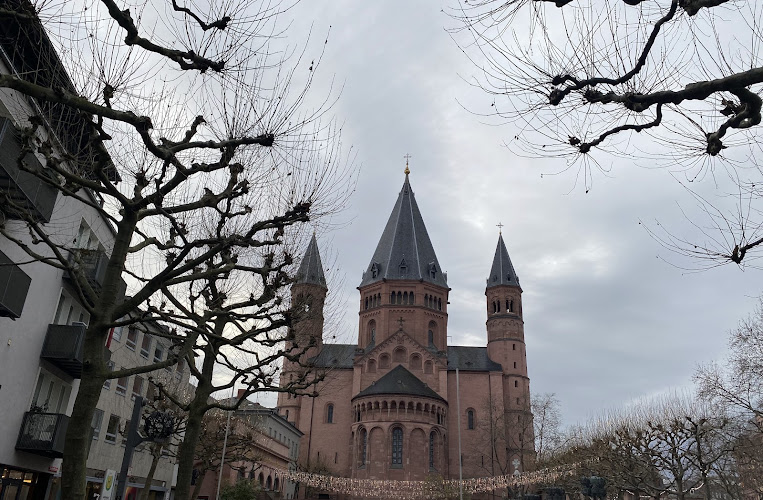
Dom- und Diözesanmuseum
Find Accommodations Nearby
Recommended Tours & Activities
Visitor Reviews
There are no reviews yet. Be the first one to write one.
Share Your Experience
Have you visited Johannes Gutenberg University Mainz Botanical Garden? Help other travelers by leaving a review.