
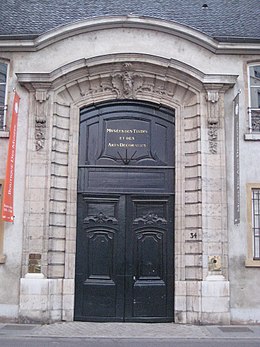
Musée des Tissus et des Arts Décoratifs
About Musée des Tissus et des Arts Décoratifs
Description
The Musée des Tissus et des Arts Décoratifs stands as one of Lyon's most treasured cultural institutions, though honestly, it doesn't get nearly the attention it deserves from international travelers. This mansion museum houses what many textile experts consider to be among the finest fabric and decorative arts collections in the entire world. And I'm not exaggerating when I say that – we're talking about over 2.5 million textile samples spanning 4,500 years of history, all packed into an elegant 18th-century building that's itself a work of art. When I first visited, I'll admit I wasn't expecting much. Museums dedicated to fabric? Sounded like something my grandmother would drag me to on a rainy afternoon. But within fifteen minutes of exploring the galleries, I realized I'd completely underestimated what textiles could tell us about human civilization. These aren't just old pieces of cloth gathering dust behind glass cases. They're masterpieces that once adorned royal courts, decorated the homes of nobility, and represented the pinnacle of artistic achievement in their respective eras. The museum actually combines two distinct collections under one roof – the textile museum and the decorative arts museum – which is why the full name sounds a bit of a mouthful. This dual focus means visitors get an incredibly rich experience that goes well beyond fabrics alone. You'll find yourself wandering through rooms filled with exquisite furniture, intricate tapestries, delicate porcelain, and ornate wallpapers that transport you straight back to the grandeur of 17th and 18th century European aristocratic life. What really sets this place apart from other textile museums (yes, there are others, though none quite like this) is the sheer breadth and quality of the collection. The museum holds textiles from ancient Egypt, Persian carpets that would make collectors weep with envy, Byzantine silks that once wrapped religious relics, and French silks from Lyon's own storied weaving tradition. Lyon was historically one of Europe's major silk production centers, and this museum preserves that heritage with remarkable devotion.Key Features
- Over 2.5 million textile specimens representing 4,500 years of fabric arts from cultures across the globe, making it one of the world's most comprehensive textile collections
- Extensive galleries dedicated to Lyon's silk weaving industry, showcasing the intricate techniques and designs that made the city famous throughout Europe during the Renaissance and Baroque periods
- A remarkable collection of 17th and 18th century French decorative arts including period furniture, tapestries, wallpapers, and ceramics displayed in beautifully restored mansion rooms
- Rare Egyptian Coptic textiles dating back to early Christian periods, offering insights into ancient weaving techniques and religious symbolism
- Persian and Ottoman carpets and textiles that represent some of the finest examples of Islamic decorative arts outside of Middle Eastern museums
- An impressive assemblage of Asian textiles, particularly Chinese and Japanese silk embroideries that demonstrate sophisticated artistic traditions
- Temporary exhibitions that rotate throughout the year, often focusing on contemporary textile artists or specific historical periods
- Original Jacquard looms and weaving equipment that revolutionized the textile industry and essentially laid the groundwork for modern computing
- Fashion pieces from renowned designers who drew inspiration from historical textile patterns and techniques
- Beautifully preserved 18th-century mansion interiors that provide authentic context for understanding how these decorative arts were originally displayed and used
Best Time to Visit
Here's where things get a bit tricky, and I'll be straight with you about it. The museum underwent significant financial difficulties and actually closed for several years, reopening only partially in recent times. Before you plan your visit, you'll want to check current opening status and hours, as they've been somewhat unpredictable. That said, when the museum is fully operational, weekday mornings tend to offer the most peaceful viewing experience. I've found that arriving right when doors open gives you almost private access to certain galleries, which makes a huge difference when you're trying to appreciate the intricate details of a 16th century tapestry without someone's backpack bumping into you every thirty seconds. Spring and fall are ideal seasons for visiting Lyon generally, and the museum benefits from these shoulder season advantages. You'll avoid the summer tourist crowds that pack into Lyon's more famous attractions, and the pleasant weather makes the walk to the museum through Lyon's historic neighborhoods genuinely enjoyable. Plus, the natural light filtering through the mansion's original windows shows off the textile colors in ways that artificial lighting just can't match. Winter visits have their own charm, particularly in December when Lyon hosts its famous Festival of Lights. The museum sometimes participates with special evening hours or themed exhibitions. But January and February can feel a bit dreary, and let's be honest – museums dedicated to decorative arts somehow feel even colder when it's freezing outside. Summer isn't necessarily bad, but Lyon gets hot and humid in July and August, and the museum's historic building lacks modern climate control in some sections. This is actually intentional to preserve the delicate textiles, but it means you might find yourself sweating while admiring an elaborate silk court dress. If you're someone who enjoys museums without crowds and doesn't mind potentially cooler indoor temperatures, visiting on weekday afternoons in November or March often provides the sweet spot between accessibility and comfort.How to Get There
The museum sits in Lyon's 2nd arrondissement, positioned between the Rhône and Saône rivers in what locals call the Presqu'île (which literally means "peninsula" because Lyon loves being geographically accurate). Getting there is refreshingly straightforward, especially compared to reaching some museums I've visited that seem deliberately hidden from tourists. By metro, you'll want to take Line A to the Ampère-Victor Hugo station, which puts you about a five-minute walk from the museum entrance. The walk itself takes you through some lovely Lyon streets lined with shops and cafes, so don't rush it. I usually plan to arrive twenty minutes early just to wander the neighborhood and maybe grab a coffee. Several bus lines also stop nearby, including lines C3, C13, and C14. Lyon's public transportation system is efficient and tourist-friendly, with clear signage in both French and English. A day pass covers metro, buses, and trams, and honestly pays for itself if you're planning to visit multiple sites around the city. If you're staying in Lyon's city center or Vieux Lyon, the museum is absolutely walkable. It's maybe a twenty-minute stroll from Place Bellecour, Lyon's main square, which is pleasant on decent weather days. The route takes you past boutiques, restaurants, and architectural gems that make Lyon such a rewarding city to explore on foot. For those arriving by car – and I wouldn't really recommend this since Lyon's historic center isn't particularly car-friendly – there are parking garages in the area, though they fill up quickly and cost more than you'd probably like to pay. Street parking is nearly impossible to find. Coming from another city? Lyon has excellent train connections through Lyon-Part-Dieu and Lyon-Perrache stations. From either station, you can catch the metro or a taxi. The journey from Paris by TGV takes just two hours, making the museum accessible as a day trip if you're really dedicated (though honestly, Lyon deserves at least a weekend of your time).Tips for Visiting
Let me share some practical wisdom that'll make your visit considerably more enjoyable. First off, wear comfortable shoes. This seems obvious, but the museum sprawls across multiple floors with original historic flooring that wasn't designed for modern sneakers, let alone heels. I made the mistake once of wearing new shoes and spent half my visit thinking about my blisters instead of the Byzantine silks. Photography policies have varied over the years, so check current rules when you arrive. Generally, non-flash photography of permanent collections is allowed, but special exhibitions sometimes have restrictions. And please, please don't use flash even if you think you've turned it off. Those textiles have survived centuries and don't need your iPhone flash accelerating their deterioration. The museum doesn't have a café, which surprised me the first time I visited. Plan accordingly – either eat before you come or know that you'll need to leave the museum to find food. There are plenty of options in the surrounding neighborhood, but re-entry isn't always guaranteed depending on your ticket type. Audio guides are available in several languages and genuinely enhance the experience. The textile collection can seem overwhelming without context, and the audio guide helps connect individual pieces to broader historical narratives. I usually skip audio guides at museums, but here it made a real difference in my understanding and appreciation. Allow at least two hours for your visit, though serious textile enthusiasts could easily spend half a day here. The collection is dense, and rushing through does it a disservice. I'd recommend focusing on one or two periods or regions rather than trying to see everything. The Lyon silk galleries and the 18th-century decorative arts rooms are particular highlights that deserve concentrated attention. If you're traveling with children, be realistic about their interest levels. This isn't an interactive, hands-on museum. It's a traditional collection requiring patience and genuine interest in decorative arts. That said, older children with interests in fashion, history, or art might find it fascinating, especially the sections explaining how textiles were made. The museum shop is actually worth browsing. They stock books on textile history that you won't easily find elsewhere, plus some beautiful reproduction scarves and fabric items. Prices are reasonable compared to museum shops in Paris or London. Finally, consider combining your visit with other nearby attractions. The Musée des Beaux-Arts is within walking distance, as are excellent restaurants serving traditional Lyonnaise cuisine. Making the textile museum part of a larger day exploring this part of Lyon creates a richer experience than treating it as an isolated stop. One last thing – the museum's somewhat troubled recent history means it operates with reduced staff and resources compared to its glory days. Show patience and kindness with museum employees who are working hard to preserve and share this incredible collection despite challenging circumstances. They're passionate about what they do, and a little appreciation goes a long way.Key Features
- Over 2.5 million textile specimens representing 4,500 years of fabric arts from cultures across the globe, making it one of the world's most comprehensive textile collections
- Extensive galleries dedicated to Lyon's silk weaving industry, showcasing the intricate techniques and designs that made the city famous throughout Europe during the Renaissance and Baroque periods
- A remarkable collection of 17th and 18th century French decorative arts including period furniture, tapestries, wallpapers, and ceramics displayed in beautifully restored mansion rooms
- Rare Egyptian Coptic textiles dating back to early Christian periods, offering insights into ancient weaving techniques and religious symbolism
- Persian and Ottoman carpets and textiles that represent some of the finest examples of Islamic decorative arts outside of Middle Eastern museums
- An impressive assemblage of Asian textiles, particularly Chinese and Japanese silk embroideries that demonstrate sophisticated artistic traditions
- Temporary exhibitions that rotate throughout the year, often focusing on contemporary textile artists or specific historical periods
- Original Jacquard looms and weaving equipment that revolutionized the textile industry and essentially laid the groundwork for modern computing
More Details
Updated March 30, 2026
Table of Contents
- Description
- Key Features
- Best Time to Visit
- How to Get There
- Tips for Visiting
- Key Highlights
- Location
- Places to Stay Near Musée des Tissus et des Arts Décoratifs
- Find and Book a Tour
- Explore More Travel Guides
- Nearby Places You Might Like
- Traveler Reviews for Musée des Tissus et des Arts Décoratifs
- Share Your Experience
Description
The Musée des Tissus et des Arts Décoratifs stands as one of Lyon’s most treasured cultural institutions, though honestly, it doesn’t get nearly the attention it deserves from international travelers. This mansion museum houses what many textile experts consider to be among the finest fabric and decorative arts collections in the entire world. And I’m not exaggerating when I say that – we’re talking about over 2.5 million textile samples spanning 4,500 years of history, all packed into an elegant 18th-century building that’s itself a work of art.
When I first visited, I’ll admit I wasn’t expecting much. Museums dedicated to fabric? Sounded like something my grandmother would drag me to on a rainy afternoon. But within fifteen minutes of exploring the galleries, I realized I’d completely underestimated what textiles could tell us about human civilization. These aren’t just old pieces of cloth gathering dust behind glass cases. They’re masterpieces that once adorned royal courts, decorated the homes of nobility, and represented the pinnacle of artistic achievement in their respective eras.
The museum actually combines two distinct collections under one roof – the textile museum and the decorative arts museum – which is why the full name sounds a bit of a mouthful. This dual focus means visitors get an incredibly rich experience that goes well beyond fabrics alone. You’ll find yourself wandering through rooms filled with exquisite furniture, intricate tapestries, delicate porcelain, and ornate wallpapers that transport you straight back to the grandeur of 17th and 18th century European aristocratic life.
What really sets this place apart from other textile museums (yes, there are others, though none quite like this) is the sheer breadth and quality of the collection. The museum holds textiles from ancient Egypt, Persian carpets that would make collectors weep with envy, Byzantine silks that once wrapped religious relics, and French silks from Lyon’s own storied weaving tradition. Lyon was historically one of Europe’s major silk production centers, and this museum preserves that heritage with remarkable devotion.
Key Features
- Over 2.5 million textile specimens representing 4,500 years of fabric arts from cultures across the globe, making it one of the world’s most comprehensive textile collections
- Extensive galleries dedicated to Lyon’s silk weaving industry, showcasing the intricate techniques and designs that made the city famous throughout Europe during the Renaissance and Baroque periods
- A remarkable collection of 17th and 18th century French decorative arts including period furniture, tapestries, wallpapers, and ceramics displayed in beautifully restored mansion rooms
- Rare Egyptian Coptic textiles dating back to early Christian periods, offering insights into ancient weaving techniques and religious symbolism
- Persian and Ottoman carpets and textiles that represent some of the finest examples of Islamic decorative arts outside of Middle Eastern museums
- An impressive assemblage of Asian textiles, particularly Chinese and Japanese silk embroideries that demonstrate sophisticated artistic traditions
- Temporary exhibitions that rotate throughout the year, often focusing on contemporary textile artists or specific historical periods
- Original Jacquard looms and weaving equipment that revolutionized the textile industry and essentially laid the groundwork for modern computing
- Fashion pieces from renowned designers who drew inspiration from historical textile patterns and techniques
- Beautifully preserved 18th-century mansion interiors that provide authentic context for understanding how these decorative arts were originally displayed and used
Best Time to Visit
Here’s where things get a bit tricky, and I’ll be straight with you about it. The museum underwent significant financial difficulties and actually closed for several years, reopening only partially in recent times. Before you plan your visit, you’ll want to check current opening status and hours, as they’ve been somewhat unpredictable.
That said, when the museum is fully operational, weekday mornings tend to offer the most peaceful viewing experience. I’ve found that arriving right when doors open gives you almost private access to certain galleries, which makes a huge difference when you’re trying to appreciate the intricate details of a 16th century tapestry without someone’s backpack bumping into you every thirty seconds.
Spring and fall are ideal seasons for visiting Lyon generally, and the museum benefits from these shoulder season advantages. You’ll avoid the summer tourist crowds that pack into Lyon’s more famous attractions, and the pleasant weather makes the walk to the museum through Lyon’s historic neighborhoods genuinely enjoyable. Plus, the natural light filtering through the mansion’s original windows shows off the textile colors in ways that artificial lighting just can’t match.
Winter visits have their own charm, particularly in December when Lyon hosts its famous Festival of Lights. The museum sometimes participates with special evening hours or themed exhibitions. But January and February can feel a bit dreary, and let’s be honest – museums dedicated to decorative arts somehow feel even colder when it’s freezing outside.
Summer isn’t necessarily bad, but Lyon gets hot and humid in July and August, and the museum’s historic building lacks modern climate control in some sections. This is actually intentional to preserve the delicate textiles, but it means you might find yourself sweating while admiring an elaborate silk court dress.
If you’re someone who enjoys museums without crowds and doesn’t mind potentially cooler indoor temperatures, visiting on weekday afternoons in November or March often provides the sweet spot between accessibility and comfort.
How to Get There
The museum sits in Lyon’s 2nd arrondissement, positioned between the Rhône and Saône rivers in what locals call the Presqu’île (which literally means “peninsula” because Lyon loves being geographically accurate). Getting there is refreshingly straightforward, especially compared to reaching some museums I’ve visited that seem deliberately hidden from tourists.
By metro, you’ll want to take Line A to the Ampère-Victor Hugo station, which puts you about a five-minute walk from the museum entrance. The walk itself takes you through some lovely Lyon streets lined with shops and cafes, so don’t rush it. I usually plan to arrive twenty minutes early just to wander the neighborhood and maybe grab a coffee.
Several bus lines also stop nearby, including lines C3, C13, and C14. Lyon’s public transportation system is efficient and tourist-friendly, with clear signage in both French and English. A day pass covers metro, buses, and trams, and honestly pays for itself if you’re planning to visit multiple sites around the city.
If you’re staying in Lyon’s city center or Vieux Lyon, the museum is absolutely walkable. It’s maybe a twenty-minute stroll from Place Bellecour, Lyon’s main square, which is pleasant on decent weather days. The route takes you past boutiques, restaurants, and architectural gems that make Lyon such a rewarding city to explore on foot.
For those arriving by car – and I wouldn’t really recommend this since Lyon’s historic center isn’t particularly car-friendly – there are parking garages in the area, though they fill up quickly and cost more than you’d probably like to pay. Street parking is nearly impossible to find.
Coming from another city? Lyon has excellent train connections through Lyon-Part-Dieu and Lyon-Perrache stations. From either station, you can catch the metro or a taxi. The journey from Paris by TGV takes just two hours, making the museum accessible as a day trip if you’re really dedicated (though honestly, Lyon deserves at least a weekend of your time).
Tips for Visiting
Let me share some practical wisdom that’ll make your visit considerably more enjoyable. First off, wear comfortable shoes. This seems obvious, but the museum sprawls across multiple floors with original historic flooring that wasn’t designed for modern sneakers, let alone heels. I made the mistake once of wearing new shoes and spent half my visit thinking about my blisters instead of the Byzantine silks.
Photography policies have varied over the years, so check current rules when you arrive. Generally, non-flash photography of permanent collections is allowed, but special exhibitions sometimes have restrictions. And please, please don’t use flash even if you think you’ve turned it off. Those textiles have survived centuries and don’t need your iPhone flash accelerating their deterioration.
The museum doesn’t have a café, which surprised me the first time I visited. Plan accordingly – either eat before you come or know that you’ll need to leave the museum to find food. There are plenty of options in the surrounding neighborhood, but re-entry isn’t always guaranteed depending on your ticket type.
Audio guides are available in several languages and genuinely enhance the experience. The textile collection can seem overwhelming without context, and the audio guide helps connect individual pieces to broader historical narratives. I usually skip audio guides at museums, but here it made a real difference in my understanding and appreciation.
Allow at least two hours for your visit, though serious textile enthusiasts could easily spend half a day here. The collection is dense, and rushing through does it a disservice. I’d recommend focusing on one or two periods or regions rather than trying to see everything. The Lyon silk galleries and the 18th-century decorative arts rooms are particular highlights that deserve concentrated attention.
If you’re traveling with children, be realistic about their interest levels. This isn’t an interactive, hands-on museum. It’s a traditional collection requiring patience and genuine interest in decorative arts. That said, older children with interests in fashion, history, or art might find it fascinating, especially the sections explaining how textiles were made.
The museum shop is actually worth browsing. They stock books on textile history that you won’t easily find elsewhere, plus some beautiful reproduction scarves and fabric items. Prices are reasonable compared to museum shops in Paris or London.
Finally, consider combining your visit with other nearby attractions. The Musée des Beaux-Arts is within walking distance, as are excellent restaurants serving traditional Lyonnaise cuisine. Making the textile museum part of a larger day exploring this part of Lyon creates a richer experience than treating it as an isolated stop.
One last thing – the museum’s somewhat troubled recent history means it operates with reduced staff and resources compared to its glory days. Show patience and kindness with museum employees who are working hard to preserve and share this incredible collection despite challenging circumstances. They’re passionate about what they do, and a little appreciation goes a long way.
Key Highlights
- Over 2.5 million textile specimens representing 4,500 years of fabric arts from cultures across the globe, making it one of the world's most comprehensive textile collections
- Extensive galleries dedicated to Lyon's silk weaving industry, showcasing the intricate techniques and designs that made the city famous throughout Europe during the Renaissance and Baroque periods
- A remarkable collection of 17th and 18th century French decorative arts including period furniture, tapestries, wallpapers, and ceramics displayed in beautifully restored mansion rooms
- Rare Egyptian Coptic textiles dating back to early Christian periods, offering insights into ancient weaving techniques and religious symbolism
- Persian and Ottoman carpets and textiles that represent some of the finest examples of Islamic decorative arts outside of Middle Eastern museums
- An impressive assemblage of Asian textiles, particularly Chinese and Japanese silk embroideries that demonstrate sophisticated artistic traditions
- Temporary exhibitions that rotate throughout the year, often focusing on contemporary textile artists or specific historical periods
- Original Jacquard looms and weaving equipment that revolutionized the textile industry and essentially laid the groundwork for modern computing
Location
Places to Stay Near Musée des Tissus et des Arts Décoratifs
Find and Book a Tour
Explore More Travel Guides
No reviews found! Be the first to review!
Musée des Tissus et des Arts Décoratifs is a prominent museums located in Lyon.
Visit us at: 34 Rue de la Charité, 69002 Lyon.
Traveler Reviews for Musée des Tissus et des Arts Décoratifs
There are no reviews yet. Be the first one to write one.
Have you visited Musée des Tissus et des Arts Décoratifs? Help other travelers by sharing your review.
You Might Also Like

Passerelle Pierre-Truche
Cathédrale Saint-Jean-Baptiste

Maison des Avocats
Find Accommodations Nearby
Recommended Tours & Activities
Visitor Reviews
There are no reviews yet. Be the first one to write one.
Share Your Experience
Have you visited Musée des Tissus et des Arts Décoratifs? Help other travelers by leaving a review.