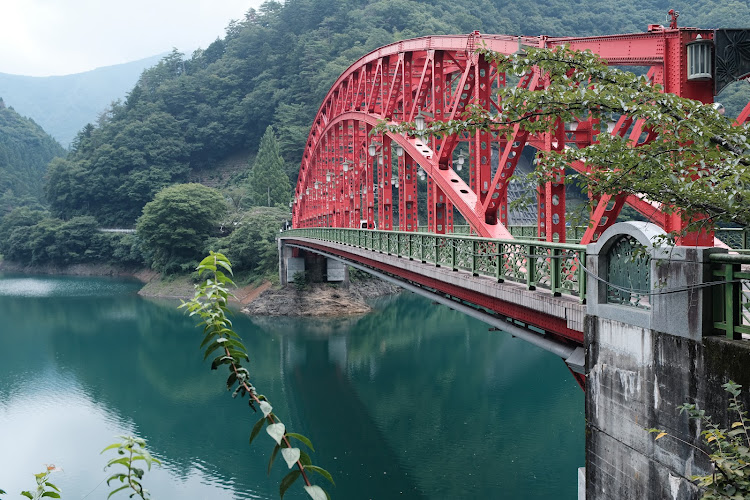
On the Oume Kaido route through Okutama, Minedani Bridge belongs to the practical, landscape-led side of travel in western Tokyo. This is not a formal sightseeing complex with a defined circuit or an interpretive museum experience. Its appeal lies in the way a working bridge sits within a mountain district where roads, slopes, vegetation, and settlements are closely connected. For travelers leaving the denser urban areas of Tokyo, even a short pause here can underline how quickly the character of the region changes.
Okutama is known for its rugged inland scenery and for journeys that are as important as individual stops. Minedani Bridge works best in that spirit: notice it as part of a wider day of road travel, hiking-area exploration, or unhurried valley sightseeing. The atmosphere can shift considerably with weather, season, and traffic. A clear day may reward careful observation of the surrounding terrain, while rain, mist, or low cloud can make the setting feel more enclosed and dramatic. Treat the location as a small point of orientation rather than a place that needs a long standalone visit.
What to See & Experience
The experience is primarily visual and contextual. Look at how the bridge carries the route through the landscape, then take in the relationship between the road corridor and the mountain environment around it. Because this is a functioning piece of infrastructure, the most worthwhile details are often the simplest: the changing grade of the road, layers of woodland, the sense of distance from metropolitan Tokyo, and the movement of everyday local travel. Photography can be rewarding when it is done safely and without entering vehicle space.
- Observe the bridge as part of Okutama’s mountain-road network.
- Take in wooded slopes and changing seasonal color nearby.
- Use the stop to understand the scale of western Tokyo.
- Look for safe, legal viewpoints before taking photographs.
- Build it into a flexible drive or transit-based itinerary.
- Notice changing light, weather, and valley atmosphere.
There is no need to force a long visit. The strongest approach is to arrive with modest expectations, spend a few minutes getting oriented, and continue toward the next stop if conditions do not support lingering. The bridge may be most memorable when encountered naturally during a journey rather than treated as an isolated attraction. Travelers interested in transport geography, road engineering in mountainous areas, or quiet landscape photography may find more to observe than those seeking a large monument or a programmed activity.
Practical Visitor Strategy
| Planning Factor | Visitor Advice |
|---|
| Best Time to Go | Choose daylight and favorable weather for clearer views and safer roadside awareness. |
| Suggested Duration | Allow a short stop, then reserve more time for the wider Okutama area. |
| Crowd & Pacing Tips | Keep the visit flexible; traffic and road conditions should set the pace. |
| Getting Oriented | Use current mapping and local transport information before setting out. |
| Nearby Pairing | Combine it with other Okutama scenery, walking areas, or local stops. |
Plan around access rather than assuming that every edge of the bridge is a viewing area. Roadside environments demand attention, particularly on a mountain route where sightlines, shoulders, weather, and passing vehicles can vary. If traveling by car, only stop where it is permitted and safe; never block traffic or pull over simply for a photograph. If using public transport, verify the current route, stop locations, and return options in advance. Conditions can change with maintenance, seasonal weather, or service updates, so it is sensible to have an alternate nearby stop in mind.
For a fuller day, use Minedani Bridge as one marker within Okutama rather than the day’s final objective. The district supports slower exploration through its broader mountain and valley landscape, and a route can be adjusted according to the season. Spring and autumn may emphasize fresh greens or foliage; summer can feel cooler and more shaded in upland surroundings; winter light can make contours easier to read, though cold, weather, and transport reliability deserve extra consideration. Pack for the outdoors even if the bridge itself is only a brief visit: sturdy footwear, water, a light layer, and a charged phone are practical basics.
Who Will Enjoy It Most (and Trade-Offs)
Minedani Bridge will appeal most to independent travelers, road-trip planners, repeat visitors to Tokyo looking beyond the central wards, and people who enjoy observing how infrastructure meets landscape. It can also fit photographers who are content with an opportunistic stop rather than a guaranteed viewpoint. Families or casual sightseers can include it easily when passing through, provided they do not expect facilities, interpretive displays, or a dedicated attraction program. The key trade-off is scale: its interest is subtle and location-driven, not spectacle-driven.
Travelers with limited mobility, young children, or anyone uncomfortable near active roads should be particularly selective about whether to stop and where to stand. Do not assume step-free access, parking, pedestrian space, or unobstructed views; assess the conditions on arrival and prioritize safety. Those wanting a more developed outing may prefer to pair the bridge with a clearly designated scenic area, an established walk, or a town stop elsewhere in Okutama. Seen as a modest waypoint within a larger mountain itinerary, Minedani Bridge offers a grounded glimpse of the route through this less urban side of Tokyo.
 Real Journey Travels