Megane Bridge
About Megane Bridge
Description
Megane Bridge isn’t the kind of place that punches you in the face with wow-factor the second you arrive. And honestly, that’s part of why it works. This historic stone bridge, built around 1634, quietly stretches across the Nakashima River and goes about its business the same way it has for nearly four centuries. No flashing signs. No grand statements. Just solid stone, gentle curves, and a whole lot of history beneath your feet.
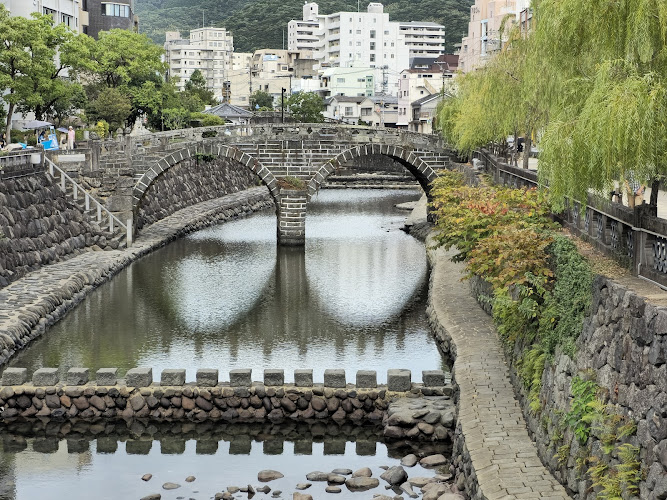
The name Megane means spectacles, and once you see the reflection of its twin arches in the water below, you get it. On a calm day, the arches and their reflection form a perfect circle, like a pair of old-school reading glasses laid gently on the river. The first time I saw it, I actually missed the reflection because I was too busy watching koi drift under the bridge. Rookie mistake. If you want the full effect, slow down. Lean on the stone railing. Look down. Let the place reveal itself.
As the oldest stone arch bridge in Japan, Megane Bridge carries serious historical weight. It was constructed during the Edo period by a Chinese monk, and that cross-cultural influence still gives it a slightly different feel compared to other Japanese bridges. It’s a pedestrian walkway, which means you’re not dodging cars or bikes. Just people strolling, couples taking photos, and the occasional local who crosses it daily and probably forgets how famous it is.
But here’s the honest truth travelers appreciate: some people walk away thinking, That’s it? And others linger for an hour. Megane Bridge is subtle. If you’re expecting fireworks, you might be underwhelmed. If you enjoy places that whisper instead of shout, you’ll probably love it. I fall squarely in the second camp.
Key Features
- Oldest surviving stone arch bridge in Japan, dating back to circa 1634
- Distinctive twin-arch design that creates a heart-like or circular reflection in the water
- Pedestrian-only bridge, ideal for relaxed walking and photography
- Constructed using traditional stone masonry techniques without modern reinforcements
- Set along the Nakashima River, with stepping stones nearby for river-level views
- Recognized as an important historical landmark and cultural asset
- Onsite services available, though facilities remain minimal and unobtrusive
Best Time to Visit
Timing matters here more than people realize. Early morning is magic. I’m talking about that quiet window just after sunrise when the city is still clearing its throat. The river tends to be calmer, which means you’re more likely to catch that famous reflection. Plus, fewer people equals better photos and a more contemplative vibe. Bring a coffee, if that’s your thing, and just sit nearby for a bit.
Spring is popular, and for good reason. Cherry blossoms sometimes frame the bridge, and while I promised not to lean on clichés, it really does add a soft, fleeting beauty to the stone. Autumn is my personal favorite, though. The leaves along the river shift into warm reds and yellows, and the bridge feels heavier somehow, more grounded. Like it knows it’s survived another year.
Evenings are hit or miss. There’s often lighting that outlines the arches, which can look stunning, but crowds tend to thicken. And reflections? Not always cooperative after dark. If you only have time for one visit, aim for morning. If you’re staying nearby, come back twice. The bridge wears different moods well.
How to Get There
Getting to Megane Bridge is straightforward, which is part of its appeal. It sits within a walkable part of the city, and most travelers reach it on foot after using public transportation to get close. The surrounding streets are pleasant to wander, and honestly, half the fun is approaching the bridge slowly and spotting it between buildings.
If you’re relying on buses or trams, you’ll find stops within easy walking distance. From there, it’s a short stroll along the river. And that walk matters. The bridge doesn’t stand alone; it’s part of a sequence of stone bridges, paths, and little riverside details that give context to what you’re seeing.
Drivers should note that parking isn’t exactly convenient, and accessibility is limited. Wheelchairs may struggle due to steps and uneven stone surfaces. It’s an old structure, and it behaves like one. Plan accordingly, wear good shoes, and don’t rush.
Tips for Visiting
First tip: look down. Seriously. Most people focus on the arches at eye level and forget the reflection entirely. The magic lives in the water. If the river’s moving too fast, wait a few minutes. Sometimes the surface settles, and there it is, clear as day.
Second, don’t just cross it and leave. Walk across, yes, but then step off and view it from different angles. There are stepping stones nearby that let you get closer to the river. I once spent twenty minutes watching someone try to get the perfect reflection photo, adjusting their stance inch by inch. They eventually got it. So will you.
Third, manage expectations. This is not a massive bridge or an adrenaline attraction. It’s historical, quiet, and grounded. If you approach it like a checklist item, it’ll feel forgettable. If you give it a little time, it might surprise you.
Fourth, combine it with a slow wander. Nearby streets, small cafes, and riverside paths add layers to the visit. Megane Bridge works best as part of a gentle day, not a rushed itinerary. And yeah, I know schedules get tight when traveling. Still worth slowing down.
Finally, respect the place. The stones have been here longer than any of us. Don’t climb where you shouldn’t, don’t litter, and don’t treat it like a prop. It’s a living piece of history that people still use daily. And that, to me, is what makes Megane Bridge special. Not flashy. Just enduring.
Key Features
- Oldest surviving stone arch bridge in Japan, dating back to circa 1634
- Distinctive twin-arch design that creates a heart-like or circular reflection in the water
- Pedestrian-only bridge, ideal for relaxed walking and photography
- Constructed using traditional stone masonry techniques without modern reinforcements
- Set along the Nakashima River, with stepping stones nearby for river-level views
- Recognized as an important historical landmark and cultural asset
- Onsite services available, though facilities remain minimal and unobtrusive
More Details
Updated January 1, 2026
Table of Contents
Description
Megane Bridge isn’t the kind of place that punches you in the face with wow-factor the second you arrive. And honestly, that’s part of why it works. This historic stone bridge, built around 1634, quietly stretches across the Nakashima River and goes about its business the same way it has for nearly four centuries. No flashing signs. No grand statements. Just solid stone, gentle curves, and a whole lot of history beneath your feet.
The name Megane means spectacles, and once you see the reflection of its twin arches in the water below, you get it. On a calm day, the arches and their reflection form a perfect circle, like a pair of old-school reading glasses laid gently on the river. The first time I saw it, I actually missed the reflection because I was too busy watching koi drift under the bridge. Rookie mistake. If you want the full effect, slow down. Lean on the stone railing. Look down. Let the place reveal itself.
As the oldest stone arch bridge in Japan, Megane Bridge carries serious historical weight. It was constructed during the Edo period by a Chinese monk, and that cross-cultural influence still gives it a slightly different feel compared to other Japanese bridges. It’s a pedestrian walkway, which means you’re not dodging cars or bikes. Just people strolling, couples taking photos, and the occasional local who crosses it daily and probably forgets how famous it is.
But here’s the honest truth travelers appreciate: some people walk away thinking, That’s it? And others linger for an hour. Megane Bridge is subtle. If you’re expecting fireworks, you might be underwhelmed. If you enjoy places that whisper instead of shout, you’ll probably love it. I fall squarely in the second camp.
Key Features
- Oldest surviving stone arch bridge in Japan, dating back to circa 1634
- Distinctive twin-arch design that creates a heart-like or circular reflection in the water
- Pedestrian-only bridge, ideal for relaxed walking and photography
- Constructed using traditional stone masonry techniques without modern reinforcements
- Set along the Nakashima River, with stepping stones nearby for river-level views
- Recognized as an important historical landmark and cultural asset
- Onsite services available, though facilities remain minimal and unobtrusive
Best Time to Visit
Timing matters here more than people realize. Early morning is magic. I’m talking about that quiet window just after sunrise when the city is still clearing its throat. The river tends to be calmer, which means you’re more likely to catch that famous reflection. Plus, fewer people equals better photos and a more contemplative vibe. Bring a coffee, if that’s your thing, and just sit nearby for a bit.
Spring is popular, and for good reason. Cherry blossoms sometimes frame the bridge, and while I promised not to lean on clichés, it really does add a soft, fleeting beauty to the stone. Autumn is my personal favorite, though. The leaves along the river shift into warm reds and yellows, and the bridge feels heavier somehow, more grounded. Like it knows it’s survived another year.
Evenings are hit or miss. There’s often lighting that outlines the arches, which can look stunning, but crowds tend to thicken. And reflections? Not always cooperative after dark. If you only have time for one visit, aim for morning. If you’re staying nearby, come back twice. The bridge wears different moods well.
How to Get There
Getting to Megane Bridge is straightforward, which is part of its appeal. It sits within a walkable part of the city, and most travelers reach it on foot after using public transportation to get close. The surrounding streets are pleasant to wander, and honestly, half the fun is approaching the bridge slowly and spotting it between buildings.
If you’re relying on buses or trams, you’ll find stops within easy walking distance. From there, it’s a short stroll along the river. And that walk matters. The bridge doesn’t stand alone; it’s part of a sequence of stone bridges, paths, and little riverside details that give context to what you’re seeing.
Drivers should note that parking isn’t exactly convenient, and accessibility is limited. Wheelchairs may struggle due to steps and uneven stone surfaces. It’s an old structure, and it behaves like one. Plan accordingly, wear good shoes, and don’t rush.
Tips for Visiting
First tip: look down. Seriously. Most people focus on the arches at eye level and forget the reflection entirely. The magic lives in the water. If the river’s moving too fast, wait a few minutes. Sometimes the surface settles, and there it is, clear as day.
Second, don’t just cross it and leave. Walk across, yes, but then step off and view it from different angles. There are stepping stones nearby that let you get closer to the river. I once spent twenty minutes watching someone try to get the perfect reflection photo, adjusting their stance inch by inch. They eventually got it. So will you.
Third, manage expectations. This is not a massive bridge or an adrenaline attraction. It’s historical, quiet, and grounded. If you approach it like a checklist item, it’ll feel forgettable. If you give it a little time, it might surprise you.
Fourth, combine it with a slow wander. Nearby streets, small cafes, and riverside paths add layers to the visit. Megane Bridge works best as part of a gentle day, not a rushed itinerary. And yeah, I know schedules get tight when traveling. Still worth slowing down.
Finally, respect the place. The stones have been here longer than any of us. Don’t climb where you shouldn’t, don’t litter, and don’t treat it like a prop. It’s a living piece of history that people still use daily. And that, to me, is what makes Megane Bridge special. Not flashy. Just enduring.

Key Highlights
- Oldest surviving stone arch bridge in Japan, dating back to circa 1634
- Distinctive twin-arch design that creates a heart-like or circular reflection in the water
- Pedestrian-only bridge, ideal for relaxed walking and photography
- Constructed using traditional stone masonry techniques without modern reinforcements
- Set along the Nakashima River, with stepping stones nearby for river-level views
- Recognized as an important historical landmark and cultural asset
- Onsite services available, though facilities remain minimal and unobtrusive
Location
Places to Stay Near Megane Bridge
Find and Book a Tour
Explore More Travel Guides
No reviews found! Be the first to review!
Traveler Reviews for Megane Bridge
There are no reviews yet. Be the first one to write one.
Have you visited Megane Bridge? Help other travelers by sharing your review.
Find Accommodations Nearby
Recommended Tours & Activities
Visitor Reviews
There are no reviews yet. Be the first one to write one.
Share Your Experience
Have you visited Megane Bridge? Help other travelers by leaving a review.