About Mannheim

Description

Mannheim, tucked between the Rhine and Neckar rivers in southwest Germany, feels like a city that’s both historic and forward-looking at the same time. It’s got this fascinating grid layout—locals call it the “Quadratestadt,” or “City of Squares”—which makes it feel surprisingly modern for a place with baroque palaces and centuries-old architecture. Honestly, it’s one of those cities that doesn’t always make the top of every traveler’s list, but once you’re there, you wonder why it isn’t talked about more.

The Mannheim Palace is the kind of place that stops you in your tracks. It’s enormous—one of the largest baroque palaces in Europe—and it houses both historical exhibits and the University of Mannheim. You can easily spend hours wandering through its courtyards and imagining what life must have been like when carriages clattered across the cobblestones. Then there’s the city center, the Quadrate, which is a geometric marvel. Streets are labeled by letters and numbers instead of names, which takes a little getting used to, but once you do, it feels oddly logical.

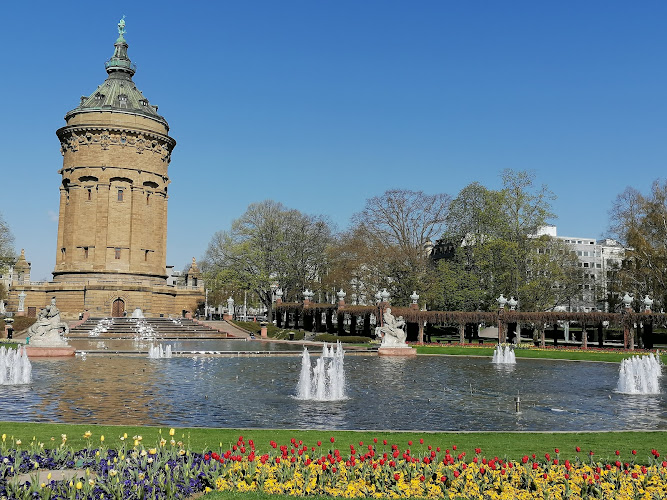
And if you’re into architecture, Mannheim is a bit of a playground. The Romanesque Water Tower, surrounded by the art nouveau gardens of Friedrichsplatz, is the city’s unofficial symbol. It’s the kind of place that makes you want to sit with a coffee and just people-watch for hours. The blend of styles—from baroque to modern industrial—reflects Mannheim’s layered history as a hub of creativity, trade, and innovation.

I remember the first time I visited, I stumbled upon a street musician playing near Marktplatz Square. The baroque fountain glistened behind him, and the sound of the violin echoed off the old stone facades. It was one of those travel moments that sticks with you—not because it’s grand or dramatic, but because it feels real. Mannheim has that effect. It’s not trying to impress you; it just quietly does.

Key Features

  • Mannheim Palace (Schloss Mannheim): A monumental baroque palace that now hosts the University of Mannheim and several fascinating historical exhibits.
  • The Quadratestadt: A unique grid-style city center unlike any other in Germany, designed for easy navigation and urban efficiency.
  • Water Tower (Wasserturm): The city’s iconic landmark surrounded by beautifully designed art nouveau gardens at Friedrichsplatz.
  • Marktplatz Square: A lively public square featuring a baroque fountain and a mix of local shops, cafés, and markets.
  • Planken and Breite Straße: The main shopping streets lined with boutiques, international brands, and plenty of spots for a quick espresso or beer.
  • Museum Zeughaus and Kunsthalle Mannheim: Cultural treasures showcasing everything from classical art to modern installations.
  • Rhein and Neckar Rivers: Scenic waterfronts perfect for walks, cycling, or just watching the boats drift by on a sunny afternoon.
  • Multicultural Food Scene: From hearty German dishes to Turkish kebabs and Italian gelato, the city’s diverse dining options reflect its international spirit.

Best Time to Visit

If you’re planning a trip, spring and early autumn are probably the sweet spots. The weather is mild, the parks are lush, and there’s this pleasant hum of local life without the heavy tourist crowds. I once visited in late April and caught the tulips blooming around Friedrichsplatz—it felt like stepping into a painting. Summer can be lively too, with open-air concerts and riverside festivals, but it can get a bit humid. Winter, on the other hand, has its charm. The Christmas market near the Water Tower glows with fairy lights, and the smell of roasted almonds and mulled wine fills the air.

If you prefer fewer crowds and cheaper stays, November or February can work, though you’ll need a good coat and a flexible mindset when it comes to the weather. Mannheim isn’t one of those cities that shuts down in the off-season—it just gets quieter, more introspective, which I actually love.

How to Get There

Getting to Mannheim is refreshingly easy. The city sits right at the crossroads of major train routes, so if you’re coming from Frankfurt, Stuttgart, or even Paris, you can hop on a high-speed train and be there in no time. The Mannheim Hauptbahnhof (main station) is a busy but well-organized hub, and from there, most attractions are within walking distance or a short tram ride away.

If you’re flying in, Frankfurt International Airport is the closest major airport—about an hour by train. Some travelers also fly into Stuttgart or Karlsruhe/Baden-Baden airports, depending on flight deals. Driving is another good option, especially if you want to explore the Rhine-Neckar region. The autobahns here are efficient, but parking in the city center can be tricky, so it’s best to use one of the Park & Ride lots and take public transport in.

And here’s a little local tip: Mannheim’s public transport system is excellent. The trams are punctual, clean, and easy to figure out, even if your German is a bit rusty. You can buy day passes that cover buses and trams, which is perfect if you plan to hop between neighborhoods or visit nearby Heidelberg.

Tips for Visiting

Here’s where a few insider details can make your trip smoother. First, don’t underestimate how compact Mannheim’s city center is. You can walk from the palace to the Water Tower in under 15 minutes, which means you can soak up a lot in a short time. Wear comfy shoes, though—the cobblestones can be unforgiving after a few hours.

If you’re into markets, check out the weekly farmers’ market at Marktplatz. It’s not huge, but the produce is fresh, and the vendors are friendly. I once bought a loaf of rye bread there that I still think about—it was that good. Also, if you’re a museum person, grab a combined ticket for the Kunsthalle and Reiss-Engelhorn Museums. It’ll save you a few euros and give you access to some of the best art and cultural exhibits in the region.

Language-wise, most people speak English well enough for travelers to get by, but learning a few German phrases goes a long way. A simple “Danke” or “Guten Tag” tends to earn smiles and better service. As for food, try the local specialties like “Maultaschen” (German dumplings) or “Spätzle” (egg noodles). And don’t skip the local beer—it’s crisp, light, and pairs perfectly with a pretzel and mustard.

For a bit of an offbeat experience, head to Jungbusch, Mannheim’s creative district. It’s full of street art, indie bars, and quirky cafés. It’s where the city’s youthful energy really shines. I once ended up at a poetry slam there on a whim, surrounded by locals snapping their fingers in appreciation—it was one of those unexpected travel gems.

Lastly, if you’re planning day trips, Heidelberg is just 20 minutes away by train. It’s more touristy, sure, but the contrast between Mannheim’s structured city grid and Heidelberg’s romantic old town makes for a great pairing.

In short, Mannheim is a city that rewards curiosity. It’s not flashy or overly polished, but it’s authentic, layered, and full of stories waiting to be discovered. Whether you’re wandering through palace corridors, sipping coffee by the Water Tower, or just getting lost in the Quadrate, you’ll find that Mannheim has a quiet charm that lingers long after you’ve left.

Key Features

  • Key Features
  • Best Time to Visit
  • How to Get There
  • Tips for Visiting

More Details

Updated November 30, 2025


Description

Mannheim, tucked between the Rhine and Neckar rivers in southwest Germany, feels like a city that’s both historic and forward-looking at the same time. It’s got this fascinating grid layout—locals call it the “Quadratestadt,” or “City of Squares”—which makes it feel surprisingly modern for a place with baroque palaces and centuries-old architecture. Honestly, it’s one of those cities that doesn’t always make the top of every traveler’s list, but once you’re there, you wonder why it isn’t talked about more.

The Mannheim Palace is the kind of place that stops you in your tracks. It’s enormous—one of the largest baroque palaces in Europe—and it houses both historical exhibits and the University of Mannheim. You can easily spend hours wandering through its courtyards and imagining what life must have been like when carriages clattered across the cobblestones. Then there’s the city center, the Quadrate, which is a geometric marvel. Streets are labeled by letters and numbers instead of names, which takes a little getting used to, but once you do, it feels oddly logical.

And if you’re into architecture, Mannheim is a bit of a playground. The Romanesque Water Tower, surrounded by the art nouveau gardens of Friedrichsplatz, is the city’s unofficial symbol. It’s the kind of place that makes you want to sit with a coffee and just people-watch for hours. The blend of styles—from baroque to modern industrial—reflects Mannheim’s layered history as a hub of creativity, trade, and innovation.

I remember the first time I visited, I stumbled upon a street musician playing near Marktplatz Square. The baroque fountain glistened behind him, and the sound of the violin echoed off the old stone facades. It was one of those travel moments that sticks with you—not because it’s grand or dramatic, but because it feels real. Mannheim has that effect. It’s not trying to impress you; it just quietly does.

Key Features

  • Mannheim Palace (Schloss Mannheim): A monumental baroque palace that now hosts the University of Mannheim and several fascinating historical exhibits.
  • The Quadratestadt: A unique grid-style city center unlike any other in Germany, designed for easy navigation and urban efficiency.
  • Water Tower (Wasserturm): The city’s iconic landmark surrounded by beautifully designed art nouveau gardens at Friedrichsplatz.
  • Marktplatz Square: A lively public square featuring a baroque fountain and a mix of local shops, cafés, and markets.
  • Planken and Breite Straße: The main shopping streets lined with boutiques, international brands, and plenty of spots for a quick espresso or beer.
  • Museum Zeughaus and Kunsthalle Mannheim: Cultural treasures showcasing everything from classical art to modern installations.
  • Rhein and Neckar Rivers: Scenic waterfronts perfect for walks, cycling, or just watching the boats drift by on a sunny afternoon.
  • Multicultural Food Scene: From hearty German dishes to Turkish kebabs and Italian gelato, the city’s diverse dining options reflect its international spirit.

Best Time to Visit

If you’re planning a trip, spring and early autumn are probably the sweet spots. The weather is mild, the parks are lush, and there’s this pleasant hum of local life without the heavy tourist crowds. I once visited in late April and caught the tulips blooming around Friedrichsplatz—it felt like stepping into a painting. Summer can be lively too, with open-air concerts and riverside festivals, but it can get a bit humid. Winter, on the other hand, has its charm. The Christmas market near the Water Tower glows with fairy lights, and the smell of roasted almonds and mulled wine fills the air.

If you prefer fewer crowds and cheaper stays, November or February can work, though you’ll need a good coat and a flexible mindset when it comes to the weather. Mannheim isn’t one of those cities that shuts down in the off-season—it just gets quieter, more introspective, which I actually love.

How to Get There

Getting to Mannheim is refreshingly easy. The city sits right at the crossroads of major train routes, so if you’re coming from Frankfurt, Stuttgart, or even Paris, you can hop on a high-speed train and be there in no time. The Mannheim Hauptbahnhof (main station) is a busy but well-organized hub, and from there, most attractions are within walking distance or a short tram ride away.

If you’re flying in, Frankfurt International Airport is the closest major airport—about an hour by train. Some travelers also fly into Stuttgart or Karlsruhe/Baden-Baden airports, depending on flight deals. Driving is another good option, especially if you want to explore the Rhine-Neckar region. The autobahns here are efficient, but parking in the city center can be tricky, so it’s best to use one of the Park & Ride lots and take public transport in.

And here’s a little local tip: Mannheim’s public transport system is excellent. The trams are punctual, clean, and easy to figure out, even if your German is a bit rusty. You can buy day passes that cover buses and trams, which is perfect if you plan to hop between neighborhoods or visit nearby Heidelberg.

Tips for Visiting

Here’s where a few insider details can make your trip smoother. First, don’t underestimate how compact Mannheim’s city center is. You can walk from the palace to the Water Tower in under 15 minutes, which means you can soak up a lot in a short time. Wear comfy shoes, though—the cobblestones can be unforgiving after a few hours.

If you’re into markets, check out the weekly farmers’ market at Marktplatz. It’s not huge, but the produce is fresh, and the vendors are friendly. I once bought a loaf of rye bread there that I still think about—it was that good. Also, if you’re a museum person, grab a combined ticket for the Kunsthalle and Reiss-Engelhorn Museums. It’ll save you a few euros and give you access to some of the best art and cultural exhibits in the region.

Language-wise, most people speak English well enough for travelers to get by, but learning a few German phrases goes a long way. A simple “Danke” or “Guten Tag” tends to earn smiles and better service. As for food, try the local specialties like “Maultaschen” (German dumplings) or “Spätzle” (egg noodles). And don’t skip the local beer—it’s crisp, light, and pairs perfectly with a pretzel and mustard.

For a bit of an offbeat experience, head to Jungbusch, Mannheim’s creative district. It’s full of street art, indie bars, and quirky cafés. It’s where the city’s youthful energy really shines. I once ended up at a poetry slam there on a whim, surrounded by locals snapping their fingers in appreciation—it was one of those unexpected travel gems.

Lastly, if you’re planning day trips, Heidelberg is just 20 minutes away by train. It’s more touristy, sure, but the contrast between Mannheim’s structured city grid and Heidelberg’s romantic old town makes for a great pairing.

In short, Mannheim is a city that rewards curiosity. It’s not flashy or overly polished, but it’s authentic, layered, and full of stories waiting to be discovered. Whether you’re wandering through palace corridors, sipping coffee by the Water Tower, or just getting lost in the Quadrate, you’ll find that Mannheim has a quiet charm that lingers long after you’ve left.

Key Highlights

  • Key Features
  • Best Time to Visit
  • How to Get There
  • Tips for Visiting

Location

Places to Stay Near Mannheim

Find and Book a Tour

Explore More Travel Guides

No reviews found! Be the first to review!

Traveler Reviews for Mannheim

There are no reviews yet. Be the first one to write one.

Share Your Experience

Have you visited Mannheim? Help other travelers by sharing your review.

Find Accommodations Nearby

Recommended Tours & Activities

Visitor Reviews

There are no reviews yet. Be the first one to write one.

Share Your Experience

Have you visited Mannheim? Help other travelers by leaving a review.