
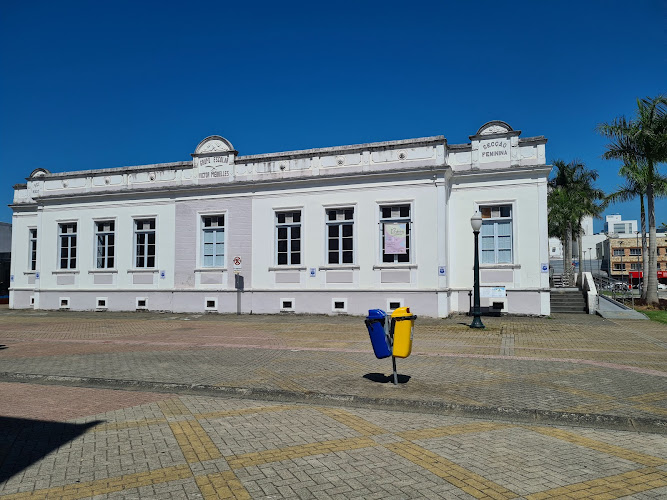
Itajaí History Museum
About Itajaí History Museum
Description
The Itajaí History Museum presents a focused, thoughtful look at the stories that shaped this port city on Brazil's southern coast. Housed in a handsome, well-maintained building in the city center, the museum collects and displays artifacts tied to maritime life, immigration, municipal government, and the industrial development that turned Itajaí into a regional hub. The arrangement feels intentionally curated rather than overwhelming — a mix of preserved objects, photographs, maps and interpretive panels that give context to the city’s evolution from a small fishing settlement into a busy port.
Visitors will notice the museum’s strong emphasis on local narratives. Exhibits highlight Portuguese, Azorean and German immigrant influences, shipping and river trade, and the technological shifts that altered work and daily life. There are archival documents and scaled models that make the past tangible. Some displays lean toward the academic, while others are surprisingly tactile and accessible for families. It’s the kind of place where a casual passerby can pick up a neat fact or two, and a history buff can linger over primary sources and photographs for longer stretches.
The museum places real value on accessibility and basic comfort. It provides a wheelchair-accessible entrance and an accessible restroom, which matters a lot — especially for travelers who plan carefully and don’t want to be surprised by stairs. Restroom facilities are available inside, though there is no onsite restaurant, so planning a snack stop before or after the visit is wise. The layout is compact, so the museum is manageable even on a rainy afternoon or a tight itinerary.
While exhibits rotate occasionally, the museum keeps a strong permanent collection that interprets Itajaí’s maritime heritage, municipal history, and cultural identity. Educational boards and occasional guided tours help contextualize complex subjects for younger audiences. The overall atmosphere is quietly proud — the museum is clearly a local institution, one that the community returns to as a reference point for identity and civic memory.
Many visitors leave with a clearer sense of the city's relationship to the sea, and of the waves of people and industry that shaped its skyline. It’s not a flashy attraction. It doesn’t need to be. For people who value layered stories over spectacle, the Itajaí History Museum offers a rewarding, steady experience.
Key Features
- Permanent and rotating exhibitions focused on maritime history, immigration, and municipal life
- Accessible entrance and wheelchair-accessible restroom for easier access
- Family-friendly displays and educational resources geared toward children and students
- Archival materials: photographs, documents and maps that appeal to researchers and history enthusiasts
- Compact layout that can be explored in 60–90 minutes, ideal for combining with nearby attractions
- Restroom facilities inside the building; note that there is no onsite restaurant
- Interpreted exhibits with bilingual or Portuguese-language signage (Portuguese primary; visitors often find translations or staff assistance)
- Temporary exhibits and small events that reflect local culture and seasonal themes
Best Time to Visit
The best time to visit depends on what one wants from the trip. For calmer crowds and a more contemplative visit, weekday mornings are ideal — the museum opens up to fewer visitors and the staff can sometimes offer a little more time for questions. If someone prefers a livelier atmosphere and the chance to catch special events or temporary exhibitions, late spring and early autumn often bring that energy. Summer months attract more tourists to the coast, so expect fuller galleries then; still, the museum remains a pleasant indoor option on hot or rainy days.
Weather plays a role in planning. Heavy rain can disrupt travel around the city but it also creates a perfect excuse to dive into indoor attractions; the museum is a good shelter from a storm and offers rich context to pair with waterfront walks when the skies clear. If visiting with children, aim for late morning when kids are fresh and exhibit labels feel less like a slog. Allow at least an hour, though two will satisfy visitors who want to read displays and browse archival items more deeply.
How to Get There
The museum sits within the central district of Itajaí, making it relatively easy to reach from downtown lodging and the waterfront. From the city center most visitors find it a short taxi or ride-hailing trip, and walking is practical for those staying nearby — expect a modest stroll through streets that reflect the town’s port-town character. Public buses serve the general area; local routes are affordable and frequent, but schedules can be irregular, so plan accordingly.
Travelers arriving by air typically use the regional airports that serve the Santa Catarina coast. A short drive or taxi ride from the nearby regional airport brings visitors into Itajaí; travelers coming from farther afield may connect through a larger airport and continue by bus, car or shuttle. Driving by car is straightforward for those comfortable with Brazilian road signs and city traffic; the museum is accessible from major highways that feed the Itajaí region, and limited street parking is available nearby. Note that parking can fill up during local events, so arriving early helps.
For visitors relying on public transit: check local bus maps and timetables in advance and allow extra time for transfers. Taxis and ride-hailing services are a convenient fallback, especially if the goal is to move on to other sights or restaurants afterward. The museum’s central location makes it a practical stop on a half-day itinerary that might include the port area, the municipal market, or a scenic walk along the riverfront.
Tips for Visiting
- Plan for 60–90 minutes to cover core exhibits; two hours if one intends to consult the archives or follow a guided talk.
- Check opening hours before going; small museums sometimes close for holidays or staff training days.
- There is no restaurant onsite. Bring a water bottle and plan a cafe stop afterward; the downtown area offers several casual options within walking distance.
- Photography policies vary by exhibit. Visitors should assume no-flash photography unless signage says otherwise, and ask staff about snapshots for study or personal use.
- Language note: exhibit labels are primarily in Portuguese. Visitors with limited Portuguese will still glean a lot from images and objects, but a translation app or a guided tour (if available) will deepen appreciation.
- Accessibility is a strong point here. The wheelchair-accessible entrance and restroom make the museum a solid choice for travelers with mobility considerations, though assistance may be limited for very specific needs — calling ahead is recommended for special arrangements.
- Bring small change or card; entrance fees, if charged, are typically modest but vary for special exhibitions or events.
- Combine the visit with nearby cultural stops. The museum pairs well with a walk along the riverfront or an exploration of other historical buildings in the center.
- If researching family or local history, ask about access to archival materials and any appointment requirements. The staff can often point researchers to digitized resources or make arrangements for viewing originals.
- Avoid peak tourist days if a quiet experience is preferred. Weekends and holiday periods are busier; weekday visits often feel more relaxed.
One often-overlooked advantage to visiting the Itajaí History Museum is the way it rewards curiosity. It doesn’t shout. Instead it layers detail upon detail — a shipping ledger here, a family photograph there — and before long visitors find themselves piecing together the big patterns. A frequent traveler who spent an afternoon there recalled how a single small exhibit on river commerce shifted their understanding of the region’s economy. That sort of slow revelation is the museum’s real charm: it nudges interest into knowledge without ever feeling the least bit pedantic.
Finally, practical common sense matters. Wear comfortable shoes, keep a hat or umbrella handy for sudden coastal weather changes, and if one wants a guided experience, inquire in advance about times and language availability. The Itajaí History Museum is an honest, grounded stop on any itinerary through Santa Catarina — not a blockbuster, but a place that quietly enriches a visit to the city and helps travelers leave with a clearer sense of place and history.
Key Features
- Permanent and rotating exhibitions focused on maritime history, immigration, and municipal life
- Accessible entrance and wheelchair-accessible restroom for easier access
- Family-friendly displays and educational resources geared toward children and students
- Archival materials: photographs, documents and maps that appeal to researchers and history enthusiasts
- Compact layout that can be explored in 60–90 minutes, ideal for combining with nearby attractions
- Restroom facilities inside the building; note that there is no onsite restaurant
- Interpreted exhibits with bilingual or Portuguese-language signage (Portuguese primary; visitors often find translations or staff assistance)
- Temporary exhibits and small events that reflect local culture and seasonal themes
More Details
Updated August 30, 2025
Table of Contents
Description
The Itajaí History Museum presents a focused, thoughtful look at the stories that shaped this port city on Brazil’s southern coast. Housed in a handsome, well-maintained building in the city center, the museum collects and displays artifacts tied to maritime life, immigration, municipal government, and the industrial development that turned Itajaí into a regional hub. The arrangement feels intentionally curated rather than overwhelming — a mix of preserved objects, photographs, maps and interpretive panels that give context to the city’s evolution from a small fishing settlement into a busy port.
Visitors will notice the museum’s strong emphasis on local narratives. Exhibits highlight Portuguese, Azorean and German immigrant influences, shipping and river trade, and the technological shifts that altered work and daily life. There are archival documents and scaled models that make the past tangible. Some displays lean toward the academic, while others are surprisingly tactile and accessible for families. It’s the kind of place where a casual passerby can pick up a neat fact or two, and a history buff can linger over primary sources and photographs for longer stretches.
The museum places real value on accessibility and basic comfort. It provides a wheelchair-accessible entrance and an accessible restroom, which matters a lot — especially for travelers who plan carefully and don’t want to be surprised by stairs. Restroom facilities are available inside, though there is no onsite restaurant, so planning a snack stop before or after the visit is wise. The layout is compact, so the museum is manageable even on a rainy afternoon or a tight itinerary.
While exhibits rotate occasionally, the museum keeps a strong permanent collection that interprets Itajaí’s maritime heritage, municipal history, and cultural identity. Educational boards and occasional guided tours help contextualize complex subjects for younger audiences. The overall atmosphere is quietly proud — the museum is clearly a local institution, one that the community returns to as a reference point for identity and civic memory.
Many visitors leave with a clearer sense of the city’s relationship to the sea, and of the waves of people and industry that shaped its skyline. It’s not a flashy attraction. It doesn’t need to be. For people who value layered stories over spectacle, the Itajaí History Museum offers a rewarding, steady experience.
Key Features
- Permanent and rotating exhibitions focused on maritime history, immigration, and municipal life
- Accessible entrance and wheelchair-accessible restroom for easier access
- Family-friendly displays and educational resources geared toward children and students
- Archival materials: photographs, documents and maps that appeal to researchers and history enthusiasts
- Compact layout that can be explored in 60–90 minutes, ideal for combining with nearby attractions
- Restroom facilities inside the building; note that there is no onsite restaurant
- Interpreted exhibits with bilingual or Portuguese-language signage (Portuguese primary; visitors often find translations or staff assistance)
- Temporary exhibits and small events that reflect local culture and seasonal themes
Best Time to Visit
The best time to visit depends on what one wants from the trip. For calmer crowds and a more contemplative visit, weekday mornings are ideal — the museum opens up to fewer visitors and the staff can sometimes offer a little more time for questions. If someone prefers a livelier atmosphere and the chance to catch special events or temporary exhibitions, late spring and early autumn often bring that energy. Summer months attract more tourists to the coast, so expect fuller galleries then; still, the museum remains a pleasant indoor option on hot or rainy days.
Weather plays a role in planning. Heavy rain can disrupt travel around the city but it also creates a perfect excuse to dive into indoor attractions; the museum is a good shelter from a storm and offers rich context to pair with waterfront walks when the skies clear. If visiting with children, aim for late morning when kids are fresh and exhibit labels feel less like a slog. Allow at least an hour, though two will satisfy visitors who want to read displays and browse archival items more deeply.
How to Get There
The museum sits within the central district of Itajaí, making it relatively easy to reach from downtown lodging and the waterfront. From the city center most visitors find it a short taxi or ride-hailing trip, and walking is practical for those staying nearby — expect a modest stroll through streets that reflect the town’s port-town character. Public buses serve the general area; local routes are affordable and frequent, but schedules can be irregular, so plan accordingly.
Travelers arriving by air typically use the regional airports that serve the Santa Catarina coast. A short drive or taxi ride from the nearby regional airport brings visitors into Itajaí; travelers coming from farther afield may connect through a larger airport and continue by bus, car or shuttle. Driving by car is straightforward for those comfortable with Brazilian road signs and city traffic; the museum is accessible from major highways that feed the Itajaí region, and limited street parking is available nearby. Note that parking can fill up during local events, so arriving early helps.
For visitors relying on public transit: check local bus maps and timetables in advance and allow extra time for transfers. Taxis and ride-hailing services are a convenient fallback, especially if the goal is to move on to other sights or restaurants afterward. The museum’s central location makes it a practical stop on a half-day itinerary that might include the port area, the municipal market, or a scenic walk along the riverfront.
Tips for Visiting
- Plan for 60–90 minutes to cover core exhibits; two hours if one intends to consult the archives or follow a guided talk.
- Check opening hours before going; small museums sometimes close for holidays or staff training days.
- There is no restaurant onsite. Bring a water bottle and plan a cafe stop afterward; the downtown area offers several casual options within walking distance.
- Photography policies vary by exhibit. Visitors should assume no-flash photography unless signage says otherwise, and ask staff about snapshots for study or personal use.
- Language note: exhibit labels are primarily in Portuguese. Visitors with limited Portuguese will still glean a lot from images and objects, but a translation app or a guided tour (if available) will deepen appreciation.
- Accessibility is a strong point here. The wheelchair-accessible entrance and restroom make the museum a solid choice for travelers with mobility considerations, though assistance may be limited for very specific needs — calling ahead is recommended for special arrangements.
- Bring small change or card; entrance fees, if charged, are typically modest but vary for special exhibitions or events.
- Combine the visit with nearby cultural stops. The museum pairs well with a walk along the riverfront or an exploration of other historical buildings in the center.
- If researching family or local history, ask about access to archival materials and any appointment requirements. The staff can often point researchers to digitized resources or make arrangements for viewing originals.
- Avoid peak tourist days if a quiet experience is preferred. Weekends and holiday periods are busier; weekday visits often feel more relaxed.
One often-overlooked advantage to visiting the Itajaí History Museum is the way it rewards curiosity. It doesn’t shout. Instead it layers detail upon detail — a shipping ledger here, a family photograph there — and before long visitors find themselves piecing together the big patterns. A frequent traveler who spent an afternoon there recalled how a single small exhibit on river commerce shifted their understanding of the region’s economy. That sort of slow revelation is the museum’s real charm: it nudges interest into knowledge without ever feeling the least bit pedantic.
Finally, practical common sense matters. Wear comfortable shoes, keep a hat or umbrella handy for sudden coastal weather changes, and if one wants a guided experience, inquire in advance about times and language availability. The Itajaí History Museum is an honest, grounded stop on any itinerary through Santa Catarina — not a blockbuster, but a place that quietly enriches a visit to the city and helps travelers leave with a clearer sense of place and history.
Key Highlights
- Permanent and rotating exhibitions focused on maritime history, immigration, and municipal life
- Accessible entrance and wheelchair-accessible restroom for easier access
- Family-friendly displays and educational resources geared toward children and students
- Archival materials: photographs, documents and maps that appeal to researchers and history enthusiasts
- Compact layout that can be explored in 60–90 minutes, ideal for combining with nearby attractions
- Restroom facilities inside the building; note that there is no onsite restaurant
- Interpreted exhibits with bilingual or Portuguese-language signage (Portuguese primary; visitors often find translations or staff assistance)
- Temporary exhibits and small events that reflect local culture and seasonal themes
Location
Places to Stay Near Itajaí History Museum
Find and Book a Tour
Explore More Travel Guides
No reviews found! Be the first to review!
Traveler Reviews for Itajaí History Museum
There are no reviews yet. Be the first one to write one.
Have you visited Itajaí History Museum? Help other travelers by sharing your review.
You Might Also Like
BioGarden Restaurante Vegetariano

Molhe de Itajaí
Centreventos Governador Luiz Henrique da Silveira
Find Accommodations Nearby
Recommended Tours & Activities
Visitor Reviews
There are no reviews yet. Be the first one to write one.
Share Your Experience
Have you visited Itajaí History Museum? Help other travelers by leaving a review.