Description
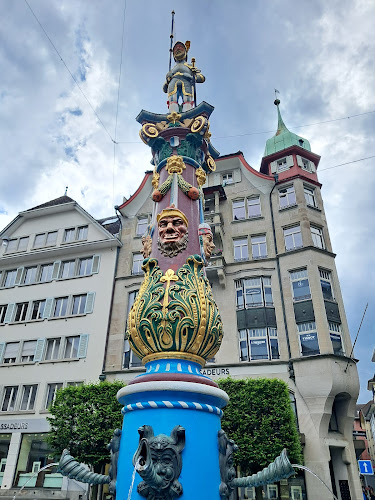
If you find yourself wandering the streets of Luzern and happen upon a quirky, brilliantly-painted fountain surrounded by curious onlookers snapping photos, chances are—yep, you’ve stumbled right into the Fritschibrunnen. This is not your average “pop in for a quick selfie and leave” spot. In fact, the Fritschibrunnen might just be one of Luzern’s most story-rich pieces of public art, and it’s a fascinating lens into Swiss carnival traditions, humor, and a dash of eccentricity. There’s something particularly gripping about a place that wears history and festivity on its sleeve—and in this case, on its painted statues.
I remember the first time I laid eyes on Fritschibrunnen. It was a chilly morning, the kind where your breath fogs in the air like you’re in one of those old detective movies, and yet, the fountain practically radiated warmth with its riot of colors and playful figures. It’s one of those spots where you find yourself walking slower, reading every detail, trying to make sense of the oddball characters and asking yourself, “Why does this guy have a mask?” (Short answer: Carnival. Longer answer: Keep reading!)
This historical landmark is not just a fountain; it’s the emblem of the Fritschi Society—one of Luzern’s legendary carnival guilds. Built in the early 20th century, its whimsical statues and painted surfaces celebrate Brother Fritschi, a merry figure and supposed jester whose origins are clouded in half-truths and tall tales. Locals take pride in this fountain, not just as an ornament, but as a symbol of Luzern’s long-standing tradition: the infernally fun, slightly wild Luzerner Fasnacht (carnival).
Fritschibrunnen sits almost unassumingly amongst the historic architecture, and I’d wager that many folks walk past without grasping its significance. That’s a shame, but also, it means if you give it the attention it deserves you’ll probably come away feeling like you’ve uncovered a bit of secret Swiss lore. It isn’t just for adults, either—kids are spellbound by the bright colors and eccentric statues. Plus (and this is rarely true of old city fountains), it’s fully wheelchair accessible. Major kudos for that.
Key Features
- Artistic Masterpiece: The fountain is lavishly decorated with striking colors, making it a favorite backdrop for photo enthusiasts and Instagrammers alike. There’s not a dull side to this piece.
- Rich Carnival Heritage: Fritschibrunnen honors the local Fasnacht (carnival) tradition—its statues and imagery reflect the mischief, satire, and joy of this unique festival. You’ll spot masks, jesters, symbolic fruits and fools’ caps—an absolute treat for anyone interested in folk traditions.
- Central Location: Plopped right in one of Luzern’s busiest squares, it’s the perfect pit-stop between shopping or sightseeing trips. And anyway, once you’re there, the cathedral and the Kapellbrücke are calling just a 5-minute walk away.
- Family-Friendly: Turns out fountains + colorful statues = magnet for kids. It’s a fantastic place to introduce young ones to a slice of Swiss culture in an immersive, fun way.
- Wheelchair Accessibility: An entrance designed for strollers and wheelchairs means nobody gets left out. That’s still surprisingly rare for older European landmarks.
- Quieter Than You’d Expect: Unlike other Luzern attractions, this fountain usually avoids throngs of tourists. More often, you’ll see curious locals, students grabbing coffee, or the odd group of carnival enthusiasts.
- Infamous Carnival Legend: The central figure, Brother Fritschi, is a legendary character wrapped in myth. Some say he was a real person, some think he’s myth-making at its best. That ambiguity just adds to the intrigue, if you ask me.
- Seasonal Surprises: Come Fasnacht, the fountain and square transform into a riotous center of music, costumed parades, and unrestrained celebration. Even outside carnival season, there are spontaneous local performances and congregations here that you just don’t find anywhere else.
Best Time to Visit
Here’s the honest scoop: the fountain is open to view all year round, so technically, there isn’t a “bad” time to see it. But if you want to catch Fritschibrunnen at its wild, dazzling best, plan your visit during Fasnacht, Luzern’s iconic carnival, which takes place in February or early March according to Lent. On those days, this usually tranquil landmark turns into the beating heart of Luzern’s joyful mayhem, with floats, confetti, barking brass bands, and masked revelers. Truly, the energy is infectious.
I visited in mid-September once, and it was a much quieter vibe—just me, a couple of schoolkids playing tag in the square, and a guy eating a sandwich who looked like he might secretly be a poet. If you prefer an atmosphere where you can actually take in the details, off-season—spring or autumn, in particular—is ideal. Mild weather and fewer crowds make it perfect for slow, thoughtful exploration (or, if you’re like me, a moment to scribble notes in your travel journal).
Summer is lovely too, though, and Luzern’s old town feels like a painting come to life, but you’ll have more tourists. Honestly, if all you want is a nice photo and ten minutes to soak up culture, any day will do. Just avoid the rain if you can help it—the bold paints glisten in the sun but look a little lonely under gray clouds.
How to Get There
Getting to Fritschibrunnen is as painless as it gets (which, if you’ve ever tried to chase landmarks across European cities, you know is a blessing). Located smack dab in Luzern’s old town, the fountain is just a short walk from the main train station. If you’re coming in by train, go through Bahnhofstrasse, head over the famous Chapel Bridge (which you absolutely should linger over!), and follow the signs for the Altstadt (old town).
For those driving, Luzern has parking garages dotted conveniently around the city center. I’ve found the Theaterplatz lot to be one of the least stressful options, plus, the walk to Fritschibrunnen takes you past some great bakeries—fresh Zopf bread and a fountain selfie? Don’t mind if I do.
If you’re cycling, Luzern is easy-going and cyclist-friendly with marked paths practically everywhere. You’ll find bike racks near the squares and public spaces, making it a breeze to lock up and explore on foot.
And let’s be honest, most travelers enjoy strolling the Altstadt’s cobbled paths. There’s always something new—a quirky shop, a mural, a waft of coffee—en route. Public transit, like buses and trams, will get you within a five-minute walk from the fountain. Check local maps; Luzern’s transport system is as reliable as a Swiss watch.
Tips for Visiting
Let’s cut to the chase: you want to do more here than just snap a photo and scroll onward. Here’s how to make your visit to Fritschibrunnen worth your while:
- Spend Time Studying the Details: Some of the jokes and references painted onto the statues are surprisingly cheeky. If you’re with someone local, ask for their take—you’ll get some brilliant stories and probably a wild theory or two.
- Consider the Angle: For the best pics, mid-morning sunlight makes those colors pop beautifully. Early evenings also bring gorgeous shadows and a softer glow, if you’re after a more moody aesthetic.
- Linger During Fasnacht: If you can, visit during carnival season. Bring earplugs if you’re sensitive to noise, but don’t miss the parade and music. Everyone, from toddlers to grandmas, is swept up in the revelry.
- Respect the Art: This is a living piece of Luzern’s history. Don’t climb the statues or dangle little ones into the basin for a better shot—local guides and shopkeepers do keep an eye out for such antics, with a friendly but firm word.
- Keep Change Handy: During certain local festivities, you might see costumed guild members collecting for charity or tradition—toss in a franc if you feel so inclined. It adds to the experience, trust me.
- Read Up Beforehand: Knowing a bit about Brother Fritschi’s legends and the meaning behind the carnival gives more depth to what you’re seeing. Even a quick browse before you visit makes those painted figures come alive in a way a casual visit just can’t match.
- Accessible for All: If you or anyone in your group uses a wheelchair or stroller, the ramped approach and wide open space mean no last-minute hurdles, thankfully.