
Fontana Pretoria
About Fontana Pretoria
Description
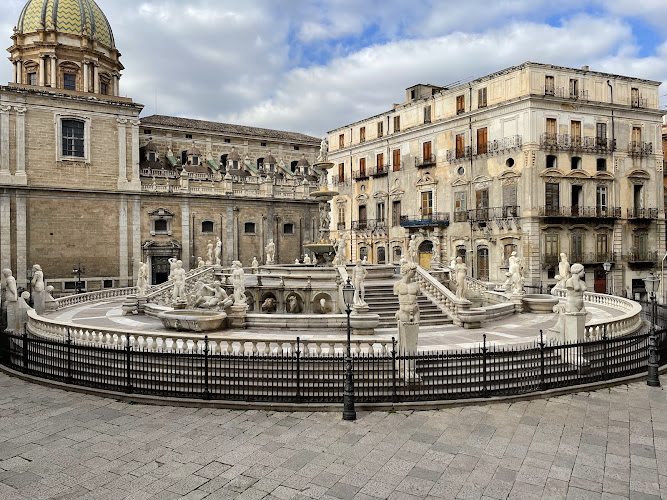
The Fontana Pretoria is one of those places that makes you stop mid-step and just stare for a while. Built in the 1500s by the Florentine sculptor Francesco Camilliani, it wasn’t originally meant for Palermo at all. The fountain was designed for a villa in Florence, but in 1574 it was dismantled into hundreds of pieces and shipped to Sicily, where it was reassembled in the heart of Palermo. Today, it dominates Piazza Pretoria, a square that feels like a stage with the fountain as the star performer.
What makes it so unforgettable is the sheer drama of the design. The fountain is tiered, sprawling, and dotted with dozens of statues—mythological gods, allegorical figures, and even animals. And yes, many of them are nude, which was a huge scandal back in the day. Locals were so shocked by the boldness of the figures that they nicknamed it the Fountain of Shame. I remember standing there on a hot afternoon, surrounded by tour groups whispering and giggling, and thinking, “If this caused outrage in the 16th century, imagine what else shocked people back then!”
Travelers’ reactions are mixed but mostly glowing. Some visitors find the nudity a bit much or the fountain too over-the-top, but most can’t help but be impressed by its scale and craftsmanship. Personally, I think its imperfections—like a chipped nose here or a weathered surface there—only add to its charm. It feels alive, like it has seen centuries of gossip, politics, and everyday life swirl around it.
Key Features
- A massive circular fountain with multiple tiers and basins
- Dozens of statues depicting Greek and Roman gods, river figures, and animals
- Nicknamed the “Fountain of Shame” due to the abundance of nude figures
- Originally built in Florence in 1554 and transported to Palermo in 1574
- Central location in Piazza Pretoria, surrounded by historic buildings and churches
- Photogenic details: flowing water, intricate carvings, and dramatic sculptural poses
Best Time to Visit
The fountain is outdoors and free to see, so timing is everything if you want the best experience. Early morning is magical—the piazza is quieter, the sunlight is soft, and you can actually hear the water trickling. By midday, the square fills with tourists and school groups, and it can feel a bit chaotic. Late afternoon is another sweet spot, when the golden Sicilian light makes the statues glow. If you’re into photography, avoid harsh noon sun; it flattens the details.
I once wandered through the piazza around 7 am while the city was still waking up, and it felt like I had the fountain all to myself. That’s when you notice the little things: the way the water splashes gently against the marble, or how the statues seem to watch you from every angle.
How to Get There
Reaching Fontana Pretoria is straightforward since it sits right in the historic center of Palermo. If you’re already exploring the old town, chances are you’ll stumble upon it while walking between landmarks like Quattro Canti or the Church of San Giuseppe dei Teatini. The square is pedestrian-friendly, though the cobblestones can be a bit uneven—so wear comfortable shoes.
Public transport in Palermo can be a little unpredictable, but buses and taxis will drop you close enough. Personally, I prefer walking; you get to soak in the atmosphere of the narrow streets, the smell of espresso wafting from cafés, and the occasional glimpse of laundry strung across balconies. Driving here is possible, but parking is a headache and honestly not worth the stress.
Tips for Visiting
First off, don’t rush. It’s tempting to snap a quick photo and move on, but the fountain rewards patience. Walk around it slowly, circle it a few times, and notice how each statue has its own personality. Some look serene, others mischievous, and a few downright odd.
If you’re traveling with kids, they’ll probably find the statues amusing (though you might have to answer a few awkward questions about the nudity). The piazza itself is open and safe for families to wander. However, keep in mind there isn’t much shade, so bring water and maybe a hat in summer.
Accessibility is a bit limited—there’s no dedicated wheelchair parking right at the piazza, and the surrounding streets can be tricky for strollers or wheelchairs. Still, the fountain can be admired from multiple angles without needing to climb stairs.
And here’s a little personal trick: visit twice if you can, once in daylight and once at night. Under the street lamps, the statues take on a more mysterious, almost theatrical vibe. It feels like they’re frozen mid-performance, waiting for the curtain to rise again.
Lastly, keep an eye on your belongings. Like many popular tourist spots, the piazza can attract pickpockets. A crossbody bag or money belt is your friend here. But don’t let that worry overshadow the experience. Take your time, enjoy the details, and let the fountain tell its centuries-old story.
Key Features
- A massive circular fountain with multiple tiers and basins
- Dozens of statues depicting Greek and Roman gods, river figures, and animals
- Nicknamed the “Fountain of Shame” due to the abundance of nude figures
- Originally built in Florence in 1554 and transported to Palermo in 1574
- Central location in Piazza Pretoria, surrounded by historic buildings and churches
- Photogenic details: flowing water, intricate carvings, and dramatic sculptural poses
More Details
Updated September 23, 2025
Table of Contents
Description
The Fontana Pretoria is one of those places that makes you stop mid-step and just stare for a while. Built in the 1500s by the Florentine sculptor Francesco Camilliani, it wasn’t originally meant for Palermo at all. The fountain was designed for a villa in Florence, but in 1574 it was dismantled into hundreds of pieces and shipped to Sicily, where it was reassembled in the heart of Palermo. Today, it dominates Piazza Pretoria, a square that feels like a stage with the fountain as the star performer.
What makes it so unforgettable is the sheer drama of the design. The fountain is tiered, sprawling, and dotted with dozens of statues—mythological gods, allegorical figures, and even animals. And yes, many of them are nude, which was a huge scandal back in the day. Locals were so shocked by the boldness of the figures that they nicknamed it the Fountain of Shame. I remember standing there on a hot afternoon, surrounded by tour groups whispering and giggling, and thinking, “If this caused outrage in the 16th century, imagine what else shocked people back then!”
Travelers’ reactions are mixed but mostly glowing. Some visitors find the nudity a bit much or the fountain too over-the-top, but most can’t help but be impressed by its scale and craftsmanship. Personally, I think its imperfections—like a chipped nose here or a weathered surface there—only add to its charm. It feels alive, like it has seen centuries of gossip, politics, and everyday life swirl around it.
Key Features
- A massive circular fountain with multiple tiers and basins
- Dozens of statues depicting Greek and Roman gods, river figures, and animals
- Nicknamed the “Fountain of Shame” due to the abundance of nude figures
- Originally built in Florence in 1554 and transported to Palermo in 1574
- Central location in Piazza Pretoria, surrounded by historic buildings and churches
- Photogenic details: flowing water, intricate carvings, and dramatic sculptural poses
Best Time to Visit
The fountain is outdoors and free to see, so timing is everything if you want the best experience. Early morning is magical—the piazza is quieter, the sunlight is soft, and you can actually hear the water trickling. By midday, the square fills with tourists and school groups, and it can feel a bit chaotic. Late afternoon is another sweet spot, when the golden Sicilian light makes the statues glow. If you’re into photography, avoid harsh noon sun; it flattens the details.
I once wandered through the piazza around 7 am while the city was still waking up, and it felt like I had the fountain all to myself. That’s when you notice the little things: the way the water splashes gently against the marble, or how the statues seem to watch you from every angle.
How to Get There
Reaching Fontana Pretoria is straightforward since it sits right in the historic center of Palermo. If you’re already exploring the old town, chances are you’ll stumble upon it while walking between landmarks like Quattro Canti or the Church of San Giuseppe dei Teatini. The square is pedestrian-friendly, though the cobblestones can be a bit uneven—so wear comfortable shoes.
Public transport in Palermo can be a little unpredictable, but buses and taxis will drop you close enough. Personally, I prefer walking; you get to soak in the atmosphere of the narrow streets, the smell of espresso wafting from cafés, and the occasional glimpse of laundry strung across balconies. Driving here is possible, but parking is a headache and honestly not worth the stress.
Tips for Visiting
First off, don’t rush. It’s tempting to snap a quick photo and move on, but the fountain rewards patience. Walk around it slowly, circle it a few times, and notice how each statue has its own personality. Some look serene, others mischievous, and a few downright odd.
If you’re traveling with kids, they’ll probably find the statues amusing (though you might have to answer a few awkward questions about the nudity). The piazza itself is open and safe for families to wander. However, keep in mind there isn’t much shade, so bring water and maybe a hat in summer.
Accessibility is a bit limited—there’s no dedicated wheelchair parking right at the piazza, and the surrounding streets can be tricky for strollers or wheelchairs. Still, the fountain can be admired from multiple angles without needing to climb stairs.
And here’s a little personal trick: visit twice if you can, once in daylight and once at night. Under the street lamps, the statues take on a more mysterious, almost theatrical vibe. It feels like they’re frozen mid-performance, waiting for the curtain to rise again.
Lastly, keep an eye on your belongings. Like many popular tourist spots, the piazza can attract pickpockets. A crossbody bag or money belt is your friend here. But don’t let that worry overshadow the experience. Take your time, enjoy the details, and let the fountain tell its centuries-old story.
Key Highlights
- A massive circular fountain with multiple tiers and basins
- Dozens of statues depicting Greek and Roman gods, river figures, and animals
- Nicknamed the “Fountain of Shame” due to the abundance of nude figures
- Originally built in Florence in 1554 and transported to Palermo in 1574
- Central location in Piazza Pretoria, surrounded by historic buildings and churches
- Photogenic details: flowing water, intricate carvings, and dramatic sculptural poses
Location
Places to Stay Near Fontana Pretoria
Find and Book a Tour
Explore More Travel Guides
No reviews found! Be the first to review!
Traveler Reviews for Fontana Pretoria
There are no reviews yet. Be the first one to write one.
Have you visited Fontana Pretoria? Help other travelers by sharing your review.
You Might Also Like

Zisa Palace
Giardini di Piazza Indipendenza

Museo Palazzo Branciforte
Find Accommodations Nearby
Recommended Tours & Activities
Visitor Reviews
There are no reviews yet. Be the first one to write one.
Share Your Experience
Have you visited Fontana Pretoria? Help other travelers by leaving a review.