
Fontaine de Janus
About Fontaine de Janus
Key Features
More Details
Updated June 11, 2025
## Fontaine de Janus (Place Broglie), Strasbourg: what it is and why it exists
The Fontaine de Janus stands at the end of Place Broglie, near Strasbourg’s opera house. Tourism Office It was created in 1988 to mark Strasbourg’s 2,000th anniversary—a nod to the city’s Roman-era identity as Argentoratum. Tourism Office
If you’ve heard someone dismiss it as “nothing special,” it usually means they’ve missed what the work is actually doing: it’s a modern monument that compresses two millennia of Strasbourg’s history into a compact set of symbols—Roman origins, city geography, and a long-running cultural duality.
—
## Where it is
– Address: 18 Place Broglie, 67000 Strasbourg, France (Place Broglie, on the Grande Île—the historic central island).
– Position on the square: Place Broglie is a long rectangular square; the Janus Fountain is described at the western end / end of the square, near the bridge toward the Neustadt.
—
## What you’re looking at
### An “aqueduct” frame + a Janus head
The Strasbourg tourist office describes it as a two-faced fountain in the shape of an aqueduct. Tourism Office That aqueduct-like structure is not decorative filler—it’s a deliberate reference to Strasbourg’s Roman origins. Tourism Office
### Two faces, two directions
The fountain’s double face references Janus, the Roman god associated with thresholds and duality. The local Strasbourg write-up adds a specific directional symbolism: one face looks toward the Grande Île (the historic center/past) and the other toward the Neustadt (“new city”/future). Strasbourg
—
## Who designed it (and how it was made)
– The fountain was designed/drawn by Alsatian illustrator Tomi Ungerer for Strasbourg’s 2,000-year celebration in 1988. Tourism Office
– A local account states it was cast in Germany by Strasbourg sculptor Denis Roth. Strasbourg
(Those two statements can both be true: a work can be designed by one artist and produced/cast by another. The sources above explicitly attribute design to Ungerer and casting to Roth.) Strasbourg
—
## The inscriptions that anchor the “2,000 years” claim
A Strasbourg local-history article notes inscriptions on the aqueduct element:
– “Argentoratum MM” (Argentoratum = Strasbourg’s Latin name)
– “Strasbourg 2000” Strasbourg
These inscriptions are the most literal explanation of why the monument exists: it’s a civic anniversary marker tied to the Roman-era name.
—
## Why it matters in a Strasbourg walk
### It’s a history “hinge” between two Strasbourgs
The tourist office is explicit that the fountain symbolizes:
– Roman origins
– Strasbourg’s Franco-German duality Tourism Office
Place Broglie itself sits in the historic core and is framed by major civic buildings; the fountain is positioned where the city transitions toward the Neustadt.
### It’s also a useful orientation point
Because it’s described at the end of Place Broglie near the opera house, it’s an easy “meet-here” landmark when navigating the center. Tourism Office
—
## Factual notes on “outdated data” risk
– Date (1988) and purpose (2,000th anniversary) are consistently stated by the Strasbourg tourist office and other sources cited above. Tourism Office
– Design attribution to Tomi Ungerer is stated by the tourist office and a local Strasbourg account. Tourism Office
– If you see other websites assigning authorship differently, treat them as less authoritative than the city’s tourist office page unless they provide primary documentation. Tourism Office
Key Highlights
Fontaine de Janus
Location
Places to Stay Near Fontaine de Janus"Nothing special about this place."
Find and Book a Tour
Explore More Travel Guides
No reviews found! Be the first to review!
Traveler Reviews for Fontaine de Janus
There are no reviews yet. Be the first one to write one.
Have you visited Fontaine de Janus? Help other travelers by sharing your review.
You Might Also Like
La Petite France
Barrage Vauban
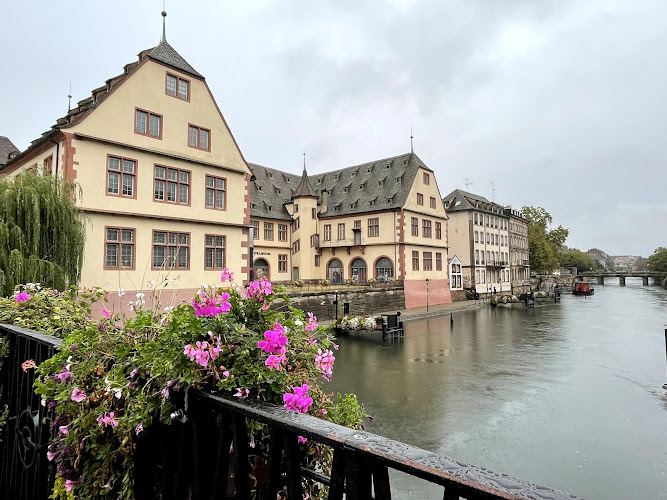
Historical Museum of the City of Strasbourg
Find Accommodations Nearby
Recommended Tours & Activities
Visitor Reviews
There are no reviews yet. Be the first one to write one.
Share Your Experience
Have you visited Fontaine de Janus? Help other travelers by leaving a review.