
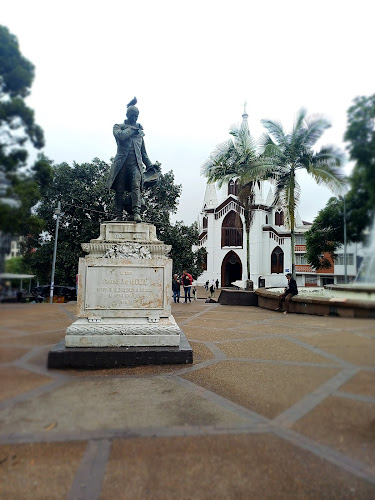
Escultura de Francisco José de Caldas
About Escultura de Francisco José de Caldas
Description
There’s something quietly powerful about standing before the Escultura de Francisco José de Caldas in Manizales. It’s not just another statue you pass by on your way to a café; it’s a piece of Colombian history cast in bronze, a tribute to a man who shaped the nation’s scientific and intellectual identity. Francisco José de Caldas—scientist, geographer, and patriot—wasn’t just a historical figure; he was a symbol of curiosity and resilience. And somehow, this sculpture manages to capture that essence perfectly.
The sculpture, one of three in Colombia dedicated to Caldas, was created in the early 20th century by the French artist Charles Raoul Verlet. The artist’s attention to detail is remarkable—the folds of Caldas’s coat, the thoughtful expression on his face, the subtle way his hand rests on a celestial globe. It’s as if the statue is mid-thought, reflecting the mind of a man who once mapped the stars and dreamed of a free Colombia. You can actually feel that energy when you stand close enough; it’s like time slows down for a moment.
Located in the heart of Manizales, this sculpture doesn’t scream for attention. Instead, it invites reflection. The surrounding park, often filled with locals chatting or sipping coffee, adds to the calm atmosphere. You might even hear the faint hum of city life blending with birdsong—a fitting soundtrack for a monument honoring a thinker who spent his life observing the natural world. I remember the first time I saw it; I wasn’t expecting to linger, but I did. There’s something magnetic about it, something that makes you want to know more about the man behind the bronze.
Key Features
- Historical Significance: The sculpture honors Francisco José de Caldas, a Colombian scientist and hero of independence, often called “El Sabio Caldas.”
- Artistic Heritage: Designed by French sculptor Charles Raoul Verlet around 1904, it’s a fine example of early 20th-century bronze craftsmanship.
- Symbolic Details: The globe and telescope featured in the sculpture symbolize Caldas’s contributions to geography and astronomy.
- Peaceful Setting: Surrounded by trees and benches, the park offers a quiet spot to pause and reflect amid the city’s bustle.
- Cultural Connection: It’s one of only three statues of Caldas in Colombia—the others are in Bogotá and Popayán—making this one a must-see for history enthusiasts.
- Photographic Appeal: The interplay of light on the bronze surface throughout the day makes for beautiful photos, especially during golden hour.
Best Time to Visit
If you ask locals, they’ll tell you mornings are the best time to visit. The air in Manizales is crisp, and the light hits the statue just right, casting soft shadows that bring out every detail. Midday can get a bit busy with people passing through, but that’s also when you’ll catch the true rhythm of the city. I personally love visiting in the late afternoon. There’s this warm glow that settles over the park, and the bronze seems to come alive. Plus, it’s a great time to grab a coffee from a nearby café and just sit for a while, watching life unfold around the monument.
Weather-wise, Manizales is known for its cool, misty climate—part of its charm, really. Even if it rains (and it probably will at some point), the drizzle adds a poetic touch. Just bring a light jacket or umbrella, and you’ll be fine. The sculpture looks particularly striking under a gentle rain, the bronze glistening like it’s been freshly polished by nature itself.
How to Get There
Getting to the Escultura de Francisco José de Caldas is straightforward, especially if you’re already exploring central Manizales. The city’s compact layout means most landmarks are within walking distance or a short taxi ride away. Public transportation is reliable, and local buses frequently pass near the main park areas. If you’re staying in one of the boutique hotels or hostels nearby, you can easily stroll over—it’s a pleasant walk, with plenty of little shops and street vendors along the way.
And honestly, walking is the best way to experience Manizales. The city’s hills can be a workout (trust me, you’ll feel it in your legs), but the views and the spontaneous encounters—like a chat with a friendly vendor or the aroma of fresh arepas wafting through the air—make it worth it. If you prefer convenience, taxis and ride-sharing apps are affordable and widely available.
Tips for Visiting
Here’s the thing about places like this: they’re not just for taking pictures (though you’ll definitely want a few). They’re for feeling connected—to history, to place, and maybe even to yourself. That said, a few practical tips can make your visit smoother and more enjoyable:
- Take your time: Don’t rush. Spend a few minutes really looking at the sculpture—the details, the posture, the expression. It tells a story if you let it.
- Bring a camera or phone: The lighting changes throughout the day, and every hour gives you a different perspective. Early morning and late afternoon are especially photogenic.
- Learn a bit about Caldas beforehand: Knowing who he was adds depth to the experience. He wasn’t just a scientist; he was a symbol of Colombia’s intellectual awakening.
- Respect the space: It’s a public monument and a piece of national heritage. Treat it with care, and avoid climbing or touching the sculpture.
- Enjoy the surroundings: The nearby park is perfect for people-watching or just soaking in the atmosphere. Grab a coffee, sit on a bench, and let the city move around you.
- Visit nearby attractions: Manizales has plenty more to offer—historic churches, scenic viewpoints, and local markets full of character. The sculpture can be part of a lovely walking itinerary through the city center.
And one small personal note—don’t be surprised if you find yourself unexpectedly moved. I’ve seen countless monuments in my travels, but this one has a quiet dignity that sticks with you. Maybe it’s the way Caldas’s gaze seems fixed on something beyond the horizon, or maybe it’s what he represents: a reminder that knowledge, courage, and curiosity can shape a nation. Whatever it is, it leaves an impression long after you’ve walked away.
So, if you’re planning a trip to Manizales, make time for the Escultura de Francisco José de Caldas. It’s not the loudest or flashiest attraction, but it’s one of those places that rewards those who slow down and look a little closer. And honestly, isn’t that what good travel is all about?
Key Features
- Key Features
- Best Time to Visit
- How to Get There
- Tips for Visiting
More Details
Updated November 9, 2025
Table of Contents
Description
There’s something quietly powerful about standing before the Escultura de Francisco José de Caldas in Manizales. It’s not just another statue you pass by on your way to a café; it’s a piece of Colombian history cast in bronze, a tribute to a man who shaped the nation’s scientific and intellectual identity. Francisco José de Caldas—scientist, geographer, and patriot—wasn’t just a historical figure; he was a symbol of curiosity and resilience. And somehow, this sculpture manages to capture that essence perfectly.
The sculpture, one of three in Colombia dedicated to Caldas, was created in the early 20th century by the French artist Charles Raoul Verlet. The artist’s attention to detail is remarkable—the folds of Caldas’s coat, the thoughtful expression on his face, the subtle way his hand rests on a celestial globe. It’s as if the statue is mid-thought, reflecting the mind of a man who once mapped the stars and dreamed of a free Colombia. You can actually feel that energy when you stand close enough; it’s like time slows down for a moment.
Located in the heart of Manizales, this sculpture doesn’t scream for attention. Instead, it invites reflection. The surrounding park, often filled with locals chatting or sipping coffee, adds to the calm atmosphere. You might even hear the faint hum of city life blending with birdsong—a fitting soundtrack for a monument honoring a thinker who spent his life observing the natural world. I remember the first time I saw it; I wasn’t expecting to linger, but I did. There’s something magnetic about it, something that makes you want to know more about the man behind the bronze.
Key Features
- Historical Significance: The sculpture honors Francisco José de Caldas, a Colombian scientist and hero of independence, often called “El Sabio Caldas.”
- Artistic Heritage: Designed by French sculptor Charles Raoul Verlet around 1904, it’s a fine example of early 20th-century bronze craftsmanship.
- Symbolic Details: The globe and telescope featured in the sculpture symbolize Caldas’s contributions to geography and astronomy.
- Peaceful Setting: Surrounded by trees and benches, the park offers a quiet spot to pause and reflect amid the city’s bustle.
- Cultural Connection: It’s one of only three statues of Caldas in Colombia—the others are in Bogotá and Popayán—making this one a must-see for history enthusiasts.
- Photographic Appeal: The interplay of light on the bronze surface throughout the day makes for beautiful photos, especially during golden hour.
Best Time to Visit
If you ask locals, they’ll tell you mornings are the best time to visit. The air in Manizales is crisp, and the light hits the statue just right, casting soft shadows that bring out every detail. Midday can get a bit busy with people passing through, but that’s also when you’ll catch the true rhythm of the city. I personally love visiting in the late afternoon. There’s this warm glow that settles over the park, and the bronze seems to come alive. Plus, it’s a great time to grab a coffee from a nearby café and just sit for a while, watching life unfold around the monument.
Weather-wise, Manizales is known for its cool, misty climate—part of its charm, really. Even if it rains (and it probably will at some point), the drizzle adds a poetic touch. Just bring a light jacket or umbrella, and you’ll be fine. The sculpture looks particularly striking under a gentle rain, the bronze glistening like it’s been freshly polished by nature itself.
How to Get There
Getting to the Escultura de Francisco José de Caldas is straightforward, especially if you’re already exploring central Manizales. The city’s compact layout means most landmarks are within walking distance or a short taxi ride away. Public transportation is reliable, and local buses frequently pass near the main park areas. If you’re staying in one of the boutique hotels or hostels nearby, you can easily stroll over—it’s a pleasant walk, with plenty of little shops and street vendors along the way.
And honestly, walking is the best way to experience Manizales. The city’s hills can be a workout (trust me, you’ll feel it in your legs), but the views and the spontaneous encounters—like a chat with a friendly vendor or the aroma of fresh arepas wafting through the air—make it worth it. If you prefer convenience, taxis and ride-sharing apps are affordable and widely available.
Tips for Visiting
Here’s the thing about places like this: they’re not just for taking pictures (though you’ll definitely want a few). They’re for feeling connected—to history, to place, and maybe even to yourself. That said, a few practical tips can make your visit smoother and more enjoyable:
- Take your time: Don’t rush. Spend a few minutes really looking at the sculpture—the details, the posture, the expression. It tells a story if you let it.
- Bring a camera or phone: The lighting changes throughout the day, and every hour gives you a different perspective. Early morning and late afternoon are especially photogenic.
- Learn a bit about Caldas beforehand: Knowing who he was adds depth to the experience. He wasn’t just a scientist; he was a symbol of Colombia’s intellectual awakening.
- Respect the space: It’s a public monument and a piece of national heritage. Treat it with care, and avoid climbing or touching the sculpture.
- Enjoy the surroundings: The nearby park is perfect for people-watching or just soaking in the atmosphere. Grab a coffee, sit on a bench, and let the city move around you.
- Visit nearby attractions: Manizales has plenty more to offer—historic churches, scenic viewpoints, and local markets full of character. The sculpture can be part of a lovely walking itinerary through the city center.
And one small personal note—don’t be surprised if you find yourself unexpectedly moved. I’ve seen countless monuments in my travels, but this one has a quiet dignity that sticks with you. Maybe it’s the way Caldas’s gaze seems fixed on something beyond the horizon, or maybe it’s what he represents: a reminder that knowledge, courage, and curiosity can shape a nation. Whatever it is, it leaves an impression long after you’ve walked away.
So, if you’re planning a trip to Manizales, make time for the Escultura de Francisco José de Caldas. It’s not the loudest or flashiest attraction, but it’s one of those places that rewards those who slow down and look a little closer. And honestly, isn’t that what good travel is all about?
Key Highlights
- Key Features
- Best Time to Visit
- How to Get There
- Tips for Visiting
Location
Places to Stay Near Escultura de Francisco José de Caldas
Find and Book a Tour
Explore More Travel Guides
No reviews found! Be the first to review!
Traveler Reviews for Escultura de Francisco José de Caldas
There are no reviews yet. Be the first one to write one.
Have you visited Escultura de Francisco José de Caldas? Help other travelers by sharing your review.
You Might Also Like

Manizales
Reserva Natural Torre 4
Letras "Welcome to" Manizales
Find Accommodations Nearby
Recommended Tours & Activities
Visitor Reviews
There are no reviews yet. Be the first one to write one.
Share Your Experience
Have you visited Escultura de Francisco José de Caldas? Help other travelers by leaving a review.