About Concatedral – Basílica de Santa María de Vigo

Description

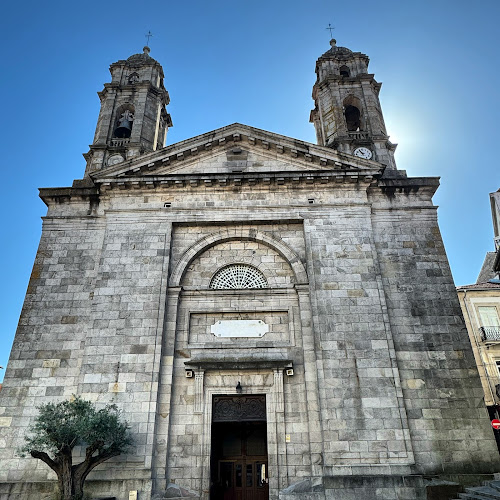
The Concatedral – Basílica de Santa María de Vigo is one of those places that quietly commands your attention, not because it’s flashy or monumental, but because it feels... grounded. Built in the early 1800s, this neoclassical church stands as a calm, steady presence in the heart of Vigo’s old town. Its stone façade is plain at first glance—almost austere—but the simplicity is what makes it beautiful. It’s like the kind of elegance that doesn’t need to shout to be noticed. Inside, the space opens up with a barrel-vaulted ceiling and soft frescoes that seem to whisper stories of devotion and patience rather than scream grandeur.

What struck me when I first walked in wasn’t just the architecture but the quiet. You can actually hear your footsteps echo, which, in a world full of noise, feels oddly comforting. The church isn’t massive, and that’s part of its charm. It feels human-sized, approachable. You can sit in one of the pews and just take a breath, watching sunlight filter through the windows, picking up the faint scent of old wood and candle wax. There’s something deeply personal about it. It’s not trying to impress; it’s just there, steady and timeless.

And yet, despite its modesty, the basilica has a certain weight in the city’s story. It’s been the spiritual heart of Vigo for centuries, witnessing the ebb and flow of fishing boats, festivals, and the city’s transformation from a small port to a bustling urban hub. Locals still come here for processions and celebrations, especially during Holy Week—it’s one of those places where faith and tradition still feel alive, not just preserved for tourists.

It’s not perfect, of course. The lighting can be dim, and if you’re expecting ornate gold altars or jaw-dropping mosaics, you might leave underwhelmed. But that’s missing the point. The Concatedral isn’t about spectacle—it’s about presence. It’s about that feeling of stillness that sneaks up on you when you least expect it. And honestly, in a busy travel itinerary full of viewpoints and tapas bars, that kind of pause is priceless.

Key Features

  • Neoclassical Design: Clean lines, symmetrical forms, and a restrained elegance that reflects the early 19th century’s architectural ideals.
  • Barrel-Vaulted Ceiling: The graceful curve of the ceiling adds depth and a sense of quiet grandeur to the interior.
  • Frescoes and Artwork: Subtle, time-worn frescoes decorate the walls and ceiling, giving the space a lived-in, sacred warmth.
  • Accessible Entrance: The main entrance is wheelchair accessible, making it easier for all visitors to experience the basilica.
  • Historic Significance: A cornerstone of Vigo’s religious and cultural identity, deeply tied to local traditions and processions.
  • Peaceful Atmosphere: A quiet refuge from the busy streets outside—perfect for reflection or simply catching your breath.

Best Time to Visit

If you ask me, the best time to visit is early in the morning, before the city fully wakes up. The light is soft, the air still smells faintly of the sea, and you can have the place almost to yourself. It’s during those hours that the basilica feels most authentic, when you can sense the rhythm of daily life beginning around it. Late afternoon is another lovely window, especially if you’re chasing that golden-hour glow that makes the stone façade look almost honey-colored.

For those who enjoy local culture, timing your visit with one of the religious processions can be unforgettable. The Holy Week celebrations, in particular, bring the basilica to life in a way that’s hard to describe—somber music, flickering candles, and a sense of community that’s both old-fashioned and deeply human. But if you’re not a fan of crowds, it’s better to visit outside of major festivals when you can wander freely and take your time.

Weather-wise, spring and early autumn are ideal. Vigo’s coastal climate means mild temperatures and fewer tourists, so you can enjoy the city’s historical center without feeling rushed. Summer can get busy, and while winter has its charm, the dampness might make lingering outside less appealing. Still, if you’re like me and enjoy the moody charm of rainy days, the basilica looks particularly poetic under a gray sky.

How to Get There

The basilica sits right in Vigo’s old town, so getting there is pretty straightforward once you’re in the city. If you’re staying nearby, it’s a short and pleasant walk through narrow cobbled streets lined with cafés and small shops. The route itself feels like part of the experience—every turn reveals a new slice of local life, from fishermen chatting in Galician to the smell of fresh bread wafting out of bakeries.

For those coming from farther out, local buses stop within walking distance, and taxis are easy to find. Vigo’s public transport system is reliable, but honestly, walking is the way to go if you can. The city’s historic core isn’t large, and wandering through it gives you a much better feel for its character. Just wear comfortable shoes—those old stone streets can be unforgiving if you’re not prepared.

If you’re driving, parking can be tricky. The area around the basilica has limited options, and the streets are narrow. It’s better to park a bit farther away and stroll in. That way, you can take in the atmosphere rather than stressing about maneuvering through tight corners. Plus, it gives you an excuse to stop for a coffee along the way.

Tips for Visiting

First off, take your time. This isn’t the kind of place you rush through. Sit down, look up, and let your eyes adjust to the dim light. You’ll start to notice little details—the texture of the stone, the faint shimmer of old paint, the way sound carries softly through the nave. It’s those small moments that stick with you.

Photography is allowed, but do it respectfully. Avoid flash, especially if there’s a service taking place. And if you’re lucky enough to visit during a procession, remember that for locals, it’s a deeply spiritual event. Stand back, watch quietly, and soak it in. It’s a humbling reminder that travel isn’t just about seeing new things—it’s about understanding them.

Accessibility-wise, the entrance is wheelchair friendly, though the surrounding streets can be uneven. There aren’t restrooms inside, so plan accordingly. And bring a light jacket—even in summer, the interior can feel cool thanks to the thick stone walls. If you’re sensitive to temperature changes, you’ll appreciate being prepared.

One last thing: don’t skip exploring the nearby square after your visit. Grab a seat at one of the outdoor cafés and just watch life unfold. Kids playing, locals chatting, the occasional street musician—it’s Vigo distilled into a single scene. That’s the thing about the Concatedral de Santa María: it’s not just a building. It’s part of the city’s heartbeat, quietly pulsing alongside everyday life. And once you’ve been there, you’ll understand why it lingers in your memory long after you’ve left.

Key Features

  • Key Features
  • Best Time to Visit
  • How to Get There
  • Tips for Visiting

More Details

Updated November 9, 2025

Description

The Concatedral – Basílica de Santa María de Vigo is one of those places that quietly commands your attention, not because it’s flashy or monumental, but because it feels… grounded. Built in the early 1800s, this neoclassical church stands as a calm, steady presence in the heart of Vigo’s old town. Its stone façade is plain at first glance—almost austere—but the simplicity is what makes it beautiful. It’s like the kind of elegance that doesn’t need to shout to be noticed. Inside, the space opens up with a barrel-vaulted ceiling and soft frescoes that seem to whisper stories of devotion and patience rather than scream grandeur.

What struck me when I first walked in wasn’t just the architecture but the quiet. You can actually hear your footsteps echo, which, in a world full of noise, feels oddly comforting. The church isn’t massive, and that’s part of its charm. It feels human-sized, approachable. You can sit in one of the pews and just take a breath, watching sunlight filter through the windows, picking up the faint scent of old wood and candle wax. There’s something deeply personal about it. It’s not trying to impress; it’s just there, steady and timeless.

And yet, despite its modesty, the basilica has a certain weight in the city’s story. It’s been the spiritual heart of Vigo for centuries, witnessing the ebb and flow of fishing boats, festivals, and the city’s transformation from a small port to a bustling urban hub. Locals still come here for processions and celebrations, especially during Holy Week—it’s one of those places where faith and tradition still feel alive, not just preserved for tourists.

It’s not perfect, of course. The lighting can be dim, and if you’re expecting ornate gold altars or jaw-dropping mosaics, you might leave underwhelmed. But that’s missing the point. The Concatedral isn’t about spectacle—it’s about presence. It’s about that feeling of stillness that sneaks up on you when you least expect it. And honestly, in a busy travel itinerary full of viewpoints and tapas bars, that kind of pause is priceless.

Key Features

  • Neoclassical Design: Clean lines, symmetrical forms, and a restrained elegance that reflects the early 19th century’s architectural ideals.
  • Barrel-Vaulted Ceiling: The graceful curve of the ceiling adds depth and a sense of quiet grandeur to the interior.
  • Frescoes and Artwork: Subtle, time-worn frescoes decorate the walls and ceiling, giving the space a lived-in, sacred warmth.
  • Accessible Entrance: The main entrance is wheelchair accessible, making it easier for all visitors to experience the basilica.
  • Historic Significance: A cornerstone of Vigo’s religious and cultural identity, deeply tied to local traditions and processions.
  • Peaceful Atmosphere: A quiet refuge from the busy streets outside—perfect for reflection or simply catching your breath.

Best Time to Visit

If you ask me, the best time to visit is early in the morning, before the city fully wakes up. The light is soft, the air still smells faintly of the sea, and you can have the place almost to yourself. It’s during those hours that the basilica feels most authentic, when you can sense the rhythm of daily life beginning around it. Late afternoon is another lovely window, especially if you’re chasing that golden-hour glow that makes the stone façade look almost honey-colored.

For those who enjoy local culture, timing your visit with one of the religious processions can be unforgettable. The Holy Week celebrations, in particular, bring the basilica to life in a way that’s hard to describe—somber music, flickering candles, and a sense of community that’s both old-fashioned and deeply human. But if you’re not a fan of crowds, it’s better to visit outside of major festivals when you can wander freely and take your time.

Weather-wise, spring and early autumn are ideal. Vigo’s coastal climate means mild temperatures and fewer tourists, so you can enjoy the city’s historical center without feeling rushed. Summer can get busy, and while winter has its charm, the dampness might make lingering outside less appealing. Still, if you’re like me and enjoy the moody charm of rainy days, the basilica looks particularly poetic under a gray sky.

How to Get There

The basilica sits right in Vigo’s old town, so getting there is pretty straightforward once you’re in the city. If you’re staying nearby, it’s a short and pleasant walk through narrow cobbled streets lined with cafés and small shops. The route itself feels like part of the experience—every turn reveals a new slice of local life, from fishermen chatting in Galician to the smell of fresh bread wafting out of bakeries.

For those coming from farther out, local buses stop within walking distance, and taxis are easy to find. Vigo’s public transport system is reliable, but honestly, walking is the way to go if you can. The city’s historic core isn’t large, and wandering through it gives you a much better feel for its character. Just wear comfortable shoes—those old stone streets can be unforgiving if you’re not prepared.

If you’re driving, parking can be tricky. The area around the basilica has limited options, and the streets are narrow. It’s better to park a bit farther away and stroll in. That way, you can take in the atmosphere rather than stressing about maneuvering through tight corners. Plus, it gives you an excuse to stop for a coffee along the way.

Tips for Visiting

First off, take your time. This isn’t the kind of place you rush through. Sit down, look up, and let your eyes adjust to the dim light. You’ll start to notice little details—the texture of the stone, the faint shimmer of old paint, the way sound carries softly through the nave. It’s those small moments that stick with you.

Photography is allowed, but do it respectfully. Avoid flash, especially if there’s a service taking place. And if you’re lucky enough to visit during a procession, remember that for locals, it’s a deeply spiritual event. Stand back, watch quietly, and soak it in. It’s a humbling reminder that travel isn’t just about seeing new things—it’s about understanding them.

Accessibility-wise, the entrance is wheelchair friendly, though the surrounding streets can be uneven. There aren’t restrooms inside, so plan accordingly. And bring a light jacket—even in summer, the interior can feel cool thanks to the thick stone walls. If you’re sensitive to temperature changes, you’ll appreciate being prepared.

One last thing: don’t skip exploring the nearby square after your visit. Grab a seat at one of the outdoor cafés and just watch life unfold. Kids playing, locals chatting, the occasional street musician—it’s Vigo distilled into a single scene. That’s the thing about the Concatedral de Santa María: it’s not just a building. It’s part of the city’s heartbeat, quietly pulsing alongside everyday life. And once you’ve been there, you’ll understand why it lingers in your memory long after you’ve left.

Key Highlights

  • Key Features
  • Best Time to Visit
  • How to Get There
  • Tips for Visiting

Location

Places to Stay Near Concatedral - Basílica de Santa María de Vigo

Find and Book a Tour

Explore More Travel Guides

No reviews found! Be the first to review!

Traveler Reviews for Concatedral – Basílica de Santa María de Vigo

There are no reviews yet. Be the first one to write one.

Share Your Experience

Have you visited Concatedral – Basílica de Santa María de Vigo? Help other travelers by sharing your review.

Find Accommodations Nearby

Recommended Tours & Activities

Visitor Reviews

There are no reviews yet. Be the first one to write one.

Share Your Experience

Have you visited Concatedral – Basílica de Santa María de Vigo? Help other travelers by leaving a review.