
Monumento a Jules Verne
About Monumento a Jules Verne
Description
Perched along the scenic coastline of Vigo, the Monumento a Jules Verne is one of those curious landmarks that manages to be both whimsical and thought-provoking at the same time. Dedicated to the legendary French writer who never actually lived here but somehow captured the spirit of the place in his novel “Twenty Thousand Leagues Under the Sea,” this sculpture is a delightful nod to imagination, adventure, and the city’s deep maritime roots. It’s not the kind of monument that overwhelms you with grandeur—it’s more of a quiet surprise, the sort of thing you stumble upon while wandering and then find yourself smiling at for no particular reason.
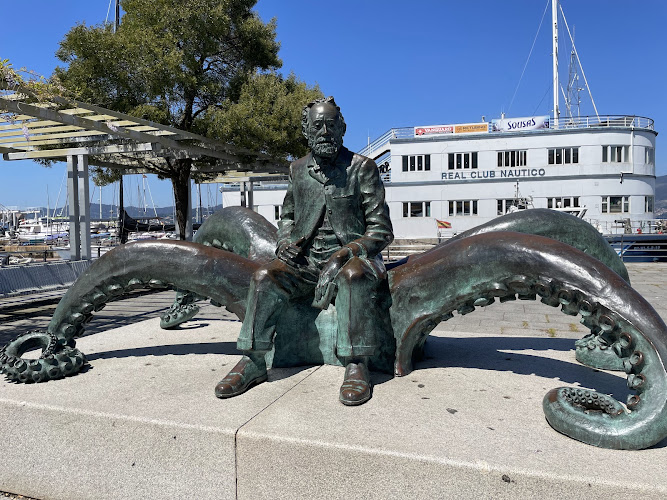
The bronze sculpture depicts Verne seated comfortably on a giant octopus, as if they’ve just finished an underwater expedition together and decided to take in the view of the Ría de Vigo. The craftsmanship is remarkable—you can see the fine details in the tentacles, the folds of Verne’s coat, and even the calm expression on his face. It’s playful but also deeply symbolic, a reminder of the city’s connection to the sea and to the stories that have shaped its identity. I remember the first time I saw it, I was caught off guard by how approachable it felt. You don’t just look at it—you kind of want to walk around it, touch the bronze, and imagine what conversation Verne might be having with that octopus.
What makes this monument even more interesting is how it ties into Vigo’s identity as a seafaring city. Verne wrote about Vigo in his novel long before tourism made it famous, describing the bay’s hidden treasures and its mysterious underwater world. Locals love to tell you that he “put Vigo on the map,” and honestly, they’re not wrong. The sculpture captures that sense of wonder and discovery perfectly. It’s also accessible to everyone, with a wheelchair-friendly entrance and plenty of open space around it, making it easy for all visitors to enjoy.
While some travelers might find it smaller or more understated than expected, most end up appreciating its charm once they take a moment to really look. It’s not about size—it’s about the feeling it gives you. The combination of the sea breeze, the sound of gulls, and this odd yet beautiful statue somehow makes you feel like you’ve stepped into a story yourself. And if you’re the kind of person who enjoys finding meaning in small details, you’ll love this place.
Key Features
- Bronze sculpture depicting Jules Verne seated atop a giant octopus, symbolizing his connection to the sea and imagination.
- Located along Vigo’s waterfront, offering panoramic views of the Ría de Vigo and nearby harbor.
- Created by sculptor José M. Acuña in 2005, blending artistic creativity with literary homage.
- Serves as a cultural landmark celebrating the link between literature and maritime history.
- Wheelchair-accessible area with smooth pathways and open public space suitable for all visitors.
- Popular photography spot, especially at sunrise and sunset when the bronze surface glows in golden light.
- Surrounded by benches and walking paths, making it a pleasant stop for a relaxed stroll or quiet reflection.
Best Time to Visit
The Monumento a Jules Verne can be visited year-round, but the experience changes with the seasons. Spring and early autumn are arguably the best times—temperatures are mild, the skies are usually clear, and the sea breeze feels refreshing rather than chilly. During these months, the light hits the sculpture just right, making it look almost alive. If you visit in summer, expect more people, especially in the late afternoon when locals and tourists alike gather along the waterfront for a walk or to watch the sunset. It’s lively then, a bit noisy, but in a nice, buzzing kind of way.
Winter visits have their charm too. The crowds thin out, and there’s something poetic about standing by the sea with the wind in your face, looking at Verne and his octopus as waves crash nearby. I’ve done that once on a gray January morning, and it had this oddly cinematic feel—like I’d wandered into a scene from one of his novels. So, really, there’s no bad time to go. It just depends on what kind of atmosphere you’re after.
How to Get There
Getting to the Monumento a Jules Verne is fairly straightforward, especially if you’re already exploring Vigo’s city center or waterfront. It’s within walking distance of the marina area, so if you’re staying nearby, you can easily reach it on foot. The walk itself is lovely—you’ll pass by cafés, small shops, and the occasional street musician, which adds a bit of local flavor to the experience. For those coming from further away, local buses run frequently and stop close to the waterfront. Taxis and rideshare services are also available and reasonably priced.
If you’re driving, parking can be a bit tricky during peak hours, but there are several paid lots within a short walk. Personally, I’d recommend walking if you can. There’s something about approaching the monument slowly, with the sea opening up in front of you and the sculpture coming into view, that makes the moment feel more special. Plus, it gives you time to take in the surroundings—the boats, the salty air, and the general rhythm of the port.
Tips for Visiting
Here’s the thing about the Monumento a Jules Verne: it’s not just a quick photo stop. Sure, you’ll want to take pictures (and you should—it’s incredibly photogenic), but give yourself a few extra minutes to just stand there and soak it in. The view of the bay is spectacular, and the sculpture has this quiet presence that grows on you the longer you look. If you’re into literature, bring a copy of one of Verne’s books with you—it makes the moment feel even more connected. I once saw a traveler reading “Twenty Thousand Leagues Under the Sea” right there by the statue, and it just felt right.
Try visiting early in the morning or around sunset for the best light and fewer people. The bronze takes on a warm, golden hue that’s perfect for photos. Also, keep an eye on the weather—Vigo’s coastal winds can be strong, so a light jacket is a good idea even in summer. And if you’re traveling with kids, they’ll probably love the octopus; it’s one of those sculptures that invites curiosity and imagination.
After your visit, consider exploring the nearby waterfront promenade. There are plenty of cafés where you can grab a coffee or a glass of Albariño wine while watching the boats drift by. It’s one of those simple pleasures that make travel feel meaningful. And if you’re the kind of traveler who likes to find hidden gems, this monument is a perfect example—it’s not the biggest or most famous, but it’s got heart, history, and a touch of magic that stays with you long after you’ve left.
In the end, the Monumento a Jules Verne isn’t just a sculpture—it’s a story told in bronze, a tribute to imagination, and a reminder that adventure often begins with curiosity. Whether you’re a literature lover, a history buff, or just someone who enjoys discovering places with soul, this spot in Vigo is absolutely worth your time. And who knows—maybe it’ll spark your own sense of adventure too.
Key Features
- Bronze sculpture depicting Jules Verne seated atop a giant octopus, symbolizing his connection to the sea and imagination.
- Located along Vigo’s waterfront, offering panoramic views of the Ría de Vigo and nearby harbor.
- Created by sculptor José M. Acuña in 2005, blending artistic creativity with literary homage.
- Serves as a cultural landmark celebrating the link between literature and maritime history.
- Wheelchair-accessible area with smooth pathways and open public space suitable for all visitors.
- Popular photography spot, especially at sunrise and sunset when the bronze surface glows in golden light.
- Surrounded by benches and walking paths, making it a pleasant stop for a relaxed stroll or quiet reflection.
More Details
Updated November 9, 2025
Table of Contents Perched along the scenic coastline of Vigo, the Monumento a Jules Verne is one of those curious landmarks that manages to be both whimsical and thought-provoking at the same time. Dedicated to the legendary French writer who never actually lived here but somehow captured the spirit of the place in his novel “Twenty Thousand Leagues Under the Sea,” this sculpture is a delightful nod to imagination, adventure, and the city’s deep maritime roots. It’s not the kind of monument that overwhelms you with grandeur—it’s more of a quiet surprise, the sort of thing you stumble upon while wandering and then find yourself smiling at for no particular reason. The bronze sculpture depicts Verne seated comfortably on a giant octopus, as if they’ve just finished an underwater expedition together and decided to take in the view of the Ría de Vigo. The craftsmanship is remarkable—you can see the fine details in the tentacles, the folds of Verne’s coat, and even the calm expression on his face. It’s playful but also deeply symbolic, a reminder of the city’s connection to the sea and to the stories that have shaped its identity. I remember the first time I saw it, I was caught off guard by how approachable it felt. You don’t just look at it—you kind of want to walk around it, touch the bronze, and imagine what conversation Verne might be having with that octopus. What makes this monument even more interesting is how it ties into Vigo’s identity as a seafaring city. Verne wrote about Vigo in his novel long before tourism made it famous, describing the bay’s hidden treasures and its mysterious underwater world. Locals love to tell you that he “put Vigo on the map,” and honestly, they’re not wrong. The sculpture captures that sense of wonder and discovery perfectly. It’s also accessible to everyone, with a wheelchair-friendly entrance and plenty of open space around it, making it easy for all visitors to enjoy. While some travelers might find it smaller or more understated than expected, most end up appreciating its charm once they take a moment to really look. It’s not about size—it’s about the feeling it gives you. The combination of the sea breeze, the sound of gulls, and this odd yet beautiful statue somehow makes you feel like you’ve stepped into a story yourself. And if you’re the kind of person who enjoys finding meaning in small details, you’ll love this place. The Monumento a Jules Verne can be visited year-round, but the experience changes with the seasons. Spring and early autumn are arguably the best times—temperatures are mild, the skies are usually clear, and the sea breeze feels refreshing rather than chilly. During these months, the light hits the sculpture just right, making it look almost alive. If you visit in summer, expect more people, especially in the late afternoon when locals and tourists alike gather along the waterfront for a walk or to watch the sunset. It’s lively then, a bit noisy, but in a nice, buzzing kind of way. Winter visits have their charm too. The crowds thin out, and there’s something poetic about standing by the sea with the wind in your face, looking at Verne and his octopus as waves crash nearby. I’ve done that once on a gray January morning, and it had this oddly cinematic feel—like I’d wandered into a scene from one of his novels. So, really, there’s no bad time to go. It just depends on what kind of atmosphere you’re after. Getting to the Monumento a Jules Verne is fairly straightforward, especially if you’re already exploring Vigo’s city center or waterfront. It’s within walking distance of the marina area, so if you’re staying nearby, you can easily reach it on foot. The walk itself is lovely—you’ll pass by cafés, small shops, and the occasional street musician, which adds a bit of local flavor to the experience. For those coming from further away, local buses run frequently and stop close to the waterfront. Taxis and rideshare services are also available and reasonably priced. If you’re driving, parking can be a bit tricky during peak hours, but there are several paid lots within a short walk. Personally, I’d recommend walking if you can. There’s something about approaching the monument slowly, with the sea opening up in front of you and the sculpture coming into view, that makes the moment feel more special. Plus, it gives you time to take in the surroundings—the boats, the salty air, and the general rhythm of the port. Here’s the thing about the Monumento a Jules Verne: it’s not just a quick photo stop. Sure, you’ll want to take pictures (and you should—it’s incredibly photogenic), but give yourself a few extra minutes to just stand there and soak it in. The view of the bay is spectacular, and the sculpture has this quiet presence that grows on you the longer you look. If you’re into literature, bring a copy of one of Verne’s books with you—it makes the moment feel even more connected. I once saw a traveler reading “Twenty Thousand Leagues Under the Sea” right there by the statue, and it just felt right. Try visiting early in the morning or around sunset for the best light and fewer people. The bronze takes on a warm, golden hue that’s perfect for photos. Also, keep an eye on the weather—Vigo’s coastal winds can be strong, so a light jacket is a good idea even in summer. And if you’re traveling with kids, they’ll probably love the octopus; it’s one of those sculptures that invites curiosity and imagination. After your visit, consider exploring the nearby waterfront promenade. There are plenty of cafés where you can grab a coffee or a glass of Albariño wine while watching the boats drift by. It’s one of those simple pleasures that make travel feel meaningful. And if you’re the kind of traveler who likes to find hidden gems, this monument is a perfect example—it’s not the biggest or most famous, but it’s got heart, history, and a touch of magic that stays with you long after you’ve left. In the end, the Monumento a Jules Verne isn’t just a sculpture—it’s a story told in bronze, a tribute to imagination, and a reminder that adventure often begins with curiosity. Whether you’re a literature lover, a history buff, or just someone who enjoys discovering places with soul, this spot in Vigo is absolutely worth your time. And who knows—maybe it’ll spark your own sense of adventure too.Description
Key Features
Best Time to Visit
How to Get There
Tips for Visiting
Key Highlights
- Bronze sculpture depicting Jules Verne seated atop a giant octopus, symbolizing his connection to the sea and imagination.
- Located along Vigo’s waterfront, offering panoramic views of the Ría de Vigo and nearby harbor.
- Created by sculptor José M. Acuña in 2005, blending artistic creativity with literary homage.
- Serves as a cultural landmark celebrating the link between literature and maritime history.
- Wheelchair-accessible area with smooth pathways and open public space suitable for all visitors.
- Popular photography spot, especially at sunrise and sunset when the bronze surface glows in golden light.
- Surrounded by benches and walking paths, making it a pleasant stop for a relaxed stroll or quiet reflection.
Location
Places to Stay Near Monumento a Jules Verne
Find and Book a Tour
Explore More Travel Guides
No reviews found! Be the first to review!
Traveler Reviews for Monumento a Jules Verne
There are no reviews yet. Be the first one to write one.
Have you visited Monumento a Jules Verne? Help other travelers by sharing your review.
You Might Also Like
Mercado da Pedra

Castro de Vigo

Museo Quiñones de León
Find Accommodations Nearby
Recommended Tours & Activities
Visitor Reviews
There are no reviews yet. Be the first one to write one.
Share Your Experience
Have you visited Monumento a Jules Verne? Help other travelers by leaving a review.