
Casa Luís Augusto Perestrelo de Vasconcelos
About Casa Luís Augusto Perestrelo de Vasconcelos
Key Features
More Details
Updated April 15, 2024
## Casa Luís Augusto Perestrelo de Vasconcelos in Cascais: A Short, Precise Guide
Casa Luís Augusto Perestrelo de Vasconcelos is one of the most distinctive summer mansions (palacetes) on Avenida Dom Carlos I in Cascais, part of the town’s celebrated belt of late-19th-century seaside architecture.
It stands on Avenida Dom Carlos I, no. 246, facing towards the bay area, with official GPS coordinates around 38.69485, –9.42023.
The building belongs to the set known locally as arquitetura de veraneio (“summer architecture”) – a group of villas and chalets that grew up after Cascais became a favored resort for the Portuguese royal family and Lisbon’s elite in the late 19th century.
—
## Historical Background
### Who was Luís Augusto Perestrelo de Vasconcelos?
Municipal and historical references identify Luís Augusto Perestrelo de Vasconcelos (1822–1907) as 1st Viscount of São Torquato and a counsellor to King D. Carlos.
His house on Avenida Dom Carlos I was part of the transformation of Cascais into a high-status seaside retreat. The avenue itself was inaugurated in 1899 as the main access to the Cidadela and seafront, and several aristocratic residences rose along it at the same time.
### Construction date and original character
Multiple academic and municipal documents describe Casa Luís Augusto Perestrelo de Vasconcelos as a palacete dated to 1899, placing it firmly in the Belle-Époque wave of Cascais development.
These same studies characterise it as:
– A palacete of “romantic” architectural matrix
– With a façade where the window embrasures are framed and crowned by small neoclassical pediments on the main floor, alternating triangular and segmental forms
Together, these details show how the house combines Romantic sensibility with neo-classical ornament, typical of Cascais’ resort architecture of the period.
—
## Architecture: What You Can Actually See
Because this is primarily a heritage residence rather than a museum, publicly available information focuses on its exterior. Travel and heritage sites list it as a relevant historic house / monument, but do not consistently describe public visiting hours inside. Please
From recent photographic documentation, a visitor viewing the building from the street can clearly identify several features:
### Façade and overall massing
– The house presents itself as a large, asymmetric mansion, with a taller volume on one side and lower wings extending along the avenue.
– The elevation facing Avenida Dom Carlos I shows strong vertical elements – pilaster-like projections and tower-like masses – that reinforce the palacete character seen in other Cascais mansions of the same period.
### Romantic structure with neo-classical detail
Academic descriptions emphasize the romantic base of the architecture, while highlighting the way openings are treated:
– Window openings (“vãos”) on the noble floor are framed and crowned with small neo-classical pediments.
– These pediments alternate between triangular and segmental (arched) shapes, a deliberate pattern that adds rhythm to the façade.
Seen in photos, this matches the stone window surrounds and pedimented heads lining the main balcony level.
### Arcaded balcony and loggia
On the principal elevation, an arcaded balcony/loggia runs across a central section:
– A row of closely spaced arches forms a deep balcony at the upper level, one of the most visible elements from the street.
– This balcony rests on projecting brackets and a strong string course, visually separating the main floor from the ground level.
### Openings and ornament
Visible details include:
– Pointed or slightly ogival window heads on some lower openings, echoing neo-Gothic and Romantic tastes.
– Projecting stone cornices and mouldings reinforcing horizontal lines of the façade.
– Decorative balconies in carved stone, particularly around the upper-floor windows, aligning with written descriptions of elaborately framed openings.
### Colour and setting today
Recent images show the building in warm pastel tones (such as soft ochre) with pale stone trim, standing above a boundary wall with mature palm trees around it.
These colours are consistent with many restorations of Cascais seaside villas, although specific interventions and paint schemes can change over time. Any current colour or conservation details should always be double-checked on-site, as façades do occasionally get repainted or repaired.
—
## Where Exactly It Sits in Cascais
Official mapping for the “Arquitetura de Veraneio” (Summer Architecture Route) places Casa Luís Augusto Perestrelo de Vasconcelos at:
– Avenida D. Carlos I, no. 246
– GPS: 38.694851, –9.420235
The same route lists neighbouring landmark houses along the same avenue:
– Casa Trindade Baptista (no. 238)
– Casa dos Condes de Monte Real
– Chalet Leitão
– Casa Maria Helena
This concentration means that simply walking Avenida Dom Carlos I effectively becomes a compact open-air gallery of late-19th-century seaside villas.
Cascais itself grew rapidly as a seaside resort and “capital of leisure” for Lisbon society after the arrival of the railway and the regular summer presence of the royal family in the late 1800s.
—
## How to See Casa Luís Augusto Perestrelo de Vasconcelos
### Street-level viewing
Based on current official and travel-guide information, Casa Luís Augusto Perestrelo de Vasconcelos is treated as a heritage building / monument, not as a walk-in public museum. Please
The most reliable way to experience it is from the outside, along Avenida Dom Carlos I:
– You can clearly view the main façade, arcaded balcony and window pediments from the public pavement.
– The avenue is part of a wider pedestrian-friendly area around the Cidadela and bay, described in municipal and historical sources as a key access route completed in 1899.
Because opening arrangements for private or semi-private buildings can change, any information about interior access that you may find on third-party blogs or booking sites should be treated with caution unless confirmed directly with Cascais Municipality or Visit Cascais.
### Combining it with nearby sights
From a purely geographic perspective, Casa Luís Augusto Perestrelo de Vasconcelos sits a short walk from Cascais’ main cluster of heritage sites around the bay and the Parque / Museu Condes de Castro Guimarães area.
Two natural internal-link opportunities on RealJourneyTravels would be:
– A broader overview of things to do in Cascais – to connect this façade stop with the town’s beaches, parks and museums.
– A detailed guide to Cascais’ summer architecture route – tying together this house with Casa de Santa Maria, the Castro Guimarães palace and other late-19th-century villas.
(Here, the links are structural suggestions; you can wire them to whichever internal URLs you use for those topics.)
—
## Why This House Matters
Academic work on Cascais’ architecture highlights Casa Luís Augusto Perestrelo de Vasconcelos as a representative example of summer-resort palacetes acting as “collective memory” of the town’s transformation in the late 19th century.
In practice, for a traveller walking through Cascais, the house is valuable because:
– It visibly condenses the shift from fishing village to aristocratic resort – big romantic massing, but with urban, almost city-palace detailing.
– It stands in a continuous sequence of notable houses along Avenida Dom Carlos I, making it easy to compare different interpretations of status and comfort in the same period.
– Its pedimented windows and arcaded balcony are textbook examples of the decorative language used by Cascais’ elite to project refinement at the water’s edge.
—
## Practical Notes and Data Caveats
To keep things strictly factual:
– Construction date (1899), romantic matrix, and neo-classical pediments are documented in municipal / academic PDFs and tourism studies.
– Address and coordinates come from Cascais’ official summer-architecture map.
– Role of Luís Augusto Perestrelo de Vasconcelos as 1st Viscount of São Torquato and royal counsellor, plus the dating of the house, are recorded on historical and photographic resources.
– Current use and public-access policy are not clearly specified in primary municipal sources; most recent listings simply treat it as a heritage building or “monument”, so any claim that it operates as a museum, hotel or private club would be speculative at this time.
Because municipal policies, restoration projects and access rules change, it is sensible for readers to verify up-to-date conditions with:
– Cascais Municipality cultural heritage pages
– Official Visit Cascais or Bairro dos Museus information portals
Within those limits, Casa Luís Augusto Perestrelo de Vasconcelos remains a reliable, street-visible stop for anyone interested in Cascais’ late-19th-century seaside architecture and the social history of Portugal’s “Riviera” era.
Key Highlights
Casa Luís Augusto Perestrelo de Vasconcelos
Location
Places to Stay Near Casa Luís Augusto Perestrelo de Vasconcelos
Find and Book a Tour
Explore More Travel Guides
No reviews found! Be the first to review!
Traveler Reviews for Casa Luís Augusto Perestrelo de Vasconcelos
There are no reviews yet. Be the first one to write one.
Have you visited Casa Luís Augusto Perestrelo de Vasconcelos? Help other travelers by sharing your review.
You Might Also Like
Farol do Cabo Raso
Antigos Paços do Concelho
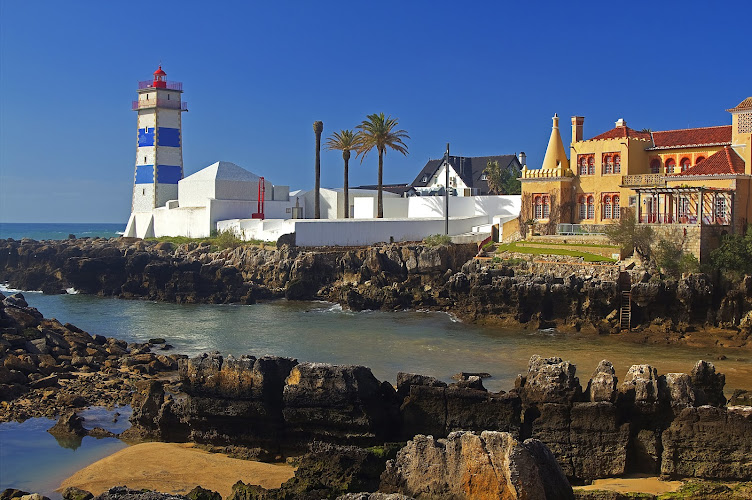
Santa Maria House Museum
Find Accommodations Nearby
Recommended Tours & Activities
Visitor Reviews
There are no reviews yet. Be the first one to write one.
Share Your Experience
Have you visited Casa Luís Augusto Perestrelo de Vasconcelos? Help other travelers by leaving a review.