
Citadel of Cascais
About Citadel of Cascais
Key Features
More Details
Updated April 15, 2024
The Best Things to Do in Cascais On a Day Trip from Lisbon
## Citadel of Cascais (Cidadela de Cascais): What to Know Before You Go
If you’re in Cascais and want a place that layers coastal defense history, royal-era Portugal, and a very modern arts-and-hospitality reuse into one compact area, the Citadel of Cascais is the logical stop. It’s a fortified complex built over multiple phases (roughly 15th to 17th centuries) as part of protecting the Cascais coastline and the Tagus River estuary approaches to Lisbon.
The site sits right by the water in Cascais (2750-642 Cascais, Portugal) and is commonly referred to as the Cidadela de Cascais. Your coordinates put you at 38.6939297, -9.4193536, consistent with the waterfront citadel zone near the marina.
—
## What, exactly, is the “Citadel of Cascais”?
One point that’s easy to miss: what people call the “citadel” isn’t a single building. It’s a set of connected fortifications and areas that developed over time. A commonly cited breakdown is that the complex incorporates:
– the Tower of Santo António de Cascais
– the Fortress of Nossa Senhora da Luz de Cascais (Fortress of Our Lady of Light)
– and a former Royal Palace area
That matters on the ground, because your experience is less “tour one monument” and more “move through an active complex” where different parts have different access rules.
—
## Why it was built: coastline defense + the Lisbon approach
Cascais isn’t just a beach town; it’s positioned near the western edge of the Tagus estuary’s Atlantic approach. The citadel’s defensive role is consistently described as protecting the coastline/estuary and reducing vulnerability to attacks targeting Lisbon.
If you like reading fortifications, look for:
– thick seaward-facing walls and bastion geometry (built to manage angles of fire and reduce blind spots)
– elevated viewpoints that make sense only when you imagine ship approach routes
– zones that feel “inner” vs “outer”—a clue you’re walking through additions from different centuries rather than one unified plan
—
## The Fortress of Nossa Senhora da Luz: what makes it distinct
Within the wider citadel area, the Fortaleza de Nossa Senhora da Luz is specifically described as a 16th-century fortress built to defend Cascais Bay, part of a “string” of Tagus estuary fortresses aimed at protecting Lisbon. It’s also described as having sea views and a small open-air artillery museum.
That open-air artillery element is worth flagging because it changes how you plan:
– It’s inherently weather-exposed (wind/sun/rain).
– You’ll get more from it if you slow down and read it as a coastal defense system, not as isolated cannons.
—
## Today’s reality: heritage site + arts district + hotel
This is where Cascais gets interesting: the citadel is not preserved as a sealed museum complex. Parts of it have been repurposed into an Art District and hospitality.
### Cidadela Art District (inside/along the citadel complex)
The Cidadela Art District is described as a cluster of galleries, studios, shops, and project rooms where artists show work—essentially a contemporary layer inside a historic envelope.
What that means for visitors:
– You can have a “two-speed” visit: slow, reflective fort-walk outside; then short, high-density gallery pops inside.
– Don’t expect everything to feel like a museum. Some spaces are active (studios, rotating exhibits), so what you see can vary. (That variability is normal for contemporary art districts.)
### Hotel within the fortress complex
There is also a 5-star hotel concept integrated into the citadel, marketed as a “Pousada & Art District,” and described as being surrounded by studios/galleries/museums, positioned in/around the fortress setting. Hotel Group
This has a practical implication: certain courtyards/entrances can feel like they “belong” to the hotel even when you’re still within the historic complex footprint. If you’re trying to see specific architectural elements, you may need to loop around rather than push through a hotel-controlled area.
—
## A high-signal way to experience the citadel (without overplanning)
If you want the most value per minute, use this sequence:
### 1) Start with the seaward edge
Begin where you can immediately see:
– wall thickness
– sightlines over the water
– how the site controls approach angles
Even if you’re not a military-architecture nerd, this gives you a mental model for everything else.
### 2) Transition inward toward the mixed-use core
As you move away from the water, you’ll feel the site shift from “defense” to “complex.” That’s your cue you’re entering the area where modern uses (arts/hospitality) are layered into older structures.
### 3) Use the Art District as a “palette cleanser”
After you’ve absorbed stone, geometry, and sea glare, step into one or two exhibition spaces. The contrast is the point: it helps you notice what’s old, what’s restored, and what’s intentionally modern.
—
## Practical visit tips that don’t depend on fragile details
Because hours, access rules, and ticketing can change, I’m not going to claim specific opening times or prices here. (If you need them, the safest move is to verify on official channels close to your visit date.) One tourism guide does publish detailed hour/ticket claims, but those are exactly the kind of details that age fast. Portugal Tourism
Instead, here’s what reliably improves the experience:
– Footwear: expect uneven stone and hard surfaces; wear shoes you’d be fine standing in for an hour.
– Wind & light: the waterfront setting can be bright and breezy—bring sun protection and a light layer if you’re sensitive.
– Photography: stone + sea = high contrast. If you care about photos, aim for softer light (morning/late afternoon) rather than midday glare.
– Accessibility reality-check: fortifications often mean steps, thresholds, and narrow passages; plan flexibility if mobility is a concern.
—
## Cultural context most people skip: it’s still politically “alive”
The Citadel of Cascais is described as serving as an official summer residence for the President of Portugal.
That’s not just trivia—it helps explain why this place can feel more “managed” than a ruin or open archaeological site.
—
—
## Outdated-data + accuracy flags (so you don’t publish something brittle)
– Opening hours, ticketing, and which areas are freely accessible can change; verify close to publication/visit date rather than relying on static blog posts. Portugal Tourism
– The art programming in an “Art District” is inherently rotating; avoid naming specific exhibitions unless you’ve verified them for the current season.
If you want, paste the draft “Getting There / Hours / Tickets” section you plan to use, and I’ll harden it—remove anything fragile, add safer language, and keep it publication-ready without guessing.
Key Highlights
Citadel of Cascais
Location
Places to Stay Near Citadel of Cascais
Find and Book a Tour
Explore More Travel Guides
No reviews found! Be the first to review!
Traveler Reviews for Citadel of Cascais
There are no reviews yet. Be the first one to write one.
Have you visited Citadel of Cascais? Help other travelers by sharing your review.
You Might Also Like
Casa Sommer
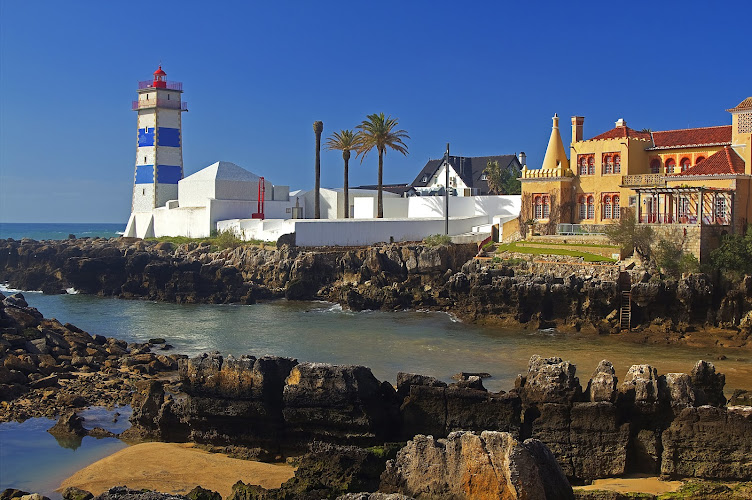
Santa Maria House Museum
Cascais Tide Gauge
Find Accommodations Nearby
Recommended Tours & Activities
Visitor Reviews
There are no reviews yet. Be the first one to write one.
Share Your Experience
Have you visited Citadel of Cascais? Help other travelers by leaving a review.