
Capela da Nossa Senhora da Torre
About Capela da Nossa Senhora da Torre
Capela da Nossa Senhora da Torre: Braga’s Chapel on a Medieval Watchtower
In the heart of Braga’s historic center, facing Largo de São Paulo, Capela da Nossa Senhora da Torre is one of those places that makes the city’s layers of history very obvious, very quickly. You’re looking at three stories at once: a medieval defensive tower, an 18th-century rococo chapel, and a 21st-century museum experience that walks you through Braga’s past across five floors. Pio XII
This small but architecturally rich chapel is part of the Museu Pio XII complex and is physically attached to the Torre de Santiago (Santiago Tower), a 40-meter-high medieval structure that once guarded one of the main gateways into Braga. Pio XII
—
## A Brief History: From City Gate to Votive Chapel
### Medieval origins
The Torre de Santiago began life as part of Braga’s defensive circuit. It formed one of the key access points through the city walls and served as a lookout over the surroundings. The tower is a remnant of the medieval citadel ordered to be reformed under King Fernando from 1369 onwards. Pio XII
The tower later became integrated into the Colégio de São Paulo (Jesuit college), which helps explain why today you see a mix of religious, civic, and defensive functions in a single structure. Pio XII
### The 1755 earthquake and a vow of thanks
Capela da Nossa Senhora da Torre itself is an 18th-century addition. Multiple architectural and heritage sources agree that the chapel was built between 1756 and 1759 as an act of thanksgiving to the Virgin Mary after Braga escaped the worst destruction of the 1755 Lisbon earthquake. About Portugal
The design is by André Soares, one of northern Portugal’s most important Baroque/rococo architects. His work appears all over Braga—Palácio do Raio, the municipal palace, Bom Jesus do Monte, Hospital de São Marcos—and the chapel is often listed among his key religious commissions. dos Biscainhos
### A modern museum nucleus
Today, the tower and chapel form one of the three main “nuclei” of Museu Pio XII. The museum uses the five levels of the Torre Medieval to narrate Braga’s history, with the chapel’s oratory as one of the architectural highlights of the route. Pio XII
—
## Architecture: Rococo Facade on a Stone Watchtower
Stand in Largo de São Paulo and you immediately see the hybrid character of the building. On the lower level, a richly carved stone balcony and portal project from the whitewashed wall—this is the rococo chapel front. Above, the square mass of the medieval tower rises in rougher stone, topped with a bell chamber and clock.
Key details to look for:
– Rococo “showcase” facade
Architectural studies describe the chapel front as a kind of large “monstrance” or display case—dynamic curves, scrolls, and finials framing a central window that brings light onto the oratory inside.
– Belfry and clock
The bell ensemble at the top of the tower has been in place since 1721, predating the chapel. The stone clock below it is part of the same 18th-century reworking that raised the tower for the installation of bells and timekeeping. Pio XII
– Integration with the old city gate
The chapel is literally “adjoined” to one of the former city gates, the Porta de Santiago. You’re looking at a space that once served as a medieval access point, later wrapped in Baroque architecture when Braga’s focus shifted from defense to display and devotion. da Minha Cidade
—
## What You’ll See Inside Today
### The oratory of Nossa Senhora da Torre
Inside, the main devotional space is a small oratory dedicated to Nossa Senhora da Torre on the third floor of the tower. Museum documentation notes that this oratory, designed by André Soares, was specifically created as a thanksgiving for Braga being spared the worst effects of the 1755 earthquake. Pio XII
Expect:
– Gilded woodcarving typical of northern Portuguese Baroque/rococo.
– A focus on Marian devotion, with Nossa Senhora da Torre as the central figure.
– A fairly intimate scale; this isn’t a large church, but a compact, architecturally rich prayer space embedded in the tower.
### Five floors of Braga’s history
The tower visit is structured as a vertical walk through Braga’s past. A detailed local guide description outlines how each level corresponds to a different historical period, supported by interpretive panels and displays:
1. Ground/first level – From the Bracari to the Reconquista
Focus on Braga’s Roman origins as Bracara Augusta and its transformation through late antiquity and the early medieval period.
2. Second level – Medieval Braga
The city as an ecclesiastical and political center, with emphasis on its cathedral, walls, and the role of the archbishops.
3. Third level – Renaissance & early modern expansion
Here the oratory sits alongside material that illustrates how Braga expanded into new squares and urban spaces, many shaped by architects like André Soares and Carlos Amarante.
4. Fourth level – 18th-century embellishment
The beautification of plazas, palaces, and religious buildings, including works that define the “Braga Baroque” look still visible in the city today.
5. Fifth level – Contemporary Braga & the view
The top floor opens to a panoramic view over the city from about 40 meters high. Reviewers consistently mention this as one of the best vantage points over Braga’s historic core. Pio XII
### Elevator and accessibility
One practical but important detail: you don’t have to climb every stair. Visitor accounts and local descriptions note that the five levels are accessible by elevator, making this one of the easier viewpoints in Braga for travelers who prefer to avoid long staircases.
—
## How to Visit Capela da Nossa Senhora da Torre
### Exact location
– Address: Largo de São Paulo 14, 4700-042 Braga, Portugal da Minha Cidade
– The entrance to the tower complex is via Largo de Santiago, just around the corner, as indicated by the Museu Pio XII. Pio XII
You’re in the Cividade area of Braga’s historic center, a few minutes’ walk from Braga Cathedral (Sé), Igreja de São Paulo, and other key sights.
### Opening hours (check for updates)
The Torre Medieval (including the oratory of Nossa Senhora da Torre) is managed as part of Museu Pio XII, and opening hours follow the museum’s schedule.
– The museum’s official website currently lists opening hours as:
– Tuesday–Saturday: 10:00–12:30 and 14:00–18:00
– Closed: Sunday, Monday, and major holidays (25 December, 1 January, Easter Sunday). Pio XII
Other regional and tourism sites still show a Tuesday–Sunday schedule with slightly different time slots, which suggests some listings have not been updated.
> Important: Because of these discrepancies, it’s safest to confirm the latest hours directly via the Museu Pio XII website or by contacting them before you go.
### Tickets and pricing
Recent visitor reports mention a small fee (around €2 per person) to access the tower, sometimes combined with broader Museu Pio XII admission.
Ticket structures and prices can change, so treat those amounts as indicative rather than guaranteed. For up-to-date information, check the museum’s official channels or inquire on site. Pio XII
### Practical tips
– Plan 45–60 minutes if you want to explore all five floors calmly, read panels, and enjoy the view.
– Combine with Museu Pio XII’s main building, which holds archaeological finds, sacred art, and the Henrique Medina gallery of 20th-century portraiture.
– Photography: vantage points at the top are behind glass, according to some reviews, so expect reflections in photos and plan accordingly.
—
## Fitting the Chapel into Your Braga & Northern Portugal Itinerary
Capela da Nossa Senhora da Torre works well as part of a compact walking circuit through Braga’s old town—linking Largo de São Paulo, Sé de Braga, Igreja de São Marcos, Palácio do Raio, and the gardens and museums around Campo de Santiago.
For a broader trip through Portugal, Braga often pairs with Porto and the Douro Valley in a northern loop. For more context on how Braga fits into a country-wide route, you can cross-reference RealJourneyTravels’ own guide to the best places to visit in Portugal, which includes key cities, wine regions, and coastal areas:
– Best Places to Visit in Portugal Journey Travels
If you’re basing yourself in Porto and visiting Braga as a day trip, it’s also useful to look at neighborhood and accommodation guidance for Porto itself:
– Where to Stay in Porto Journey Travels
Both pages help position Braga—and this chapel-tower complex—in the larger picture of a northern Portugal itinerary that combines historic cities, religious heritage, and scenic landscapes.
—
## Why Capela da Nossa Senhora da Torre Is Worth Your Time
If you care about architecture and the way cities reuse their old structures, this is one of Braga’s most revealing stops. In a relatively compact visit you get:
– A medieval gate-tower that once controlled access to the city. Pio XII
– An 18th-century rococo chapel by André Soares, built in response to one of the most significant natural disasters in Portuguese history. About Portugal
– A curated walk through Braga’s evolution from Roman Bracara Augusta to the modern-day city.
– One of the best elevated viewpoints over the historic center, accessed with the help of an elevator rather than a punishing staircase. Pio XII
It’s not the largest site in Braga, and it won’t take over your day, but it’s one of the clearest, most tangible ways to understand how this northern Portuguese city has layered its history—stone on stone, century on century—around a small chapel dedicated to Our Lady of the Tower.
Key Features
Capela da Nossa Senhora da Torre
You Might Also Like
Archbishops Court
Arco da Porta Nova
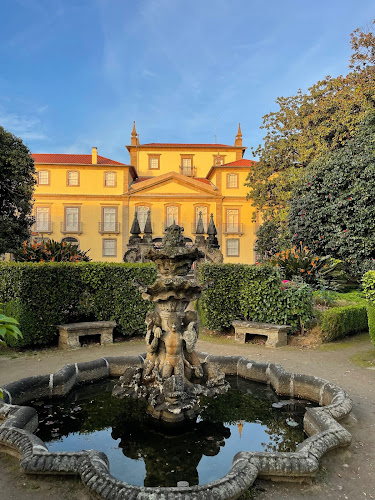
Biscainhos Museum
Tours & Activities
GetYourGuide provides this tour inventory. We may earn a commission if you book through it; verify current availability, prices, and terms with the provider.
Visitor Reviews
There are no reviews yet. Be the first one to write one.
Share Your Experience
Have you visited Capela da Nossa Senhora da Torre? Help other travelers by leaving a review.