
Jardim de Santa Bárbara
About Jardim de Santa Bárbara
Key Features
More Details
Updated April 15, 2024
## Jardim de Santa Bárbara (Braga): what it is, where it sits, and what you’ll actually see
Jardim de Santa Bárbara is a municipal garden in Braga, Portugal, located beside the eastern wing of the historic Archbishop’s Palace (Paço Arquiepiscopal) in the civil parish of Sé. It’s a compact, highly-photogenic stop in the historic center of Braga, known for formal geometry, clipped hedging, and seasonal flower displays set against medieval palace elements/arcades.
Your dataset pins it at:
– Address: Unnamed Road, 4700-317 Braga, Portugal
– Coordinates: 41.5513441, -8.4258485
– Category: Garden
– Rating: 4.8 (as provided)
What makes this garden different (and worth your time) is the contrast: carefully arranged beds and topiary in the foreground, and the “toothy” crenellated/fortified-looking palace wall and medieval remnants behind it. Planet
—
## Quick orientation: where it is in Braga
The garden is alongside the Archbishop’s Palace, specifically adjacent to its eastern wing. If you’re moving through central Braga, this is not a “destination garden” that requires planning a half-day—think of it as a high-impact 20–40 minute stop that pairs naturally with nearby historic-center walks.
A reliable mental map:
– Garden = formal beds + fountain/statue centerpiece
– Backdrop = Archbishop’s Palace structures + remnants/arcades from earlier palace fabric
—
## What you’ll see inside the garden
### Formal design, not wilderness
This is a designed municipal garden, described as having geometric patterns carved from boxwood beds, decorated with topiary (including cedar topiaries). The planting scheme is often discussed as seasonal/annual color in multiple beds, which is part of why it photographs well at different times of year.
### The Saint Barbara centerpiece
At the center is a fountain with a statue of Saint Barbara, which is the garden’s namesake. This is not trivia—it’s the visual anchor most visitors frame in photos, with the palace wing and stonework behind.
### Medieval palace elements and reused stone details
One of the most distinctive features is the set of ruined/broken arcades bordering the garden area, described as remains associated with the medieval palace. Nearby, there are also references to architectural fragments (cornices, statuary, coats-of-arms in stone/rock) arranged along the palace patio area adjacent to the garden.
If you care about travel photos that look “Braga” without leaning on clichés: this is the spot. The garden’s neat symmetry plus hard, historic stone behind it creates a strong sense of place—fast.
—
## A short, sourced history (what’s known vs. what’s often guessed)
The key fact that’s easy to miss: the current garden is modern in its landscaped form.
– Wikipedia’s summary states the garden was landscaped in 1955, aligned with the Estado Novo-era romanticism, and credits José Cardoso da Silva for the design/landscaping.
You’ll sometimes see travel posts claim much older design origins; those claims vary by site and aren’t consistently documented across high-quality references. If you’re writing for accuracy (and avoiding “sounds-right” lore), anchoring the garden as a mid-20th-century landscaping project set beside far older architecture is the cleanest defensible framing.
—
## Visiting logistics: hours, cost, and accessibility (with an accuracy flag)
### Cost
Multiple travel resources describe it as a public garden with no admission ticket (free access).
### Hours (accuracy flag)
You will find conflicting hour claims across sources:
– Some list it as open 24/7. Cool
– Others imply “no specific visiting hours” / best visited in daylight.
What’s safe to publish without overreaching: it is widely described as freely accessible, and the best experience is during daylight for photos and visibility.
What to flag: exact “official hours” are inconsistent across third-party listings; if your editorial workflow requires precision, verify locally (city tourism site/onsite signage) before publishing a specific time window.
—
## How to get the most out of a short stop
This section sticks to things that follow directly from what the garden is (formal layout + historic stone + central statue/fountain) rather than guessing events or seasonal schedules.
### 1) Photographing it without crowds in-frame
Because the garden is compact and visually structured, small timing shifts matter. If you want clean shots:
– Frame the Saint Barbara statue/fountain with the palace wing behind it (the most iconic composition).
– Use the arcade ruins as a leading line/texture layer—this is the garden’s “only in Braga” signature.
### 2) What to look for beyond flowers
If you’re the kind of traveler who likes “why does this look like this?”:
– The garden’s formal geometry and clipped hedging are deliberate design choices (not “natural beauty”).
– The historical setting is the point: the garden reads as a curated foreground for the palace complex, not a standalone botanical collection.
### 3) Accessibility and pacing
As a public municipal garden next to major civic/historic structures, it’s typically integrated into walkable city-center routes rather than being a drive-out attraction. (That’s a general city-center travel pattern; no special claim needed.) Plan it as a pause between bigger visits in Braga, not the main event.
—
## Inclusive, practical notes for different traveler types
– Families: It’s a visually engaging stop that doesn’t demand long attention spans—good for a reset between museums/churches.
– Mobility considerations: It’s a structured garden with paths; however, I’m not going to claim step-free access everywhere without an official accessibility statement.
– Sensitive travelers (noise/crowds): As a central spot, it can be busier at peak hours; the easiest mitigation is choosing quieter times.
—
—
## Source notes (what’s solid vs. what should be verified)
– Solid, citable facts used above: location beside the Archbishop’s Palace; formal boxwood geometry/topiary; central Saint Barbara statue/fountain; 1955 landscaping; public-garden positioning.
– Verify before hardcoding: “official” opening hours (third-party sources conflict). Cool
Table of Contents
Key Highlights
Jardim de Santa Bárbara
Location
Places to Stay Near Jardim de Santa Bárbara
Find and Book a Tour
Explore More Travel Guides
No reviews found! Be the first to review!
Traveler Reviews for Jardim de Santa Bárbara
There are no reviews yet. Be the first one to write one.
Have you visited Jardim de Santa Bárbara? Help other travelers by sharing your review.
You Might Also Like
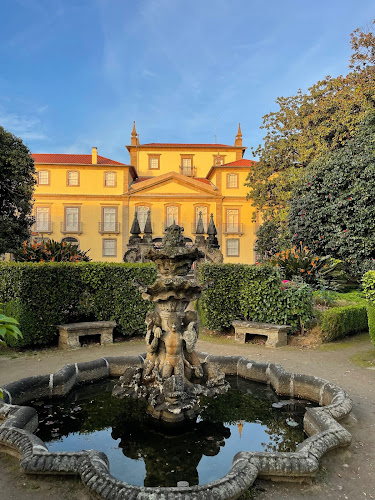
Biscainhos Museum
Igreja Misericórdia
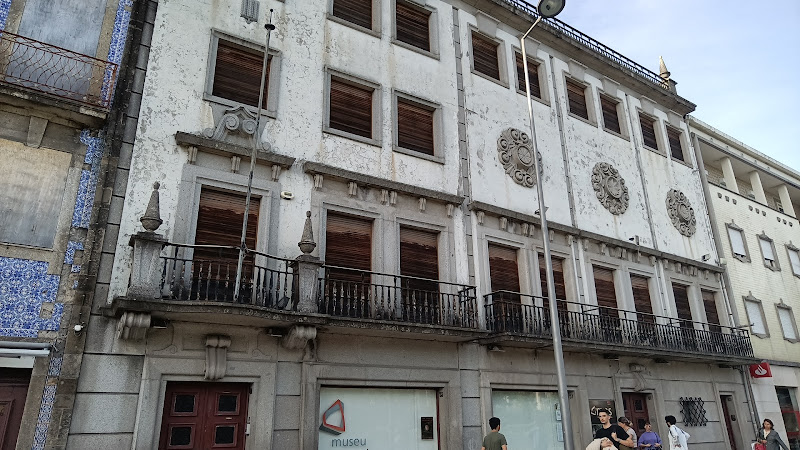
Museu Nogueira da Silva
Find Accommodations Nearby
Recommended Tours & Activities
Visitor Reviews
There are no reviews yet. Be the first one to write one.
Share Your Experience
Have you visited Jardim de Santa Bárbara? Help other travelers by leaving a review.