
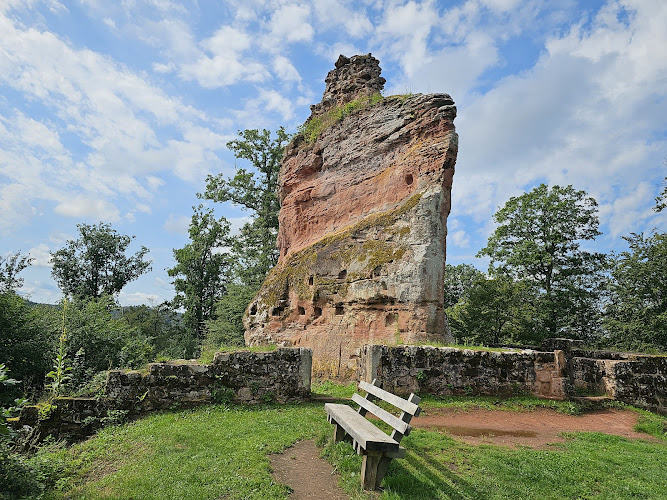
Burgruine Beilstein
About Burgruine Beilstein
Description
Burgruine Beilstein stands as one of those hidden gems that many travelers stumble upon quite by accident—and honestly, that's part of its charm. This medieval castle ruin, dating back to the 12th century, sits quietly in the forested hills east of Kaiserslautern, seemingly content to let more famous attractions grab the spotlight. But here's the thing: sometimes the best discoveries are the ones you weren't expecting.
The castle gets its name from the distinctive axe-shaped rock formation it's built upon—"Beil" meaning axe in German. And when you see it, you'll understand why. This isn't your typical sprawling castle complex with soaring towers and grand courtyards. Instead, Burgruine Beilstein is intimate, almost mysterious in its simplicity. The main structure centers around an eight-meter-high natural rock outcrop that once served as the foundation for a five-sided keep, though much of that original tower has long since crumbled away.
What strikes most visitors first is how seamlessly the ruins blend into their forest setting. Unlike some historical sites that feel cordoned off from nature, Beilstein embraces its woodland surroundings. Ancient stone walls emerge from between tree trunks, and moss-covered foundations disappear into the forest floor. It's the kind of place where you might half-expect to encounter a medieval knight emerging from the morning mist.
The castle originally served as one of the smaller imperial ministerial castles in the region—basically a fortified residence for minor nobility who served the Holy Roman Empire. While it may not have housed kings or witnessed great battles, it played its part in the complex web of medieval politics and defense that characterized this part of Germany centuries ago.
Key Features
Burgruine Beilstein might be compact, but it packs some genuinely fascinating features that reward closer inspection:
- The Axe-Shaped Rock Formation - The distinctive natural foundation that gives the castle its name rises dramatically from the forest floor and provides the perfect vantage point for surveying the surrounding countryside
- Remnants of the Five-Sided Keep - Though largely ruined, the unusual pentagonal design of the original tower foundation can still be traced among the stonework
- Medieval Defensive Walls - Sections of the original fortification walls remain intact, showing the skilled craftsmanship of 12th-century builders
- Forest Integration - The way nature has reclaimed parts of the structure creates an almost fairy-tale atmosphere that's particularly striking during different seasons
- Panoramic Viewing Platform - The elevated position offers sweeping views across the forested hills and valleys of the Palatinate region
- Multiple Seating Areas - Natural and constructed spots throughout the ruins provide perfect places to rest and soak in the atmosphere
- Archaeological Evidence - Careful observers can spot foundations and structural elements that hint at the castle's original layout and daily life
Best Time to Visit
Here's where things get interesting with Burgruine Beilstein—each season offers a completely different experience, and honestly, I'm not sure there's a "wrong" time to visit.
Winter might sound like an odd recommendation for exploring castle ruins, but hear me out. When the leaves are gone and the forest is bare, the stone structures become much more visible and dramatic. You can actually see the full extent of the ruins and understand the castle's original layout in ways that summer's thick foliage obscures. Plus, there's something hauntingly beautiful about medieval stonework dusted with snow. The downside? Well, it's cold, and the paths can be slippery.
Spring brings its own magic as the forest awakens around the ancient stones. Wildflowers push up between foundation blocks, and the contrast between new green growth and weathered medieval masonry is genuinely moving. The weather's usually pleasant for hiking, too, though you might encounter some muddy conditions after heavy rains.
Summer transforms Beilstein into a green sanctuary. The forest canopy provides welcome shade, making it an ideal retreat from hot weather. However, this is also when the ruins become most hidden by vegetation—you might find yourself practically stumbling upon stone walls before you see them. Weekends can get busier during summer months, though "busy" is relative when talking about this lesser-known site.
Autumn, though—that's when Beilstein really shines. The fall colors create an absolutely stunning backdrop for the gray stone ruins, and the gradually thinning leaves strike a perfect balance between summer's lush green and winter's stark visibility. October and early November offer particularly spectacular photography opportunities.
For practical purposes, aim for weekday visits if possible. Weekend crowds aren't overwhelming, but there's something special about having these ancient stones mostly to yourself. Early morning visits reward you with the best lighting and the highest chance of spotting local wildlife going about their business around the ruins.
How to Get There
Getting to Burgruine Beilstein requires a bit of planning, but that's part of what keeps it from being overrun with tour buses—which is honestly a good thing.
If you're driving, the ruins sit about two kilometers east of Kaiserslautern along the B37 highway toward Hochspeyer. The tricky part isn't finding the general area—it's locating the actual trailheads. Unlike many tourist destinations, Beilstein doesn't announce itself with big signs and parking lots. Instead, you'll need to look for smaller hiking trail markers and forest access points.
The most reliable approach starts from either the "Hungerbrunnen" or "Quack" areas, both of which connect to the network of forest trails leading up to the castle. These aren't exactly household names, so having a good map or GPS is essential. The hike itself isn't particularly demanding—we're talking about a moderate forest walk rather than serious mountaineering—but it does involve some uphill sections and potentially uneven terrain.
For those relying on public transportation, your best bet is getting to Kaiserslautern first, then taking local buses toward Hochspeyer and hiking in from there. This definitely adds time to your journey, but it's doable if you're comfortable with some walking and basic trail navigation.
One thing to keep in mind: this isn't a destination where you can just drive up and hop out of your car. The forest setting means you'll be doing some hiking regardless of how you arrive. That's actually part of the charm—the approach through the woods builds anticipation and helps transport you mentally back to medieval times.
Tips for Visiting
After years of exploring historical sites, I've learned that places like Burgruine Beilstein reward visitors who come prepared and approach them with the right mindset.
First and foremost, wear proper hiking footwear. Those medieval builders weren't thinking about modern accessibility when they chose this rocky outcrop, and centuries of weather haven't exactly smoothed things out. You'll be navigating forest paths, uneven stone surfaces, and potentially muddy conditions depending on recent weather. Sneakers might work in dry conditions, but hiking boots are always the safer choice.
Bring a flashlight or headlamp, even for daytime visits. Some of the more interesting architectural details hide in shadows and partially collapsed spaces where a little extra light makes all the difference. And honestly, there's something thrilling about illuminating medieval stonework that hasn't seen much artificial light in centuries.
Pack water and maybe some snacks. While you won't be hiking for hours, there's something deeply satisfying about having a quiet picnic among centuries-old ruins. The various seating areas around the site practically invite you to linger and soak in the atmosphere. Plus, the combination of forest air and historical reflection tends to work up an appetite.
Here's something most guidebooks won't tell you: download some background information about medieval castle construction before your visit. Unlike many tourist sites, Beilstein doesn't have extensive on-site interpretation or guided tours. Understanding what you're looking at—how a keep functioned, what those foundation patterns mean, why castle builders chose elevated positions—transforms scattered stones into a fascinating glimpse of medieval life.
Photography enthusiasts should plan for the lighting conditions. The forest setting creates constantly changing patterns of light and shadow that can be either magical or frustrating depending on your goals. Early morning and late afternoon generally provide the most dramatic lighting, while overcast days offer more even illumination for detailed shots.
Consider combining your Beilstein visit with other regional attractions. The castle works perfectly as part of a broader exploration of the Palatinate's medieval heritage, and its location makes it a natural stopping point for hiking enthusiasts exploring the area's trail network.
Most importantly, approach Burgruine Beilstein with realistic expectations. This isn't going to be your Neuschwanstein or Heidelberg Castle experience. What it offers instead is authenticity, atmosphere, and the rare chance to explore historical ruins without fighting crowds or following roped pathways. Sometimes the best travel experiences are the ones that ask you to slow down, look closer, and use your imagination to fill in the gaps that time has worn away.
Key Features
- 12th–13th century rock castle ruins with tower remnants
- Dramatic rocky promontory (Beilsteiner Kopf) integrated into the ruins
- Woodland setting within the Pfälzerwald offering quiet, scenic surroundings
- Easily reached from B37 with a short walk from a small parking spot
- Designated natural and cultural monument under Rheinland-Pfalz care
More Details
Updated September 12, 2025
Table of Contents
Description
Burgruine Beilstein stands as one of those hidden gems that many travelers stumble upon quite by accident—and honestly, that’s part of its charm. This medieval castle ruin, dating back to the 12th century, sits quietly in the forested hills east of Kaiserslautern, seemingly content to let more famous attractions grab the spotlight. But here’s the thing: sometimes the best discoveries are the ones you weren’t expecting.
The castle gets its name from the distinctive axe-shaped rock formation it’s built upon—”Beil” meaning axe in German. And when you see it, you’ll understand why. This isn’t your typical sprawling castle complex with soaring towers and grand courtyards. Instead, Burgruine Beilstein is intimate, almost mysterious in its simplicity. The main structure centers around an eight-meter-high natural rock outcrop that once served as the foundation for a five-sided keep, though much of that original tower has long since crumbled away.
What strikes most visitors first is how seamlessly the ruins blend into their forest setting. Unlike some historical sites that feel cordoned off from nature, Beilstein embraces its woodland surroundings. Ancient stone walls emerge from between tree trunks, and moss-covered foundations disappear into the forest floor. It’s the kind of place where you might half-expect to encounter a medieval knight emerging from the morning mist.
The castle originally served as one of the smaller imperial ministerial castles in the region—basically a fortified residence for minor nobility who served the Holy Roman Empire. While it may not have housed kings or witnessed great battles, it played its part in the complex web of medieval politics and defense that characterized this part of Germany centuries ago.
Key Features
Burgruine Beilstein might be compact, but it packs some genuinely fascinating features that reward closer inspection:
- The Axe-Shaped Rock Formation – The distinctive natural foundation that gives the castle its name rises dramatically from the forest floor and provides the perfect vantage point for surveying the surrounding countryside
- Remnants of the Five-Sided Keep – Though largely ruined, the unusual pentagonal design of the original tower foundation can still be traced among the stonework
- Medieval Defensive Walls – Sections of the original fortification walls remain intact, showing the skilled craftsmanship of 12th-century builders
- Forest Integration – The way nature has reclaimed parts of the structure creates an almost fairy-tale atmosphere that’s particularly striking during different seasons
- Panoramic Viewing Platform – The elevated position offers sweeping views across the forested hills and valleys of the Palatinate region
- Multiple Seating Areas – Natural and constructed spots throughout the ruins provide perfect places to rest and soak in the atmosphere
- Archaeological Evidence – Careful observers can spot foundations and structural elements that hint at the castle’s original layout and daily life
Best Time to Visit
Here’s where things get interesting with Burgruine Beilstein—each season offers a completely different experience, and honestly, I’m not sure there’s a “wrong” time to visit.
Winter might sound like an odd recommendation for exploring castle ruins, but hear me out. When the leaves are gone and the forest is bare, the stone structures become much more visible and dramatic. You can actually see the full extent of the ruins and understand the castle’s original layout in ways that summer’s thick foliage obscures. Plus, there’s something hauntingly beautiful about medieval stonework dusted with snow. The downside? Well, it’s cold, and the paths can be slippery.
Spring brings its own magic as the forest awakens around the ancient stones. Wildflowers push up between foundation blocks, and the contrast between new green growth and weathered medieval masonry is genuinely moving. The weather’s usually pleasant for hiking, too, though you might encounter some muddy conditions after heavy rains.
Summer transforms Beilstein into a green sanctuary. The forest canopy provides welcome shade, making it an ideal retreat from hot weather. However, this is also when the ruins become most hidden by vegetation—you might find yourself practically stumbling upon stone walls before you see them. Weekends can get busier during summer months, though “busy” is relative when talking about this lesser-known site.
Autumn, though—that’s when Beilstein really shines. The fall colors create an absolutely stunning backdrop for the gray stone ruins, and the gradually thinning leaves strike a perfect balance between summer’s lush green and winter’s stark visibility. October and early November offer particularly spectacular photography opportunities.
For practical purposes, aim for weekday visits if possible. Weekend crowds aren’t overwhelming, but there’s something special about having these ancient stones mostly to yourself. Early morning visits reward you with the best lighting and the highest chance of spotting local wildlife going about their business around the ruins.
How to Get There
Getting to Burgruine Beilstein requires a bit of planning, but that’s part of what keeps it from being overrun with tour buses—which is honestly a good thing.
If you’re driving, the ruins sit about two kilometers east of Kaiserslautern along the B37 highway toward Hochspeyer. The tricky part isn’t finding the general area—it’s locating the actual trailheads. Unlike many tourist destinations, Beilstein doesn’t announce itself with big signs and parking lots. Instead, you’ll need to look for smaller hiking trail markers and forest access points.
The most reliable approach starts from either the “Hungerbrunnen” or “Quack” areas, both of which connect to the network of forest trails leading up to the castle. These aren’t exactly household names, so having a good map or GPS is essential. The hike itself isn’t particularly demanding—we’re talking about a moderate forest walk rather than serious mountaineering—but it does involve some uphill sections and potentially uneven terrain.
For those relying on public transportation, your best bet is getting to Kaiserslautern first, then taking local buses toward Hochspeyer and hiking in from there. This definitely adds time to your journey, but it’s doable if you’re comfortable with some walking and basic trail navigation.
One thing to keep in mind: this isn’t a destination where you can just drive up and hop out of your car. The forest setting means you’ll be doing some hiking regardless of how you arrive. That’s actually part of the charm—the approach through the woods builds anticipation and helps transport you mentally back to medieval times.
Tips for Visiting
After years of exploring historical sites, I’ve learned that places like Burgruine Beilstein reward visitors who come prepared and approach them with the right mindset.
First and foremost, wear proper hiking footwear. Those medieval builders weren’t thinking about modern accessibility when they chose this rocky outcrop, and centuries of weather haven’t exactly smoothed things out. You’ll be navigating forest paths, uneven stone surfaces, and potentially muddy conditions depending on recent weather. Sneakers might work in dry conditions, but hiking boots are always the safer choice.
Bring a flashlight or headlamp, even for daytime visits. Some of the more interesting architectural details hide in shadows and partially collapsed spaces where a little extra light makes all the difference. And honestly, there’s something thrilling about illuminating medieval stonework that hasn’t seen much artificial light in centuries.
Pack water and maybe some snacks. While you won’t be hiking for hours, there’s something deeply satisfying about having a quiet picnic among centuries-old ruins. The various seating areas around the site practically invite you to linger and soak in the atmosphere. Plus, the combination of forest air and historical reflection tends to work up an appetite.
Here’s something most guidebooks won’t tell you: download some background information about medieval castle construction before your visit. Unlike many tourist sites, Beilstein doesn’t have extensive on-site interpretation or guided tours. Understanding what you’re looking at—how a keep functioned, what those foundation patterns mean, why castle builders chose elevated positions—transforms scattered stones into a fascinating glimpse of medieval life.
Photography enthusiasts should plan for the lighting conditions. The forest setting creates constantly changing patterns of light and shadow that can be either magical or frustrating depending on your goals. Early morning and late afternoon generally provide the most dramatic lighting, while overcast days offer more even illumination for detailed shots.
Consider combining your Beilstein visit with other regional attractions. The castle works perfectly as part of a broader exploration of the Palatinate’s medieval heritage, and its location makes it a natural stopping point for hiking enthusiasts exploring the area’s trail network.
Most importantly, approach Burgruine Beilstein with realistic expectations. This isn’t going to be your Neuschwanstein or Heidelberg Castle experience. What it offers instead is authenticity, atmosphere, and the rare chance to explore historical ruins without fighting crowds or following roped pathways. Sometimes the best travel experiences are the ones that ask you to slow down, look closer, and use your imagination to fill in the gaps that time has worn away.
Key Highlights
- 12th–13th century rock castle ruins with tower remnants
- Dramatic rocky promontory (Beilsteiner Kopf) integrated into the ruins
- Woodland setting within the Pfälzerwald offering quiet, scenic surroundings
- Easily reached from B37 with a short walk from a small parking spot
- Designated natural and cultural monument under Rheinland-Pfalz care
Location
Places to Stay Near Burgruine Beilstein
Find and Book a Tour
Explore More Travel Guides
No reviews found! Be the first to review!
Traveler Reviews for Burgruine Beilstein
There are no reviews yet. Be the first one to write one.
Have you visited Burgruine Beilstein? Help other travelers by sharing your review.
Nearby Attractions
You Might Also Like

Museum Pfalzgalerie Lautre
Vogelweh 1474A

Zoo Kaiserslautern
Find Accommodations Nearby
Recommended Tours & Activities
Visitor Reviews
There are no reviews yet. Be the first one to write one.
Share Your Experience
Have you visited Burgruine Beilstein? Help other travelers by leaving a review.