
Bungakuno-Komichi
About Bungakuno-Komichi
Key Features
More Details
Updated April 16, 2024
## Bungakuno-Komichi, Onomichi: Walking Japan’s “Path of Literature”
High above the Onomichi waterfront, Bungakuno-Komichi (文学のこみち, often translated as the “Path of Literature” or “Literary Path”) runs along the slopes of Mt. Senkoji inside Senkoji Park. It’s a short, poetic walk: about 1 km of stone paths, trees, and sweeping Seto Inland Sea views, punctuated by carved quotations from some of Japan’s most respected writers. Hiroshima
If you’re already eyeing Onomichi for its temples, ropeway, and Shimanami Kaido cycling, this quiet hillside path is where the city’s literary history lives in the landscape.
—
## What Bungakuno-Komichi Actually Is
Bungakuno-Komichi is a tree-lined promenade that links the summit area of Mt. Senkoji with Senko-ji Temple below, inside Senkoji Park. As soon as you step off the Senkoji Ropeway at the summit station, you can enter this “Letter to Literature” path and follow it downhill. Hiroshima
Key factual points:
– Location: On the slopes of Mt. Senkoji in Senkoji Park, Onomichi, Hiroshima Prefecture. The park and temple complex use the address 15-1 Higashitsuchidocho, Onomichi City, Hiroshima 722-0033, Japan. Hiroshima
– Length: Roughly 1 km from the ropeway summit area down toward Senko-ji Temple. Hiroshima
– Features: Around 24–25 stone monuments carved with literary excerpts and poems connected to Onomichi. Official Hiroshima tourism material mentions 25 monuments, while other travel guides count 24 stones; the discrepancy likely reflects different ways of counting or later additions. Hiroshima
– Scenery: Continuous views over Onomichi city and the Onomichi Channel as you walk, framed by rocks and pines. Hiroshima
Most inscriptions are in Japanese only, so for many visitors Bungakuno-Komichi functions as a contemplative walk with atmosphere and views, rather than a textual “museum” you can read line by line.
—
## The Writers Behind the Stones
The monuments along Bungakuno-Komichi highlight authors who either lived in Onomichi, set stories here, or were otherwise closely tied to the city. Hiroshima’s official guide and local sources consistently mention three big names: Hiroshima
– Fumiko Hayashi (1903–1951) – A major modern Japanese writer whose autobiographical short story “The Accordion and the Fish Town” is set in Onomichi, portraying the town through the eyes of a teenager from a poor merchant family.
– Naoya Shiga (1883–1971) – An influential novelist still studied in Japanese literature classes; he spent time in Onomichi and drew on it for his work. Japan Times
– Masaoka Shiki (1867–1902) – Often described as the father of the modern haiku, whose work has shaped how many Japanese people think about short-form poetry. Japan Tours
Their words are not presented in a museum case. Instead, they’re carved directly into boulders and natural rock faces along the hillside path. Official tourism material describes these as “literary monuments” with passages from their works, allowing you to read fragments of fiction and poetry in the very landscape that inspired them, while looking down at the port town below. Hiroshima
Even if you can’t read Japanese, knowing who these writers are and that their words are embedded in the stones can change how you experience the walk. You’re not just taking a shortcut between viewpoints; you’re moving through a curated chapter of Onomichi’s cultural memory.
—
## What the Walk Feels Like
Travel and tourism sources broadly agree on a few characteristics of Bungakuno-Komichi:
– Short but layered: At about a kilometer, it’s not a demanding hike, but it’s dense with shrines, temple views, and literary stones.
– Downhill orientation: Most visitors ride the Senkoji Ropeway up, then stroll down Bungakuno-Komichi toward Senko-ji Temple and the city.
– Wooded hillside setting: Guides describe a wooded slope with stone steps and narrow paths, weaving between rocks and viewpoints rather than a flat, paved promenade.
– Temples and shrines nearby: The path threads through the wider Senkoji Park and temple area, with access to Senko-ji Temple itself and other religious sites on the hill.
Because of the gradient and stone underfoot, the path is best enjoyed at a slow pace with decent walking shoes. Multiple sources describe the hike up Mt. Senkoji as fairly steep, which is why so many people choose to go up by ropeway and walk down instead.
—
## How to Get to Bungakuno-Komichi
The simplest way to think about access is: you’re going to Senkoji Park first, then connecting onto the Path of Literature.
### 1. Reach Senkoji Park / Senko-ji Temple
Senko-ji Temple and Senkoji Park sit above central Onomichi and share the 15-1 Higashitsuchidocho address. Multiple official and commercial travel sites confirm this as the base location, and they outline consistent access patterns: Hiroshima
– From JR Onomichi Station on the Sanyo Main Line, take a short city bus ride to Nagaeguchi.
– From Nagaeguchi, you can ride the Senkoji Ropeway to the summit station. Ropeway information published in early 2025 lists typical operating hours around 09:00–17:15, with cabins every 15 minutes, but hours and maintenance days can change, so checking the latest timetable on the official ropeway or Senko-ji website before visiting is important. LUCK TRIP)
– Alternatively, you can walk up from town via the hillside streets and temple routes, but guides note that the ascent is steep.
### 2. From the Ropeway Summit to the Path
Hiroshima’s official tourism site describes Bungakuno-Komichi starting essentially as you exit the Mt. Senkoji Ropeway summit station. A tree-covered promenade about 1 km long begins there and runs toward Senko-ji Temple. Hiroshima
From that point:
– Follow signs for 文学のこみち or Bungaku no Komichi / Path of Literature.
– The path gradually leads you downhill toward the temple precincts and, ultimately, back toward the city.
Many guided day tours of Onomichi and nearby Ikuchijima explicitly include walking down Bungaku no Komichi from the observatory area, reading passages from various Japanese authors inscribed on the rocks along the way, which matches this ropeway-downhill pattern.
—
## When to Visit & How Long to Allow
There is no separate ticket gate for Bungakuno-Komichi; it’s part of the open Senkoji Park area, which visitors use alongside the temple and museum. Official sources list Senko-ji Temple itself as open roughly 09:00–17:00, with the ropeway running on a similar schedule. Hiroshima
Because these hours and ropeway operating times are subject to seasonal adjustments or temporary closures (for example, around year-end or during maintenance), they should always be confirmed against the current official listings before you build a tight same-day itinerary.
For timing:
– Most visitors can comfortably walk Bungakuno-Komichi within about an hour, including photo stops and reading what you can, based on the path’s modest 1 km length and common tour descriptions that bundle it into half-day or day tours as one segment. Japan Times
### Seasonal considerations
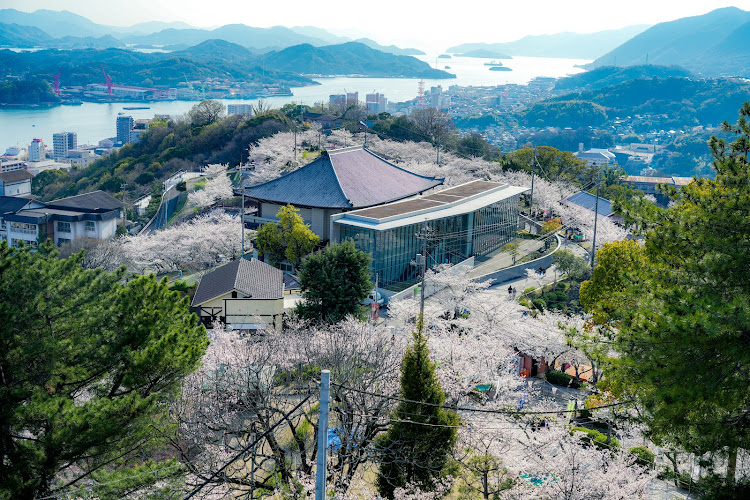
Several official and commercial guides highlight Senkoji Park as a well-known spot for cherry blossoms in spring and for its night views over the Seto Inland Sea. LUCK TRIP)
– In spring, the hillsides and paths, including sections near Bungakuno-Komichi, are framed by sakura, but this also coincides with peak domestic travel periods and higher crowd levels.
– At night, the wider park is praised for its illuminated cityscape, although specific safety and lighting conditions on the Path of Literature itself aren’t detailed in the sources. Given the hillside terrain and stone steps, most people will be more comfortable experiencing the trail in daylight.
—
## Combining Bungakuno-Komichi with Nearby Sights
Because Bungakuno-Komichi runs through Senkoji Park, it anchors easily into a broader Onomichi day:
– Senko-ji Temple – A historic Buddhist temple first founded in 806, positioned on the slope with views over the port; it’s one of the main landmarks of Onomichi and part of the Chugoku 33 Kannon Pilgrimage.
– Senkoji Park Observatory – Panoramic viewpoints over Onomichi Channel and the Shimanami Kaido islands, frequently highlighted in regional tourism material.
– Onomichi City Museum of Art – A Tadao Ando–designed museum in the same park, mentioned together with Bungakuno-Komichi as part of a cluster of attractions between the temple and the summit.
– Temple Walk & Cat Alley (Neko no Hosomichi) – Onomichi has a 2.5 km temple route linking 25 temples across the hillside, and the famous “Cat Alley,” both of which connect naturally with a visit to Senko-ji and the Path of Literature. LUCK TRIP)
Because Onomichi is also a key gateway to the Shimanami Kaido cycling route, many travelers pair a half-day in Senkoji Park and Bungakuno-Komichi with time on the waterfront or a short cycling segment, rather than seeing the literary path as a standalone outing.
—
## Practical Notes & Data Caveats
To keep this guide strictly factual and transparent:
– Trail details: Multiple reputable sources agree on the path’s location on Mt. Senkoji, its approximate 1 km length, and the presence of 24–25 literary stones, but the exact count differs slightly by publication. That suggests occasional updates or differing counting criteria; if you’re documenting every monument, verify on site. Hiroshima
– Language: Guides are explicit that inscriptions are in Japanese only. Non-Japanese readers should expect to appreciate the stones visually and contextually rather than as fully readable texts.
– Hours & access: Ropeway times, temple opening hours, and bus schedules quoted in 2024–2025 sources are accurate for that period but inherently subject to change. Always confirm via the official Senko-ji or Senkoji Ropeway websites or current local tourism pages before travel. LUCK TRIP)
—
## Is Bungakuno-Komichi Worth Adding to Your Onomichi Itinerary?
Table of Contents
Key Highlights
Bungakuno-Komichi
Location
Places to Stay Near Bungakuno-Komichi
Find and Book a Tour
Explore More Travel Guides
No reviews found! Be the first to review!
Traveler Reviews for Bungakuno-Komichi
There are no reviews yet. Be the first one to write one.
Have you visited Bungakuno-Komichi? Help other travelers by sharing your review.
You Might Also Like
MOU Onomichi City University Museum of Art
Senkoji Park
Kaneyoshi-no-oka Hill
Find Accommodations Nearby
Recommended Tours & Activities
Visitor Reviews
There are no reviews yet. Be the first one to write one.
Share Your Experience
Have you visited Bungakuno-Komichi? Help other travelers by leaving a review.