
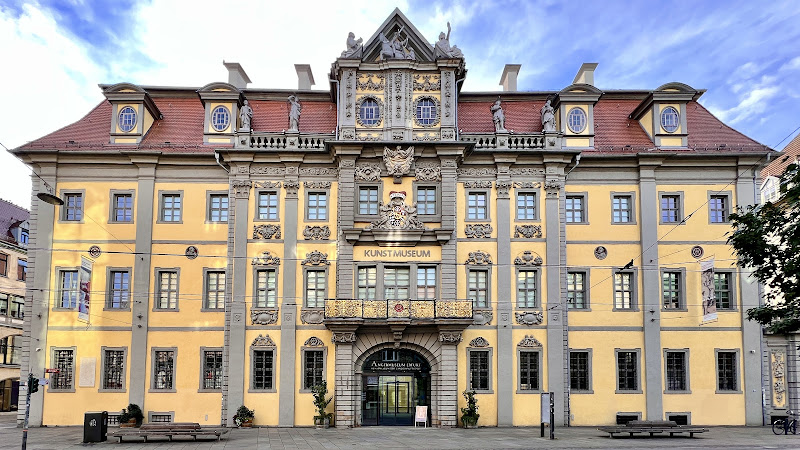
Angermuseum
About Angermuseum
Description
The Angermuseum in Erfurt occupies a gracious baroque palace and presents a sweeping narrative of art and craft from the Middle Ages to the present day. It is simultaneously a local treasure chest and a quietly ambitious art museum: rooms of carved altarpieces sit not far from galleries of 19th-century painting, and contemporary works counterpoint older craft in ways that feel deliberate rather than random. The building itself — with stuccoed ceilings, broad staircases, and rooms that still smell faintly of polished wood — plays a role in the story, offering a tangible link to the centuries the collections document.
This museum is not trying to shout. Instead it invites a slower kind of attention: linger in front of a Gothic Madonna and notice the brushwork, then drift into a cabinet of applied arts and get lost in the tiny inlaid details of a seventeenth-century casket. That contrast — the monumental and the miniature — is one of the Angermuseum’s strengths. Large-format paintings provide sweeping narratives while decorative objects reward close, intimate looking. Visitors who come with patience tend to leave with more than facts: they bring back impressions and a sense that Erfurt, Thuringia, keeps its history close at hand.
Curators have arranged the permanent collection to show continuity across centuries rather than strict chronological separation. Expect to see medieval and Gothic altarpieces, baroque painting, and applied arts that chart changes in taste and technique. The museum has a notable collection of regional works, which offers insight into Thuringia’s artistic lineage and local craftsmanship. That regional focus makes the Angermuseum particularly useful for travelers who want to understand the area beyond the surface-level tourist stops.
Practicalities are considered here, too. The museum provides a wheelchair accessible entrance and restroom, so physical accessibility is better than many historic houses in Europe. There is at least one restroom for general visitor use, but no on-site restaurant, so planning a coffee or lunch stop ahead of time is wise. Families will find the museum manageable: the displays are engaging for children, and the scale of many objects makes them approachable for young eyes without overwhelming them.
One slightly unexpected pleasure of visiting the Angermuseum is the way the building’s architecture frames the collection. Original baroque details, high ceilings and period rooms create moments that feel cinematic. A particular gallery on the upper floor often rewards visitors with a shaft of late afternoon light that makes painted faces glow; many regulars will nod knowingly about that spot. A seasoned traveler once said that this museum is best enjoyed not in a rush but with a pocket notebook and a willingness to follow a curiosity: read a plaque, glance at a nearby object, and then allow the eye to drift to a painting across the room. That anecdote sums up how the museum quietly encourages thoughtful exploration.
Content selection leans toward depth rather than breadth. It is not the largest institution in Germany, but its focused collections mean visitors can develop a real sense of continuity through the centuries. The medieval holdings are a particular draw: carved polychrome figures, fragments of ecclesiastical fittings, and early paintings that preserve styles and religious narratives from earlier centuries. For someone who delights in craftsmanship, the applied arts galleries — ceramics, metalwork, textiles — offer an education in materials and techniques that evolved across generations. The museum’s presentation often highlights technique alongside aesthetic value, so a display might explain how a lacquer finish was achieved or how pigments were sourced historically. That kind of detail sits well with visitors who appreciate a little context without feeling bogged down in academic prose.
Contemporary art finds its place here too, though not as a dominant strand. Rather than showcasing cutting-edge installations in every room, the Angermuseum weaves modern works into the broader storyline. That approach can be refreshing: modern pieces serve as commentary, echo, or contrast to older objects, prompting new questions about continuity, taste, and cultural values. It’s a curatorial decision that tends to reward visitors who come with an open mind rather than strict expectations of seeing only either old masters or avant-garde displays.
The museum also runs rotating exhibitions and thematic shows that change the rhythm of a visit. These special exhibitions often highlight lesser-known artists, technical aspects of art production, or focused surveys of regional craft traditions. Locals sometimes return specifically for these changing displays, and travelers who time their visit carefully can catch an exhibition that adds a fresh angle to the permanent collection.
Atmosphere matters here. On weekdays, the Angermuseum moves at a calm, almost private pace; on weekends or during school holidays, the rooms can feel livelier. Staff are generally helpful and will point out a must-see piece or suggest a logical path through the collections. Signage is clear and informative; a surprising number of labels include English descriptions, making the museum accessible to international visitors who do not read German. That said, the most rewarding moments often come when a visitor allows themselves to get lost in the rooms and follow small curiosities rather than a fixed route.
A fair-minded view acknowledges a few limitations. The lack of a restaurant means longer visits require external planning for food and drink. Some rooms, owing to their historic layout, have restricted sightlines; rarely, a visitor might feel a bit hemmed in when seeking a broad perspective on larger works. But overall, the museum balances historic constraints with a visitor-focused presentation, so most people find the experience both enriching and comfortable.
For the traveler intent on authentic experiences, the Angermuseum rewards attentive visiting. It is especially valuable for those who want to explore the cultural history of Erfurt and Thuringia through objects that span centuries. If a traveler enjoys craftmanship, painted faces laden with stories, and the occasional modern whisper in a baroque room, then this museum will deliver quiet, memorable pleasures. And if someone has ever wished to understand how small objects and grand paintings converse across time, this place offers a gentle masterclass in that conversation.
Leaving the museum, many visitors report a sense of having seen a layered, human history — not an abstract timeline but a series of hands at work and minds at play across centuries. It is the sort of place that lingers in memory: a carved figure that looked almost alive, an oddly modern gesture in a centuries-old painting, a glint of gold leaf catching the light. Those little details add up, and that, after all, is what a well-kept art museum in a historic house does best: it turns a visit into a set of stories, small and large, that stay with a traveler long after the day is done.
Key Features
More Details
Updated August 30, 2025
Table of Contents
Description
The Angermuseum in Erfurt occupies a gracious baroque palace and presents a sweeping narrative of art and craft from the Middle Ages to the present day. It is simultaneously a local treasure chest and a quietly ambitious art museum: rooms of carved altarpieces sit not far from galleries of 19th-century painting, and contemporary works counterpoint older craft in ways that feel deliberate rather than random. The building itself — with stuccoed ceilings, broad staircases, and rooms that still smell faintly of polished wood — plays a role in the story, offering a tangible link to the centuries the collections document.
This museum is not trying to shout. Instead it invites a slower kind of attention: linger in front of a Gothic Madonna and notice the brushwork, then drift into a cabinet of applied arts and get lost in the tiny inlaid details of a seventeenth-century casket. That contrast — the monumental and the miniature — is one of the Angermuseum’s strengths. Large-format paintings provide sweeping narratives while decorative objects reward close, intimate looking. Visitors who come with patience tend to leave with more than facts: they bring back impressions and a sense that Erfurt, Thuringia, keeps its history close at hand.
Curators have arranged the permanent collection to show continuity across centuries rather than strict chronological separation. Expect to see medieval and Gothic altarpieces, baroque painting, and applied arts that chart changes in taste and technique. The museum has a notable collection of regional works, which offers insight into Thuringia’s artistic lineage and local craftsmanship. That regional focus makes the Angermuseum particularly useful for travelers who want to understand the area beyond the surface-level tourist stops.
Practicalities are considered here, too. The museum provides a wheelchair accessible entrance and restroom, so physical accessibility is better than many historic houses in Europe. There is at least one restroom for general visitor use, but no on-site restaurant, so planning a coffee or lunch stop ahead of time is wise. Families will find the museum manageable: the displays are engaging for children, and the scale of many objects makes them approachable for young eyes without overwhelming them.
One slightly unexpected pleasure of visiting the Angermuseum is the way the building’s architecture frames the collection. Original baroque details, high ceilings and period rooms create moments that feel cinematic. A particular gallery on the upper floor often rewards visitors with a shaft of late afternoon light that makes painted faces glow; many regulars will nod knowingly about that spot. A seasoned traveler once said that this museum is best enjoyed not in a rush but with a pocket notebook and a willingness to follow a curiosity: read a plaque, glance at a nearby object, and then allow the eye to drift to a painting across the room. That anecdote sums up how the museum quietly encourages thoughtful exploration.
Content selection leans toward depth rather than breadth. It is not the largest institution in Germany, but its focused collections mean visitors can develop a real sense of continuity through the centuries. The medieval holdings are a particular draw: carved polychrome figures, fragments of ecclesiastical fittings, and early paintings that preserve styles and religious narratives from earlier centuries. For someone who delights in craftsmanship, the applied arts galleries — ceramics, metalwork, textiles — offer an education in materials and techniques that evolved across generations. The museum’s presentation often highlights technique alongside aesthetic value, so a display might explain how a lacquer finish was achieved or how pigments were sourced historically. That kind of detail sits well with visitors who appreciate a little context without feeling bogged down in academic prose.
Contemporary art finds its place here too, though not as a dominant strand. Rather than showcasing cutting-edge installations in every room, the Angermuseum weaves modern works into the broader storyline. That approach can be refreshing: modern pieces serve as commentary, echo, or contrast to older objects, prompting new questions about continuity, taste, and cultural values. It’s a curatorial decision that tends to reward visitors who come with an open mind rather than strict expectations of seeing only either old masters or avant-garde displays.
The museum also runs rotating exhibitions and thematic shows that change the rhythm of a visit. These special exhibitions often highlight lesser-known artists, technical aspects of art production, or focused surveys of regional craft traditions. Locals sometimes return specifically for these changing displays, and travelers who time their visit carefully can catch an exhibition that adds a fresh angle to the permanent collection.
Atmosphere matters here. On weekdays, the Angermuseum moves at a calm, almost private pace; on weekends or during school holidays, the rooms can feel livelier. Staff are generally helpful and will point out a must-see piece or suggest a logical path through the collections. Signage is clear and informative; a surprising number of labels include English descriptions, making the museum accessible to international visitors who do not read German. That said, the most rewarding moments often come when a visitor allows themselves to get lost in the rooms and follow small curiosities rather than a fixed route.
A fair-minded view acknowledges a few limitations. The lack of a restaurant means longer visits require external planning for food and drink. Some rooms, owing to their historic layout, have restricted sightlines; rarely, a visitor might feel a bit hemmed in when seeking a broad perspective on larger works. But overall, the museum balances historic constraints with a visitor-focused presentation, so most people find the experience both enriching and comfortable.
For the traveler intent on authentic experiences, the Angermuseum rewards attentive visiting. It is especially valuable for those who want to explore the cultural history of Erfurt and Thuringia through objects that span centuries. If a traveler enjoys craftmanship, painted faces laden with stories, and the occasional modern whisper in a baroque room, then this museum will deliver quiet, memorable pleasures. And if someone has ever wished to understand how small objects and grand paintings converse across time, this place offers a gentle masterclass in that conversation.
Leaving the museum, many visitors report a sense of having seen a layered, human history — not an abstract timeline but a series of hands at work and minds at play across centuries. It is the sort of place that lingers in memory: a carved figure that looked almost alive, an oddly modern gesture in a centuries-old painting, a glint of gold leaf catching the light. Those little details add up, and that, after all, is what a well-kept art museum in a historic house does best: it turns a visit into a set of stories, small and large, that stay with a traveler long after the day is done.
Key Highlights
Angermuseum
Location
Places to Stay Near Angermuseum
Find and Book a Tour
Explore More Travel Guides
No reviews found! Be the first to review!
Traveler Reviews for Angermuseum
There are no reviews yet. Be the first one to write one.
Have you visited Angermuseum? Help other travelers by sharing your review.
You Might Also Like
Bernd the bread
Erfurt Cathedral
Egapark
Find Accommodations Nearby
Recommended Tours & Activities
Visitor Reviews
There are no reviews yet. Be the first one to write one.
Share Your Experience
Have you visited Angermuseum? Help other travelers by leaving a review.