
Grande-Île de Strasbourg
About Grande-Île de Strasbourg
Key Features
More Details
Updated April 15, 2024
The districts’ names (part 2/4) – The city center – Happy Strasbourg
## Grande Île de Strasbourg (Grande-Île): what it is, why it matters, and how to visit well
Grande Île is Strasbourg’s historic core—an island-shaped city center structured around the cathedral and framed by waterways and canals. It’s also the original component of Strasbourg’s UNESCO World Heritage inscription (added in 1988), later extended to include the Neustadt district (added in 2017). World Heritage Centre
The practical takeaway: if you want the most “Strasbourg in one walk” experience—medieval street patterns, landmark churches, grand civic architecture, and the city’s best-known canal-and-bridge scenery—this is the area to prioritize. Tourist Office
### Quick facts (based on your listing)
– Place/attraction: Grande-Île de Strasbourg
– City: Strasbourg, France
– Coordinates: 48.5836287, 7.7457331
– Rating (provided): 4.7
– Commonly listed address: 24 Rue Thomann, 67000 Strasbourg (used by some travel listings for “Grande Île”).
– Important nuance: Rue Thomann is a real street in central Strasbourg and “24 Rue Thomann” is also used for unrelated businesses/offices (so treat the address as a map “anchor,” not as a single entrance).
## Why Grande Île is UNESCO-listed
UNESCO’s description of the broader “Strasbourg, Grande-Île and Neustadt” site emphasizes:
– A historic urban ensemble characteristic of Rhineland Europe
– A city structure centered on the cathedral
– A landscape organized around rivers and canals, with key perspectives built around the cathedral World Heritage Centre
If you care about “what am I actually looking at?” rather than just ticking sights off a list, that framing helps: Grande Île isn’t a single monument—it’s a coherent historic fabric shaped by water, trade, religion, and civic power over centuries. World Heritage Centre
## What to see on Grande Île (high-signal stops)
These are places explicitly highlighted by Strasbourg’s official tourism office within the Grande Île “must-see” context:
### Strasbourg Cathedral area (the gravitational center)
UNESCO notes that the historic center is structured around the cathedral. World Heritage Centre
Even if you don’t go inside, the cathedral precinct is the best “orientation point” on the island: from here, you can radiate out to squares, museums, and the river edges with minimal backtracking. World Heritage Centre
### Palais Rohan (Rohan Palace)
The tourism office describes Palais Rohan as one of Strasbourg’s iconic monuments, completed in 1742, close to the cathedral, with a classical façade overlooking the Ill River. Tourist Office
This is your anchor for understanding Strasbourg’s 18th-century “princely” layer—different from the half-timbered canal scenery but equally part of the Grande Île story. Tourist Office
### Place Gutenberg and the “Neubau”
On Place Gutenberg, the tourism office points out:
– A statue honoring Gutenberg (printing press)
– The Neubau, a late 16th-century, rigorously symmetrical cut-stone building associated with the Alsace Eurométropole Chamber of Commerce and Industry Tourist Office
If you’re interested in how Strasbourg telegraphed civic confidence through architecture, this square is a compact lesson. Tourist Office
### St Thomas’ Church (Protestant heritage in Alsace)
The tourism office calls St Thomas’ Church the “cathedral of Protestantism in Alsace,” noting its distinctive shape and two bell towers, plus the mausoleum of Marshal Maurice de Saxe by sculptor Jean-Baptiste Pigalle. Tourist Office
This is a useful counterbalance to the cathedral-focused narrative: Alsace’s religious history is plural, and the city’s built heritage reflects that. Tourist Office
## How to get around (and why this matters inside the old center)
Strasbourg’s tourism office explicitly frames mobility as moving “beyond cars,” highlighting tramway, buses, cycling, and walking. Tourist Office
### Walking-first logic
Grande Île works best on foot because the experience is about short distances, squares, river edges, and sightlines that you miss if you treat it like a checklist of addresses. UNESCO’s emphasis on perspectives and waterways is easiest to appreciate at walking speed. World Heritage Centre
### Tram and bus
The tourism office describes Strasbourg’s tram network as dense, high-frequency, serving the town center and all corners of the city. Tourist Office
Practical implication: you can sleep outside the core (often cheaper/quieter) and still “drop in” to Grande Île efficiently. Tourist Office
### Cycling
The tourism office states Strasbourg and adjacent municipalities have 600 km of bike paths. Tourist Office
If you’re comfortable biking in cities, cycling lets you connect Grande Île with the Neustadt extension and other districts without turning your day into transit logistics. Tourist Office
### If you arrive by car
The tourism office notes Park & Ride options on the outskirts with tram access, and flags “new regulations regarding the low emission zone.” Tourist Office
Because low-emission rules and enforcement can change, treat that as a “verify before you drive” item rather than relying on old blog posts. Tourist Office
## Accessibility and inclusivity notes
Strasbourg’s tourism office states the city provides adapted responses for visitors with disabilities and that many hotels, accommodations, and tourism locations have the “Tourisme et Handicap” accreditation. Tourist Office
This is one of the most concrete, official signals you can use when planning: look for that accreditation in listings (and still confirm specifics directly with the venue, since “accessible” can mean different things in practice). Tourist Office
## Planning pointers that stay factual
### Grande Île vs. Neustadt (what’s the difference?)
UNESCO’s site description draws a clear line:
– Grande Île: the original historic center (inscribed 1988), structured around the cathedral World Heritage Centre
– Neustadt: the later “new town,” designed and built under German administration (1871–1918), added as an extension in 2017 World Heritage Centre
So: Grande Île is your medieval-to-18th-century core; Neustadt is your planned, later urban layer. If you only have a half-day, prioritize Grande Île. If you have a full day, pairing the two gives you the “why Strasbourg looks like this” storyline in a single trip. World Heritage Centre
## Data that may be outdated (flagged)
Strasbourg’s tourism office has published visitor PDFs (for example, a 2021 guide). Content like opening hours, ticketing, and seasonal programming in older brochures can change, so use official live pages (or direct venue pages) for anything time-sensitive. Tourist Office
Key Highlights
Grande-Île de Strasbourg
Location
Places to Stay Near Grande-Île de Strasbourg
Find and Book a Tour
Explore More Travel Guides
No reviews found! Be the first to review!
Traveler Reviews for Grande-Île de Strasbourg
There are no reviews yet. Be the first one to write one.
Have you visited Grande-Île de Strasbourg? Help other travelers by sharing your review.
You Might Also Like
Cave Historique des Hospices de Strasbourg
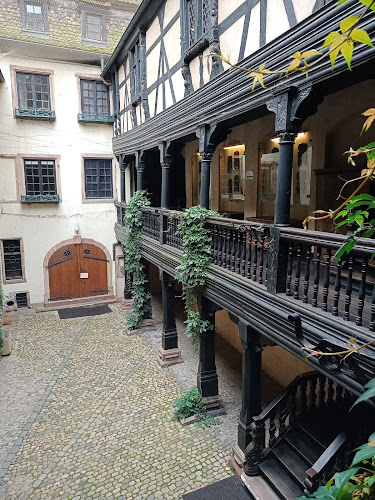
Alsatian Museum
Château Musée Vodou
Find Accommodations Nearby
Recommended Tours & Activities
Visitor Reviews
There are no reviews yet. Be the first one to write one.
Share Your Experience
Have you visited Grande-Île de Strasbourg? Help other travelers by leaving a review.