
Château Musée Vodou
About Château Musée Vodou
Key Features
More Details
Updated April 15, 2024
## Château Musée Vodou, Strasbourg: A Different Kind of Castle Experience
Just a few minutes’ walk from Strasbourg’s main train station, an old 19th-century water tower now houses one of the most unusual museums in France: the Château Musée Vodou (often called Château Vodou). Inside, more than a thousand ritual objects from West Africa are displayed in a circular sequence of low-lit rooms, inviting you to rethink everything you think you know about “voodoo”. Tourism Office
This guide walks you through what the museum actually is, what you’ll see, and how to visit in a way that’s respectful, informed, and practical.
—
### Quick Facts
– Location: 4 Rue de Koenigshoffen, 67000 Strasbourg (west of the station) Tourism Office
– Building: Former water tower built between 1878–1883, now a listed historic monument
– Focus: West African Vodun (often written “Vodou” in French) – religion and ritual, not horror-movie stereotypes Obscura
– Collection size: Private collection of more than 1,500 objects, with around 220 pieces in the permanent exhibition
– Languages: Audio guide in French, German, English and Spanish; group tours in FR/EN/DE by reservation Tourism Office
> Note on opening hours & prices:
> As of the latest Strasbourg tourism listings, the museum is generally open daily from 14:00–18:00, with late opening until 21:00 on the first and last Friday of the month, and standard adult admission around €14 with reduced rates for young visitors. Tourism Office
> Older sources still mention different days/hours, so always confirm on the official website or social channels before you go.
—
## A Water Tower Turned Vodou Museum
The first surprise is the building itself. The museum sits inside a massive octagonal water tower built during German rule (1878–1883) by Berlin architect Johann Eduard Jacobsthal, who also worked on the Berlin Stadtbahn and stations such as Alexanderplatz and Bellevue.
Key details about the structure:
– Architecture: Neo-Romanesque, with a red sandstone base and thick masonry walls originally designed to support the reservoir.
– Historic status: Listed as a Monument Historique in 1984, which constrained how the interior could be modified.
– Conversion: The tower was purchased in the 2000s by Alsatian entrepreneur Marc Arbogast and converted into a museum that opened in 2014. Strasbourg
Inside, the circular floorplan dictates the visitor route. You spiral upward through several levels, each using the curved walls and former tank structure to create intimate, sometimes intense viewing spaces. This layout is atmospheric but can feel enclosed; visitors with claustrophobia or reduced mobility should be aware that the museum occupies several levels of a tower. Some listings note the presence of a lift and accessible toilets but also mention that the layout can be challenging for some visitors, so if accessibility is crucial, it’s worth emailing ahead. Vodou Museum
—
## What the Collection Actually Shows
### Origins and Scope
The Château Musée Vodou holds the largest private collection of West-African Vodou objects in the world, assembled by Marie-Luce and Marc Arbogast.
A few anchored facts:
– The collection exceeds 1,500 objects, with roughly 220 on permanent display.
– Objects come mainly from Benin, Togo, Ghana and Nigeria, with additional pieces from countries such as Guinea. Tourism Office
– Represented cultures include Ewe, Fon, Guin, Sahwe, Yoruba and Adja, among others. Obscura
– Every object shown has been used in religious practice—for ancestor veneration, healing, divination, protection, life-cycle rituals and other ceremonies.
This is not an art museum showing unused “decorative” pieces: the objects carry the physical traces of use—worn surfaces, offerings, residues—and the interpretation leans heavily on anthropology and religious studies.
### Types of Objects You’ll Encounter
Based on the permanent collection and official descriptions, you can expect to see, among others: Obscura
– Bocio / fetishes: Power-charged figures created to protect individuals or communities, pursue justice, or influence specific situations. One highlighted example in the collection is a wotoji bocio (“swollen cadaver of divine breath”) from the Ewe tradition.
– Masks and headdresses: Used in ceremonies involving masked societies such as Zangbeto (night guardians) or Egungun (ancestor masquerades). The towering, textile-rich costumes often fill entire vitrines or stand free in the galleries.
– Altars and ritual assemblages: Groupings of figures, vessels, chains and organic materials that were originally part of functioning altars, not studio “sets”.
– Divination tools: Objects used in Fa divination and other systems, where priests interpret patterns to diagnose problems or advise clients.
– Textiles and garments: Vodou priest and devotee clothing, along with costumes relating to specific deities or spirits. Obscura
Interpretive panels and the audio guide work hard to explain what each object was for, who might have used it, and how it fits into broader Vodun cosmology. Visitors often comment that the museum corrects distorted media images of “voodoo dolls” and curses, replacing them with a multi-layered religion concerned with health, community protection and relations with the spirit world.
—
## How the Museum Frames Vodou
A key part of the experience is how the museum positions itself ethically. The official charter stresses that:
– The collection is private but publicly accessible, managed by a local non-profit.
– The museum acknowledges that collecting and exhibiting ritual objects from living cultures carries responsibilities and dilemmas.
– Staff aim to present Vodun as a living set of belief systems, not an extinct or exotic curiosity.
For visitors, this means:
– Labels generally avoid sensational language.
– The focus is on context and meaning, not shock value.
– Exhibitions are designed to encourage questions about how museums acquire, preserve and interpret objects from the Global South.
If you’re interested in decolonial museum debates or restitution issues, this is one of the more quietly thought-through sites in eastern France.
—
## Visitor Experience: What It Feels Like to Go
### Atmosphere and Layout
The design uses low lighting, spotlit objects and the circular masonry to create an immersive, sometimes intense mood. Strasbourg’s tourism board explicitly notes the “outstanding exhibition design” and how it introduces “a little-known culture and a philosophy of life that is still widespread today.” Tourism Office
Many visitors highlight:
– Strong storytelling through the audio guide and wall texts.
– A route that starts with introductory cosmology and moves toward more complex themes such as protection, justice and death.
– A visit time of about 1–2 hours if you use the audio guide at a normal pace.
Some reviews do mention that the atmosphere and subject matter can be emotionally heavy or unsettling, especially for younger children or anyone sensitive to funerary themes. That isn’t a flaw, but it’s worth knowing before you bring very young kids.
### Audio Guides, VR and Tours
– Audio guide: Included or commonly bundled with admission according to recent visitor reports; it’s available in four languages (FR/DE/EN/ES) and is widely praised for depth. Tourism Office
– Virtual reality rituals: The museum offers an optional VR experience showing four filmed ceremonies in Benin—Fa divination, a Mami Wata ceremony, a Kokou ritual and a Zangbeto mask ritual—using a 360° headset rented on site during weekday opening hours.
– Guided tours: Groups (usually >8–10 people) can book tours in French, English or German; Strasbourg’s tourism board notes that group tours are possible daily by reservation. Tourism Office
Night visits by torchlight are offered periodically and have been running at least through 2024; they’re guided, small-group tours designed to explore the tower in near-darkness. These are popular and should be booked in advance; dates vary and are announced via the museum’s and local tourism websites. week-end en Alsace
—
## Practical Tips for Visiting
### Getting There
– The museum is close to Strasbourg’s main station; most guides describe it as a short walk. Tourism Office
– Public transport: Tram line F, stop “Porte Blanche”, is listed as the nearest tram stop on the city’s official tourism page. Tourism Office
If you’re assembling a broader city itinerary, this pairs logically with a self-guided station-area walk or a canal-side loop back toward Petite France.
> Suggested internal link: from a Strasbourg hub page, you can naturally link to this article from a section on “Unusual museums in Strasbourg” or “Things to do near the train station”.
### Tickets, Discounts and City Card
– The official Alsace tourism sites currently list standard adult entry at €14, with lower rates for ages 11–25 and children 6–10. Tourism Office
– The museum is included in the Strasbourg City Card, which offers discounted or free entry to several museums and activities for seven days. Tourism Office
Because ticket prices can change, treat published rates as indicative and re-check shortly before your visit.
### Families and Children
The museum actively courts families while also acknowledging that some pieces are intense.
– A children’s booklet with games, quizzes and drawing prompts is available on request at the welcome desk and is explicitly promoted in city and local guides. Tourism Office
– Many parents report that older children and teens who like mythology, history or “spooky but educational” experiences tend to engage well, especially with the audio guide.
If you’re writing a broader family guide to Strasbourg, this museum fits naturally into a section on “alternative museums for curious teens” rather than very small children.
### Accessibility and Sensory Considerations
Key Highlights
Château Musée Vodou
Location
Places to Stay Near Château Musée Vodou
Find and Book a Tour
Explore More Travel Guides
No reviews found! Be the first to review!
Traveler Reviews for Château Musée Vodou
There are no reviews yet. Be the first one to write one.
Have you visited Château Musée Vodou? Help other travelers by sharing your review.
You Might Also Like
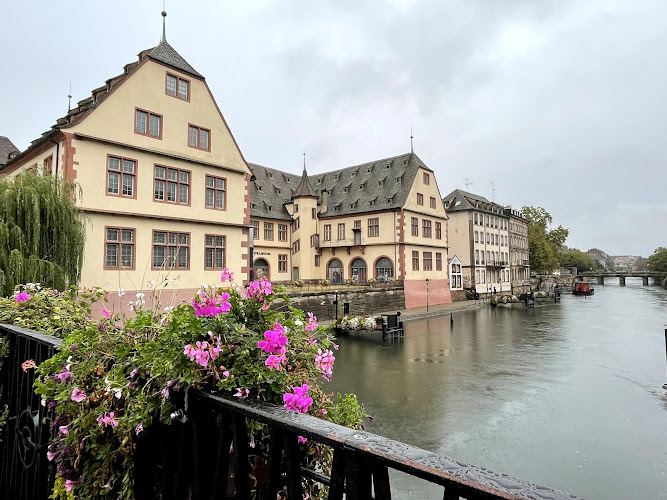
Historical Museum of the City of Strasbourg
Cathédrale Notre-Dame-de-Strasbourg
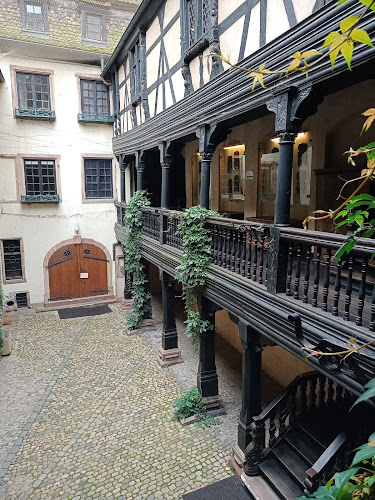
Alsatian Museum
Find Accommodations Nearby
Recommended Tours & Activities
Visitor Reviews
There are no reviews yet. Be the first one to write one.
Share Your Experience
Have you visited Château Musée Vodou? Help other travelers by leaving a review.