
MURAL CULTURAL DE INDEPENDENCIA
About MURAL CULTURAL DE INDEPENDENCIA
Description
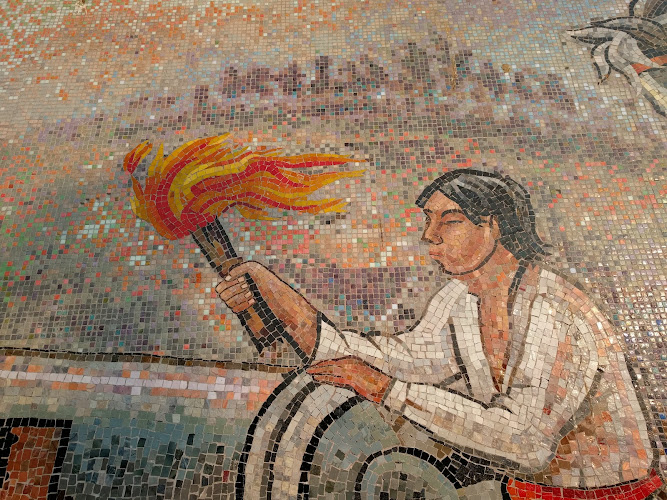
The Mural Cultural de Independencia is one of those places that quietly surprises you. It’s tucked within the everyday rhythm of Cuernavaca, yet it holds a kind of energy that makes you stop for a moment and just take it all in. This mural isn’t just paint on a wall—it’s a layered story, a visual conversation about Mexico’s long and complex journey toward independence. Every brushstroke tells a piece of that struggle, the pride, and the hope that came with it. You don’t need to be an art historian to feel something when you stand before it. There’s a sense of respect that naturally comes over you, even if you didn’t plan to stay long. When I first saw it, I remember thinking how the colors seemed to hum against the concrete. The figures—heroes, farmers, mothers, soldiers—felt alive in a way that’s hard to describe. It’s not a polished gallery piece; it’s raw, emotional, and deeply human. That’s what makes it so special. You can see the artist’s hand, the imperfections, the passion. It’s the kind of art that doesn’t just decorate a wall—it anchors a community’s identity. And while it’s absolutely worth a visit for adults who love history or art, it’s also surprisingly engaging for kids. There’s something about the scale and the storytelling that captures their attention. You’ll often see families standing there, parents explaining bits of history, children pointing out details in the faces or the flags. It’s a living lesson in culture and memory, right out in the open air.
Key Features
- Historical narrative: The mural visually narrates Mexico’s fight for independence, blending symbolic imagery with real historical figures.
- Community connection: Created with local participation and pride, it reflects Cuernavaca’s cultural heartbeat.
- Artistic detail: The mural uses bold colors and expressive brushwork to evoke emotion and movement.
- Educational value: Great for families and students, offering a tangible way to learn about Mexican history.
- Photogenic setting: The lighting and textures make it a favorite spot for travelers and photographers.
There’s also something quietly powerful about how it’s positioned—not hidden away, but part of the daily scenery. People pass by on their way to work or school, and it’s just there, reminding them of where they come from. That’s the beauty of public art like this—it belongs to everyone.
Best Time to Visit
If you ask me, the best time to visit is in the morning or late afternoon. The sunlight hits the mural just right during those hours, casting soft shadows that make the figures pop. Midday can be a bit harsh, especially if you’re planning to take photos, but even then, the colors hold up beautifully. I once went just after a light rain, and honestly, it was magical. The mural looked freshly washed, the colors deeper, and the air smelled like wet stone and flowers. There weren’t many people around, just a few locals chatting nearby. It felt peaceful, almost sacred. If you’re traveling through Cuernavaca on a weekend, you might find a few more visitors lingering around, especially families or small tour groups. But it never feels overcrowded. The space allows you to step back, take your time, and really look.
How to Get There
Reaching the Mural Cultural de Independencia is fairly straightforward. Most travelers arrive by car or taxi, though local buses also pass nearby. If you’re staying in central Cuernavaca, it’s just a short drive away—close enough to combine with other cultural stops like museums or local markets. I actually recommend walking part of the way if you can. Cuernavaca’s streets have this relaxed, lived-in charm that’s hard to appreciate from inside a car. You’ll see small cafés, fruit vendors, and maybe even hear a street musician or two. It’s a nice prelude to the mural itself, which is all about the spirit of the people. For those using navigation apps, it’s easy to locate. Just make sure to check traffic beforehand—Cuernavaca can get a little busy during rush hours.
Tips for Visiting
Here’s the thing: visiting the Mural Cultural de Independencia isn’t like going to a typical tourist attraction. There’s no ticket booth, no guided tour, no souvenir shop waiting at the end. It’s simple and authentic, which is exactly what makes it so special. Still, a few tips can help you make the most of your visit:
- Take your time: Don’t just snap a photo and move on. Walk along the mural slowly, notice the transitions between scenes, and let the story unfold.
- Bring water and sunscreen: The sun can be strong, especially in the early afternoon. There’s not much shade nearby.
- Go with a local guide: If you can, find someone who knows the history behind each figure. It adds so much depth to the experience.
- Respect the space: It’s a public artwork, but it’s also a cultural monument. Avoid touching the mural or leaning against it.
- Capture details: Instead of only taking wide shots, zoom in on the brush strokes, the eyes, the flags—those small details tell the real story.
And maybe this is just me, but I always like to sit for a few minutes after visiting a place like this. Find a nearby bench or low wall, and just watch the world go by. You’ll see how the mural interacts with the people around it—kids playing, locals chatting, tourists taking pictures. It’s a reminder that history isn’t just something in books; it’s alive, woven into daily life. If you’re traveling with kids, this is a great opportunity to talk about independence in a way that’s visual and easy to grasp. The bright imagery helps them connect the dots between art and history. I’ve seen children point out the horses, the flags, the faces—asking questions that spark beautiful little conversations. On a practical note, mornings are generally cooler and quieter, making them ideal for families. If you’re into photography, the golden hour light is perfect for capturing the mural’s texture and tone. Just be mindful of pedestrians—it’s a working neighborhood, after all.
There’s a certain humility in the Mural Cultural de Independencia. It doesn’t shout for attention, yet it holds so much meaning. It’s one of those places that reminds you why travel matters—not just to see new things, but to feel connected to the stories that shape a place. So, whether you’re an art lover, a history buff, or just someone who enjoys discovering the soul of a city, this mural is worth your time. It’s not flashy or grand, but it’s honest. And sometimes, that’s exactly what you need—a quiet moment with a wall that speaks volumes.
Key Features
- Key Features
- Best Time to Visit
- How to Get There
- Tips for Visiting
More Details
Updated December 1, 2025
Table of Contents
Description
The Mural Cultural de Independencia is one of those places that quietly surprises you. It’s tucked within the everyday rhythm of Cuernavaca, yet it holds a kind of energy that makes you stop for a moment and just take it all in. This mural isn’t just paint on a wall—it’s a layered story, a visual conversation about Mexico’s long and complex journey toward independence. Every brushstroke tells a piece of that struggle, the pride, and the hope that came with it. You don’t need to be an art historian to feel something when you stand before it. There’s a sense of respect that naturally comes over you, even if you didn’t plan to stay long.
When I first saw it, I remember thinking how the colors seemed to hum against the concrete. The figures—heroes, farmers, mothers, soldiers—felt alive in a way that’s hard to describe. It’s not a polished gallery piece; it’s raw, emotional, and deeply human. That’s what makes it so special. You can see the artist’s hand, the imperfections, the passion. It’s the kind of art that doesn’t just decorate a wall—it anchors a community’s identity.
And while it’s absolutely worth a visit for adults who love history or art, it’s also surprisingly engaging for kids. There’s something about the scale and the storytelling that captures their attention. You’ll often see families standing there, parents explaining bits of history, children pointing out details in the faces or the flags. It’s a living lesson in culture and memory, right out in the open air.
Key Features
- Historical narrative: The mural visually narrates Mexico’s fight for independence, blending symbolic imagery with real historical figures.
- Community connection: Created with local participation and pride, it reflects Cuernavaca’s cultural heartbeat.
- Artistic detail: The mural uses bold colors and expressive brushwork to evoke emotion and movement.
- Educational value: Great for families and students, offering a tangible way to learn about Mexican history.
- Photogenic setting: The lighting and textures make it a favorite spot for travelers and photographers.
There’s also something quietly powerful about how it’s positioned—not hidden away, but part of the daily scenery. People pass by on their way to work or school, and it’s just there, reminding them of where they come from. That’s the beauty of public art like this—it belongs to everyone.
Best Time to Visit
If you ask me, the best time to visit is in the morning or late afternoon. The sunlight hits the mural just right during those hours, casting soft shadows that make the figures pop. Midday can be a bit harsh, especially if you’re planning to take photos, but even then, the colors hold up beautifully.
I once went just after a light rain, and honestly, it was magical. The mural looked freshly washed, the colors deeper, and the air smelled like wet stone and flowers. There weren’t many people around, just a few locals chatting nearby. It felt peaceful, almost sacred.
If you’re traveling through Cuernavaca on a weekend, you might find a few more visitors lingering around, especially families or small tour groups. But it never feels overcrowded. The space allows you to step back, take your time, and really look.
How to Get There
Reaching the Mural Cultural de Independencia is fairly straightforward. Most travelers arrive by car or taxi, though local buses also pass nearby. If you’re staying in central Cuernavaca, it’s just a short drive away—close enough to combine with other cultural stops like museums or local markets.
I actually recommend walking part of the way if you can. Cuernavaca’s streets have this relaxed, lived-in charm that’s hard to appreciate from inside a car. You’ll see small cafés, fruit vendors, and maybe even hear a street musician or two. It’s a nice prelude to the mural itself, which is all about the spirit of the people.
For those using navigation apps, it’s easy to locate. Just make sure to check traffic beforehand—Cuernavaca can get a little busy during rush hours.
Tips for Visiting
Here’s the thing: visiting the Mural Cultural de Independencia isn’t like going to a typical tourist attraction. There’s no ticket booth, no guided tour, no souvenir shop waiting at the end. It’s simple and authentic, which is exactly what makes it so special. Still, a few tips can help you make the most of your visit:
- Take your time: Don’t just snap a photo and move on. Walk along the mural slowly, notice the transitions between scenes, and let the story unfold.
- Bring water and sunscreen: The sun can be strong, especially in the early afternoon. There’s not much shade nearby.
- Go with a local guide: If you can, find someone who knows the history behind each figure. It adds so much depth to the experience.
- Respect the space: It’s a public artwork, but it’s also a cultural monument. Avoid touching the mural or leaning against it.
- Capture details: Instead of only taking wide shots, zoom in on the brush strokes, the eyes, the flags—those small details tell the real story.
And maybe this is just me, but I always like to sit for a few minutes after visiting a place like this. Find a nearby bench or low wall, and just watch the world go by. You’ll see how the mural interacts with the people around it—kids playing, locals chatting, tourists taking pictures. It’s a reminder that history isn’t just something in books; it’s alive, woven into daily life.
If you’re traveling with kids, this is a great opportunity to talk about independence in a way that’s visual and easy to grasp. The bright imagery helps them connect the dots between art and history. I’ve seen children point out the horses, the flags, the faces—asking questions that spark beautiful little conversations.
On a practical note, mornings are generally cooler and quieter, making them ideal for families. If you’re into photography, the golden hour light is perfect for capturing the mural’s texture and tone. Just be mindful of pedestrians—it’s a working neighborhood, after all.
There’s a certain humility in the Mural Cultural de Independencia. It doesn’t shout for attention, yet it holds so much meaning. It’s one of those places that reminds you why travel matters—not just to see new things, but to feel connected to the stories that shape a place.
So, whether you’re an art lover, a history buff, or just someone who enjoys discovering the soul of a city, this mural is worth your time. It’s not flashy or grand, but it’s honest. And sometimes, that’s exactly what you need—a quiet moment with a wall that speaks volumes.
Key Highlights
- Key Features
- Best Time to Visit
- How to Get There
- Tips for Visiting
Location
Places to Stay Near MURAL CULTURAL DE INDEPENDENCIA
Find and Book a Tour
Explore More Travel Guides
No reviews found! Be the first to review!
Traveler Reviews for MURAL CULTURAL DE INDEPENDENCIA
There are no reviews yet. Be the first one to write one.
Have you visited MURAL CULTURAL DE INDEPENDENCIA? Help other travelers by sharing your review.
You Might Also Like
Zona Arqueológica Teopanzolco
LETRAS CUERNAVACA
Urban State Park Barranca de Chapultepec
Find Accommodations Nearby
Recommended Tours & Activities
Visitor Reviews
There are no reviews yet. Be the first one to write one.
Share Your Experience
Have you visited MURAL CULTURAL DE INDEPENDENCIA? Help other travelers by leaving a review.