
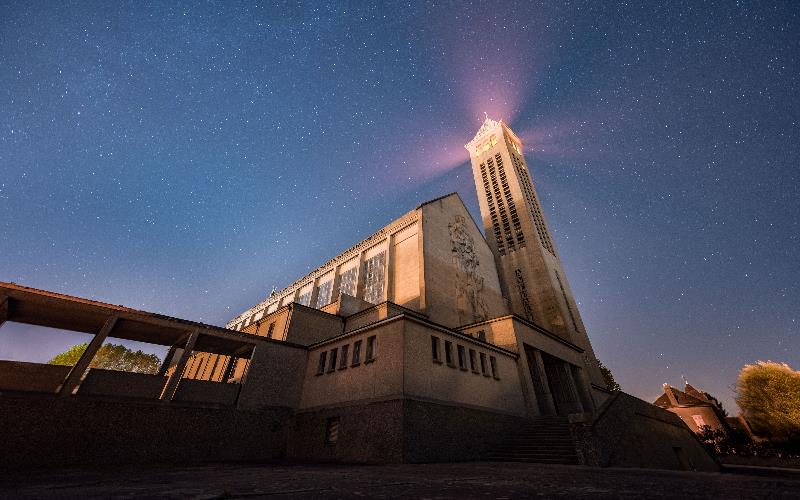
Basilica of Our Lady of the Trinity
About Basilica of Our Lady of the Trinity
Description
The Basilica of Our Lady of the Trinity in Blois is one of those places that quietly takes your breath away before you even realize it. It’s not just another church on a European itinerary—it’s a story built in stone, glass, and faith. Constructed in the 1930s, this basilica stands as a rare example of interwar religious architecture, blending modern innovation with deep spiritual symbolism. There’s something almost cinematic about the way sunlight filters through its stained-glass windows, scattering colors across the floor like a living mosaic. It’s peaceful, yes, but it also hums with a kind of energy that only spaces shaped by devotion can hold.
What makes this basilica truly fascinating is how it bridges eras. Unlike medieval cathedrals that tower with Gothic drama, the Basilica of Our Lady of the Trinity feels approachable, human. Its design reflects a moment in history when art and faith were rediscovering each other after a world had been shaken by war. The result is a building that feels both grounded and transcendent. You can sense the craftsmanship in every carved detail, every curve of the nave, every beam of light that dances across the altar.
I remember my first visit on a crisp autumn morning—Blois was wrapped in that soft Loire Valley mist, and the basilica’s façade seemed to glow faintly in the pale light. Inside, the air was cool and still. A few locals sat quietly in prayer, and I found myself just sitting there too, not out of obligation but because it felt right. That’s the thing about this place: it doesn’t demand attention; it earns it.
Although it’s a significant Catholic site, the basilica welcomes everyone—pilgrims, architecture lovers, or simply curious travelers wandering through Blois. It’s fully accessible, with thoughtful design that makes it easy for visitors of all abilities to explore comfortably. The atmosphere is contemplative but not heavy, and the staff and volunteers are genuinely kind, often eager to share stories about the church’s history and the meaning behind its art.
The basilica’s interior is a feast for the eyes. The stained-glass windows, in particular, are a highlight—vivid depictions of biblical scenes rendered in rich blues, reds, and golds that seem to shift with the changing daylight. The craftsmanship is impeccable, and yet it never feels ostentatious. Instead, it feels like a dialogue between light and faith. Every corner seems to whisper a story, and if you linger long enough, you start to feel like part of it.
Key Features
- Architectural Style: A unique example of 1930s religious architecture, blending Art Deco influences with traditional Catholic symbolism.
- Stained Glass Windows: Stunning panels that illuminate the interior with a kaleidoscope of colors, each telling a sacred story.
- Peaceful Ambiance: A quiet refuge ideal for reflection, prayer, or simply escaping the bustle of the city.
- Accessibility: Wheelchair-accessible entrances and parking, ensuring inclusivity for all visitors.
- Artistic Details: Intricate carvings, sculptures, and mosaics that showcase exceptional craftsmanship from the early 20th century.
- Spiritual Significance: A key pilgrimage site dedicated to the Virgin Mary, attracting visitors from across France and beyond.
- Heritage Value: Recognized as an important cultural and religious landmark in the Loire Valley region.
One of the most underrated aspects of the basilica is its acoustics. If you happen to catch a choir rehearsal or an organ performance, you’ll understand why locals hold this place dear. The sound fills the space in a way that feels almost alive, resonating through the arches and settling softly on your skin. It’s goosebump-inducing, honestly.
Best Time to Visit
While the basilica is open year-round, the best time to visit depends a bit on what kind of experience you’re after. Spring and early summer are ideal if you enjoy mild weather and long daylight hours—the Loire Valley is lush and full of life, and the soft sunlight makes the stained glass truly sing. Autumn, though, has its own kind of magic. The golden leaves outside contrast beautifully with the cool stone inside, and the crowds thin out, giving you space to breathe and explore at your own pace.
If you’re visiting around major Catholic holidays—especially Easter or the Feast of the Assumption—you’ll find the basilica at its most vibrant, with special services and processions. Even if you’re not religious, these moments offer a glimpse into the community’s heart and traditions. Winter, on the other hand, is quieter. The chill in the air and the warm glow of candlelight make it feel intimate and contemplative, perfect for travelers who prefer a slower, more reflective experience.
How to Get There
Reaching the Basilica of Our Lady of the Trinity is quite straightforward. Blois itself is well connected by train from major French cities like Paris, Tours, and Orléans. The ride from Paris takes about 90 minutes, and from the Blois-Chambord station, it’s a pleasant walk through charming streets lined with cafés and old stone buildings. If you’re driving, the roads are scenic—rolling hills, vineyards, and glimpses of the Loire River along the way. Parking near the basilica is convenient, and accessibility features make it easy for everyone to enter comfortably.
For those who love to wander, exploring Blois on foot is a treat. The basilica is within walking distance of other landmarks like Château de Blois and the old town’s winding lanes. You could easily spend a day exploring local bakeries, antique shops, and small museums before or after your visit. And if you’re staying overnight, consider booking accommodation nearby so you can see the basilica illuminated at dusk—it’s a quietly stunning sight.
Tips for Visiting
Here’s the thing about visiting a place like this: it’s not just about ticking off another attraction. It’s about slowing down, listening, and letting the space speak to you. That said, there are a few practical tips that can make your visit smoother and more meaningful.
- Go early in the day: Mornings are peaceful, and you’ll often have the place nearly to yourself. The light is also at its best for photography.
- Check for events: The basilica occasionally hosts concerts and religious ceremonies that are open to the public—these can be unforgettable experiences.
- Dress respectfully: It’s still an active place of worship, so modest attire is appreciated.
- Take your time: Don’t rush through. Sit for a while, watch the light shift across the walls, and let the atmosphere work its quiet magic.
- Bring a small donation: It helps with upkeep and restoration, and it’s a nice way to give back after enjoying such a beautiful space.
- Accessibility: If mobility is a concern, rest assured—the basilica is designed with accessibility in mind, from its entrance to its seating areas.
And maybe this is just me, but I always bring a small notebook when visiting places like this. There’s something about the calm that invites reflection—you might find yourself jotting down thoughts you didn’t know you had. The Basilica of Our Lady of the Trinity has that effect. It’s not flashy or overwhelming; it’s quietly profound. Whether you come for faith, art, or simple curiosity, you’ll likely leave with more than you expected.
In the end, what makes this basilica special isn’t just its architecture or history—it’s the feeling it leaves with you. A sense of peace, of connection, of having touched something timeless. It’s the kind of place that reminds you why travel matters—not just to see, but to feel.
Key Features
- Key Features
- Best Time to Visit
- How to Get There
- Tips for Visiting
More Details
Updated December 1, 2025
Table of Contents
- Description
- Key Features
- Best Time to Visit
- How to Get There
- Tips for Visiting
- Key Highlights
- Location
- Places to Stay Near Basilica of Our Lady of the Trinity
- Find and Book a Tour
- Explore More Travel Guides
- Nearby Places You Might Like
- Traveler Reviews for Basilica of Our Lady of the Trinity
- Share Your Experience
Description
The Basilica of Our Lady of the Trinity in Blois is one of those places that quietly takes your breath away before you even realize it. It’s not just another church on a European itinerary—it’s a story built in stone, glass, and faith. Constructed in the 1930s, this basilica stands as a rare example of interwar religious architecture, blending modern innovation with deep spiritual symbolism. There’s something almost cinematic about the way sunlight filters through its stained-glass windows, scattering colors across the floor like a living mosaic. It’s peaceful, yes, but it also hums with a kind of energy that only spaces shaped by devotion can hold.
What makes this basilica truly fascinating is how it bridges eras. Unlike medieval cathedrals that tower with Gothic drama, the Basilica of Our Lady of the Trinity feels approachable, human. Its design reflects a moment in history when art and faith were rediscovering each other after a world had been shaken by war. The result is a building that feels both grounded and transcendent. You can sense the craftsmanship in every carved detail, every curve of the nave, every beam of light that dances across the altar.
I remember my first visit on a crisp autumn morning—Blois was wrapped in that soft Loire Valley mist, and the basilica’s façade seemed to glow faintly in the pale light. Inside, the air was cool and still. A few locals sat quietly in prayer, and I found myself just sitting there too, not out of obligation but because it felt right. That’s the thing about this place: it doesn’t demand attention; it earns it.
Although it’s a significant Catholic site, the basilica welcomes everyone—pilgrims, architecture lovers, or simply curious travelers wandering through Blois. It’s fully accessible, with thoughtful design that makes it easy for visitors of all abilities to explore comfortably. The atmosphere is contemplative but not heavy, and the staff and volunteers are genuinely kind, often eager to share stories about the church’s history and the meaning behind its art.
The basilica’s interior is a feast for the eyes. The stained-glass windows, in particular, are a highlight—vivid depictions of biblical scenes rendered in rich blues, reds, and golds that seem to shift with the changing daylight. The craftsmanship is impeccable, and yet it never feels ostentatious. Instead, it feels like a dialogue between light and faith. Every corner seems to whisper a story, and if you linger long enough, you start to feel like part of it.
Key Features
- Architectural Style: A unique example of 1930s religious architecture, blending Art Deco influences with traditional Catholic symbolism.
- Stained Glass Windows: Stunning panels that illuminate the interior with a kaleidoscope of colors, each telling a sacred story.
- Peaceful Ambiance: A quiet refuge ideal for reflection, prayer, or simply escaping the bustle of the city.
- Accessibility: Wheelchair-accessible entrances and parking, ensuring inclusivity for all visitors.
- Artistic Details: Intricate carvings, sculptures, and mosaics that showcase exceptional craftsmanship from the early 20th century.
- Spiritual Significance: A key pilgrimage site dedicated to the Virgin Mary, attracting visitors from across France and beyond.
- Heritage Value: Recognized as an important cultural and religious landmark in the Loire Valley region.
One of the most underrated aspects of the basilica is its acoustics. If you happen to catch a choir rehearsal or an organ performance, you’ll understand why locals hold this place dear. The sound fills the space in a way that feels almost alive, resonating through the arches and settling softly on your skin. It’s goosebump-inducing, honestly.
Best Time to Visit
While the basilica is open year-round, the best time to visit depends a bit on what kind of experience you’re after. Spring and early summer are ideal if you enjoy mild weather and long daylight hours—the Loire Valley is lush and full of life, and the soft sunlight makes the stained glass truly sing. Autumn, though, has its own kind of magic. The golden leaves outside contrast beautifully with the cool stone inside, and the crowds thin out, giving you space to breathe and explore at your own pace.
If you’re visiting around major Catholic holidays—especially Easter or the Feast of the Assumption—you’ll find the basilica at its most vibrant, with special services and processions. Even if you’re not religious, these moments offer a glimpse into the community’s heart and traditions. Winter, on the other hand, is quieter. The chill in the air and the warm glow of candlelight make it feel intimate and contemplative, perfect for travelers who prefer a slower, more reflective experience.
How to Get There
Reaching the Basilica of Our Lady of the Trinity is quite straightforward. Blois itself is well connected by train from major French cities like Paris, Tours, and Orléans. The ride from Paris takes about 90 minutes, and from the Blois-Chambord station, it’s a pleasant walk through charming streets lined with cafés and old stone buildings. If you’re driving, the roads are scenic—rolling hills, vineyards, and glimpses of the Loire River along the way. Parking near the basilica is convenient, and accessibility features make it easy for everyone to enter comfortably.
For those who love to wander, exploring Blois on foot is a treat. The basilica is within walking distance of other landmarks like Château de Blois and the old town’s winding lanes. You could easily spend a day exploring local bakeries, antique shops, and small museums before or after your visit. And if you’re staying overnight, consider booking accommodation nearby so you can see the basilica illuminated at dusk—it’s a quietly stunning sight.
Tips for Visiting
Here’s the thing about visiting a place like this: it’s not just about ticking off another attraction. It’s about slowing down, listening, and letting the space speak to you. That said, there are a few practical tips that can make your visit smoother and more meaningful.
- Go early in the day: Mornings are peaceful, and you’ll often have the place nearly to yourself. The light is also at its best for photography.
- Check for events: The basilica occasionally hosts concerts and religious ceremonies that are open to the public—these can be unforgettable experiences.
- Dress respectfully: It’s still an active place of worship, so modest attire is appreciated.
- Take your time: Don’t rush through. Sit for a while, watch the light shift across the walls, and let the atmosphere work its quiet magic.
- Bring a small donation: It helps with upkeep and restoration, and it’s a nice way to give back after enjoying such a beautiful space.
- Accessibility: If mobility is a concern, rest assured—the basilica is designed with accessibility in mind, from its entrance to its seating areas.
And maybe this is just me, but I always bring a small notebook when visiting places like this. There’s something about the calm that invites reflection—you might find yourself jotting down thoughts you didn’t know you had. The Basilica of Our Lady of the Trinity has that effect. It’s not flashy or overwhelming; it’s quietly profound. Whether you come for faith, art, or simple curiosity, you’ll likely leave with more than you expected.
In the end, what makes this basilica special isn’t just its architecture or history—it’s the feeling it leaves with you. A sense of peace, of connection, of having touched something timeless. It’s the kind of place that reminds you why travel matters—not just to see, but to feel.
Key Highlights
- Key Features
- Best Time to Visit
- How to Get There
- Tips for Visiting
Location
Places to Stay Near Basilica of Our Lady of the Trinity
Find and Book a Tour
Explore More Travel Guides
No reviews found! Be the first to review!
Traveler Reviews for Basilica of Our Lady of the Trinity
There are no reviews yet. Be the first one to write one.
Have you visited Basilica of Our Lady of the Trinity? Help other travelers by sharing your review.
You Might Also Like
Find Accommodations Nearby
Recommended Tours & Activities
Visitor Reviews
There are no reviews yet. Be the first one to write one.
Share Your Experience
Have you visited Basilica of Our Lady of the Trinity? Help other travelers by leaving a review.