Monument 4.7 Edinburgh, United Kingdom of Great Britain and Northern IrelandCommunity Guide

Scott Monument

E. Princes St Gardens, Edinburgh EH2 2EJ英國

Scott Monument
35,344 Photos

About & Overview

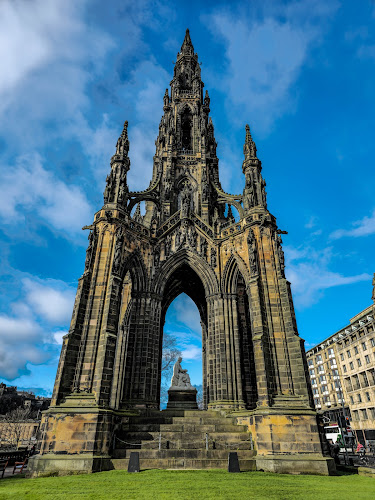
Rising 200 feet above Princes Street Gardens, the Scott Monument is a brooding Victorian Gothic spire that honours Sir Walter Scott and dominates Edinburgh’s New Town skyline. Built in the mid-19th century, its intricate sandstone carving, pointed arches and dozens of sculpted figures celebrate Scotland’s literary heritage and Victorian craftsmanship. Visitors enter through a vaulted base and can climb a series of narrow spiral staircases to reach viewing platforms that frame the Old Town, Edinburgh Castle and the Firth of Forth — each level reveals new details of the monument’s architecture and the city unfolding below. The climb is part history lesson, part adventure: look out for the statue of Sir Walter Scott seated with his dog on the lower level and the many character busts tucked into the structure. Whether you’re a literature lover, architecture fan or photographer chasing panoramic cityscapes at golden hour, the Scott Monument offers a compact, unforgettable experience in the heart of Edinburgh.

Highlights & Key Features

  • Victorian Gothic architecture with intricate sandstone carving
  • Statue of Sir Walter Scott seated with his dog
  • Multiple viewing platforms with panoramic views of Edinburgh and the Castle
  • Narrow spiral staircases (around 287 steps) providing an immersive climb
  • Numerous sculpted figures and literary character busts integrated into the structure

Visitor Guide & Information

Standing at 200 feet tall in the heart of Edinburgh, the Scott Monument is impossible to miss. This Gothic spire punches through the Scottish skyline like something straight out of a Victorian fairy tale, and honestly, there’s nothing quite like it anywhere else in the world. Built between 1840 and 1844, this blackened sandstone tower serves as a tribute to Sir Walter Scott, the novelist and poet who basically put Scotland on the literary map with works like Ivanhall and Rob Roy.

The monument’s dark appearance comes from the local sandstone that’s been weathered and darkened over time, giving it this dramatic, almost brooding presence that feels very fitting for a writer who penned such romantic tales of Scottish history. When you first see it, you might think it looks more like a church steeple that wandered away from its building rather than a standalone monument. And that’s kind of the point – the architect, George Meikle Kemp, was a self-taught draftsman who tragically drowned in the Union Canal before seeing his masterpiece completed.

What makes this monument particularly special is that it’s the largest monument dedicated to a writer anywhere in the world. Think about that for a second – we’re talking about a 200-foot tower built just to honor someone who wrote books. That’s how much the Scots loved Walter Scott, and how deeply his work resonated with people during that era.

Inside, you’ll find a marble statue of Scott himself, seated with his deerhound Maida at his feet, looking very contemplative as any good writer should. But the real attraction here is the climb. Those 287 steps wind their way up a narrow spiral staircase that gets progressively tighter as you ascend, eventually leading to viewing platforms that offer some of the most spectacular panoramas of Edinburgh you’ll find anywhere.

Key Features

The Scott Monument packs quite a punch when it comes to architectural and cultural significance. Here’s what makes this Victorian gothic masterpiece worth your time:

  • 287 stone steps leading to four different viewing platforms at various heights, each offering increasingly impressive views of Edinburgh’s Old and New Towns
  • 64 carved figures representing characters from Scott’s novels and poems adorning the exterior – it’s like a stone encyclopedia of 19th-century Scottish literature
  • The central marble statue of Sir Walter Scott carved by Sir John Steell, showing the writer in a relaxed, seated position with his beloved dog
  • Gothic Revival architecture featuring intricate stonework, pointed arches, and flying buttresses that would make Notre Dame jealous
  • Viewing platforms at different levels (approximately 100, 130, 160, and 200 feet), allowing visitors to choose their comfort level for heights
  • Educational displays throughout the climb detailing Scott’s life, works, and the monument’s construction history
  • A position right on Princes Street Gardens, making it a central landmark that’s hard to miss during any Edinburgh visit
  • The narrowing staircase design that becomes increasingly tight – the topmost sections are definitely not for anyone with claustrophobia
  • Original Victorian engineering and construction techniques still visible throughout the structure
  • Photo opportunities at every level, though the top platform provides unobstructed 360-degree views of Edinburgh Castle, Arthur’s Seat, the Firth of Forth, and beyond

Best Time to Visit

Timing your visit to the Scott Monument can make a huge difference in your experience, and I’ve learned this the hard way after watching tourists struggle up those stairs in the pouring rain.

The monument is open year-round, but let’s be real – Edinburgh weather is famously unpredictable. Your best bet for clear views from the top is during late spring through early autumn, particularly May through September. During these months, you’ve got longer daylight hours and a slightly better chance of decent weather. I say “slightly” because this is Scotland we’re talking about, where four seasons in one day isn’t just a saying, it’s basically a guarantee.

Early mornings, right when the monument opens, tend to be quieter. You’ll avoid the tour groups and school trips that often descend mid-morning. Plus, morning light on Edinburgh can be absolutely stunning, especially if you catch it just after sunrise during summer months. The golden hour before sunset is equally magical, but you’ll be competing with more visitors who’ve had the same idea.

Winter visits have their own charm, don’t get me wrong. The monument looks particularly atmospheric against grey Scottish skies, and Edinburgh’s Christmas markets nearby add festive energy. But those stairs get cold, and I mean really cold. The wind whips through the open structure, and if there’s ice or snow, the climb becomes genuinely treacherous.

Weekdays are generally less crowded than weekends, particularly Tuesday through Thursday. If you’re visiting during Edinburgh Festival season in August, expect longer queues and a busier experience overall. The city swells with visitors, and everyone seems to want that perfect Instagram shot from the top.

Weather apps are your friend here – check them obsessively before committing to the climb. There’s nothing worse than huffing up 287 steps only to find the top shrouded in fog. Though honestly, even foggy Edinburgh has its moody appeal.

How to Get There

Getting to the Scott Monument is refreshingly straightforward since it sits right in the city center on Princes Street, one of Edinburgh’s main thoroughfares. You literally can’t miss it if you’re walking along Princes Street – just look for the massive Gothic spire that looks like it’s trying to poke holes in the clouds.

If you’re staying anywhere in Edinburgh’s city center, walking is probably your best option. The monument is easily accessible on foot from most central locations, sitting right at the intersection of Princes Street and The Mound. From Edinburgh Waverley Station, it’s about a five-minute walk – just exit the station onto Princes Street and head east.

For bus travelers, numerous routes run along Princes Street, making it super convenient. Routes 3, 5, 7, 8, 14, 22, 25, 29, 30, 31, 33, and 49 all stop nearby. Just tell the driver you want Princes Street for the Scott Monument, and they’ll sort you out. The Edinburgh bus system is pretty tourist-friendly, though buying a day pass often makes more sense than individual tickets if you’re planning multiple trips.

The Edinburgh Tram system also serves the area well, with a stop at Princes Street that puts you within easy walking distance. Trams run from Edinburgh Airport directly into the city center, so if you’re coming straight from your flight, this could work perfectly.

Now, about parking – here’s where things get a bit tricky. The monument itself doesn’t have dedicated parking, and driving in Edinburgh’s city center is generally more headache than it’s worth. If you must drive, there are several paid car parks nearby, including the St James Quarter car park and the Castle Terrace car park. Be prepared for typical city center parking rates, which aren’t cheap. Honestly though, unless you’ve got mobility issues, public transport or walking makes way more sense.

For those with accessibility needs, it’s worth noting that the monument itself isn’t wheelchair accessible – those 287 stone steps are the only way up. The ground level where Scott’s statue sits can be viewed, but the viewing platforms require climbing. There is accessible parking relatively nearby for those who need it, even though the monument itself presents challenges.

Tips for Visiting

Let me share some hard-earned wisdom about tackling the Scott Monument that’ll make your visit smoother and more enjoyable.

First things first – wear proper shoes. I cannot stress this enough. Those spiral staircases are stone, they can be worn smooth in places, and they get slippery when wet. Your cute sandals or slick-soled dress shoes are a twisted ankle waiting to happen. Trainers with good grip are your friend here.

The staircase gets narrow. Like, really narrow. At the top sections, you’ll be squeezing through passages that weren’t designed for modern humans who’ve been eating well. If you’ve got any concerns about tight spaces, maybe pause at one of the lower viewing platforms. There’s absolutely no shame in that – the views from the intermediate levels are still fantastic.

Bring a light jacket even if it’s warm at ground level. The wind at the top can be fierce, and temperature drops as you climb. Edinburgh wind has this special quality where it seems to find every gap in your clothing and exploit it mercilessly.

Tickets need to be purchased, and while they’re reasonably priced, there’s no point showing up without cash or card. They don’t take IOUs or promises of future payment, trust me. Consider booking ahead during peak season to avoid disappointment.

The climb takes most people between 15-30 minutes depending on fitness level and how many photo stops you make. Budget at least an hour total for your visit when you factor in time at the top enjoying the views and the descent. Going down can actually be trickier than going up because the steps are steep and your legs are already tired.

Speaking of photos – your phone or camera will get a workout. The views are spectacular from multiple angles and levels. But be careful leaning out for that perfect shot. The barriers are there for a reason, and Scottish winds are no joke. I’ve seen too many tourists nearly lose their phones (and their balance) trying for that Instagram-worthy angle.

If you’re visiting with kids, they generally love the adventure of climbing the monument. But keep a close eye on them, especially on the narrower sections. The excitement can make them forget to watch their step. Children under 8 might find the climb challenging, and you know your kids best.

Plan your visit around meals – there’s no cafe at the top, and you’ll probably be hungry after all that climbing. The good news is that Princes Street and surrounding areas are packed with dining options for every budget.

Finally, take your time. This isn’t a race, despite what the fit twenty-somethings bounding past you might suggest. Pause at the landings, catch your breath, read the information plaques about Scott’s life and works. The monument is as much about honoring literary history as it is about the views, and rushing through misses the point entirely.

Community & Insider Notes

Last modified March 30, 2026

Description

Standing at 200 feet tall in the heart of Edinburgh, the Scott Monument is impossible to miss. This Gothic spire punches through the Scottish skyline like something straight out of a Victorian fairy tale, and honestly, there’s nothing quite like it anywhere else in the world. Built between 1840 and 1844, this blackened sandstone tower serves as a tribute to Sir Walter Scott, the novelist and poet who basically put Scotland on the literary map with works like Ivanhall and Rob Roy.

The monument’s dark appearance comes from the local sandstone that’s been weathered and darkened over time, giving it this dramatic, almost brooding presence that feels very fitting for a writer who penned such romantic tales of Scottish history. When you first see it, you might think it looks more like a church steeple that wandered away from its building rather than a standalone monument. And that’s kind of the point – the architect, George Meikle Kemp, was a self-taught draftsman who tragically drowned in the Union Canal before seeing his masterpiece completed.

What makes this monument particularly special is that it’s the largest monument dedicated to a writer anywhere in the world. Think about that for a second – we’re talking about a 200-foot tower built just to honor someone who wrote books. That’s how much the Scots loved Walter Scott, and how deeply his work resonated with people during that era.

Inside, you’ll find a marble statue of Scott himself, seated with his deerhound Maida at his feet, looking very contemplative as any good writer should. But the real attraction here is the climb. Those 287 steps wind their way up a narrow spiral staircase that gets progressively tighter as you ascend, eventually leading to viewing platforms that offer some of the most spectacular panoramas of Edinburgh you’ll find anywhere.

Key Features

The Scott Monument packs quite a punch when it comes to architectural and cultural significance. Here’s what makes this Victorian gothic masterpiece worth your time:

  • 287 stone steps leading to four different viewing platforms at various heights, each offering increasingly impressive views of Edinburgh’s Old and New Towns
  • 64 carved figures representing characters from Scott’s novels and poems adorning the exterior – it’s like a stone encyclopedia of 19th-century Scottish literature
  • The central marble statue of Sir Walter Scott carved by Sir John Steell, showing the writer in a relaxed, seated position with his beloved dog
  • Gothic Revival architecture featuring intricate stonework, pointed arches, and flying buttresses that would make Notre Dame jealous
  • Viewing platforms at different levels (approximately 100, 130, 160, and 200 feet), allowing visitors to choose their comfort level for heights
  • Educational displays throughout the climb detailing Scott’s life, works, and the monument’s construction history
  • A position right on Princes Street Gardens, making it a central landmark that’s hard to miss during any Edinburgh visit
  • The narrowing staircase design that becomes increasingly tight – the topmost sections are definitely not for anyone with claustrophobia
  • Original Victorian engineering and construction techniques still visible throughout the structure
  • Photo opportunities at every level, though the top platform provides unobstructed 360-degree views of Edinburgh Castle, Arthur’s Seat, the Firth of Forth, and beyond

Best Time to Visit

Timing your visit to the Scott Monument can make a huge difference in your experience, and I’ve learned this the hard way after watching tourists struggle up those stairs in the pouring rain.

The monument is open year-round, but let’s be real – Edinburgh weather is famously unpredictable. Your best bet for clear views from the top is during late spring through early autumn, particularly May through September. During these months, you’ve got longer daylight hours and a slightly better chance of decent weather. I say “slightly” because this is Scotland we’re talking about, where four seasons in one day isn’t just a saying, it’s basically a guarantee.

Early mornings, right when the monument opens, tend to be quieter. You’ll avoid the tour groups and school trips that often descend mid-morning. Plus, morning light on Edinburgh can be absolutely stunning, especially if you catch it just after sunrise during summer months. The golden hour before sunset is equally magical, but you’ll be competing with more visitors who’ve had the same idea.

Winter visits have their own charm, don’t get me wrong. The monument looks particularly atmospheric against grey Scottish skies, and Edinburgh’s Christmas markets nearby add festive energy. But those stairs get cold, and I mean really cold. The wind whips through the open structure, and if there’s ice or snow, the climb becomes genuinely treacherous.

Weekdays are generally less crowded than weekends, particularly Tuesday through Thursday. If you’re visiting during Edinburgh Festival season in August, expect longer queues and a busier experience overall. The city swells with visitors, and everyone seems to want that perfect Instagram shot from the top.

Weather apps are your friend here – check them obsessively before committing to the climb. There’s nothing worse than huffing up 287 steps only to find the top shrouded in fog. Though honestly, even foggy Edinburgh has its moody appeal.

How to Get There

Getting to the Scott Monument is refreshingly straightforward since it sits right in the city center on Princes Street, one of Edinburgh’s main thoroughfares. You literally can’t miss it if you’re walking along Princes Street – just look for the massive Gothic spire that looks like it’s trying to poke holes in the clouds.

If you’re staying anywhere in Edinburgh’s city center, walking is probably your best option. The monument is easily accessible on foot from most central locations, sitting right at the intersection of Princes Street and The Mound. From Edinburgh Waverley Station, it’s about a five-minute walk – just exit the station onto Princes Street and head east.

For bus travelers, numerous routes run along Princes Street, making it super convenient. Routes 3, 5, 7, 8, 14, 22, 25, 29, 30, 31, 33, and 49 all stop nearby. Just tell the driver you want Princes Street for the Scott Monument, and they’ll sort you out. The Edinburgh bus system is pretty tourist-friendly, though buying a day pass often makes more sense than individual tickets if you’re planning multiple trips.

The Edinburgh Tram system also serves the area well, with a stop at Princes Street that puts you within easy walking distance. Trams run from Edinburgh Airport directly into the city center, so if you’re coming straight from your flight, this could work perfectly.

Now, about parking – here’s where things get a bit tricky. The monument itself doesn’t have dedicated parking, and driving in Edinburgh’s city center is generally more headache than it’s worth. If you must drive, there are several paid car parks nearby, including the St James Quarter car park and the Castle Terrace car park. Be prepared for typical city center parking rates, which aren’t cheap. Honestly though, unless you’ve got mobility issues, public transport or walking makes way more sense.

For those with accessibility needs, it’s worth noting that the monument itself isn’t wheelchair accessible – those 287 stone steps are the only way up. The ground level where Scott’s statue sits can be viewed, but the viewing platforms require climbing. There is accessible parking relatively nearby for those who need it, even though the monument itself presents challenges.

Tips for Visiting

Let me share some hard-earned wisdom about tackling the Scott Monument that’ll make your visit smoother and more enjoyable.

First things first – wear proper shoes. I cannot stress this enough. Those spiral staircases are stone, they can be worn smooth in places, and they get slippery when wet. Your cute sandals or slick-soled dress shoes are a twisted ankle waiting to happen. Trainers with good grip are your friend here.

The staircase gets narrow. Like, really narrow. At the top sections, you’ll be squeezing through passages that weren’t designed for modern humans who’ve been eating well. If you’ve got any concerns about tight spaces, maybe pause at one of the lower viewing platforms. There’s absolutely no shame in that – the views from the intermediate levels are still fantastic.

Bring a light jacket even if it’s warm at ground level. The wind at the top can be fierce, and temperature drops as you climb. Edinburgh wind has this special quality where it seems to find every gap in your clothing and exploit it mercilessly.

Tickets need to be purchased, and while they’re reasonably priced, there’s no point showing up without cash or card. They don’t take IOUs or promises of future payment, trust me. Consider booking ahead during peak season to avoid disappointment.

The climb takes most people between 15-30 minutes depending on fitness level and how many photo stops you make. Budget at least an hour total for your visit when you factor in time at the top enjoying the views and the descent. Going down can actually be trickier than going up because the steps are steep and your legs are already tired.

Speaking of photos – your phone or camera will get a workout. The views are spectacular from multiple angles and levels. But be careful leaning out for that perfect shot. The barriers are there for a reason, and Scottish winds are no joke. I’ve seen too many tourists nearly lose their phones (and their balance) trying for that Instagram-worthy angle.

If you’re visiting with kids, they generally love the adventure of climbing the monument. But keep a close eye on them, especially on the narrower sections. The excitement can make them forget to watch their step. Children under 8 might find the climb challenging, and you know your kids best.

Plan your visit around meals – there’s no cafe at the top, and you’ll probably be hungry after all that climbing. The good news is that Princes Street and surrounding areas are packed with dining options for every budget.

Finally, take your time. This isn’t a race, despite what the fit twenty-somethings bounding past you might suggest. Pause at the landings, catch your breath, read the information plaques about Scott’s life and works. The monument is as much about honoring literary history as it is about the views, and rushing through misses the point entirely.

Key Highlights

  • Victorian Gothic architecture with intricate sandstone carving
  • Statue of Sir Walter Scott seated with his dog
  • Multiple viewing platforms with panoramic views of Edinburgh and the Castle
  • Narrow spiral staircases (around 287 steps) providing an immersive climb
  • Numerous sculpted figures and literary character busts integrated into the structure

Location

Places to Stay Near Scott Monument

Find and Book a Tour

Explore More Travel Guides

No reviews found! Be the first to review!

Select a Rating5 Stars4 Stars3 Stars2 Stars1 Star

Scott Monument is a prominent attractions located in Edinburgh.

Visit us at: E. Princes St Gardens, Edinburgh EH2 2EJ英國.

Find Places to Stay Nearby

Stay22 provides this accommodation search. We may earn a commission if you book through it; verify current prices and terms with the provider.

Recommended Experiences & Activities

GetYourGuide provides this tour inventory. We may earn a commission if you book through it; verify current availability, prices, and terms with the provider.

Top Viator Experiences & Guided Tours in Edinburgh

We may earn a commission if you book through links on this page at no extra cost to you. All tours feature verified customer reviews and flexible cancellation options.

Traveler Reviews & Community Q&A

No traveler reviews yet. Share your experience below!

No traveler questions yet. Be the first to ask a local!

Real Journey Travels Community