
Surgeons’ Hall Museums
About Surgeons’ Hall Museums
Description
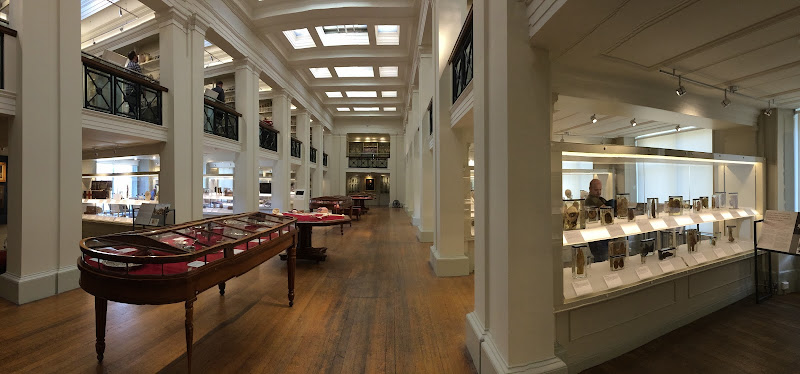
Standing in Edinburgh's historic Old Town, the Surgeons' Hall Museums offers travelers something genuinely different from your typical Scottish castle or whisky distillery tour. This isn't just another dusty collection of old medical instruments gathering cobwebs in a corner - it's actually one of the most fascinating and slightly unsettling museum experiences you'll find anywhere in the UK. The building itself dates back to 1832, designed by William Henry Playfair in that gorgeous neoclassical style that Edinburgh does so well. But what really makes this place special is what's inside. We're talking about one of the largest collections of surgical pathology specimens in the world, alongside dental and medical artifacts that span several centuries. And yes, before you ask - some of it can be pretty intense to look at, which is exactly why so many visitors find themselves completely absorbed. I remember my first visit here years ago, expecting maybe a quick hour-long browse before heading to lunch. Three hours later, I was still there, completely engrossed in the history of medicine and surgery. The museum does an incredible job of showing you just how far medical science has come, and honestly, it makes you grateful you weren't around needing surgery in the 1700s. The museum actually consists of several collections spread across different galleries. You've got the Wohl Pathology Museum, which houses those preserved specimens I mentioned - everything from bones to organs to entire body parts that show various diseases and conditions. Then there's the History of Surgery Museum, the Dental Collection, and regularly rotating special exhibitions that cover all sorts of medical topics. What struck me most about this place is how it manages to be educational without being boring, and respectful without being sterile. The curators clearly understand that people are naturally curious about the human body and medical history, even when - or especially when - it's a bit gruesome.Key Features
The Surgeons' Hall Museums packs quite a lot into its historic walls, and travelers should know what makes this attraction worth adding to their Edinburgh itinerary: • One of the world's most significant surgical pathology collections, with specimens dating back to the 18th century that show diseases and medical conditions before modern treatments existed • The fascinating History of Surgery galleries that walk you through the evolution of surgical techniques, from the terrifying age of amputations without anesthesia to today's robotic procedures • An extensive dental collection that'll make you appreciate modern dentistry - seriously, the old tooth extraction tools alone are enough to make you never skip a dentist appointment again • Joseph Lister's original carbolic acid spray, which revolutionized surgery by introducing antiseptic practices and saving countless lives • Charles Darwin's personal medical instruments and a letter written in his own hand, connecting Edinburgh's medical heritage to one of history's greatest scientists • The Anatomical Museum featuring articulated skeletons and anatomical models that medical students used for training throughout the centuries • Regular temporary exhibitions covering everything from forensic medicine to the history of specific diseases, meaning there's often something new even for repeat visitors • Burke and Hare related artifacts - yes, Edinburgh's infamous body snatchers make an appearance here, and it's every bit as creepy as it sounds • Beautiful Victorian-era medical illustrations and surgical instruments that are genuinely works of art in their own right • Fully wheelchair accessible throughout, with modern facilities despite the historic building (though you'll want to note there isn't wheelchair accessible parking on-site) • A small but well-curated gift shop where you can pick up medical-themed souvenirs that you definitely won't find anywhere elseBest Time to Visit
Here's the thing about the Surgeons' Hall Museums - it's entirely indoors, which makes it brilliant for Edinburgh's notoriously unpredictable weather. I've ducked in here during sudden rainstorms more than once and never regretted it. That said, timing does matter if you want to avoid crowds. The museum tends to be quietest on weekday mornings, particularly Tuesday through Thursday. If you're visiting Edinburgh during the Festival season in August, you'll find the museum busier than usual, though honestly it never gets as packed as Edinburgh Castle or the Royal Mile attractions. Winter months can actually be ideal for visiting. Not only are there fewer tourists in Edinburgh generally, but there's something appropriately atmospheric about exploring medical history when it's dark and drizzly outside. Plus, you're not wasting precious daylight hours that you could spend outdoors when the weather's nice. Spring and early autumn hit that sweet spot where you'll have decent weather for walking there but won't be fighting through peak summer crowds. The museum often launches new temporary exhibitions around March and September, so these can be particularly interesting times to visit. And here's a tip I learned from experience - give yourself at least two to three hours here. I know that sounds like a lot for a museum, but you'll be surprised how quickly time passes when you're reading fascinating case histories and examining centuries-old medical specimens. Rushing through defeats the purpose entirely. Avoid late afternoons if possible, as tour groups sometimes schedule visits around 2-3pm, and school groups occasionally visit during term time. Early birds really do get the worm here - or in this case, the best viewing experience of preserved anatomical specimens.How to Get There
The Surgeons' Hall Museums sits right in Edinburgh's Southside area, which is super accessible whether you're walking from the city center or using public transport. Most travelers find it pretty straightforward to reach. If you're staying anywhere in Edinburgh's Old Town or city center, walking is honestly your best bet. It's about a 15-minute walk from Waverley Station or the Royal Mile, mostly downhill on the way there (which does mean uphill on the way back, but that's Edinburgh for you). Just head south from the Royal Mile toward the university area, and you'll find it on Nicolson Street. The museum is located on a main road with excellent bus connections. Multiple Lothian bus routes stop nearby, including several that run from the airport. The buses numbered 3, 5, 7, 8, 14, 29, 30, 31, 33, 37, and 49 all stop within a couple minutes' walk. You can use contactless payment or get a day ticket if you're planning multiple bus journeys around Edinburgh. For those arriving by train at Waverley Station, you're looking at maybe 20 minutes on foot. Head out the south exit, walk up North Bridge which becomes South Bridge, then continue onto Nicolson Street. Can't miss it really. Taxis and ride-shares can drop you right at the door, though with Edinburgh traffic being what it is, you might not save much time compared to walking unless you've got mobility issues or heavy bags. Now, here's the parking situation - there isn't dedicated parking for the museum, and street parking in this area is pretty limited and mostly permit-only during weekdays. Your best bet if you're driving is the nearby Quartermile car park on Lauriston Place, about a 10-minute walk away. But honestly? Unless you really need a car for other parts of your trip, I'd skip driving in Edinburgh altogether. The city center is compact enough that you don't need one.Tips for Visiting
Let me share some insider knowledge that'll make your visit to the Surgeons' Hall Museums so much better. First thing - and I can't stress this enough - don't visit right after eating a big meal. Some of the pathology specimens are genuinely intense, and while most people handle it fine, you might want an empty stomach just in case. I've seen more than a few people turn a bit green around the gills in the pathology section. Photography is allowed in most areas, which is great because you'll definitely want to capture some of this stuff. But please, be respectful. These are real human specimens that were donated for medical education. Take photos for your own interest and learning, not to gross out your friends on social media. The museum doesn't have a cafe or restaurant on-site, so plan accordingly. There's restrooms available which is essential for a longer visit, but you'll need to step out if you want food or coffee. Luckily, the surrounding area has tons of options - Nicolson Street is lined with cafes, restaurants, and pubs. Bring a jacket even in summer. The temperature inside needs to be carefully controlled to preserve the collections, so it can feel quite cool, especially if you're used to warm weather. Don't skip the labels and information panels. I know, I know - everyone says that about museums. But the stories behind these specimens are often as fascinating as the objects themselves. You'll learn about real patients, real medical breakthroughs, and real historical events that shaped modern medicine. If you're traveling with kids, use your judgment. The museum doesn't have an age restriction, and older children who are interested in science and medicine will probably love it. But younger kids or those who are squeamish might find some exhibits disturbing. The staff at the front desk can give you guidance on which sections might be too intense. Take advantage of the temporary exhibitions. These change regularly and often cover contemporary medical topics or dive deep into specific aspects of medical history that the permanent collection can't fully explore. Finally - and this is important - give yourself permission to take breaks if you need them. The benches scattered throughout aren't just for tired feet; sometimes you need a moment to process what you're seeing. This museum makes you think about mortality, medical progress, human suffering, and scientific advancement all at once. That's heavy stuff, and it's okay to sit with those thoughts for a minute before moving on to the next gallery. The gift shop is actually worth browsing, especially if you know anyone studying medicine or nursing. They stock some genuinely interesting books on medical history that you won't find in regular bookshops. And one last thing - check the museum's calendar before you visit. They occasionally host special lectures, evening events, and curator talks that can add extra depth to your visit. Some of these require separate booking, but they're often free or very reasonably priced and absolutely worth attending if you've got the time in your schedule.Key Features
- Wohl Pathology Museum with extensive preserved specimens
- History of Surgery galleries featuring antique instruments and case histories
- Dental collection showcasing the evolution of dentistry
- Atmospheric William Playfair building in Edinburgh’s Old Town
- Interpretive labels and displays that connect medical history to wider social context
More Details
Updated March 30, 2026
Table of Contents
Description
Standing in Edinburgh’s historic Old Town, the Surgeons’ Hall Museums offers travelers something genuinely different from your typical Scottish castle or whisky distillery tour. This isn’t just another dusty collection of old medical instruments gathering cobwebs in a corner – it’s actually one of the most fascinating and slightly unsettling museum experiences you’ll find anywhere in the UK.
The building itself dates back to 1832, designed by William Henry Playfair in that gorgeous neoclassical style that Edinburgh does so well. But what really makes this place special is what’s inside. We’re talking about one of the largest collections of surgical pathology specimens in the world, alongside dental and medical artifacts that span several centuries. And yes, before you ask – some of it can be pretty intense to look at, which is exactly why so many visitors find themselves completely absorbed.
I remember my first visit here years ago, expecting maybe a quick hour-long browse before heading to lunch. Three hours later, I was still there, completely engrossed in the history of medicine and surgery. The museum does an incredible job of showing you just how far medical science has come, and honestly, it makes you grateful you weren’t around needing surgery in the 1700s.
The museum actually consists of several collections spread across different galleries. You’ve got the Wohl Pathology Museum, which houses those preserved specimens I mentioned – everything from bones to organs to entire body parts that show various diseases and conditions. Then there’s the History of Surgery Museum, the Dental Collection, and regularly rotating special exhibitions that cover all sorts of medical topics.
What struck me most about this place is how it manages to be educational without being boring, and respectful without being sterile. The curators clearly understand that people are naturally curious about the human body and medical history, even when – or especially when – it’s a bit gruesome.
Key Features
The Surgeons’ Hall Museums packs quite a lot into its historic walls, and travelers should know what makes this attraction worth adding to their Edinburgh itinerary:
• One of the world’s most significant surgical pathology collections, with specimens dating back to the 18th century that show diseases and medical conditions before modern treatments existed
• The fascinating History of Surgery galleries that walk you through the evolution of surgical techniques, from the terrifying age of amputations without anesthesia to today’s robotic procedures
• An extensive dental collection that’ll make you appreciate modern dentistry – seriously, the old tooth extraction tools alone are enough to make you never skip a dentist appointment again
• Joseph Lister’s original carbolic acid spray, which revolutionized surgery by introducing antiseptic practices and saving countless lives
• Charles Darwin’s personal medical instruments and a letter written in his own hand, connecting Edinburgh’s medical heritage to one of history’s greatest scientists
• The Anatomical Museum featuring articulated skeletons and anatomical models that medical students used for training throughout the centuries
• Regular temporary exhibitions covering everything from forensic medicine to the history of specific diseases, meaning there’s often something new even for repeat visitors
• Burke and Hare related artifacts – yes, Edinburgh’s infamous body snatchers make an appearance here, and it’s every bit as creepy as it sounds
• Beautiful Victorian-era medical illustrations and surgical instruments that are genuinely works of art in their own right
• Fully wheelchair accessible throughout, with modern facilities despite the historic building (though you’ll want to note there isn’t wheelchair accessible parking on-site)
• A small but well-curated gift shop where you can pick up medical-themed souvenirs that you definitely won’t find anywhere else
Best Time to Visit
Here’s the thing about the Surgeons’ Hall Museums – it’s entirely indoors, which makes it brilliant for Edinburgh’s notoriously unpredictable weather. I’ve ducked in here during sudden rainstorms more than once and never regretted it.
That said, timing does matter if you want to avoid crowds. The museum tends to be quietest on weekday mornings, particularly Tuesday through Thursday. If you’re visiting Edinburgh during the Festival season in August, you’ll find the museum busier than usual, though honestly it never gets as packed as Edinburgh Castle or the Royal Mile attractions.
Winter months can actually be ideal for visiting. Not only are there fewer tourists in Edinburgh generally, but there’s something appropriately atmospheric about exploring medical history when it’s dark and drizzly outside. Plus, you’re not wasting precious daylight hours that you could spend outdoors when the weather’s nice.
Spring and early autumn hit that sweet spot where you’ll have decent weather for walking there but won’t be fighting through peak summer crowds. The museum often launches new temporary exhibitions around March and September, so these can be particularly interesting times to visit.
And here’s a tip I learned from experience – give yourself at least two to three hours here. I know that sounds like a lot for a museum, but you’ll be surprised how quickly time passes when you’re reading fascinating case histories and examining centuries-old medical specimens. Rushing through defeats the purpose entirely.
Avoid late afternoons if possible, as tour groups sometimes schedule visits around 2-3pm, and school groups occasionally visit during term time. Early birds really do get the worm here – or in this case, the best viewing experience of preserved anatomical specimens.
How to Get There
The Surgeons’ Hall Museums sits right in Edinburgh’s Southside area, which is super accessible whether you’re walking from the city center or using public transport. Most travelers find it pretty straightforward to reach.
If you’re staying anywhere in Edinburgh’s Old Town or city center, walking is honestly your best bet. It’s about a 15-minute walk from Waverley Station or the Royal Mile, mostly downhill on the way there (which does mean uphill on the way back, but that’s Edinburgh for you). Just head south from the Royal Mile toward the university area, and you’ll find it on Nicolson Street.
The museum is located on a main road with excellent bus connections. Multiple Lothian bus routes stop nearby, including several that run from the airport. The buses numbered 3, 5, 7, 8, 14, 29, 30, 31, 33, 37, and 49 all stop within a couple minutes’ walk. You can use contactless payment or get a day ticket if you’re planning multiple bus journeys around Edinburgh.
For those arriving by train at Waverley Station, you’re looking at maybe 20 minutes on foot. Head out the south exit, walk up North Bridge which becomes South Bridge, then continue onto Nicolson Street. Can’t miss it really.
Taxis and ride-shares can drop you right at the door, though with Edinburgh traffic being what it is, you might not save much time compared to walking unless you’ve got mobility issues or heavy bags.
Now, here’s the parking situation – there isn’t dedicated parking for the museum, and street parking in this area is pretty limited and mostly permit-only during weekdays. Your best bet if you’re driving is the nearby Quartermile car park on Lauriston Place, about a 10-minute walk away. But honestly? Unless you really need a car for other parts of your trip, I’d skip driving in Edinburgh altogether. The city center is compact enough that you don’t need one.
Tips for Visiting
Let me share some insider knowledge that’ll make your visit to the Surgeons’ Hall Museums so much better. First thing – and I can’t stress this enough – don’t visit right after eating a big meal. Some of the pathology specimens are genuinely intense, and while most people handle it fine, you might want an empty stomach just in case. I’ve seen more than a few people turn a bit green around the gills in the pathology section.
Photography is allowed in most areas, which is great because you’ll definitely want to capture some of this stuff. But please, be respectful. These are real human specimens that were donated for medical education. Take photos for your own interest and learning, not to gross out your friends on social media.
The museum doesn’t have a cafe or restaurant on-site, so plan accordingly. There’s restrooms available which is essential for a longer visit, but you’ll need to step out if you want food or coffee. Luckily, the surrounding area has tons of options – Nicolson Street is lined with cafes, restaurants, and pubs.
Bring a jacket even in summer. The temperature inside needs to be carefully controlled to preserve the collections, so it can feel quite cool, especially if you’re used to warm weather.
Don’t skip the labels and information panels. I know, I know – everyone says that about museums. But the stories behind these specimens are often as fascinating as the objects themselves. You’ll learn about real patients, real medical breakthroughs, and real historical events that shaped modern medicine.
If you’re traveling with kids, use your judgment. The museum doesn’t have an age restriction, and older children who are interested in science and medicine will probably love it. But younger kids or those who are squeamish might find some exhibits disturbing. The staff at the front desk can give you guidance on which sections might be too intense.
Take advantage of the temporary exhibitions. These change regularly and often cover contemporary medical topics or dive deep into specific aspects of medical history that the permanent collection can’t fully explore.
Finally – and this is important – give yourself permission to take breaks if you need them. The benches scattered throughout aren’t just for tired feet; sometimes you need a moment to process what you’re seeing. This museum makes you think about mortality, medical progress, human suffering, and scientific advancement all at once. That’s heavy stuff, and it’s okay to sit with those thoughts for a minute before moving on to the next gallery.
The gift shop is actually worth browsing, especially if you know anyone studying medicine or nursing. They stock some genuinely interesting books on medical history that you won’t find in regular bookshops.
And one last thing – check the museum’s calendar before you visit. They occasionally host special lectures, evening events, and curator talks that can add extra depth to your visit. Some of these require separate booking, but they’re often free or very reasonably priced and absolutely worth attending if you’ve got the time in your schedule.
Key Highlights
- Wohl Pathology Museum with extensive preserved specimens
- History of Surgery galleries featuring antique instruments and case histories
- Dental collection showcasing the evolution of dentistry
- Atmospheric William Playfair building in Edinburgh’s Old Town
- Interpretive labels and displays that connect medical history to wider social context
Location
Places to Stay Near Surgeons' Hall Museums
Find and Book a Tour
Explore More Travel Guides
No reviews found! Be the first to review!
Surgeons’ Hall Museums is a prominent museums located in Edinburgh.
Visit us at: Surgeons Hall Museums, Nicolson St, Edinburgh EH8 9DW, United Kingdom.
Traveler Reviews for Surgeons’ Hall Museums
There are no reviews yet. Be the first one to write one.
Have you visited Surgeons’ Hall Museums? Help other travelers by sharing your review.
Nearby Attractions
You Might Also Like

Gladstone's Land (National Trust for Scotland)

The Scotch Whisky Experience

Edinburgh Castle
Find Accommodations Nearby
Recommended Tours & Activities
Visitor Reviews
There are no reviews yet. Be the first one to write one.
Share Your Experience
Have you visited Surgeons’ Hall Museums? Help other travelers by leaving a review.