
About Bremen Roland

Description

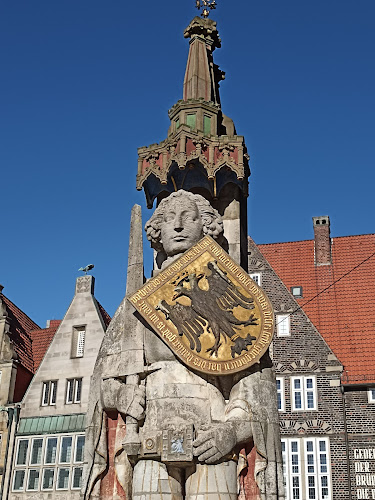
Standing proudly in Bremen's Market Square for more than six centuries, the Roland statue represents one of Germany's most significant medieval monuments. This imposing stone figure towers over visitors at about 5.5 meters tall, though its total height reaches nearly 10 meters when you include the ornate baldachin canopy overhead. The statue depicts a knight in full armor, clutching a sword and bearing a shield decorated with the imperial eagle—a powerful symbol that once declared Bremen's independence and trading privileges under the Holy Roman Empire. I'll be honest, when I first heard about a giant medieval statue in Bremen, I wasn't sure what to expect. But seeing Roland in person is genuinely something else. The craftsmanship from 1404 still holds up remarkably well, and you can't help but feel a bit awestruck standing beneath this stone guardian who's weathered wars, fires, and everything history could throw at him. The locals have an old saying that Bremen will remain free as long as Roland stands in the market square, and given how carefully they've preserved him over the centuries, I don't think he's going anywhere anytime soon. What makes this statue particularly special isn't just its age or size—though both are impressive. It's what Roland represents. In medieval times, having a Roland statue meant your city had market rights and judicial independence from feudal lords. For Bremen, this was basically a big stone middle finger to anyone who tried to control their trading operations. And it worked too. The city maintained its independence and became one of the wealthiest Hanseatic League members, largely because they could conduct business on their own terms. The UNESCO World Heritage designation that Roland shares with Bremen's Town Hall isn't just ceremonial either. These monuments together form an outstanding example of civic autonomy and market rights in medieval Europe. You're not just looking at an old statue; you're witnessing a piece of democratic heritage that influenced how cities governed themselves for generations.

Key Features

Walking around the Roland statue reveals details that most people miss on their first visit. Here's what makes this historical landmark truly remarkable: • The statue's knees bear an intriguing set of measurements—copper nails marking the "Bremen Ell," which was the official unit of measurement used in the city's cloth trade. Merchants would literally come to Roland to verify their measurements, making him both symbol and practical tool • Roland's gaze directs toward Bremen Cathedral, which isn't accidental. This positioning reflected the delicate balance between secular and religious power in medieval times • The shield displays the imperial double-headed eagle, though it's been replaced several times throughout history due to weathering and damage • Hidden beneath Roland's feet sits a small stone figure, which some believe represents the city's defeated enemies or possibly a symbol of evil being trampled • The sword he carries stretches nearly as long as a grown person, and according to legend, as long as it remains in Roland's hand, Bremen stays free • Original paint traces were discovered during restoration work, revealing that medieval Roland was actually quite colorful—nothing like the gray stone appearance we see today • A smaller replica of Roland exists in the city's Böttcherstrasse, created during World War II when locals feared the original might be destroyed • The baldachin above Roland's head features Gothic architectural elements that were cutting-edge design in the 15th century • Roland's facial expression appears stern and watchful, exactly what you'd want in a guardian meant to intimidate anyone considering messing with Bremen's freedoms

Best Time to Visit

Here's where I might differ from typical guidebook advice. Sure, summer brings pleasant weather and longer daylight hours, making it easier to photograph Roland and explore the surrounding Market Square. But hear me out—visiting during different seasons offers completely different experiences. December transforms the area around Roland into Bremen's famous Christmas market, one of Germany's oldest. The statue stands illuminated among wooden stalls selling glühwein and crafts, creating an almost magical atmosphere. Yeah, it's crowded and yes, it's cold, but there's something about seeing this ancient symbol of freedom surrounded by centuries-old holiday traditions that just hits different. Plus, the Christmas decorations don't overwhelm Roland's presence; they somehow complement it. Early spring, particularly April and May, brings fewer tourists than summer but still offers decent weather. The Market Square isn't packed, so you can actually spend time examining Roland's details without constantly dodging tour groups. Morning visits around 8-9 AM are particularly peaceful—locals hurry to work while you've got Bremen's guardian mostly to yourself. Summer months from June through August predictably draw the biggest crowds. But if you don't mind company, this is when the square hosts various festivals and events. Seeing Roland presiding over modern celebrations gives you perspective on how this statue has witnessed Bremen's evolution across six centuries. Autumn, especially October, offers my personal favorite visiting conditions. The tourist surge has ebbed, temperatures stay comfortable for walking around, and the golden light during late afternoon creates stunning photo opportunities. The statue seems to glow when the sun hits at just the right angle. Weather-wise, Bremen doesn't really have a "bad" season for visiting Roland since the statue stands outdoors year-round anyway. Rain actually brings out deeper colors in the stone, though obviously it's less comfortable for extended viewing. Winter can be brutally cold with wind whipping across the square, so bundle up if you're visiting between November and February.

How to Get There

Getting to the Roland statue is refreshingly straightforward, which makes sense considering it's stood in the city center for over 600 years. The statue occupies Bremen's Market Square (Marktplatz), which serves as the city's historic heart and central meeting point. If you're arriving by train at Bremen Hauptbahnhof, the walk takes about 15 minutes through the city center. Head down Bahnhofstrasse, which becomes Sögestrasse—Bremen's main shopping street. You can't really get lost because the street leads directly to Market Square. And honestly, the walk itself is pleasant enough that you won't mind, with plenty of shops and cafes along the way if you need a coffee before statue-gazing. The city's tram system also connects directly to the Market Square. Trams 2, 3, 4, and 5 all stop at "Schüsselkorb" or "Domsheide," both within a few minutes walk of Roland. Bremen's public transport runs efficiently and frequently, making trams often easier than walking if you're staying further out. For those driving—and I'll be straight with you here—parking near Market Square ranges from difficult to nearly impossible during busy periods. Several parking garages operate within walking distance, including the "Am Brill" garage and "Mitte" parking facility. But you'll pay typical city-center rates, and during events or weekends, even finding a spot becomes an adventure. Consider parking at your hotel and using public transport instead. Cyclists will find Bremen incredibly bike-friendly, with dedicated lanes throughout the city. Bike parking near Market Square is plentiful, and the flat terrain makes cycling easy even for casual riders. Many visitors actually rent bikes to explore Bremen, and Roland makes an excellent landmark to navigate from. The Market Square itself is fully pedestrianized, meaning once you arrive, you're walking. This actually works perfectly for viewing Roland from multiple angles and exploring the surrounding historic buildings without worrying about traffic.

Tips for Visiting

First things first—Roland is completely free to visit, which somehow feels appropriate for a symbol of freedom. But that also means you need to make the visit worthwhile yourself since there's no admission ticket or guided tour automatically included. The statue features wheelchair-accessible surroundings, with the Market Square's cobblestones being relatively well-maintained and mostly level. However, those ancient cobbles can still be tricky for some mobility devices, so take it slow if needed. Photography enthusiasts should know that the best shots come from varying your position. Most people snap one photo from directly in front and call it done. Move around instead. The angle from near the Town Hall entrance captures Roland with the beautiful Rathaus architecture behind him. Late afternoon light from the west creates dramatic shadows that emphasize the statue's features. Bring or download a detailed guide about Roland's symbolism before visiting. While informational plaques exist nearby, they don't cover everything that makes this statue historically significant. Knowing what you're looking at transforms the experience from "oh, neat old statue" to genuinely appreciating medieval craftsmanship and political symbolism. The Town Hall right next to Roland offers tours that provide context about Bremen's history and Roland's role in it. Combining both visits makes sense since you're already there, plus the Town Hall's wine cellar holds some seriously old bottles if that interests you. Kids often enjoy Roland more than you'd expect from a static statue. The sheer size impresses them, and the sword-and-armor aspect taps into typical childhood interests. Frame it as meeting a stone knight who's protected the city for 600 years, and you've got their attention. The Market Square also has enough space for them to move around without constant "don't touch" warnings. Visit during weekday mornings if crowds bother you. Tour groups typically arrive mid-morning through afternoon, while weekends bring both tourists and locals to the Market Square. Early weekday timing means you can examine details without bumping into other visitors. Don't skip the small details. Those copper nails marking the Bremen Ell? Actually crouch down and look at them. The shield's eagle design? Get close enough to see how weathering has affected different parts. The figure under Roland's feet? Most people never notice it exists. Combine your Roland visit with exploring the Schnoor Quarter, Bremen's oldest neighborhood, located about a 10-minute walk away. This creates a logical historical tour route rather than visiting Roland in isolation. Restaurant and cafe options surround Market Square, but prices reflect the prime tourist location. For better value, walk a block or two in any direction. That said, having a coffee while gazing at Roland from a cafe table isn't a terrible way to spend 30 minutes. Weather changes quickly in Bremen, so check forecasts but also bring layers regardless of what they predict. The Market Square offers minimal shelter, and standing around examining a statue means you're exposed to whatever weather arrives. Finally, and this might sound odd, but take a moment to just stand there and think about everything this statue has witnessed. Bremen's fires, World War II bombing raids that destroyed surrounding buildings while Roland survived, centuries of traders and travelers passing through this exact spot. There's something humbling about being in the presence of an object that's stood witness to so much history. That's the real magic of Roland—not just what it is, but what it represents and what it's endured.

Key Features

  • Erected in 1404; emblem of civic freedom and market rights
  • Nearly 10 metres tall when including pedestal; prominent gothic stone carving
  • Located directly in front of Bremen Town Hall on Am Markt
  • Part of a UNESCO World Heritage ensemble (Town Hall and Roland)
  • Close visual relationship with Bremen Cathedral across the square

More Details

Updated March 30, 2026

Description

Standing proudly in Bremen’s Market Square for more than six centuries, the Roland statue represents one of Germany’s most significant medieval monuments. This imposing stone figure towers over visitors at about 5.5 meters tall, though its total height reaches nearly 10 meters when you include the ornate baldachin canopy overhead. The statue depicts a knight in full armor, clutching a sword and bearing a shield decorated with the imperial eagle—a powerful symbol that once declared Bremen’s independence and trading privileges under the Holy Roman Empire.

I’ll be honest, when I first heard about a giant medieval statue in Bremen, I wasn’t sure what to expect. But seeing Roland in person is genuinely something else. The craftsmanship from 1404 still holds up remarkably well, and you can’t help but feel a bit awestruck standing beneath this stone guardian who’s weathered wars, fires, and everything history could throw at him. The locals have an old saying that Bremen will remain free as long as Roland stands in the market square, and given how carefully they’ve preserved him over the centuries, I don’t think he’s going anywhere anytime soon.

What makes this statue particularly special isn’t just its age or size—though both are impressive. It’s what Roland represents. In medieval times, having a Roland statue meant your city had market rights and judicial independence from feudal lords. For Bremen, this was basically a big stone middle finger to anyone who tried to control their trading operations. And it worked too. The city maintained its independence and became one of the wealthiest Hanseatic League members, largely because they could conduct business on their own terms.

The UNESCO World Heritage designation that Roland shares with Bremen’s Town Hall isn’t just ceremonial either. These monuments together form an outstanding example of civic autonomy and market rights in medieval Europe. You’re not just looking at an old statue; you’re witnessing a piece of democratic heritage that influenced how cities governed themselves for generations.

Key Features

Walking around the Roland statue reveals details that most people miss on their first visit. Here’s what makes this historical landmark truly remarkable:

• The statue’s knees bear an intriguing set of measurements—copper nails marking the “Bremen Ell,” which was the official unit of measurement used in the city’s cloth trade. Merchants would literally come to Roland to verify their measurements, making him both symbol and practical tool

• Roland’s gaze directs toward Bremen Cathedral, which isn’t accidental. This positioning reflected the delicate balance between secular and religious power in medieval times

• The shield displays the imperial double-headed eagle, though it’s been replaced several times throughout history due to weathering and damage

• Hidden beneath Roland’s feet sits a small stone figure, which some believe represents the city’s defeated enemies or possibly a symbol of evil being trampled

• The sword he carries stretches nearly as long as a grown person, and according to legend, as long as it remains in Roland’s hand, Bremen stays free

• Original paint traces were discovered during restoration work, revealing that medieval Roland was actually quite colorful—nothing like the gray stone appearance we see today

• A smaller replica of Roland exists in the city’s Böttcherstrasse, created during World War II when locals feared the original might be destroyed

• The baldachin above Roland’s head features Gothic architectural elements that were cutting-edge design in the 15th century

• Roland’s facial expression appears stern and watchful, exactly what you’d want in a guardian meant to intimidate anyone considering messing with Bremen’s freedoms

Best Time to Visit

Here’s where I might differ from typical guidebook advice. Sure, summer brings pleasant weather and longer daylight hours, making it easier to photograph Roland and explore the surrounding Market Square. But hear me out—visiting during different seasons offers completely different experiences.

December transforms the area around Roland into Bremen’s famous Christmas market, one of Germany’s oldest. The statue stands illuminated among wooden stalls selling glühwein and crafts, creating an almost magical atmosphere. Yeah, it’s crowded and yes, it’s cold, but there’s something about seeing this ancient symbol of freedom surrounded by centuries-old holiday traditions that just hits different. Plus, the Christmas decorations don’t overwhelm Roland’s presence; they somehow complement it.

Early spring, particularly April and May, brings fewer tourists than summer but still offers decent weather. The Market Square isn’t packed, so you can actually spend time examining Roland’s details without constantly dodging tour groups. Morning visits around 8-9 AM are particularly peaceful—locals hurry to work while you’ve got Bremen’s guardian mostly to yourself.

Summer months from June through August predictably draw the biggest crowds. But if you don’t mind company, this is when the square hosts various festivals and events. Seeing Roland presiding over modern celebrations gives you perspective on how this statue has witnessed Bremen’s evolution across six centuries.

Autumn, especially October, offers my personal favorite visiting conditions. The tourist surge has ebbed, temperatures stay comfortable for walking around, and the golden light during late afternoon creates stunning photo opportunities. The statue seems to glow when the sun hits at just the right angle.

Weather-wise, Bremen doesn’t really have a “bad” season for visiting Roland since the statue stands outdoors year-round anyway. Rain actually brings out deeper colors in the stone, though obviously it’s less comfortable for extended viewing. Winter can be brutally cold with wind whipping across the square, so bundle up if you’re visiting between November and February.

How to Get There

Getting to the Roland statue is refreshingly straightforward, which makes sense considering it’s stood in the city center for over 600 years. The statue occupies Bremen’s Market Square (Marktplatz), which serves as the city’s historic heart and central meeting point.

If you’re arriving by train at Bremen Hauptbahnhof, the walk takes about 15 minutes through the city center. Head down Bahnhofstrasse, which becomes Sögestrasse—Bremen’s main shopping street. You can’t really get lost because the street leads directly to Market Square. And honestly, the walk itself is pleasant enough that you won’t mind, with plenty of shops and cafes along the way if you need a coffee before statue-gazing.

The city’s tram system also connects directly to the Market Square. Trams 2, 3, 4, and 5 all stop at “Schüsselkorb” or “Domsheide,” both within a few minutes walk of Roland. Bremen’s public transport runs efficiently and frequently, making trams often easier than walking if you’re staying further out.

For those driving—and I’ll be straight with you here—parking near Market Square ranges from difficult to nearly impossible during busy periods. Several parking garages operate within walking distance, including the “Am Brill” garage and “Mitte” parking facility. But you’ll pay typical city-center rates, and during events or weekends, even finding a spot becomes an adventure. Consider parking at your hotel and using public transport instead.

Cyclists will find Bremen incredibly bike-friendly, with dedicated lanes throughout the city. Bike parking near Market Square is plentiful, and the flat terrain makes cycling easy even for casual riders. Many visitors actually rent bikes to explore Bremen, and Roland makes an excellent landmark to navigate from.

The Market Square itself is fully pedestrianized, meaning once you arrive, you’re walking. This actually works perfectly for viewing Roland from multiple angles and exploring the surrounding historic buildings without worrying about traffic.

Tips for Visiting

First things first—Roland is completely free to visit, which somehow feels appropriate for a symbol of freedom. But that also means you need to make the visit worthwhile yourself since there’s no admission ticket or guided tour automatically included.

The statue features wheelchair-accessible surroundings, with the Market Square’s cobblestones being relatively well-maintained and mostly level. However, those ancient cobbles can still be tricky for some mobility devices, so take it slow if needed.

Photography enthusiasts should know that the best shots come from varying your position. Most people snap one photo from directly in front and call it done. Move around instead. The angle from near the Town Hall entrance captures Roland with the beautiful Rathaus architecture behind him. Late afternoon light from the west creates dramatic shadows that emphasize the statue’s features.

Bring or download a detailed guide about Roland’s symbolism before visiting. While informational plaques exist nearby, they don’t cover everything that makes this statue historically significant. Knowing what you’re looking at transforms the experience from “oh, neat old statue” to genuinely appreciating medieval craftsmanship and political symbolism.

The Town Hall right next to Roland offers tours that provide context about Bremen’s history and Roland’s role in it. Combining both visits makes sense since you’re already there, plus the Town Hall’s wine cellar holds some seriously old bottles if that interests you.

Kids often enjoy Roland more than you’d expect from a static statue. The sheer size impresses them, and the sword-and-armor aspect taps into typical childhood interests. Frame it as meeting a stone knight who’s protected the city for 600 years, and you’ve got their attention. The Market Square also has enough space for them to move around without constant “don’t touch” warnings.

Visit during weekday mornings if crowds bother you. Tour groups typically arrive mid-morning through afternoon, while weekends bring both tourists and locals to the Market Square. Early weekday timing means you can examine details without bumping into other visitors.

Don’t skip the small details. Those copper nails marking the Bremen Ell? Actually crouch down and look at them. The shield’s eagle design? Get close enough to see how weathering has affected different parts. The figure under Roland’s feet? Most people never notice it exists.

Combine your Roland visit with exploring the Schnoor Quarter, Bremen’s oldest neighborhood, located about a 10-minute walk away. This creates a logical historical tour route rather than visiting Roland in isolation.

Restaurant and cafe options surround Market Square, but prices reflect the prime tourist location. For better value, walk a block or two in any direction. That said, having a coffee while gazing at Roland from a cafe table isn’t a terrible way to spend 30 minutes.

Weather changes quickly in Bremen, so check forecasts but also bring layers regardless of what they predict. The Market Square offers minimal shelter, and standing around examining a statue means you’re exposed to whatever weather arrives.

Finally, and this might sound odd, but take a moment to just stand there and think about everything this statue has witnessed. Bremen’s fires, World War II bombing raids that destroyed surrounding buildings while Roland survived, centuries of traders and travelers passing through this exact spot. There’s something humbling about being in the presence of an object that’s stood witness to so much history. That’s the real magic of Roland—not just what it is, but what it represents and what it’s endured.

Key Highlights

  • Erected in 1404; emblem of civic freedom and market rights
  • Nearly 10 metres tall when including pedestal; prominent gothic stone carving
  • Located directly in front of Bremen Town Hall on Am Markt
  • Part of a UNESCO World Heritage ensemble (Town Hall and Roland)
  • Close visual relationship with Bremen Cathedral across the square

Location

Places to Stay Near Bremen Roland

Find and Book a Tour

Explore More Travel Guides

No reviews found! Be the first to review!

Bremen Roland is a prominent attractions located in Bremen.

Visit us at: Am Markt, 28195 Bremen, Germany.

Traveler Reviews for Bremen Roland

There are no reviews yet. Be the first one to write one.

Share Your Experience

Have you visited Bremen Roland? Help other travelers by sharing your review.

Nearby Attractions

Bremen Town Hall (Rathaus) St. Peter's Cathedral (Bremer Dom) Schnoorviertel (historic quarter with narrow lanes and shops)

Find Accommodations Nearby

Recommended Tours & Activities

Visitor Reviews

There are no reviews yet. Be the first one to write one.

Share Your Experience

Have you visited Bremen Roland? Help other travelers by leaving a review.