 Real Journey Travels
Last modified August 17, 2026
Picking where to stay in Wadi Rum isn’t straightforward—this isn’t a city with hotel strips or tidy neighborhoods. Here, you’re balancing comfort with the desert’s wildness and the traditions of Bedouin hosts. The best place for you depends on how you want to experience the desert—maybe a luxury bubble camp under the stars, a classic Bedouin tent, or a budget camp close to the village.
This guide cuts through the noise: you’ll get a fast overview of the main areas, matched to different travel styles, plus real pros and cons for specific stays. I’ve sifted through the options so you don’t have to waste hours online.
Key Takeaways
- Figure out which Wadi Rum area fits your travel style and comfort needs.
- Compare top camps by type: luxury domes, Bedouin tents, and budget picks.
- Use practical tips to lock in the right spot—no endless searching required.
Understanding Where to Stay in Wadi Rum
Your choice in Wadi Rum comes down to how close you want to get to nature, how much comfort you expect, and how adventurous you’re feeling. The region runs on a system managed by local Bedouin guides, and knowing how that works saves you hassle when you arrive.
Accommodation System Overview

Wadi Rum isn’t like other places in Jordan. Since it’s a protected area, only Bedouin-run camps can host guests or organize tours. That keeps money local and protects the landscape.
You’ll see three main types:
- Basic Bedouin camps – simple tents, shared bathrooms, group meals.
- Mid-range camps – private tents or small domes, hot showers, buffet dinners.
- Luxury bubble domes – air-conditioned pods with clear panels for stargazing.
Electricity usually comes from generators, and Wi-Fi can be spotty even at the high-end places. Camps arrange jeep or camel excursions, or you can book guided desert tours through sites like Viator that work with local guides. Nights are quiet, meals are filling, and you’ll probably hear music by the fire after dark.
Booking Tips and Common Pitfalls
Booking in Wadi Rum can be a headache—lots of camps have similar names and vague photos. Before you confirm, double-check the location and look closely at recent images. I once thought I’d booked a “Luxury Desert Bubble,” but it was just a tiny tent with a plastic window and a fan. Oops.
Always check what’s included: entry fees, pickup from Wadi Rum Village, and if meals or tours come with your booking. Some places look cheap until you realize they charge for dinner or transport. Groups can often get discounts, but solo travelers sometimes pay a premium.
Don’t expect hotel-style perks like room service or unlimited electricity. This is the desert, after all. If you want activities lined up, consider pre-booking with GetYourGuide so you’re not scrambling on arrival.
Map and Orientation of Wadi Rum Camps
Most trips start in Wadi Rum Village, about 5 km inside the protected zone. From there, Bedouin guides pick you up in 4x4s—self-driving past the checkpoint isn’t allowed without a licensed guide, which keeps things a bit more peaceful.
Camps are spread across a few main zones:
| Area | Features | Travel Time from Village |
|---|---|---|
| Disi Area | Easy access, budget and mid-range camps | 10–20 min |
| Abu Khashaba & Um Fruth | Scenic red dunes, popular for jeep safaris | 20–30 min |
| White Desert | Stunning rock formations, remote luxury domes | 40–60 min |
The farther out you go, the quieter and more dramatic the setting, but transfers take longer. Ask your host about pickup logistics before you show up—they’ll usually coordinate over WhatsApp. Knowing the layout helps you avoid surprises.
Types of Accommodation in Wadi Rum
Spending a night in Wadi Rum is a different experience than a quick day tour. Options range from glass-domed luxury camps with private bathrooms to handmade Bedouin tents lit by lanterns. Your call depends on how much comfort you need and how close you want to get to traditional desert living.
Luxury Desert Bubbles

Meals are usually buffet-style—local breads, roasted meats, sweet mint tea. You pay more, but you get reliable electricity, Wi-Fi, and all the extras. It’s not the most “authentic” Bedouin setup, but if you want comfort, it’s hard to beat.
| Camp Name | Style | Price Range | Notable Feature |
|---|---|---|---|
| Memories Aicha | Luxury Dome | $$ | Fine dining and scenic terrace |
| Wadi Rum Bubble Luxotel | Transparent Bubble | $$ | Stargazing domes |
| UFO Luxotel | Modern Bubble | $$ | Panorama views |
Traditional Bedouin Camps
If you care more about atmosphere than polish, traditional Bedouin camps offer a real glimpse of desert life. Local families usually run these places, mixing modern needs with cultural touches. You’ll sleep in canvas or goat-hair tents set by the dunes.
Facilities are basic—shared bathrooms, communal meals cooked underground (zarb), and tea around the fire. Some camps skip Wi-Fi entirely, but the calm is worth it.
You’ll meet travelers from everywhere, swapping stories over coffee while camels rest nearby. That rhythm of camp life tends to stick with people long after the trip.
Bedouin Tents Experience
Staying in traditional Bedouin tents brings you closest to how desert families have lived for centuries. Black goat-hair tents keep things cool by day and warm by night. Inside, expect woven rugs, thick blankets, and lanterns for light.
It’s basic—no outlets, sometimes no running water—but it feels peaceful and grounded. Meals are slow-cooked and eaten by hand at low tables. I remember the hush after dinner in a remote camp: no cars, no phones, just the wind moving sand past the tent flaps.
If you like simplicity and connection, this is your stay. You’ll wake to sunrise, barefoot, with the desert stretching out like another world.
Best Luxury Camps in Wadi Rum
Luxury camps in Wadi Rum blend comfort with that raw desert backdrop. Some go all-in with futuristic domes for stargazing, others lean into Bedouin-inspired design and warm hospitality. Each gives you a different take on what “luxury” means out here.
Wadi Rum Bubble Luxotel
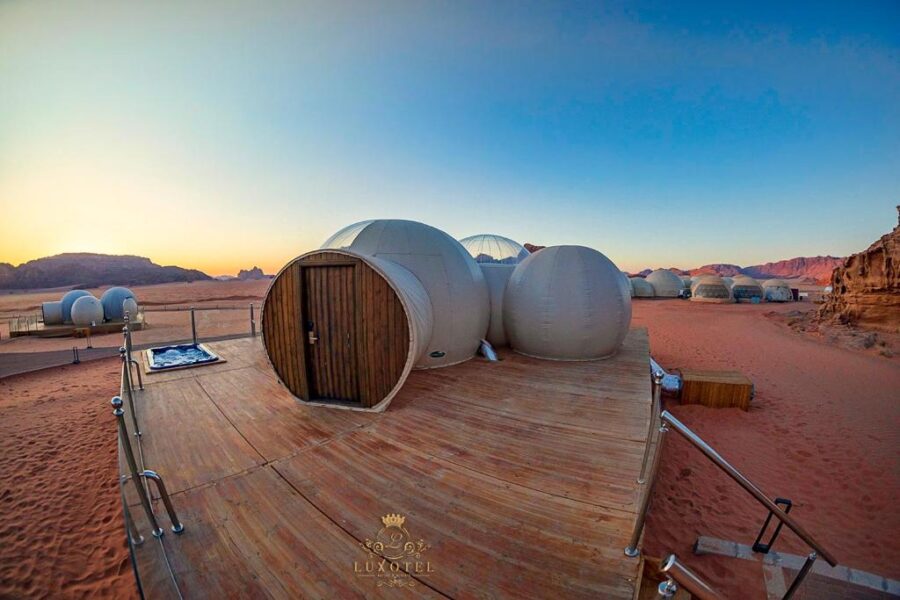
Wadi Rum Bubble Luxotel is all about sleeping under the stars in a transparent dome. Each bubble suite has clear walls and ceilings, so you can watch the sunset fade right from your bed.
Inside, you get climate control, private bathrooms, and decks facing the cliffs. The vibe is simple but striking—glass, sand, and sky. I remember stepping out before dawn, coffee in hand, watching the colors change before sunrise.
Meals happen in a shared dining tent, and staff can set up jeep or camel tours. It’s not cheap, but you’re paying for that rare silence and sky.
| Feature | Details |
|---|---|
| Type | Bubble Capsules |
| Best For | Stargazing and panoramic desert views |
| Added Perks | Air-conditioning, hot tub terrace, private deck |
Memories Aicha Luxury Camp

Memories Aicha Luxury Camp feels more like an art project than a campsite. Interiors use rich fabrics, carved wood, and lanterns—it’s got a distinct Jordanian and Bedouin flair. Tents (some look like yurts, others like domes) come with bathrooms, AC, and electricity.
Its location is a big draw: deep in the protected area, surrounded by red cliffs. You can step outside and feel tiny against the rock faces. Staff organize private jeep tours, sandboarding, or quiet sunset spots.
Meals are buffet-style but taste home-cooked. If you’re celebrating, ask for a tent with a fireplace—they’ll usually make it happen.
| Feature | Details |
|---|---|
| Type | Bubble Capsules & Yurts |
| Best For | Travelers wanting amenities and ambiance |
| Added Perks | Private bathrooms, fireplaces, tour booking desk |
Wadi Rum UFO Luxotel
Wadi Rum UFO Luxotel looks straight out of a sci-fi flick—white domes, curved lines, open desert views. It’s less traditional but definitely photogenic.
Each pod has a private terrace for watching the light shift across the sand. Inside, you get AC, a minimalist layout, and a bit more privacy since the pods are spaced out. It’s quiet and feels genuinely remote.
Meals are buffet-style with local flavors, and staff can arrange tours into quieter corners of the desert. A solid pick if you want modern design and a sense of space.
| Feature | Details |
|---|---|
| Type | Bubble Pods |
| Best For | Modern design lovers and photographers |
| Added Perks | Private terrace, 24-hour front desk, panoramic domes |
Best Traditional Bedouin Experiences

A night in a traditional Bedouin camp is more than a bed—it’s a look into a life shaped by sand, stars, and stories. These camps feel personal, usually run by Bedouin families who genuinely welcome guests.
Authentic Bedouin Hospitality
Arrive at a traditional Bedouin tent, and you’ll probably get a tiny cup of sweet, cardamom tea before anything else. It’s a quiet welcome, not just a drink. Bedouin hosts watch out for your comfort—extra blankets when it’s cold, a little more food at dinner.
Don’t expect formal service; it’s more like staying with friends. I remember sitting by a campfire, listening to our host tell stories about his family’s life moving herds across the desert. That kind of history and warmth stays with you.
Many hosts live onsite with their families—kids darting between tents, the smell of bread baking, goats bleating just out of sight. It’s simple, sometimes imperfect, but that’s what makes it memorable.
Popular Bedouin Camps
Wadi Rum’s Bedouin camps come in all shapes—some basic, others mixing comfort with tradition. Here are a few you can trust:
| Camp | Type | What Makes It Unique |
|---|---|---|
| Wadi Rum Bedouin Camp | Budget | Friendly vibe, classic goat-hair tents |
| Desert Guide Camp | Mid-range | Private bathrooms, family-run tours |
| Wadi Rum Galaxy Camp | Budget | Home-cooked dinners, music around the fire |
Most camps use black goat-hair tents stretched over wood frames. Step inside and you’ll usually find low cushions, woven carpets, and lanterns glowing in the corners. It’s half home, half adventure outpost. Always book through verified sites—names repeat online, so double-check. Good camps answer fast, confirm Visitor Center pickup, and lay out prices clearly.
Cultural Activities and Meals
Life at camp follows its own pace. When the sun sets, everyone gathers for zarb, a traditional meal slow-cooked underground—usually lamb and veggies stacked in metal trays. Watching the pit open and steam billow out is a show in itself.
Between meals, you might hop on a camel, take a jeep ride, or stargaze deep in the dunes. Evenings usually end around the fire with oud music and endless sweet tea. Sometimes your host will teach you a few Arabic words or a Dabke dance step.
Nights get cold, but the warmth from shared food and conversation helps you forget. There’s no rush, no script—just genuine hospitality shaped by the desert.
Budget and Eco-Friendly Options

Wadi Rum has stays that don’t drain your wallet or harm the landscape. Sleep under the stars in simple desert camps reflecting Bedouin life, or try eco-lodges using solar power and local materials. Both aim to keep your experience rooted in the desert, not apart from it.
Affordable Bedouin Camps
If you’re counting coins, traditional Bedouin camps are your best bet for staying close to the desert without overspending. These camps often hide deep in Wadi Rum’s valleys, surrounded by sandstone and sky. Most include shared meals, basic tents, and group activities like tea or jeep rides with local guides.
Expect prices from about $30 to $70 a night, depending on comfort and extras. The simplest spots use goat-hair tents that keep cool by day and warm at night. You’ll probably get a mattress on the sand, a hearty fire-cooked dinner, and silence for miles.
For travelers who care more about atmosphere and authenticity than plush bedding, these camps are a real find.
Sustainable Accommodation Choices
Eco-friendly camps in Wadi Rum prove comfort and conservation can work together. Many now rely on solar panels for power and hot water, cutting down on generator noise. Some build domes or cabins from natural or recycled materials, blending with the rocks instead of sticking out.
You might spot bubble tents—clear domes for stargazing from bed. They use insulated bases and minimal lighting to save energy. A few offer composting toilets and water-saving systems, which really matter in a place this dry.
| Feature | Eco-Friendly Benefit |
|---|---|
| Solar Power | Less fossil fuel, less noise |
| Local Materials | Cuts transport, supports the area |
| Waste Reduction | Protects fragile desert |
Staying at these places supports local jobs and respects Bedouin traditions. You’ll leave a lighter footprint and still sleep under skies you won’t soon forget.
Practical Tips for Choosing the Right Camp

Choosing a camp in Wadi Rum is about location, facilities, and how the climate fits your comfort needs. Details like getting there from Petra or Aqaba, or whether there’s heating in winter, can really matter.
Location and Accessibility
Wadi Rum is huge. Camp location changes your experience more than you’d expect. Near Wadi Rum Village you get easy pickups and short drives from Aqaba or Petra. Go deeper and you’ll find better stargazing and quiet, but transfers may cost extra.
Many camps pick you up in the village—confirm this before you go. Buses come from Amman, Petra, and Aqaba. You can fly into Jordan using cheap flight tickets or check KAYAK. Only local Bedouin guides can drive inside the reserve, so you’ll rely on them for transport.
For privacy, look for camps in the Protected Area—try Um Frouth Bridge or Burrah Canyon. If you want quick access to Petra the next day, stay closer to the northern edge.
Facilities and Amenities
Camps range from simple tents to plush domes with private bathrooms. Decide what you actually need. Basic tents come with shared bathrooms, local meals, and tea. Higher-end domes have air-con and panoramic windows for sunrise views.
Quick comparison:
| Type of Camp | Typical Price Range | Bathroom | Power/Heat | Food |
|---|---|---|---|---|
| Basic Bedouin | $40–$70 | Shared | Limited | Local buffet |
| Mid-range | $80–$130 | Private | Solar | Buffet or à la carte |
| Luxury dome | $150–$250 | Private | Full | Gourmet options |
Booking on Booking.com usually gives you flexible cancellation. Always check if pickup from Wadi Rum Village is included—sometimes it’s not obvious.
Seasonality and Weather
Wadi Rum’s weather changes fast. Spring (March–May) and autumn (September–November) are mild—warm days, cool nights. These seasons are ideal for tours and sleeping out. Summer gets brutally hot, sometimes over 40°C, and many camps pause midday to avoid heat risks.
Winter nights can drop near freezing. You’ll need a tent with heat, especially if you’re with family. Ask if thick blankets are provided—not all camps have them. If you underestimate the chill, you’ll end up bundled in every layer you brought.
If you’re touring Jordan, try to hit Amman or Petra first and finish in Wadi Rum when it’s cooler. Weather can affect tour times too; early mornings and sunset trips are usually the most comfortable.
Frequently Asked Questions
Wadi Rum’s accommodation runs the gamut—from high-end bubble domes glowing under the stars to traditional camps run by Bedouin families. You’ll find everything from private hot tubs to simple group dinners and endless desert views.
What are the top-rated luxury accommodations available in Wadi Rum?
If you’re after style and comfort, check out u003cstrongu003eMemories Aicha Luxury Campu003c/strongu003e, u003cstrongu003eWadi Rum UFO Luxotelu003c/strongu003e, and u003cstrongu003eWadi Rum Bubble Luxotelu003c/strongu003e. These offer private bathrooms, air conditioning, and glass walls or domes opening onto the cliffs.u003cbru003eu003cbru003eDon’t expect city-hotel polish—power sometimes comes from generators, and you’ll find sand everywhere. Still, for a soft bed and desert quiet, these are the best of the bunch.
Can you recommend unique stays that offer an authentic Bedouin experience in Wadi Rum?
For a more rooted experience, go for a u003cstrongu003eBedouin-run family campu003c/strongu003e like u003cstrongu003eDesert Guide Campu003c/strongu003e or u003cstrongu003eWadi Rum Galaxy Campu003c/strongu003e. These offer shared meals, tea by the fire, and guides who know the dunes by heart.u003cbru003eu003cbru003eYou’ll hear local stories and music, and the atmosphere feels less like a hotel, more like being a guest.
Which camps or lodges provide the best panoramic desert views in Wadi Rum?
For the best views, pick camps deep in the protected area, away from the visitor center. u003cstrongu003eRum Sophia Campu003c/strongu003e and u003cstrongu003eBubble RumCampu003c/strongu003e both have wide-open vistas of red sand and limestone peaks.u003cbru003eu003cbru003eMorning light is dramatic here, and sunrise feels almost close enough to touch. Ask for a tent or bubble with a terrace—many camps now plan layouts for clear dune views.
Are there eco-friendly stay options that allow for an immersive experience in Wadi Rum?
A few camps take sustainability seriously, though it’s still catching on. Some use solar energy, limit generators, and serve local food.u003cbru003eu003cbru003eYou’ll find eco-minded Bedouin camps that skip air conditioning, relying on shade and airflow. It’s simpler, quieter, and lets you feel the desert’s rhythm—machines not included.
What should I look for when choosing a place to stay in Wadi Rum for stargazing?
Distance from light pollution is key. Choose camps well inside the reserve, especially those offering u003ca href=u0022https://www.realjourneytravels.com/stargazing-destinations/u0022u003estargazingu003c/au003e or telescopes. Bubble domes like u003cstrongu003eBubble Luxotelu003c/strongu003e give you wide views of the u003ca href=u0022https://www.realjourneytravels.com/dark-sky-parks-europe-for-stargazing/u0022u003enight skyu003c/au003e right from bed.u003cbru003eu003cbru003eBring layers—nights get cold, and you’ll want to be outside watching the Milky Way. Ask if the camp turns off outdoor lights at night; it makes a huge difference.
What are some lesser-known but amazing places to stay in Wadi Rum for families?
If you’re traveling with kids, you’ll want somewhere with space to breathe and a bit of quiet. u003cstrongu003eWadi Rum Serenity Campu003c/strongu003e checks those boxes. They offer roomy family tents, open areas for playing, and safe spots where children can roam without worry.u003cbru003eu003cbru003eLooking for something a little different? u003cstrongu003eWadi Rum Galaxy Campu003c/strongu003e is a solid choice that stays under most people’s radar. It’s budget-friendly, serves shared meals (always a win for meeting other travelers), and has little extras like evening music and a terrace for stargazing. Honestly, these smaller camps sometimes end up being the highlight for families.


