
Stone Works Museum of Fine Minaret
About Stone Works Museum of Fine Minaret
Description
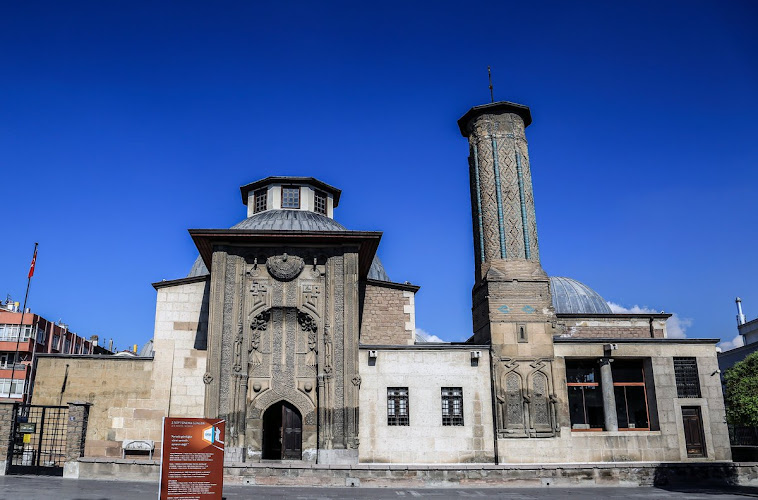
The Stone Works Museum of Fine Minaret in Konya is one of those places that quietly sneaks up on you. At first glance, it looks like a historic madrasa with a tall, slender minaret that seems almost too delicate to have survived all these centuries. But step inside, and you’ll find yourself surrounded by centuries-old stone carvings, wooden doors, and inscriptions that tell the story of the Seljuk era in a way that books never really can. It’s not a massive museum where you’ll get lost for hours, but it carries a depth that lingers with you long after you leave.
The building itself dates back to the 13th century, originally serving as a madrasa, and it’s a textbook example of Anatolian Seljuk architecture. The ornate entrance is jaw-dropping—carved stonework so intricate you can’t help but wonder how many hands and how many years it took to complete. Inside, the atmosphere is calm, almost meditative, and while not every artifact will blow you away, there’s a quiet dignity to the collection. Some travelers rave about the artistry, others feel it’s a bit modest compared to bigger museums, but that’s part of its charm. It’s less about overwhelming you and more about slowing you down, letting you notice details like the curve of a calligraphic line or the pattern etched into a centuries-old tombstone.
Personally, I think that’s why it resonates. It’s not trying to impress with size—it’s about intimacy. You can stand inches away from a 900-year-old carving and really take in the craftsmanship. And if you’re the type who loves wandering through places that feel authentic, a little rough around the edges, and deeply tied to local history, this museum will feel like a hidden gem.
Key Features
- 13th-century madrasa architecture with a striking brick minaret
- Intricately carved stone portals and Seljuk inscriptions
- Collection of tombstones, wooden doors, and decorative panels from the Seljuk period
- Domed courtyard offering a glimpse into medieval Islamic school design
- Smaller, more intimate setting compared to larger museums
What makes this place stand out isn’t just the artifacts—it’s the way the building itself is part of the story. The madrasa walls, the minaret, the courtyard—they’re not just a backdrop, they’re part of the exhibit. And that’s something you don’t always get in modern museums.
Best Time to Visit
If you’re planning a trip, spring and autumn are easily the best seasons to experience Konya as a whole. The weather is mild, the city feels alive but not overcrowded, and you can actually enjoy walking to the museum without melting under the summer sun. I once visited in July, and let me tell you, standing in the courtyard under that blazing heat made me wish I had waited for October. Winter has its own charm—Konya dusted with snow looks magical—but it can be biting cold, so come prepared if that’s your plan.
The museum itself doesn’t take long to explore, maybe an hour or two at most, so it’s perfect to slot into a morning or afternoon before heading to other Konya highlights like the Mevlana Museum. Try to go earlier in the day if you want to avoid the larger tour groups. There’s something special about standing in that quiet courtyard when it’s just you and the echoes of history.
How to Get There
Konya is well connected by train, bus, and even flights from Istanbul and Ankara, so reaching the city itself is straightforward. Once you’re in Konya, the museum is in the central area, not far from other major attractions. If you’re staying near the city center, you can easily walk to it in under 15 minutes. Taxis are affordable if you prefer not to walk, and there are also trams that make getting around pretty painless.
I personally enjoy walking in Konya—it’s flat, the streets are wide, and you stumble across little bakeries and tea shops along the way. And honestly, half the fun of visiting a place like this is the journey there, when you feel like you’re weaving your way through the layers of the city’s history.
Tips for Visiting
A few things I wish I had known before my first visit. First, bring a little patience. Some displays don’t have extensive English explanations, so if you’re someone who likes context, it might be worth reading up a bit beforehand or even hiring a local guide. Second, wear comfortable shoes. The floors are uneven in places, and you’ll probably be walking a fair bit around the city anyway.
Photography is usually allowed, but be respectful—this is a historic site, not just a photo backdrop. And take your time with the details. It’s easy to breeze through, but when you pause and really look at the carvings, you start to notice things you’d otherwise miss. Like the way a floral motif curls into a geometric pattern, or how the woodwork has aged into rich, dark tones after centuries.
If you’re traveling with kids, keep in mind that it’s not a hands-on museum. It’s quiet, reflective, and best appreciated if you’re in the mood to soak in history. For food and drink, I’d recommend grabbing a meal at a local lokanta nearby after your visit. Nothing beats finishing a museum trip with a warm plate of etli ekmek (Konya’s famous flatbread).
And maybe the most important tip: don’t compare it too much to other museums. This isn’t the Louvre or Topkapi Palace. It’s smaller, yes, but it’s also more personal. Let it be what it is—a place where history feels close enough to touch.
Key Features
- 13th-century madrasa architecture with a striking brick minaret
- Intricately carved stone portals and Seljuk inscriptions
- Collection of tombstones, wooden doors, and decorative panels from the Seljuk period
- Domed courtyard offering a glimpse into medieval Islamic school design
- Smaller, more intimate setting compared to larger museums
More Details
Updated September 8, 2025
Table of Contents
- Description
- Key Features
- Best Time to Visit
- How to Get There
- Tips for Visiting
- Key Highlights
- Location
- Places to Stay Near Stone Works Museum of Fine Minaret
- Find and Book a Tour
- Explore More Travel Guides
- Nearby Places You Might Like
- Traveler Reviews for Stone Works Museum of Fine Minaret
- Share Your Experience
Description
The Stone Works Museum of Fine Minaret in Konya is one of those places that quietly sneaks up on you. At first glance, it looks like a historic madrasa with a tall, slender minaret that seems almost too delicate to have survived all these centuries. But step inside, and you’ll find yourself surrounded by centuries-old stone carvings, wooden doors, and inscriptions that tell the story of the Seljuk era in a way that books never really can. It’s not a massive museum where you’ll get lost for hours, but it carries a depth that lingers with you long after you leave.
The building itself dates back to the 13th century, originally serving as a madrasa, and it’s a textbook example of Anatolian Seljuk architecture. The ornate entrance is jaw-dropping—carved stonework so intricate you can’t help but wonder how many hands and how many years it took to complete. Inside, the atmosphere is calm, almost meditative, and while not every artifact will blow you away, there’s a quiet dignity to the collection. Some travelers rave about the artistry, others feel it’s a bit modest compared to bigger museums, but that’s part of its charm. It’s less about overwhelming you and more about slowing you down, letting you notice details like the curve of a calligraphic line or the pattern etched into a centuries-old tombstone.
Personally, I think that’s why it resonates. It’s not trying to impress with size—it’s about intimacy. You can stand inches away from a 900-year-old carving and really take in the craftsmanship. And if you’re the type who loves wandering through places that feel authentic, a little rough around the edges, and deeply tied to local history, this museum will feel like a hidden gem.
Key Features
- 13th-century madrasa architecture with a striking brick minaret
- Intricately carved stone portals and Seljuk inscriptions
- Collection of tombstones, wooden doors, and decorative panels from the Seljuk period
- Domed courtyard offering a glimpse into medieval Islamic school design
- Smaller, more intimate setting compared to larger museums
What makes this place stand out isn’t just the artifacts—it’s the way the building itself is part of the story. The madrasa walls, the minaret, the courtyard—they’re not just a backdrop, they’re part of the exhibit. And that’s something you don’t always get in modern museums.
Best Time to Visit
If you’re planning a trip, spring and autumn are easily the best seasons to experience Konya as a whole. The weather is mild, the city feels alive but not overcrowded, and you can actually enjoy walking to the museum without melting under the summer sun. I once visited in July, and let me tell you, standing in the courtyard under that blazing heat made me wish I had waited for October. Winter has its own charm—Konya dusted with snow looks magical—but it can be biting cold, so come prepared if that’s your plan.
The museum itself doesn’t take long to explore, maybe an hour or two at most, so it’s perfect to slot into a morning or afternoon before heading to other Konya highlights like the Mevlana Museum. Try to go earlier in the day if you want to avoid the larger tour groups. There’s something special about standing in that quiet courtyard when it’s just you and the echoes of history.
How to Get There
Konya is well connected by train, bus, and even flights from Istanbul and Ankara, so reaching the city itself is straightforward. Once you’re in Konya, the museum is in the central area, not far from other major attractions. If you’re staying near the city center, you can easily walk to it in under 15 minutes. Taxis are affordable if you prefer not to walk, and there are also trams that make getting around pretty painless.
I personally enjoy walking in Konya—it’s flat, the streets are wide, and you stumble across little bakeries and tea shops along the way. And honestly, half the fun of visiting a place like this is the journey there, when you feel like you’re weaving your way through the layers of the city’s history.
Tips for Visiting
A few things I wish I had known before my first visit. First, bring a little patience. Some displays don’t have extensive English explanations, so if you’re someone who likes context, it might be worth reading up a bit beforehand or even hiring a local guide. Second, wear comfortable shoes. The floors are uneven in places, and you’ll probably be walking a fair bit around the city anyway.
Photography is usually allowed, but be respectful—this is a historic site, not just a photo backdrop. And take your time with the details. It’s easy to breeze through, but when you pause and really look at the carvings, you start to notice things you’d otherwise miss. Like the way a floral motif curls into a geometric pattern, or how the woodwork has aged into rich, dark tones after centuries.
If you’re traveling with kids, keep in mind that it’s not a hands-on museum. It’s quiet, reflective, and best appreciated if you’re in the mood to soak in history. For food and drink, I’d recommend grabbing a meal at a local lokanta nearby after your visit. Nothing beats finishing a museum trip with a warm plate of etli ekmek (Konya’s famous flatbread).
And maybe the most important tip: don’t compare it too much to other museums. This isn’t the Louvre or Topkapi Palace. It’s smaller, yes, but it’s also more personal. Let it be what it is—a place where history feels close enough to touch.
Key Highlights
- 13th-century madrasa architecture with a striking brick minaret
- Intricately carved stone portals and Seljuk inscriptions
- Collection of tombstones, wooden doors, and decorative panels from the Seljuk period
- Domed courtyard offering a glimpse into medieval Islamic school design
- Smaller, more intimate setting compared to larger museums
Location
Places to Stay Near Stone Works Museum of Fine Minaret
Find and Book a Tour
Explore More Travel Guides
No reviews found! Be the first to review!
Traveler Reviews for Stone Works Museum of Fine Minaret
There are no reviews yet. Be the first one to write one.
Have you visited Stone Works Museum of Fine Minaret? Help other travelers by sharing your review.
You Might Also Like

Contemporary Glass Art Museum

Fakıllı Mağarası
2006. Sk. No:2
Find Accommodations Nearby
Recommended Tours & Activities
Visitor Reviews
There are no reviews yet. Be the first one to write one.
Share Your Experience
Have you visited Stone Works Museum of Fine Minaret? Help other travelers by leaving a review.