

South African Air Force Museum, Port Elizabeth Branch
About South African Air Force Museum, Port Elizabeth Branch
Description
The South African Air Force Museum, Port Elizabeth Branch sits on the quieter side of Gqeberha and feels like a secret that likes to be discovered slowly. It is a specialist aviation museum that traces the technical and human story of South African military flight from the 1930s right through to modern craft. Visitors will find an historic collection of vintage planes, helicopters and aviation artifacts arranged in hangars and outdoor displays that, together, tell a layered story about the SAAF, local training bases and the role of aircraft in regional history.
For travelers who nerd out on metal, rivets and the smell of old fuel (and, yes, some people actually enjoy that), the collection delivers. There are restored fighters and trainers, helicopters that once hummed over coastal waters, and a handful of rarities that aviation enthusiasts like to point at and whisper about. The exhibit labels mix technical specs—engine type, wingspan, service years—with human-scale material: photos, uniforms, logbooks and oral-history excerpts that conjure pilots, ground crews and the odd mechanic with a laugh and a cigarette tucked behind the ear. It’s not all glass cases and museum aloofness; there’s personality here, and that helps the machines feel like part of a larger story.
The museum has a reputation for being accessible. Wheelchair-friendly entrances, accessible parking and restrooms mean families with strollers and visitors with mobility needs can get close to many of the displays. There is free on-site parking, which is one of those underrated amenities that saves a day from starting with a small sulk about meters and search time. But it’s worth noting that, while amenities are practical, this branch does not have an on-site restaurant. Therefore, visitors tend to bring snacks or plan a coffee stop nearby after a couple of hours exploring.
Expect a pace that suits curious travelers rather than hurried tourists. People linger at cockpits, peer into instrument panels, and compare nose art photos—old-school personalization that tells as much about morale as it does about design. The museum’s narrative ranges from early prop-driven trainers and reconnaissance aircraft to jet-age fighters and rotary-wing craft. Some machines are painstakingly restored to near-flight condition; others remain as preserved relics, their paint faded but their stories intact. Together they map technological change, military strategy shifts, and the particular contours of aviation history in South Africa and the wider eastern Cape region.
Practical displays—pilot uniforms, flight suits, medals, and maintenance tools—add texture and are surprisingly evocative. One wings-and-bits display, for instance, focuses on flight-training life in the mid-20th century: letters home, ration tins, and a training manual with handwritten corrections. Those small human artifacts tend to be the bits that linger in memory. They show visitors that the museum curators care not just about machines but about the men and women who flew and serviced them.
Visitors with children will find the place kid-friendly without being gimmicky. There are safe viewing areas built for little ones to see cockpits without having to climb, and many volunteers enjoy chatting to kids about how aircraft fly. That said, the museum leans educational rather than theme-park, so families should plan for a calm, exploratory visit rather than a full day of activities. Bring a notebook or a camera—there are photogenic angles—but also be ready for certain inside-the-hangar lighting to be a bit moody; that adds atmosphere, but it’s not an Instagram studio.
Because the museum is part of the national SAAF museum network, it situates local exhibits within national and sometimes international contexts. There are interpretive panels that address the SAAF’s development, training programs, and operational roles in different decades. Military history buffs will appreciate references to training bases and operational sorties; casual visitors will appreciate that these topics are explained without assuming prior specialist knowledge. The curators strike a fair balance: they respect complexity, yet keep explanations friendly and readable.
Not everything is perfect. At times, signage could be clearer and some exhibits would benefit from extra restoration funds—there are a handful of displays that show their age. But that slightly rough-around-the-edges character lends authenticity too; it feels like a community effort where volunteers and staff have poured personal passion into preserving each fuselage and instrument panel. And that community vibe is visible: volunteers man exhibits, share stories and sometimes point out quirks that aren’t in the official descriptions. Those personal anecdotes—told by someone who used to work on a particular aircraft or who remembers the base in wartime—are the gold in a visit here.
For photography and quiet reflection, the museum offers atmospheric opportunities. The long lines of parked aircraft under the sun, the gleam of polished chrome, the shadows under wings—these are the kinds of sights that make a mid-afternoon visit unexpectedly beautiful. Aviation enthusiasts will likely spend hours examining serial numbers and restoration choices; casual travelers might take an hour or two and still leave feeling enriched. Guided visits or volunteer-led talks pop up occasionally, and when they do, they’re worth catching—firsthand stories can turn a static display into a vivid living memory.
Location-wise, the museum is easy to slot into a broader Gqeberha travel plan: it’s not far from coastal attractions, city neighborhoods and the modest bustle of the Eastern Cape. Visitors often combine the museum with other nearby outings—beaches, historical walks, or a local café run. Because there is no onsite restaurant, the flow of a visit commonly ends with a plan to explore local dining options afterward. Also, the free parking and accessible facilities make it a low-stress stop on a half-day itinerary.
In short, the Port Elizabeth Branch of the South African Air Force Museum is a focused, thoughtfully curated aviation museum that rewards both the casual browser and the detail-oriented historian. It’s not slick in that corporate, over-polished way—thankfully—but it’s sincere, informative and often surprisingly moving. For travelers who appreciate history, machines and the human tales attached to both, this museum is a memorable slice of South Africa’s aviation story in Gqeberha.
Key Features
More Details
Updated August 29, 2025
Table of Contents
Description
The South African Air Force Museum, Port Elizabeth Branch sits on the quieter side of Gqeberha and feels like a secret that likes to be discovered slowly. It is a specialist aviation museum that traces the technical and human story of South African military flight from the 1930s right through to modern craft. Visitors will find an historic collection of vintage planes, helicopters and aviation artifacts arranged in hangars and outdoor displays that, together, tell a layered story about the SAAF, local training bases and the role of aircraft in regional history.
For travelers who nerd out on metal, rivets and the smell of old fuel (and, yes, some people actually enjoy that), the collection delivers. There are restored fighters and trainers, helicopters that once hummed over coastal waters, and a handful of rarities that aviation enthusiasts like to point at and whisper about. The exhibit labels mix technical specs—engine type, wingspan, service years—with human-scale material: photos, uniforms, logbooks and oral-history excerpts that conjure pilots, ground crews and the odd mechanic with a laugh and a cigarette tucked behind the ear. It’s not all glass cases and museum aloofness; there’s personality here, and that helps the machines feel like part of a larger story.
The museum has a reputation for being accessible. Wheelchair-friendly entrances, accessible parking and restrooms mean families with strollers and visitors with mobility needs can get close to many of the displays. There is free on-site parking, which is one of those underrated amenities that saves a day from starting with a small sulk about meters and search time. But it’s worth noting that, while amenities are practical, this branch does not have an on-site restaurant. Therefore, visitors tend to bring snacks or plan a coffee stop nearby after a couple of hours exploring.
Expect a pace that suits curious travelers rather than hurried tourists. People linger at cockpits, peer into instrument panels, and compare nose art photos—old-school personalization that tells as much about morale as it does about design. The museum’s narrative ranges from early prop-driven trainers and reconnaissance aircraft to jet-age fighters and rotary-wing craft. Some machines are painstakingly restored to near-flight condition; others remain as preserved relics, their paint faded but their stories intact. Together they map technological change, military strategy shifts, and the particular contours of aviation history in South Africa and the wider eastern Cape region.
Practical displays—pilot uniforms, flight suits, medals, and maintenance tools—add texture and are surprisingly evocative. One wings-and-bits display, for instance, focuses on flight-training life in the mid-20th century: letters home, ration tins, and a training manual with handwritten corrections. Those small human artifacts tend to be the bits that linger in memory. They show visitors that the museum curators care not just about machines but about the men and women who flew and serviced them.
Visitors with children will find the place kid-friendly without being gimmicky. There are safe viewing areas built for little ones to see cockpits without having to climb, and many volunteers enjoy chatting to kids about how aircraft fly. That said, the museum leans educational rather than theme-park, so families should plan for a calm, exploratory visit rather than a full day of activities. Bring a notebook or a camera—there are photogenic angles—but also be ready for certain inside-the-hangar lighting to be a bit moody; that adds atmosphere, but it’s not an Instagram studio.
Because the museum is part of the national SAAF museum network, it situates local exhibits within national and sometimes international contexts. There are interpretive panels that address the SAAF’s development, training programs, and operational roles in different decades. Military history buffs will appreciate references to training bases and operational sorties; casual visitors will appreciate that these topics are explained without assuming prior specialist knowledge. The curators strike a fair balance: they respect complexity, yet keep explanations friendly and readable.
Not everything is perfect. At times, signage could be clearer and some exhibits would benefit from extra restoration funds—there are a handful of displays that show their age. But that slightly rough-around-the-edges character lends authenticity too; it feels like a community effort where volunteers and staff have poured personal passion into preserving each fuselage and instrument panel. And that community vibe is visible: volunteers man exhibits, share stories and sometimes point out quirks that aren’t in the official descriptions. Those personal anecdotes—told by someone who used to work on a particular aircraft or who remembers the base in wartime—are the gold in a visit here.
For photography and quiet reflection, the museum offers atmospheric opportunities. The long lines of parked aircraft under the sun, the gleam of polished chrome, the shadows under wings—these are the kinds of sights that make a mid-afternoon visit unexpectedly beautiful. Aviation enthusiasts will likely spend hours examining serial numbers and restoration choices; casual travelers might take an hour or two and still leave feeling enriched. Guided visits or volunteer-led talks pop up occasionally, and when they do, they’re worth catching—firsthand stories can turn a static display into a vivid living memory.
Location-wise, the museum is easy to slot into a broader Gqeberha travel plan: it’s not far from coastal attractions, city neighborhoods and the modest bustle of the Eastern Cape. Visitors often combine the museum with other nearby outings—beaches, historical walks, or a local café run. Because there is no onsite restaurant, the flow of a visit commonly ends with a plan to explore local dining options afterward. Also, the free parking and accessible facilities make it a low-stress stop on a half-day itinerary.
In short, the Port Elizabeth Branch of the South African Air Force Museum is a focused, thoughtfully curated aviation museum that rewards both the casual browser and the detail-oriented historian. It’s not slick in that corporate, over-polished way—thankfully—but it’s sincere, informative and often surprisingly moving. For travelers who appreciate history, machines and the human tales attached to both, this museum is a memorable slice of South Africa’s aviation story in Gqeberha.
Key Highlights
South African Air Force Museum, Port Elizabeth Branch
Location
Places to Stay Near South African Air Force Museum, Port Elizabeth Branch
Find and Book a Tour
Explore More Travel Guides
No reviews found! Be the first to review!
Traveler Reviews for South African Air Force Museum, Port Elizabeth Branch
There are no reviews yet. Be the first one to write one.
Have you visited South African Air Force Museum, Port Elizabeth Branch? Help other travelers by sharing your review.
You Might Also Like

Route 67
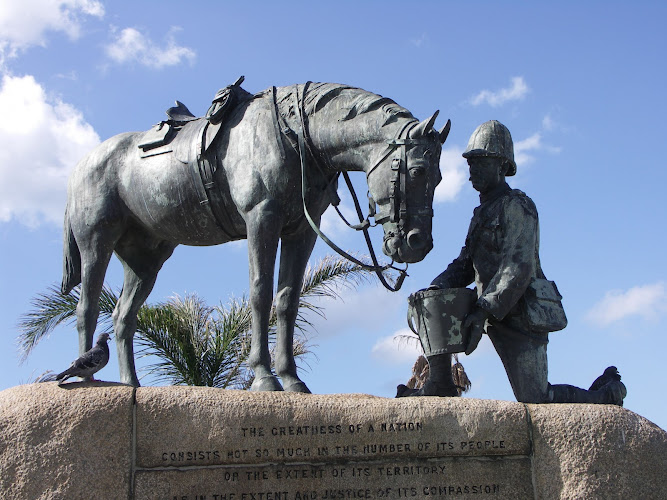
Horse Memorial

South End Museum
Find Accommodations Nearby
Recommended Tours & Activities
Visitor Reviews
There are no reviews yet. Be the first one to write one.
Share Your Experience
Have you visited South African Air Force Museum, Port Elizabeth Branch? Help other travelers by leaving a review.