

South End Museum
About South End Museum
Description
The South End Museum in Gqeberha is a focused, intimate museum dedicated to telling the story of the South End community and the effects of apartheid on everyday life. It is not a sprawling national complex; instead it leans into a close-up, human-scale approach: photographs, personal testimonies, archival documents and reconstructed street scenes that bring the past into the present. The emphasis is on lived experience rather than abstract policy, so visitors walk away with names, faces and neighborhoods rather than just dates and legislation. That choice makes it one of the more emotionally direct museums in the Eastern Cape.
Visitors who come for the South End Museum will find exhibits arranged to highlight the community before, during and after the forced removals that reshaped Gqeberha. Panels outline the Group Areas Act and other apartheid-era laws in plain language, while oral histories — recorded interviews with former residents and activists — offer candid, sometimes raw perspectives. There are display cabinets of everyday objects, schoolbooks, and household items that anchor the historical narrative. And photos, often cropped close, show street corners, classrooms and market stalls that make the history feel immediate. It’s the sort of place where a single photograph can linger in the mind for days.
The interpretive tone is educational but humane. The curators aim to preserve memory as a form of resistance and healing, and that intention is visible in the way exhibits are labeled and in the small rotating exhibitions of local artists and community projects. Where many larger museums risk overwhelming visitors with scale, this museum uses intimacy to its advantage: small groups, quiet reflection spaces, and staff who, more often than not, know the stories behind the items on display. A docent once shared a scrap of a school uniform and the tale of a child who continued to study by candlelight; details like that are what visitors remember.
Practical amenities are present and thoughtfully considered. The building has wheelchair-accessible entrances, an accessible parking area and restrooms designed for visitors with mobility requirements. There is a small on-site cafe where visitors can sit and digest what they have seen, and restrooms are available so people don’t have to rush out halfway through. Families with children find the museum manageable; exhibits are arranged at readable heights and there are moments that provoke curiosity in younger minds without being simplified to the point of losing complexity.
For travelers who are tracking cultural heritage and social history in South Africa, the South End Museum offers a crucial local perspective. It complements visits to larger institutions, such as city museums or national apartheid museums, by focusing tightly on the consequences of segregation in one neighbourhood and the resilience shown there afterwards. If one only reads about apartheid in textbooks, this place helps translate that reading into real, human consequences: where people once lived, where shops stood, how schools were reorganized. The museum clarifies why urban planning under apartheid mattered so much to ordinary lives.
Not everything here is polished to a corporate sheen, and that is part of its character. Display cases sometimes feel modest, labels can be handwritten in places, and rotating exhibits might exhibit a DIY warmth. Some visitors interpret that as a sign of authenticity; others might wish for more interactive technology or multilingual audio guides. The truth is somewhere in between: the museum is earnest, community-rooted, and while it may not boast high-tech bells and whistles, it offers depth and stories that are hard to find elsewhere in Gqeberha.
Interpretation leans heavily on first-person testimony, which means the museum’s emotional temperature can fluctuate. One minute a visitor reads a text about forced removals and the next hears a clip of a woman remembering a childhood friend. Those transitions are powerful, and sometimes discomfiting — which is appropriate for the subject matter. A good visit here requires a bit of emotional stamina; it is not a quick, superficial stop. People who arrive expecting light, neutral displays are sometimes surprised. People who want to understand the human cost of political systems find the museum essential.
There is a clear educational mission: local schools and university groups often arrange guided tours, and the museum hosts talks and workshops that connect past events to current urban and social issues. Travelers who end up here will discover learning resources that go beyond the gallery: community-curated research, booklets that explain the context, and occasional short films produced by local filmmakers. Those who like history with a strong local voice will appreciate the effort made to engage learners of all ages.
From a logistics standpoint, the site is compact and easy to navigate on foot. Typical visits last an hour to ninety minutes, though a visitor who reads every panel and listens to the oral histories might spend longer. The layout encourages a linear progression through time, but there are also pockets for contemplation. Benches and quiet corners invite visitors to sit and reflect, and the small cafe is a good place to jot notes or discuss what one has just seen. A practical tip for the curious: bring a notebook. The museum triggers questions and sometimes highlights gaps that spark further research; writing thoughts down on the spot helps preserve the impressions.
The museum’s connection to the South End community is visible in the ways exhibits are sourced and presented. Many objects are donations, and the curatorial team often collaborates with former residents to verify details and provide contextual material. That collaborative spirit gives the museum a local authority; it’s not just an external institution documenting a community, it is part of ongoing memory work. Travelers who appreciate community-driven interpretation will find that distinction meaningful. One volunteer guide remarked that the museum acts like a living scrapbook for the neighbourhood — not pristine, but sustained by ongoing contributions.
A visitor should be prepared for an emotionally resonant experience. The museum does not shy away from difficult subject matter and often frames stories through personal losses, resilience and creative survival strategies. Yet amid the heavier themes there are also stories of music, neighborhood sports clubs, entrepreneurial markets and daily joys that people held onto despite repression. Those lighter threads are important because they counterbalance the pain with evidence of ordinary life and dignity.
Accessibility and thoughtful amenities make the museum more inclusive than many small, local institutions. The wheelchair-accessible entrance and parking, plus accessible restrooms, mean that visitors with mobility concerns can usually move through the space comfortably. Staff members are accustomed to guiding groups with special needs and will often offer a slower-paced tour or additional context when asked. Families will find child-friendly moments without a patronizing tone; the focus remains on honesty, coupled with sensitivity.
For travelers building an itinerary in the Eastern Cape, the South End Museum anchors a broader exploration of Gqeberha’s social history. It pairs well with walks around the older parts of the city, visits to community arts projects, and trips to nearby historical landmarks. The museum is the kind of stop that alters how one sees the rest of the city; after a visit, the urban landscape reads differently because the visitor is attuned to traces of past displacement and to acts of survival that shaped current neighborhoods.
There are minor practical caveats to note. The museum’s scale means peak times can feel slightly cramped if a school group arrives simultaneously; and while the cafe is convenient, it is small and sometimes busy during midday. Audio guides are limited, so non-English speakers might find the experience uneven unless they request additional assistance. Still, these are relatively small issues compared to the quality of the narrative offered.
On balance, the South End Museum in Gqeberha is recommended for travelers who want a focused, community-centered view of apartheid’s effects on urban life. It rewards thoughtful visitors with clear storytelling, personal testimony and curated artifacts that together make history palpable. The experience is candid and sometimes tough, but in an important way: it insists that history be felt, remembered and discussed. For anyone serious about understanding the human geography of South Africa, this museum is a necessary stop; it helps transform abstract historical facts into human stories that stick with you long after you leave the building.
Key Features
More Details
Updated August 29, 2025
Table of Contents
Description
The South End Museum in Gqeberha is a focused, intimate museum dedicated to telling the story of the South End community and the effects of apartheid on everyday life. It is not a sprawling national complex; instead it leans into a close-up, human-scale approach: photographs, personal testimonies, archival documents and reconstructed street scenes that bring the past into the present. The emphasis is on lived experience rather than abstract policy, so visitors walk away with names, faces and neighborhoods rather than just dates and legislation. That choice makes it one of the more emotionally direct museums in the Eastern Cape.
Visitors who come for the South End Museum will find exhibits arranged to highlight the community before, during and after the forced removals that reshaped Gqeberha. Panels outline the Group Areas Act and other apartheid-era laws in plain language, while oral histories — recorded interviews with former residents and activists — offer candid, sometimes raw perspectives. There are display cabinets of everyday objects, schoolbooks, and household items that anchor the historical narrative. And photos, often cropped close, show street corners, classrooms and market stalls that make the history feel immediate. It’s the sort of place where a single photograph can linger in the mind for days.
The interpretive tone is educational but humane. The curators aim to preserve memory as a form of resistance and healing, and that intention is visible in the way exhibits are labeled and in the small rotating exhibitions of local artists and community projects. Where many larger museums risk overwhelming visitors with scale, this museum uses intimacy to its advantage: small groups, quiet reflection spaces, and staff who, more often than not, know the stories behind the items on display. A docent once shared a scrap of a school uniform and the tale of a child who continued to study by candlelight; details like that are what visitors remember.
Practical amenities are present and thoughtfully considered. The building has wheelchair-accessible entrances, an accessible parking area and restrooms designed for visitors with mobility requirements. There is a small on-site cafe where visitors can sit and digest what they have seen, and restrooms are available so people don’t have to rush out halfway through. Families with children find the museum manageable; exhibits are arranged at readable heights and there are moments that provoke curiosity in younger minds without being simplified to the point of losing complexity.
For travelers who are tracking cultural heritage and social history in South Africa, the South End Museum offers a crucial local perspective. It complements visits to larger institutions, such as city museums or national apartheid museums, by focusing tightly on the consequences of segregation in one neighbourhood and the resilience shown there afterwards. If one only reads about apartheid in textbooks, this place helps translate that reading into real, human consequences: where people once lived, where shops stood, how schools were reorganized. The museum clarifies why urban planning under apartheid mattered so much to ordinary lives.
Not everything here is polished to a corporate sheen, and that is part of its character. Display cases sometimes feel modest, labels can be handwritten in places, and rotating exhibits might exhibit a DIY warmth. Some visitors interpret that as a sign of authenticity; others might wish for more interactive technology or multilingual audio guides. The truth is somewhere in between: the museum is earnest, community-rooted, and while it may not boast high-tech bells and whistles, it offers depth and stories that are hard to find elsewhere in Gqeberha.
Interpretation leans heavily on first-person testimony, which means the museum’s emotional temperature can fluctuate. One minute a visitor reads a text about forced removals and the next hears a clip of a woman remembering a childhood friend. Those transitions are powerful, and sometimes discomfiting — which is appropriate for the subject matter. A good visit here requires a bit of emotional stamina; it is not a quick, superficial stop. People who arrive expecting light, neutral displays are sometimes surprised. People who want to understand the human cost of political systems find the museum essential.
There is a clear educational mission: local schools and university groups often arrange guided tours, and the museum hosts talks and workshops that connect past events to current urban and social issues. Travelers who end up here will discover learning resources that go beyond the gallery: community-curated research, booklets that explain the context, and occasional short films produced by local filmmakers. Those who like history with a strong local voice will appreciate the effort made to engage learners of all ages.
From a logistics standpoint, the site is compact and easy to navigate on foot. Typical visits last an hour to ninety minutes, though a visitor who reads every panel and listens to the oral histories might spend longer. The layout encourages a linear progression through time, but there are also pockets for contemplation. Benches and quiet corners invite visitors to sit and reflect, and the small cafe is a good place to jot notes or discuss what one has just seen. A practical tip for the curious: bring a notebook. The museum triggers questions and sometimes highlights gaps that spark further research; writing thoughts down on the spot helps preserve the impressions.
The museum’s connection to the South End community is visible in the ways exhibits are sourced and presented. Many objects are donations, and the curatorial team often collaborates with former residents to verify details and provide contextual material. That collaborative spirit gives the museum a local authority; it’s not just an external institution documenting a community, it is part of ongoing memory work. Travelers who appreciate community-driven interpretation will find that distinction meaningful. One volunteer guide remarked that the museum acts like a living scrapbook for the neighbourhood — not pristine, but sustained by ongoing contributions.
A visitor should be prepared for an emotionally resonant experience. The museum does not shy away from difficult subject matter and often frames stories through personal losses, resilience and creative survival strategies. Yet amid the heavier themes there are also stories of music, neighborhood sports clubs, entrepreneurial markets and daily joys that people held onto despite repression. Those lighter threads are important because they counterbalance the pain with evidence of ordinary life and dignity.
Accessibility and thoughtful amenities make the museum more inclusive than many small, local institutions. The wheelchair-accessible entrance and parking, plus accessible restrooms, mean that visitors with mobility concerns can usually move through the space comfortably. Staff members are accustomed to guiding groups with special needs and will often offer a slower-paced tour or additional context when asked. Families will find child-friendly moments without a patronizing tone; the focus remains on honesty, coupled with sensitivity.
For travelers building an itinerary in the Eastern Cape, the South End Museum anchors a broader exploration of Gqeberha’s social history. It pairs well with walks around the older parts of the city, visits to community arts projects, and trips to nearby historical landmarks. The museum is the kind of stop that alters how one sees the rest of the city; after a visit, the urban landscape reads differently because the visitor is attuned to traces of past displacement and to acts of survival that shaped current neighborhoods.
There are minor practical caveats to note. The museum’s scale means peak times can feel slightly cramped if a school group arrives simultaneously; and while the cafe is convenient, it is small and sometimes busy during midday. Audio guides are limited, so non-English speakers might find the experience uneven unless they request additional assistance. Still, these are relatively small issues compared to the quality of the narrative offered.
On balance, the South End Museum in Gqeberha is recommended for travelers who want a focused, community-centered view of apartheid’s effects on urban life. It rewards thoughtful visitors with clear storytelling, personal testimony and curated artifacts that together make history palpable. The experience is candid and sometimes tough, but in an important way: it insists that history be felt, remembered and discussed. For anyone serious about understanding the human geography of South Africa, this museum is a necessary stop; it helps transform abstract historical facts into human stories that stick with you long after you leave the building.
Key Highlights
South End Museum
Location
Places to Stay Near South End Museum
Find and Book a Tour
Explore More Travel Guides
No reviews found! Be the first to review!
Traveler Reviews for South End Museum
There are no reviews yet. Be the first one to write one.
Have you visited South End Museum? Help other travelers by sharing your review.
You Might Also Like

Nelson Mandela Metropolitan Art Museum
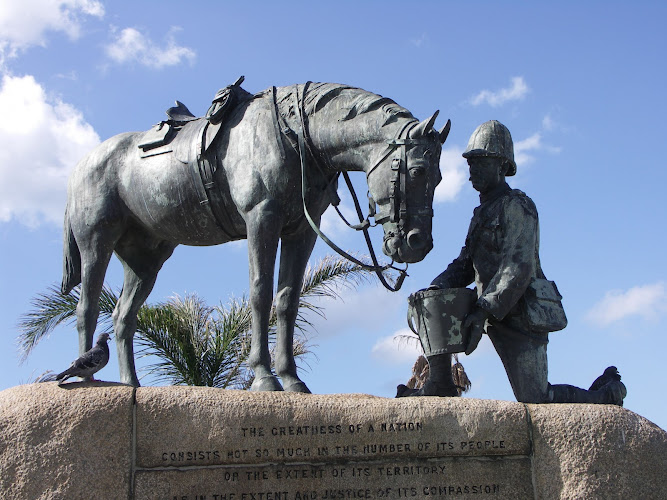
Horse Memorial

Cape Recife Lighthouse Villa
Find Accommodations Nearby
Recommended Tours & Activities
Visitor Reviews
There are no reviews yet. Be the first one to write one.
Share Your Experience
Have you visited South End Museum? Help other travelers by leaving a review.