

Hugh Exton Photographic Museum
About Hugh Exton Photographic Museum
Description
The Hugh Exton Photographic Museum in Polokwane, Limpopo, South Africa, is a focused, quietly proud place that preserves one of the region’s most important photographic archives. It houses the work of photographer Hugh Exton and a remarkable cache of glass negatives and prints that document life in the late 19th and early 20th centuries across northern South Africa. For travelers who like history mixed with visual storytelling, this museum acts like a time machine: photos of everyday dress, town street scenes, religious gatherings, and formal portraits sit side by side and slowly reveal social, cultural, and architectural changes over decades.
Unlike larger, more theatrical museums, the Hugh Exton Photographic Museum keeps things intimate. Exhibits are arranged to invite close inspection; the lighting and display cases encourage viewers to lean in, read captions, and try to match faces with names. Many images focus on the Bakone people and other local communities, offering a sensitive — and sometimes surprising — record of traditional clothing, ceremonies, and domestic life. There are also photographs that relate to Pietersburg’s growth, the influence of churches and local institutions, and the broader shifts across the Limpopo province during periods of colonial contact and modernization.
Photography enthusiasts will find the museum especially rewarding. The collection includes original glass negatives, a format that carries an unmistakable presence: fine detail, subtle tonal ranges, and the occasional scratch or hand-written note on a sleeve that tells a tiny backstory. Those physical traces make the archive feel authentic in a way that digital reproductions rarely achieve. The way the museum preserves and explains the process of early photography — from glass plate technique to period cameras — adds depth. It is not just looking at pictures; it’s learning how they were made and why they mattered then.
The museum is housed in a building whose character complements the collection. Its rooms are modest rather than cavernous, which is a blessing: visitors do not get overwhelmed, they get absorbed. Staff and volunteers often share context that turns an ordinary viewing into a small revelation — for instance, pointing out a single photograph that documents a rare traditional costume or an unusual architectural detail on a church façade. Those moments remind visitors that the Hugh Exton Photographic Museum is part archive, part local memory bank.
Accessibility matters here. The museum has a wheelchair accessible entrance, accessible parking, and restrooms that accommodate mobility needs, which is worth flagging because not every small museum makes that commitment. Families with children will also find it approachable; exhibits hold kids’ attention better than most history museums because photographs are immediate and human. There is a restroom on site, and the layout is compact enough for short attention spans — but long enough for curious minds.
For travelers mapping out cultural stops in Polokwane and the surrounding area, the Hugh Exton Photographic Museum offers a concentrated, satisfying window into local history and visual culture. It aligns well with visits to other cultural attractions in Limpopo province: it provides context, names, faces, and a sequence of images that often illuminate what one sees later at open-air sites or historical houses. In short, it’s the kind of place that enriches the rest of a trip by slowing things down and encouraging observation.
The mood inside is reflective rather than celebratory. Exhibits present history with subtlety; there is an emphasis on observation over interpretation, which means visitors who like to piece stories together from clues will enjoy themselves. That said, the museum does supply helpful labels and background notes, and the staff are willing to answer questions. It’s not an academic fortress — it’s more like a good local guide who happens to have an exceptional photo album.
Practical details and small pleasures: expect close-up views of portraits that capture fashion, expressions, and social rank; street scenes that reveal the town’s changing layout; ceremonial shots that highlight Northern Sotho cultural elements; and images connected to larger historical themes, such as the Anglo-Boer War and urban development across the early 20th century. For anyone interested in photography as both technique and social record, the glass negatives are a standout draw. For families and casual travelers, the immediacy of faces and scenes makes the visit feel personal — occasionally poignant, sometimes quietly funny, and often curiously instructive.
One thing lesser known but worth mentioning: the museum sometimes presents small, rotating displays that pull from the archive to explore a single theme — clothing, schools, churches, or a photographic technique. Those mini-exhibitions are a good excuse to return if one passes through Polokwane more than once. Also, the museum’s compactness makes it feasible to add to a half-day itinerary without feeling rushed; visitors can leave with a clearer sense of the region’s photographic heritage and a handful of stories to tell.
In the end, the Hugh Exton Photographic Museum rewards attention. It favors visitors who slow down, read details, and let faces and settings do the talking. For photographers, history buffs, families, and culturally curious travelers in Polokwane, it’s a quietly satisfying stop that connects visual artistry with lived experience across Limpopo’s recent past.
Key Features
More Details
Updated August 30, 2025
Table of Contents
Description
The Hugh Exton Photographic Museum in Polokwane, Limpopo, South Africa, is a focused, quietly proud place that preserves one of the region’s most important photographic archives. It houses the work of photographer Hugh Exton and a remarkable cache of glass negatives and prints that document life in the late 19th and early 20th centuries across northern South Africa. For travelers who like history mixed with visual storytelling, this museum acts like a time machine: photos of everyday dress, town street scenes, religious gatherings, and formal portraits sit side by side and slowly reveal social, cultural, and architectural changes over decades.
Unlike larger, more theatrical museums, the Hugh Exton Photographic Museum keeps things intimate. Exhibits are arranged to invite close inspection; the lighting and display cases encourage viewers to lean in, read captions, and try to match faces with names. Many images focus on the Bakone people and other local communities, offering a sensitive — and sometimes surprising — record of traditional clothing, ceremonies, and domestic life. There are also photographs that relate to Pietersburg’s growth, the influence of churches and local institutions, and the broader shifts across the Limpopo province during periods of colonial contact and modernization.
Photography enthusiasts will find the museum especially rewarding. The collection includes original glass negatives, a format that carries an unmistakable presence: fine detail, subtle tonal ranges, and the occasional scratch or hand-written note on a sleeve that tells a tiny backstory. Those physical traces make the archive feel authentic in a way that digital reproductions rarely achieve. The way the museum preserves and explains the process of early photography — from glass plate technique to period cameras — adds depth. It is not just looking at pictures; it’s learning how they were made and why they mattered then.
The museum is housed in a building whose character complements the collection. Its rooms are modest rather than cavernous, which is a blessing: visitors do not get overwhelmed, they get absorbed. Staff and volunteers often share context that turns an ordinary viewing into a small revelation — for instance, pointing out a single photograph that documents a rare traditional costume or an unusual architectural detail on a church façade. Those moments remind visitors that the Hugh Exton Photographic Museum is part archive, part local memory bank.
Accessibility matters here. The museum has a wheelchair accessible entrance, accessible parking, and restrooms that accommodate mobility needs, which is worth flagging because not every small museum makes that commitment. Families with children will also find it approachable; exhibits hold kids’ attention better than most history museums because photographs are immediate and human. There is a restroom on site, and the layout is compact enough for short attention spans — but long enough for curious minds.
For travelers mapping out cultural stops in Polokwane and the surrounding area, the Hugh Exton Photographic Museum offers a concentrated, satisfying window into local history and visual culture. It aligns well with visits to other cultural attractions in Limpopo province: it provides context, names, faces, and a sequence of images that often illuminate what one sees later at open-air sites or historical houses. In short, it’s the kind of place that enriches the rest of a trip by slowing things down and encouraging observation.
The mood inside is reflective rather than celebratory. Exhibits present history with subtlety; there is an emphasis on observation over interpretation, which means visitors who like to piece stories together from clues will enjoy themselves. That said, the museum does supply helpful labels and background notes, and the staff are willing to answer questions. It’s not an academic fortress — it’s more like a good local guide who happens to have an exceptional photo album.
Practical details and small pleasures: expect close-up views of portraits that capture fashion, expressions, and social rank; street scenes that reveal the town’s changing layout; ceremonial shots that highlight Northern Sotho cultural elements; and images connected to larger historical themes, such as the Anglo-Boer War and urban development across the early 20th century. For anyone interested in photography as both technique and social record, the glass negatives are a standout draw. For families and casual travelers, the immediacy of faces and scenes makes the visit feel personal — occasionally poignant, sometimes quietly funny, and often curiously instructive.
One thing lesser known but worth mentioning: the museum sometimes presents small, rotating displays that pull from the archive to explore a single theme — clothing, schools, churches, or a photographic technique. Those mini-exhibitions are a good excuse to return if one passes through Polokwane more than once. Also, the museum’s compactness makes it feasible to add to a half-day itinerary without feeling rushed; visitors can leave with a clearer sense of the region’s photographic heritage and a handful of stories to tell.
In the end, the Hugh Exton Photographic Museum rewards attention. It favors visitors who slow down, read details, and let faces and settings do the talking. For photographers, history buffs, families, and culturally curious travelers in Polokwane, it’s a quietly satisfying stop that connects visual artistry with lived experience across Limpopo’s recent past.
Key Highlights
Hugh Exton Photographic Museum
Location
Places to Stay Near Hugh Exton Photographic Museum
Find and Book a Tour
Explore More Travel Guides
No reviews found! Be the first to review!
Traveler Reviews for Hugh Exton Photographic Museum
There are no reviews yet. Be the first one to write one.
Have you visited Hugh Exton Photographic Museum? Help other travelers by sharing your review.
You Might Also Like
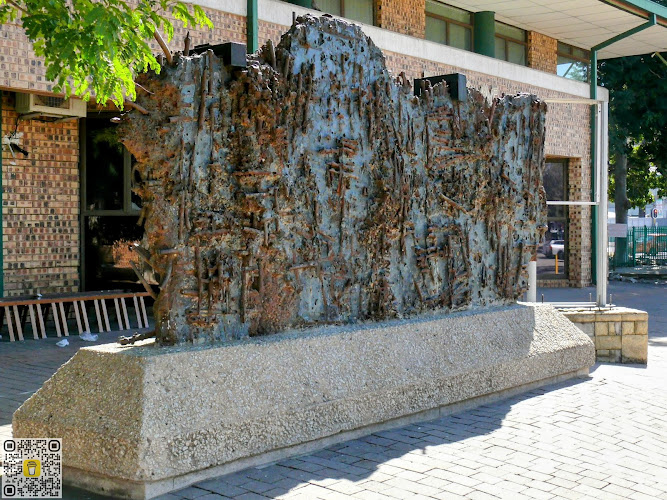
Polokwane Art Museum
Jack botes park
Laddanna Community Park
Find Accommodations Nearby
Recommended Tours & Activities
Visitor Reviews
There are no reviews yet. Be the first one to write one.
Share Your Experience
Have you visited Hugh Exton Photographic Museum? Help other travelers by leaving a review.