
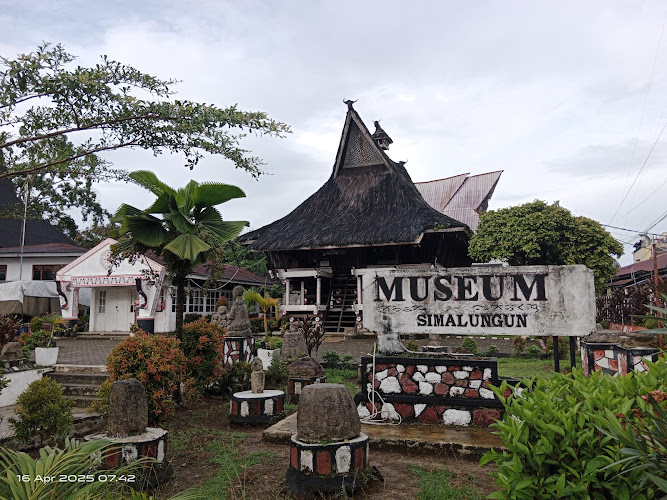
Simalungun Museum
About Simalungun Museum
Description
The Simalungun Museum in Pematang Siantar is a quiet, steady keeper of local memory and culture. It sits within the pulse of the city and focuses squarely on the Simalungun branch of Batak history and arts. For travelers who like museums that tell stories rather than just display objects, this place often feels like a conversation with the past: slow, patient, and oddly intimate. People who come expecting flash will be mildly disappointed; those who come curious leave with many small revelations about social life, leadership, craft, and ritual in North Sumatra.
The core of the museum is its collections. There are carved wooden artifacts, traditional textiles, ritual objects, and household items that show how Simalungun families lived, worked, and marked major life events. Particularly notable are the displays that relate to raja raja Simalungun — the historical rulers and clan leaders — where regalia and portraits/constructions of authority are arranged so visitors can see power as material culture: weapons, ceremonial crowns, and carved furniture. But it is not only about leaders. There are rich, everyday objects: cooking implements, woven hats, musical instruments. Those everyday pieces often do the best job of making the culture feel real and immediate.
Another attraction is the collection of naskah kuno and written material. The manuscripts and documents here are not always polished or pristine; many are weathered, sometimes fragile, and that fragility tells a story too. They demonstrate how oral tradition, written records, and colonial-era archives interacted. Scholars will want to linger over the provenance notes; casual visitors will still find the manuscripts atmospheric, like glimpses of conversations that once mattered to whole communities.
Architecturally, the museum does a decent job of reflecting the local aesthetic. Several exhibit spaces display elements reminiscent of rumah adat Simalungun: steep roofs, carved eaves, and decorative patterns that repeat in different media. And although the building is not a reconstructed village, the placement of objects often gives a sense of how they would have been used inside a traditional house. That contextual approach helps visitors imagine daily life rather than just catalog items under glass.
Practicalities matter here, and the museum staff generally keep things straightforward. There are up-to-date labels on many exhibits, though a few pieces still have only minimal captions; for non-Indonesian speakers, the experience can be mixed. Some explanatory texts are translated into English, while others remain in Indonesian. Thus, for independent travelers who do not speak the local language, hiring a local guide or joining a short guided tour (if available on the day) can multiply the value of a visit. Onsite services are provided, and the staff are typically willing to answer questions — sometimes with a smile and a short anecdote about the collection — which is a welcome human touch.
The museum is child-friendly in the sense that exhibits include tangible, visually engaging objects and occasional storytelling elements that feel approachable for younger visitors. Families traveling with kids often find the rhythms of the galleries manageable: rooms are compact rather than cavernous, so the displays can hold a child’s attention without overwhelming them. That said, there are no play areas or interactive digital installations; it remains a largely traditional museum experience.
Accessibility is a mixed bag and worth noting before arrival. The museum does not offer a wheelchair accessible entrance or a wheelchair-accessible parking lot. For visitors with reduced mobility, this reality can make the experience difficult and occasionally frustrating. However, the museum does provide a restroom and basic amenities, which many travelers appreciate after a morning on the road. There is no on-site restaurant, so plan ahead: bring water and snacks, or have a meal before or after the visit in the city.
Visitors will notice a range of conservation conditions. Some objects are displayed in controlled cases and look well-cared-for; other pieces show signs of aging or previous display methods. That unevenness is both a practical truth of many regional museums and a reminder that cultural preservation requires ongoing resources. For the curious traveler, this unevenness can be interesting rather than off-putting: it reveals the living nature of local heritage work, often carried out on modest budgets by passionate staff.
What makes the Simalungun Museum stand out is the way it ties material culture to stories. Exhibits often highlight life-cycle rituals, marriage customs, heirloom items passed through generations, and the role of music and symbolism in social life. For instance, a display about wedding trousseaux will show not just textiles but the social logic behind their patterns and the meanings attached to certain motifs. In short, the museum tries to explain why objects mattered, not only how they looked. That approach rewards visitors who slow down and read labels or ask questions.
And a quick aside: the atmosphere inside can feel almost like visiting a respected relative’s home — respectfully quiet, sometimes a little formal, always oriented toward memory. It is easy to lose a few hours if one likes to read and ponder. Photographers will find many richly textured subjects — carved wood grain, colorful fabrics, old paper — though it is wise to check the museum’s photography rules at the entrance; policies vary by gallery and artifact sensitivity.
For travelers planning broader North Sumatra explorations, the museum offers a concentrated cultural primer. It complements visits to nearby sites and to the larger Batak cultural sphere, including Lake Toba and other regional attractions. Many visitors choose to see the museum early in their itinerary to gain historical and cultural context that sharpens the appreciation of other destinations. This strategy works well: learning about Simalungun social structures and symbolism before encountering villages or regional ceremonies makes those experiences richer.
Finally, the museum’s reputation among locals is generally positive: it is seen as a guardian of heritage and an educational resource. International visitors often leave impressed by the scope of the collection and the way objects are curated to tell human stories. At the same time, some expect a more polished, multilingual, or interactive experience and find the museum modest by international museum-standards. That tension — between quiet depth and limited infrastructure — is part of its character. In other words, if a traveler arrives expecting authenticity over spectacle, the Simalungun Museum will likely hit the mark.
In summary, the Simalungun Museum is a thoughtful stop for those who wish to understand Simalungun and Batak cultural history through objects, manuscripts, and household material culture. It combines meaningful collections with a human-scale presentation; it is honest about its limitations; and it rewards visitors who come prepared to read, reflect, and ask questions. For many travelers to Pematang Siantar and North Sumatra, it becomes one of those understated highlights that deepen the whole trip.
Key Features
More Details
Updated August 29, 2025
Table of Contents
Description
The Simalungun Museum in Pematang Siantar is a quiet, steady keeper of local memory and culture. It sits within the pulse of the city and focuses squarely on the Simalungun branch of Batak history and arts. For travelers who like museums that tell stories rather than just display objects, this place often feels like a conversation with the past: slow, patient, and oddly intimate. People who come expecting flash will be mildly disappointed; those who come curious leave with many small revelations about social life, leadership, craft, and ritual in North Sumatra.
The core of the museum is its collections. There are carved wooden artifacts, traditional textiles, ritual objects, and household items that show how Simalungun families lived, worked, and marked major life events. Particularly notable are the displays that relate to raja raja Simalungun — the historical rulers and clan leaders — where regalia and portraits/constructions of authority are arranged so visitors can see power as material culture: weapons, ceremonial crowns, and carved furniture. But it is not only about leaders. There are rich, everyday objects: cooking implements, woven hats, musical instruments. Those everyday pieces often do the best job of making the culture feel real and immediate.
Another attraction is the collection of naskah kuno and written material. The manuscripts and documents here are not always polished or pristine; many are weathered, sometimes fragile, and that fragility tells a story too. They demonstrate how oral tradition, written records, and colonial-era archives interacted. Scholars will want to linger over the provenance notes; casual visitors will still find the manuscripts atmospheric, like glimpses of conversations that once mattered to whole communities.
Architecturally, the museum does a decent job of reflecting the local aesthetic. Several exhibit spaces display elements reminiscent of rumah adat Simalungun: steep roofs, carved eaves, and decorative patterns that repeat in different media. And although the building is not a reconstructed village, the placement of objects often gives a sense of how they would have been used inside a traditional house. That contextual approach helps visitors imagine daily life rather than just catalog items under glass.
Practicalities matter here, and the museum staff generally keep things straightforward. There are up-to-date labels on many exhibits, though a few pieces still have only minimal captions; for non-Indonesian speakers, the experience can be mixed. Some explanatory texts are translated into English, while others remain in Indonesian. Thus, for independent travelers who do not speak the local language, hiring a local guide or joining a short guided tour (if available on the day) can multiply the value of a visit. Onsite services are provided, and the staff are typically willing to answer questions — sometimes with a smile and a short anecdote about the collection — which is a welcome human touch.
The museum is child-friendly in the sense that exhibits include tangible, visually engaging objects and occasional storytelling elements that feel approachable for younger visitors. Families traveling with kids often find the rhythms of the galleries manageable: rooms are compact rather than cavernous, so the displays can hold a child’s attention without overwhelming them. That said, there are no play areas or interactive digital installations; it remains a largely traditional museum experience.
Accessibility is a mixed bag and worth noting before arrival. The museum does not offer a wheelchair accessible entrance or a wheelchair-accessible parking lot. For visitors with reduced mobility, this reality can make the experience difficult and occasionally frustrating. However, the museum does provide a restroom and basic amenities, which many travelers appreciate after a morning on the road. There is no on-site restaurant, so plan ahead: bring water and snacks, or have a meal before or after the visit in the city.
Visitors will notice a range of conservation conditions. Some objects are displayed in controlled cases and look well-cared-for; other pieces show signs of aging or previous display methods. That unevenness is both a practical truth of many regional museums and a reminder that cultural preservation requires ongoing resources. For the curious traveler, this unevenness can be interesting rather than off-putting: it reveals the living nature of local heritage work, often carried out on modest budgets by passionate staff.
What makes the Simalungun Museum stand out is the way it ties material culture to stories. Exhibits often highlight life-cycle rituals, marriage customs, heirloom items passed through generations, and the role of music and symbolism in social life. For instance, a display about wedding trousseaux will show not just textiles but the social logic behind their patterns and the meanings attached to certain motifs. In short, the museum tries to explain why objects mattered, not only how they looked. That approach rewards visitors who slow down and read labels or ask questions.
And a quick aside: the atmosphere inside can feel almost like visiting a respected relative’s home — respectfully quiet, sometimes a little formal, always oriented toward memory. It is easy to lose a few hours if one likes to read and ponder. Photographers will find many richly textured subjects — carved wood grain, colorful fabrics, old paper — though it is wise to check the museum’s photography rules at the entrance; policies vary by gallery and artifact sensitivity.
For travelers planning broader North Sumatra explorations, the museum offers a concentrated cultural primer. It complements visits to nearby sites and to the larger Batak cultural sphere, including Lake Toba and other regional attractions. Many visitors choose to see the museum early in their itinerary to gain historical and cultural context that sharpens the appreciation of other destinations. This strategy works well: learning about Simalungun social structures and symbolism before encountering villages or regional ceremonies makes those experiences richer.
Finally, the museum’s reputation among locals is generally positive: it is seen as a guardian of heritage and an educational resource. International visitors often leave impressed by the scope of the collection and the way objects are curated to tell human stories. At the same time, some expect a more polished, multilingual, or interactive experience and find the museum modest by international museum-standards. That tension — between quiet depth and limited infrastructure — is part of its character. In other words, if a traveler arrives expecting authenticity over spectacle, the Simalungun Museum will likely hit the mark.
In summary, the Simalungun Museum is a thoughtful stop for those who wish to understand Simalungun and Batak cultural history through objects, manuscripts, and household material culture. It combines meaningful collections with a human-scale presentation; it is honest about its limitations; and it rewards visitors who come prepared to read, reflect, and ask questions. For many travelers to Pematang Siantar and North Sumatra, it becomes one of those understated highlights that deepen the whole trip.
Key Highlights
Simalungun Museum
Location
Places to Stay Near Simalungun Museum
Find and Book a Tour
Explore More Travel Guides
No reviews found! Be the first to review!
Traveler Reviews for Simalungun Museum
There are no reviews yet. Be the first one to write one.
Have you visited Simalungun Museum? Help other travelers by sharing your review.
You Might Also Like

Siantar Waterpark

Indah Sipinggan Beach
Find Accommodations Nearby
Recommended Tours & Activities
Visitor Reviews
There are no reviews yet. Be the first one to write one.
Share Your Experience
Have you visited Simalungun Museum? Help other travelers by leaving a review.