
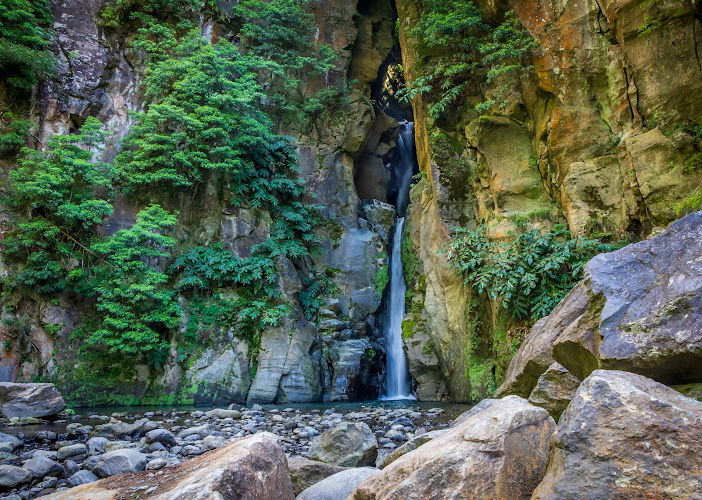
Salto do Cabrito
About Salto do Cabrito
Description
I’ll be straight with you: Salto do Cabrito is not that easy-breezy waterfall you might expect to stumble across in the Azores—this one makes you work for it. Tucked away in the rugged countryside close to Ribeira Grande on São Miguel island, this spot is for folks who want a little pulse-raising excitement along with their natural beauty. Your journey doesn’t begin with a gentle stroll; instead, you get steep steps, some industrial water pipes alongside you, muddy tracks after the rains, and just enough ‘should I go back?’ moments to feel like you’re on an adventure with a capital A.
Is it all worth it? Oh, absolutely. I’m still telling stories of the first time I hiked down into that ravine and emerged, panting, to see the 15-meter torrent crashing into its jade pool below, wisps of mist hanging in the air. The power of that water is no joke: it’s noisy, bold, and somehow calming, all at once. Salto do Cabrito might not be Portugal’s biggest waterfall, but it’s got genuine charm and raw appeal. The hike in—the very obstacle course that keeps some away—makes it all the more satisfying for those who see it through. Be ready for lush patches of volcanic forest, wild ferns as tall as your shoulders, and canyon walls that remind you Mother Nature knows how to set a scene.
The spot is popular for canyoning, which means you’ll likely catch sight of thrill-seekers abseiling directly through the cascade, whooping as they drop. But you definitely don’t have to don a wetsuit to enjoy the place. It’s a solid choice for a family day out if your kids are comfortable on their feet, and it’s a memorable hike for anyone with a decent level of physical fitness. If you’re just chasing that perfect waterfall photo or you want a break from the hotter springs and beaches around São Miguel, Salto do Cabrito offers a blast of cool, fresh air and the sort of wild backdrop you’ll be bragging about for ages.
It’s not flawless—accessibility is poor, and in the rain, things get slippery—but there aren’t many places in the Azores that wrap up volcanic drama, engineering oddities, and valley silence quite like this. Salto do Cabrito manages to be tough, fun, and unforgettable all at once—if you’re game, of course.
Key Features
- Dramatic Waterfall: The star of the show is a roughly 15-meter waterfall located in a rugged volcanic canyon, roaring after rainy days and sparkling in the sunlight.
- Challenging Hike: The route includes steep steps, metal walkways, and some old pipes, making it a mini-adventure rather than a casual stroll. The challenge is part of the fun, but don’t say I didn’t warn you.
- Canyoning Hotspot: Salto do Cabrito is hailed as one of the top canyoning destinations on São Miguel. Several local tours offer guided abseils and jumps for those seeking a more extreme experience.
- Lush Volcanic Surroundings: The area features dense greenery, mossy rocks, ferns, and dramatic volcanic formations—you’ll feel like you tumbled into a real-life Jurassic Park minus the actual dinosaurs.
- Thermal Springs Nearby: The trail runs close to hot spring areas—sometimes you can even catch the scent of sulfur and see steaming vents along the route, a not-so-subtle reminder that São Miguel sits atop volcanic heat.
- Great for Families (with a catch): The waterfall is good for kids who can handle some physical activity. The hike has kid-friendly parts, but it's not stroller-friendly (not even close).
- Raw, Unfiltered Azorean Nature: If you want pristine beauty without the crowds of Sete Cidades or Lagoa do Fogo, Salto do Cabrito is your jam. On busy summer afternoons, you’ll share the place, but early morning or off-peak afternoons can feel surprisingly peaceful.
- Photographer’s Playground: Mist, light, cascading water, and wild-green backdrops make this an outstanding spot for photography, especially if you’re willing to play with angles along the pipes or from below the falls.
Best Time to Visit
I’ll be up front—the Azores weather is fickle. One minute you’re in the sun, the next you’re ducking a shower—but that’s part of São Miguel’s charm. The best time to plan your Salto do Cabrito adventure? Late spring (May to June) or early autumn (September to early October) is the golden window. You’ll get lush greenery after the winter/spring rains, the waterfall in fine voice, but you’re less likely to get swamped by summertime tour groups.
Summer days (July-August) are typically busiest, but not unbearably crowded like other Portuguese hot spots. Shoulder hours—early mornings or after mid-afternoon—give you your best shot at some peace. Avoid days of very heavy rain, if you can, as the trail becomes a muddy slip-and-slide and the pipes are no friend in a downpour. If you’re visiting for canyoning or a guided adventure, tours run almost year-round but do check in advance for water level updates. There’s nothing more frustrating than turning up only to find the canyoning route is closed due to fast water!
Oh, and don’t let a little drizzle stop you—the scene with mist swirling over the falls is pure movie magic. Just pack a poncho and sturdy boots.
How to Get There
Getting to Salto do Cabrito feels like a small adventure itself, and that’s part of the reward. The waterfall sits inland from Ribeira Grande, sort of between the north shore’s wild Atlantic and the geothermal heart of São Miguel. You’re looking at a 20-minute (give or take) drive from Ponta Delgada, and frankly, having your own rental car is by far the easiest option.
Head east from Ponta Delgada along the EN1-1A road, aiming for Ribeira Grande, and then follow the signs toward Caldeira Velha. Eventually, you’ll hit the (surprisingly bumpy) municipal road branching off toward Salto do Cabrito. Parking is in a small lot near some visible hydroelectric plant machinery—a leftover from the island’s experiment in green energy way back when. Don’t panic, you’re not lost, that’s the real starting point. There are no buses that serve the trailhead directly, and while you could cycle part of the way, the steep inclines will have your calves singing.
Some organized tours (especially canyoning adventures) offer pickup and drop-off right from your accommodation, which is a fantastic option if you’re nervous about Azorean roads or the messier weather. Taxis from Ponta Delgada are possible but can be pricey. Frankly, if you can drive, do—the freedom lets you explore other spots nearby like the Caldeira Velha hot springs or even Lagoa do Fogo the same day.
Tips for Visiting
- Don’t Underestimate the Hike: The trail is short but can be physically demanding—expect steep steps and tricky footing if it’s wet. Trainers or proper hiking boots are a must. Flip-flops are your enemy here.
- Bring Water and Snacks: There’s nowhere to buy food or drinks on the trail, and the effort works up a thirst. A refillable water bottle comes in handy, especially on warmer days.
- Packing for the Elements: São Miguel is known for sudden, dramatic weather changes. Always bring a rain jacket or poncho, even if the skies are clear when you set out. Sunscreen is a good idea, too—the UV index sneaks up on you in the Azores.
- Watch Your Step on the Metal Walkways: The pipes and catwalks can get slick when wet. Use the rails, and don’t rush. I learned this the hard way with a slip that almost became the story of my trip. Take your time and enjoy the view—it’s not a race.
- Consider a Guided Canyoning Experience: If you’re up for a thrill and don’t mind getting soaked, look for local guides offering canyoning tours. They provide all the equipment (wetsuits, helmets, ropes) and make sure everyone stays safe.
- Timing is Everything: Early morning or late afternoon usually means fewer people, better light for photos, and a more peaceful experience. Plus, early hikers often spot songbirds and wildflowers before the area wakes up.
- No Wheelchair Access: Accessibility is, honestly, poor. The trail has stairs, uneven ground, and narrow walkways. Those with limited mobility won’t find it friendly—just want to set expectations.
- Noise and Nature: The area was once home to a hydroelectric plant, so you may hear humming machinery if the plant is operating. It doesn’t ruin the tranquility, but if you’re dreaming of total silence, you might prefer this as a quick stop rather than a long meditation session.
- Take All Rubbish Back: There are no bins on the trail, and the ecosystem is delicate. Please leave no trace. It’s a small act but makes a big impact.
- Explore Around: If you have time, combine your visit with the steaming Caldeira Velha hot springs or drive up to Lagoa do Fogo for big panoramic views—Salto do Cabrito is a fun part of a fuller São Miguel day trip.
If there’s one thing my time in the Azores taught me, it’s that the wildest memories don’t come from the easiest attractions. Salto do Cabrito keeps a bit of its magic behind muddy tracks and metallic pipes, and for me, that’s what makes it worth every step. Step out of your comfort zone (and maybe into a little mud), and you’ll walk away with a true story to tell.
Key Features
- Powerful waterfall set in a steep, verdant gorge
- Historic hydro/irrigation infrastructure and visible pipes along the trail
- Varied hiking trail with steps, stream crossings and a dramatic bridge
- Lush native vegetation and good opportunities for birdwatching and photography
- Relatively close to Ribeira Grande and Ponta Delgada yet feels remote
More Details
Updated September 16, 2025
Table of Contents
Description
I’ll be straight with you: Salto do Cabrito is not that easy-breezy waterfall you might expect to stumble across in the Azores—this one makes you work for it. Tucked away in the rugged countryside close to Ribeira Grande on São Miguel island, this spot is for folks who want a little pulse-raising excitement along with their natural beauty. Your journey doesn’t begin with a gentle stroll; instead, you get steep steps, some industrial water pipes alongside you, muddy tracks after the rains, and just enough ‘should I go back?’ moments to feel like you’re on an adventure with a capital A.
Is it all worth it? Oh, absolutely. I’m still telling stories of the first time I hiked down into that ravine and emerged, panting, to see the 15-meter torrent crashing into its jade pool below, wisps of mist hanging in the air. The power of that water is no joke: it’s noisy, bold, and somehow calming, all at once. Salto do Cabrito might not be Portugal’s biggest waterfall, but it’s got genuine charm and raw appeal. The hike in—the very obstacle course that keeps some away—makes it all the more satisfying for those who see it through. Be ready for lush patches of volcanic forest, wild ferns as tall as your shoulders, and canyon walls that remind you Mother Nature knows how to set a scene.
The spot is popular for canyoning, which means you’ll likely catch sight of thrill-seekers abseiling directly through the cascade, whooping as they drop. But you definitely don’t have to don a wetsuit to enjoy the place. It’s a solid choice for a family day out if your kids are comfortable on their feet, and it’s a memorable hike for anyone with a decent level of physical fitness. If you’re just chasing that perfect waterfall photo or you want a break from the hotter springs and beaches around São Miguel, Salto do Cabrito offers a blast of cool, fresh air and the sort of wild backdrop you’ll be bragging about for ages.
It’s not flawless—accessibility is poor, and in the rain, things get slippery—but there aren’t many places in the Azores that wrap up volcanic drama, engineering oddities, and valley silence quite like this. Salto do Cabrito manages to be tough, fun, and unforgettable all at once—if you’re game, of course.
Key Features
- Dramatic Waterfall: The star of the show is a roughly 15-meter waterfall located in a rugged volcanic canyon, roaring after rainy days and sparkling in the sunlight.
- Challenging Hike: The route includes steep steps, metal walkways, and some old pipes, making it a mini-adventure rather than a casual stroll. The challenge is part of the fun, but don’t say I didn’t warn you.
- Canyoning Hotspot: Salto do Cabrito is hailed as one of the top canyoning destinations on São Miguel. Several local tours offer guided abseils and jumps for those seeking a more extreme experience.
- Lush Volcanic Surroundings: The area features dense greenery, mossy rocks, ferns, and dramatic volcanic formations—you’ll feel like you tumbled into a real-life Jurassic Park minus the actual dinosaurs.
- Thermal Springs Nearby: The trail runs close to hot spring areas—sometimes you can even catch the scent of sulfur and see steaming vents along the route, a not-so-subtle reminder that São Miguel sits atop volcanic heat.
- Great for Families (with a catch): The waterfall is good for kids who can handle some physical activity. The hike has kid-friendly parts, but it’s not stroller-friendly (not even close).
- Raw, Unfiltered Azorean Nature: If you want pristine beauty without the crowds of Sete Cidades or Lagoa do Fogo, Salto do Cabrito is your jam. On busy summer afternoons, you’ll share the place, but early morning or off-peak afternoons can feel surprisingly peaceful.
- Photographer’s Playground: Mist, light, cascading water, and wild-green backdrops make this an outstanding spot for photography, especially if you’re willing to play with angles along the pipes or from below the falls.
Best Time to Visit
I’ll be up front—the Azores weather is fickle. One minute you’re in the sun, the next you’re ducking a shower—but that’s part of São Miguel’s charm. The best time to plan your Salto do Cabrito adventure? Late spring (May to June) or early autumn (September to early October) is the golden window. You’ll get lush greenery after the winter/spring rains, the waterfall in fine voice, but you’re less likely to get swamped by summertime tour groups.
Summer days (July-August) are typically busiest, but not unbearably crowded like other Portuguese hot spots. Shoulder hours—early mornings or after mid-afternoon—give you your best shot at some peace. Avoid days of very heavy rain, if you can, as the trail becomes a muddy slip-and-slide and the pipes are no friend in a downpour. If you’re visiting for canyoning or a guided adventure, tours run almost year-round but do check in advance for water level updates. There’s nothing more frustrating than turning up only to find the canyoning route is closed due to fast water!
Oh, and don’t let a little drizzle stop you—the scene with mist swirling over the falls is pure movie magic. Just pack a poncho and sturdy boots.
How to Get There
Getting to Salto do Cabrito feels like a small adventure itself, and that’s part of the reward. The waterfall sits inland from Ribeira Grande, sort of between the north shore’s wild Atlantic and the geothermal heart of São Miguel. You’re looking at a 20-minute (give or take) drive from Ponta Delgada, and frankly, having your own rental car is by far the easiest option.
Head east from Ponta Delgada along the EN1-1A road, aiming for Ribeira Grande, and then follow the signs toward Caldeira Velha. Eventually, you’ll hit the (surprisingly bumpy) municipal road branching off toward Salto do Cabrito. Parking is in a small lot near some visible hydroelectric plant machinery—a leftover from the island’s experiment in green energy way back when. Don’t panic, you’re not lost, that’s the real starting point. There are no buses that serve the trailhead directly, and while you could cycle part of the way, the steep inclines will have your calves singing.
Some organized tours (especially canyoning adventures) offer pickup and drop-off right from your accommodation, which is a fantastic option if you’re nervous about Azorean roads or the messier weather. Taxis from Ponta Delgada are possible but can be pricey. Frankly, if you can drive, do—the freedom lets you explore other spots nearby like the Caldeira Velha hot springs or even Lagoa do Fogo the same day.
Tips for Visiting
- Don’t Underestimate the Hike: The trail is short but can be physically demanding—expect steep steps and tricky footing if it’s wet. Trainers or proper hiking boots are a must. Flip-flops are your enemy here.
- Bring Water and Snacks: There’s nowhere to buy food or drinks on the trail, and the effort works up a thirst. A refillable water bottle comes in handy, especially on warmer days.
- Packing for the Elements: São Miguel is known for sudden, dramatic weather changes. Always bring a rain jacket or poncho, even if the skies are clear when you set out. Sunscreen is a good idea, too—the UV index sneaks up on you in the Azores.
- Watch Your Step on the Metal Walkways: The pipes and catwalks can get slick when wet. Use the rails, and don’t rush. I learned this the hard way with a slip that almost became the story of my trip. Take your time and enjoy the view—it’s not a race.
- Consider a Guided Canyoning Experience: If you’re up for a thrill and don’t mind getting soaked, look for local guides offering canyoning tours. They provide all the equipment (wetsuits, helmets, ropes) and make sure everyone stays safe.
- Timing is Everything: Early morning or late afternoon usually means fewer people, better light for photos, and a more peaceful experience. Plus, early hikers often spot songbirds and wildflowers before the area wakes up.
- No Wheelchair Access: Accessibility is, honestly, poor. The trail has stairs, uneven ground, and narrow walkways. Those with limited mobility won’t find it friendly—just want to set expectations.
- Noise and Nature: The area was once home to a hydroelectric plant, so you may hear humming machinery if the plant is operating. It doesn’t ruin the tranquility, but if you’re dreaming of total silence, you might prefer this as a quick stop rather than a long meditation session.
- Take All Rubbish Back: There are no bins on the trail, and the ecosystem is delicate. Please leave no trace. It’s a small act but makes a big impact.
- Explore Around: If you have time, combine your visit with the steaming Caldeira Velha hot springs or drive up to Lagoa do Fogo for big panoramic views—Salto do Cabrito is a fun part of a fuller São Miguel day trip.
If there’s one thing my time in the Azores taught me, it’s that the wildest memories don’t come from the easiest attractions. Salto do Cabrito keeps a bit of its magic behind muddy tracks and metallic pipes, and for me, that’s what makes it worth every step. Step out of your comfort zone (and maybe into a little mud), and you’ll walk away with a true story to tell.
Key Highlights
- Powerful waterfall set in a steep, verdant gorge
- Historic hydro/irrigation infrastructure and visible pipes along the trail
- Varied hiking trail with steps, stream crossings and a dramatic bridge
- Lush native vegetation and good opportunities for birdwatching and photography
- Relatively close to Ribeira Grande and Ponta Delgada yet feels remote
Location
Places to Stay Near Salto do Cabrito
Find and Book a Tour
Explore More Travel Guides
No reviews found! Be the first to review!
Traveler Reviews for Salto do Cabrito
There are no reviews yet. Be the first one to write one.
Have you visited Salto do Cabrito? Help other travelers by sharing your review.
Nearby Attractions
You Might Also Like

Azorean Active Blueberry

Futurismo Azores Adventures

Igreja do Colégio dos Jesuítas
Find Accommodations Nearby
Recommended Tours & Activities
Visitor Reviews
There are no reviews yet. Be the first one to write one.
Share Your Experience
Have you visited Salto do Cabrito? Help other travelers by leaving a review.