
Sabadell Art Museum
About Sabadell Art Museum
Description
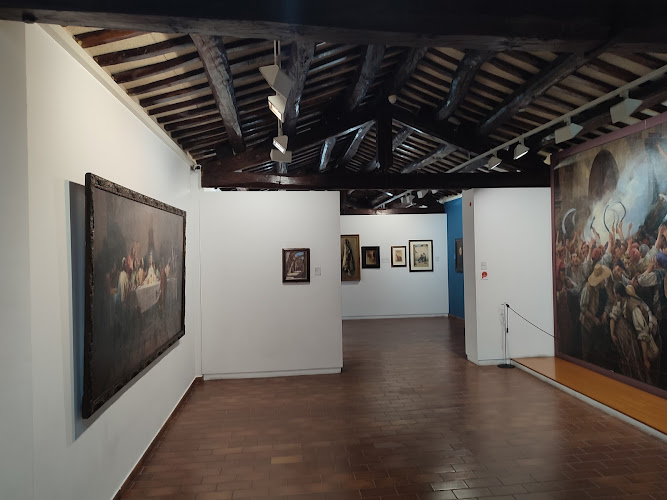
The Sabadell Art Museum presents itself as a quietly memorable stop for travelers who care about the story behind the canvas. Housed in a vintage space, the museum traces artistic currents from the late 19th century through much of the 20th century, with an emphasis on local artists and the international figures who influenced them. It is not a mega-museum with slick corporate signage; rather, it feels like a neighborhood institution that took the time to collect, preserve and show the visual pulse of a city shaped by industry, ambition and quiet pride.
Visitors will notice immediately that the collection favors works that speak to place — landscapes, portraiture, scenes of everyday life — and that many of the pieces were created by artists who lived and worked in the region. The museum does a good job of linking art to Sabadell’s broader history: the textile mills, the industrial boom, the social changes that came with modernization. If one is interested in how art reflects economic and social transformation, the exhibits here are unexpectedly rich. There are paintings that nodded to Catalan artistic movements, plus works that show traces of wider European trends. That balance makes the Sabadell Art Museum a great stop for travelers who want to connect Catalonia’s cultural threads to the art of Spain and beyond.
The building itself contributes to the experience. It keeps a vintage, slightly worn charm — the kind of place where wooden floors creak just enough to remind you that these rooms have a past. Lighting is used thoughtfully in many galleries, often highlighting texture and brushwork in ways that reward close looking. The museum’s curatorial voice tends to be conversational rather than officious: labels are clear, timelines are present when helpful, and temporary exhibitions are curated to complement the permanent holdings. This is not the kind of museum where visitors are rushed; people linger. Which is good, because some of the smaller sketches and lesser-known artists here repay a slow, curious gaze.
One of the museum’s strengths is contextualization. Exhibits frequently explore the interplay between local culture and broader artistic influences, so a visitor who knows a little about Catalan modernism or the late 19th-century European art scene will find satisfying cross-references. But even without prior knowledge, the stories are accessible. Panels and short essays often explain how a particular artist responded to Sabadell’s industrial growth or how artistic networks connected this city with Barcelona and other European centers. The narrative approach helps the collection feel alive, not simply a repository of objects.
Families and casual travelers take note: the museum is considered good for kids. There are approachable works — vivid scenes, accessible subject matter, and galleries that don’t feel intimidating. Programs aimed at younger visitors sometimes accompany temporary shows, and the friendly staff are usually willing to point out pieces that capture attention quickly. That said, parents should plan for a relaxed pace; this is a place meant to be enjoyed slowly, not rushed through in the name of ticking boxes on a sightseeing list.
Accessibility is handled in a respectful, straightforward way. The entrance is wheelchair accessible, and there are wheelchair-accessible restroom facilities within the building. While parking directly linked to the museum is not available, the central location of the museum within the city makes it relatively easy to reach by public transport or a short walk from nearby lots. Restrooms are available on site, though there isn’t a restaurant; visitors who want a longer, café-style break will find nearby options in town. These practical details matter when travel days are long, and the museum’s quietly practical approach to amenities is appreciated by those who plan ahead.
What surprises many first-time visitors is the intimacy of certain rooms. Some galleries are small, almost like private salons, and the close quarters create an immediacy that larger museums sometimes lack. Intimacy can be a double-edged sword: on busy days the rooms can feel crowded, but on a lucky weekday — or early morning visit — the experience is almost meditative. The museum often stages rotating exhibitions alongside its permanent collection, and those temporary shows can highlight unknown gems: works on paper, regional photographers, or thematic displays that tie art to local social history. Expect variety, and expect a curatorial curiosity that leans toward depth rather than flash.
For travelers who enjoy connecting dots, the museum quietly rewards investigation. For example, the way certain paintings reference textile patterns or industrial motifs can be fascinating once the link is noticed. Sabadell’s past as a center of textile production seeps into the art on display, not always overtly but often in texture, color choices, and subject matter. The museum serves as a cultural bridge between the city’s industrial heritage and its artistic community. That interplay makes it more than a house of pretty pictures; it becomes a historical lens.
The tone of the museum is deliberate and humane. Staffers tend to be approachable and not overly formal. The explanatory materials are written to be readable — which means not filled with academic jargon for the sake of it. This approach is a blessing for independent travelers who are curious but not necessarily art-historians. Occasionally, signage may be primarily in Catalan or Spanish; English translations are often available but sometimes concise. Travelers who know just a few words of Spanish or Catalan will get an extra layer of enjoyment, though it is by no means required.
One of the more underrated perks: photo opportunities. Not the kind where flash is allowed in galleries (it typically isn’t), but rather the sort of framing where architecture and artwork combine for memorable snapshots. The museum’s quieter corners and vintage rooms make it feel like a place where a good travel photo can be taken without the tourist-trap feel. If a visitor cares about sharing moments on social media, this museum offers tasteful visuals that speak to authenticity rather than spectacle.
Practical-minded travelers will appreciate that the Sabadell Art Museum is well integrated into a visitor’s broader itinerary. It pairs naturally with walks through the historic center, visits to local monuments, or explorations of the region’s industrial heritage sites. For a day in Sabadell, the art museum is a point of cultural gravity — a place to pause, learn, and recalibrate after bustling markets or long train rides. It is a sweet spot in the travel flow: long enough to be satisfying, small enough to keep the rest of the day flexible.
That said, the museum is not perfect. There are times when signage could be clearer and when temporary exhibitions feel a bit niche for general tourists. But those are quibbles in comparison to the strengths: solid curatorial choices, a focus on local narratives, and a welcoming atmosphere. In short, the Sabadell Art Museum will likely appeal to travelers who value authenticity, depth, and a sense of place. For those who collect museum memories that tell stories about cities rather than just show famous names, this place is a quietly rewarding stop.
And yes, the guide confesses a small, personal bias: there is comfort in museums that feel like they belong to their city. The Sabadell Art Museum carries that belonging well. It never tries too hard to impress with scale or blockbuster marketing. Instead, it invites you to look closely, to notice the small brushstrokes that reveal a larger social history. For travelers who like museums that teach without preaching, that stitch local narratives into visual art, and that provide time to breathe between galleries, the Sabadell Art Museum is a meaningful and memorable detour from the usual tourist flow.
To sum up without being boring: this is a museum for inquisitive travelers. It rewards those who linger, who ask questions, who are curious about Catalonia beyond the obvious postcards. It blends art and history into something quietly compelling, and it does it with a kind of no-nonsense warmth. Visitors leave with an improved sense of Sabadell’s artistic identity and, often, a small favorite painting that keeps surfacing in travel memories later on. That, in the end, is what counts.
Key Features
More Details
Updated August 30, 2025
Table of Contents
Description
The Sabadell Art Museum presents itself as a quietly memorable stop for travelers who care about the story behind the canvas. Housed in a vintage space, the museum traces artistic currents from the late 19th century through much of the 20th century, with an emphasis on local artists and the international figures who influenced them. It is not a mega-museum with slick corporate signage; rather, it feels like a neighborhood institution that took the time to collect, preserve and show the visual pulse of a city shaped by industry, ambition and quiet pride.
Visitors will notice immediately that the collection favors works that speak to place — landscapes, portraiture, scenes of everyday life — and that many of the pieces were created by artists who lived and worked in the region. The museum does a good job of linking art to Sabadell’s broader history: the textile mills, the industrial boom, the social changes that came with modernization. If one is interested in how art reflects economic and social transformation, the exhibits here are unexpectedly rich. There are paintings that nodded to Catalan artistic movements, plus works that show traces of wider European trends. That balance makes the Sabadell Art Museum a great stop for travelers who want to connect Catalonia’s cultural threads to the art of Spain and beyond.
The building itself contributes to the experience. It keeps a vintage, slightly worn charm — the kind of place where wooden floors creak just enough to remind you that these rooms have a past. Lighting is used thoughtfully in many galleries, often highlighting texture and brushwork in ways that reward close looking. The museum’s curatorial voice tends to be conversational rather than officious: labels are clear, timelines are present when helpful, and temporary exhibitions are curated to complement the permanent holdings. This is not the kind of museum where visitors are rushed; people linger. Which is good, because some of the smaller sketches and lesser-known artists here repay a slow, curious gaze.
One of the museum’s strengths is contextualization. Exhibits frequently explore the interplay between local culture and broader artistic influences, so a visitor who knows a little about Catalan modernism or the late 19th-century European art scene will find satisfying cross-references. But even without prior knowledge, the stories are accessible. Panels and short essays often explain how a particular artist responded to Sabadell’s industrial growth or how artistic networks connected this city with Barcelona and other European centers. The narrative approach helps the collection feel alive, not simply a repository of objects.
Families and casual travelers take note: the museum is considered good for kids. There are approachable works — vivid scenes, accessible subject matter, and galleries that don’t feel intimidating. Programs aimed at younger visitors sometimes accompany temporary shows, and the friendly staff are usually willing to point out pieces that capture attention quickly. That said, parents should plan for a relaxed pace; this is a place meant to be enjoyed slowly, not rushed through in the name of ticking boxes on a sightseeing list.
Accessibility is handled in a respectful, straightforward way. The entrance is wheelchair accessible, and there are wheelchair-accessible restroom facilities within the building. While parking directly linked to the museum is not available, the central location of the museum within the city makes it relatively easy to reach by public transport or a short walk from nearby lots. Restrooms are available on site, though there isn’t a restaurant; visitors who want a longer, café-style break will find nearby options in town. These practical details matter when travel days are long, and the museum’s quietly practical approach to amenities is appreciated by those who plan ahead.
What surprises many first-time visitors is the intimacy of certain rooms. Some galleries are small, almost like private salons, and the close quarters create an immediacy that larger museums sometimes lack. Intimacy can be a double-edged sword: on busy days the rooms can feel crowded, but on a lucky weekday — or early morning visit — the experience is almost meditative. The museum often stages rotating exhibitions alongside its permanent collection, and those temporary shows can highlight unknown gems: works on paper, regional photographers, or thematic displays that tie art to local social history. Expect variety, and expect a curatorial curiosity that leans toward depth rather than flash.
For travelers who enjoy connecting dots, the museum quietly rewards investigation. For example, the way certain paintings reference textile patterns or industrial motifs can be fascinating once the link is noticed. Sabadell’s past as a center of textile production seeps into the art on display, not always overtly but often in texture, color choices, and subject matter. The museum serves as a cultural bridge between the city’s industrial heritage and its artistic community. That interplay makes it more than a house of pretty pictures; it becomes a historical lens.
The tone of the museum is deliberate and humane. Staffers tend to be approachable and not overly formal. The explanatory materials are written to be readable — which means not filled with academic jargon for the sake of it. This approach is a blessing for independent travelers who are curious but not necessarily art-historians. Occasionally, signage may be primarily in Catalan or Spanish; English translations are often available but sometimes concise. Travelers who know just a few words of Spanish or Catalan will get an extra layer of enjoyment, though it is by no means required.
One of the more underrated perks: photo opportunities. Not the kind where flash is allowed in galleries (it typically isn’t), but rather the sort of framing where architecture and artwork combine for memorable snapshots. The museum’s quieter corners and vintage rooms make it feel like a place where a good travel photo can be taken without the tourist-trap feel. If a visitor cares about sharing moments on social media, this museum offers tasteful visuals that speak to authenticity rather than spectacle.
Practical-minded travelers will appreciate that the Sabadell Art Museum is well integrated into a visitor’s broader itinerary. It pairs naturally with walks through the historic center, visits to local monuments, or explorations of the region’s industrial heritage sites. For a day in Sabadell, the art museum is a point of cultural gravity — a place to pause, learn, and recalibrate after bustling markets or long train rides. It is a sweet spot in the travel flow: long enough to be satisfying, small enough to keep the rest of the day flexible.
That said, the museum is not perfect. There are times when signage could be clearer and when temporary exhibitions feel a bit niche for general tourists. But those are quibbles in comparison to the strengths: solid curatorial choices, a focus on local narratives, and a welcoming atmosphere. In short, the Sabadell Art Museum will likely appeal to travelers who value authenticity, depth, and a sense of place. For those who collect museum memories that tell stories about cities rather than just show famous names, this place is a quietly rewarding stop.
And yes, the guide confesses a small, personal bias: there is comfort in museums that feel like they belong to their city. The Sabadell Art Museum carries that belonging well. It never tries too hard to impress with scale or blockbuster marketing. Instead, it invites you to look closely, to notice the small brushstrokes that reveal a larger social history. For travelers who like museums that teach without preaching, that stitch local narratives into visual art, and that provide time to breathe between galleries, the Sabadell Art Museum is a meaningful and memorable detour from the usual tourist flow.
To sum up without being boring: this is a museum for inquisitive travelers. It rewards those who linger, who ask questions, who are curious about Catalonia beyond the obvious postcards. It blends art and history into something quietly compelling, and it does it with a kind of no-nonsense warmth. Visitors leave with an improved sense of Sabadell’s artistic identity and, often, a small favorite painting that keeps surfacing in travel memories later on. That, in the end, is what counts.
Key Highlights
Sabadell Art Museum
Location
Places to Stay Near Sabadell Art Museum
Find and Book a Tour
Explore More Travel Guides
No reviews found! Be the first to review!
Traveler Reviews for Sabadell Art Museum
There are no reviews yet. Be the first one to write one.
Have you visited Sabadell Art Museum? Help other travelers by sharing your review.
You Might Also Like
Agrupació Astronòmica de Sabadell
Sabadell History Museum
Casa Duran
Find Accommodations Nearby
Recommended Tours & Activities
Visitor Reviews
There are no reviews yet. Be the first one to write one.
Share Your Experience
Have you visited Sabadell Art Museum? Help other travelers by leaving a review.