

Quarteirão Paulista
About Quarteirão Paulista
Description
Quarteirão Paulista is the historic calçadão of the center of Ribeirão Preto, a pedestrian-friendly promenade ringed by one of the most photogenic architectural ensembles in São Paulo state. Locals call it a conjunto harmônico de edifícios monumentais for good reason: Theatro Pedro II, the old Palace Hotel (today the Centro Cultural Palace), and classic commercial buildings like the Edifício Meira Júnior and the Edifício Diederichsen hold court around Praça XV de Novembro. Together they tell the long story of a city that called itself a capital of coffee and later a hub of agribusiness and culture. When people ask why Ribeirão Preto is nicknamed the Brazilian California, part of the answer sits right here—wealth from coffee in the early 20th century funded grand architecture, a taste for modern amenities, and a buoyant urban identity that still lingers in the air.
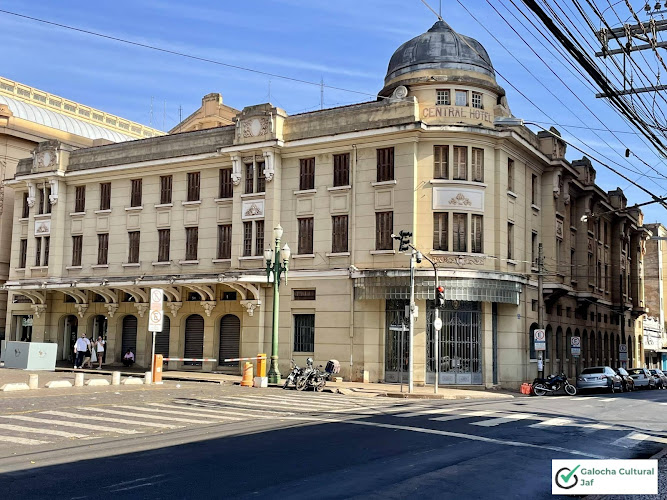
As a calçadão, this promenade is about walking. It is where shoes squeak on stone after a sudden tropical downpour, where friends split a pastel or a coxinha between errands, and where the façade of Theatro Pedro II—elegant, imposing, and yes, a little dramatic—ends up in practically every first-time visitor’s camera roll. Theatro Pedro II itself has a life story: inaugurated during the coffee boom, ravaged by a fire in the 1980s, and painstakingly restored in the 1990s. Today it hosts symphonies, plays, dance, and a stream of touring artists. Right across, the former Palace Hotel (once a byword for luxury, now reborn as Centro Cultural Palace) lends its refined lines and carved details to street-level culture: exhibitions, talks, workshops, and, sometimes, that uncanny feeling of stepping directly into a preserved photograph.
Quarteirão Paulista is also social. Ask a local to meet “by the Pinguim” and there’s no confusion. Choperia Pinguim, a classic with frosty chope and old-school waiters who seem to glide, traces its roots to Cervejaria Paulista. It’s as much ritual as refreshment. Visitors on a budget have plenty of lanchonetes and padarias nearby—snack bars where a ham-and-cheese toasty, freshly squeezed orange juice, and a decent coffee cost surprisingly little compared with Brazil’s big capitals. For families, the promenade’s car-free nature and Praça XV’s broad steps and tall palms make it a straightforward choice: it’s easy to pause, regroup, and find shade. The area is wheelchair-accessible with curb cuts and ramps at the main crossings, and there is wheelchair-accessible parking just off the calçadão on surrounding streets. That said, like most century-old centers, there are patches of uneven pavement—rolling slowly and picking smooth lines makes the stroll nicer.
This writer still remembers the first time stepping into the square on a golden late afternoon—the heat loosening, breeze nudging the jacaranda leaves, a busker’s guitar threading between conversations. Small detail, but it stuck: a teenager taking a graduation photo in front of the theater, proud as can be, and her grandmother pointing up at the restored dome, retelling how the place once went dark and then came back brighter. Quarteirão Paulista lives in those hand-offs between generations: annual book fairs, end-of-year light displays, midweek market chatter. The Feira Nacional do Livro de Ribeirão Preto frequently spills into this area, turning Praça XV de Novembro into a sea of pages and conversation. And during the holidays, decorations and trees add sparkle for night photos that look great even if your phone lens isn’t the latest and greatest.
Architecturally, the mix is eclectic—literally and stylistically. Eclética curves meet Art Deco lines, with stone ornaments, wrought-iron balconies, and grand cornices. For those who enjoy studying façades, the upper stories are where the good stuff hides: rosettes, keystones, and those very Brazilian interpretations of European style that make the city’s postcards so distinctive. Even the commercial signage tends to bow a little to history; around Quarteirão Paulista, retailers and cafés often keep their lettering tidy so as not to fight the buildings’ DNA. That’s not always the case, sure, but more often than not, the conjunto arquitetônico is treated with respect.
Culture and daily life meet here. Weekdays bring energy (and sometimes elbow-to-elbow crowds) as office workers cross the square and shoppers traverse the calçadão. Saturdays are lighter, local families in the morning, café lingerers by noon. Sundays are quiet—some see peace, others see shuttered storefronts—but the promenade maintains its charm, especially for photographers who like uncluttered compositions. Safety-wise, it’s like many Brazilian downtowns: keep your phone close, wear your backpack on the front in thicker crowds, and avoid wandering deep into empty side streets after dark. In return, you’ll get an honest taste of the city’s rhythm, a front-row seat to its theater of everyday moments, and a quick path to many of Ribeirão’s headline sights within a few steps.
Some practical tidbits people often ask: Are tickets needed? Not to walk the Quarteirão Paulista—this is public space. Tickets only apply to events at Theatro Pedro II or exhibitions with special admission at cultural venues. Can you take photos? Outdoors, yes—shoot away. Photography inside theaters and exhibitions depends on each venue and show; generally, no flash, and sometimes no photos during performances at all. Drones are a different story: Brazil requires registration and permissions for drone flights, and flying over crowds or close to heritage façades can get you in trouble. It’s best to keep the drone grounded unless you’ve secured the proper authorizations.
Another common question: Is it easy to cycle here? Approaching by bike is fine, but the calçadão is pedestrian-only. Most cyclists dismount and walk the last block or two. Locking points are near Praça XV de Novembro and on side streets bordering the promenade; a sturdy U-lock and cable combo is the local way to go. Is the food safe? In a word, yes—stick to busy places with quick turnover and you’ll eat well. A super cold chope at Pinguim plus a plate of bolinhos or a pastel is practically a rite-of-passage; budget-minded travelers can graze at lanchonetes for less than they’d spend on a single dish in larger Brazilian cities.
Finally, the history question that always pops up: How old is the quarteirão? The architecture dates to the 1920s and 1930s—call it roughly a century. The conjunto has been protected as heritage, which helps explain why it feels cohesive and why restoration work is a big civic point of pride. That same heritage protection is part of why Quarteirão Paulista and Praça XV de Novembro often appear together in explanations of the city’s core story. One without the other would feel incomplete.
Key Features
- Pedestrian-only calçadão promenade in the center of Ribeirão Preto, framed by a renowned conjunto arquitetônico
- Landmark buildings: Theatro Pedro II, former Palace Hotel (Centro Cultural Palace), Edifício Meira Júnior, and Edifício Diederichsen
- Praça XV de Novembro as the natural forecourt, ideal for photos and people-watching
- Choperia Pinguim on the corner for classic Brazilian chope and traditional bar snacks
- Wheelchair-accessible entrances and nearby accessible parking; family-friendly environment with plenty of seating space
- Regular cultural programming including concerts, theater, exhibitions, and book-related events
- Free public access; ticketing only applies to specific performances or exhibitions
- Excellent urban photography opportunities from sunrise to evening lights
Best Time to Visit
Ribeirão Preto is warm-to-hot most of the year. From April to September, the weather is drier, skies are clearer, and walking the center feels easier—especially mornings and late afternoons when the light is soft. During the rainy season (roughly October to March), afternoon downpours are common; they cool the air but can soak the pavements for an hour or so. If traveling in midsummer, expect highs around the low 30s Celsius; hydration and shade breaks are your friends.
For photographers, golden hour works wonders on the façades of Theatro Pedro II and the Centro Cultural Palace. Early morning is best for crowd-free shots and balanced light on Praça XV de Novembro; late afternoon to blue hour gives dramatic contrast with lit windows and signage. Nighttime is lovely during holiday periods when the square and buildings often get seasonal illumination—just keep situational awareness and stick to busier areas if you’re carrying gear.
In terms of weekly rhythm: - Monday to Friday: Most shops are open; it’s lively and authentic, with the hustle of the city on full display. - Saturday: Lighter crowds, a popular time for families and café lingering. - Sunday: Quiet streets, many stores closed, making it photogenic but very calm. Cultural venues sometimes run special events, so checking listings can pay off.
How to Get There
Quarteirão Paulista sits in the center of Ribeirão Preto, around Praça XV de Novembro and close to key pedestrian streets like Rua General Osório. It’s easy to reach by bus, ride-hailing, or taxi. Most urban bus lines converge on the Centro; riders can disembark within a couple of blocks and walk the final stretch along the calçadão.
By car, drivers follow signs for the Centro and use one of the paid parking garages or on-street rotating parking nearby. Do note that the promenade is car-free; drop-offs happen on parallel streets, and it’s a short walk to the square. Wheelchair-accessible parking is available on surrounding blocks, with ramped sidewalks at the most used crossings.
Cyclists can approach on city streets and use bike racks near the edges of the calçadão. As in many Brazilian downtowns, riding inside the pedestrian zone is generally discouraged or prohibited, so plan to dismount and walk.
From the airport, the center is a quick ride by taxi or app-based car, typically 15–25 minutes depending on traffic. For travelers staying elsewhere in São Paulo state and arriving by intercity bus, the central area is also a short, inexpensive ride from the bus terminal.
Tips for Visiting
Make the promenade your compass. Quarteirão Paulista and the Praça XV de Novembro axis are the heart of the city’s story—cultural, commercial, and architectural. Going in with a few simple strategies makes the visit smoother and, frankly, more fun.
- Plan your loop: Start at Praça XV de Novembro, photograph Theatro Pedro II, swing by the Centro Cultural Palace, and then take in the façades along the calçadão. Cap it off with a chope or a coffee.
- Mind the heat: Bring water and a hat. Midday sun can be strong; late afternoon often feels kinder and looks prettier on camera.
- Accessibility check: The main crossings have ramps and the entrances to key buildings are accessible, but some tiles and stones can be uneven. If wheeling, a companion helps in crowded segments.
- Sunday silence: Great for photos, but fewer open shops. If you like bustle, target weekday mornings; if you like space, pick Sundays or early Saturdays.
- Events and tickets: Walking the quarteirão is free. For shows at Theatro Pedro II, purchase tickets in advance when possible; popular events sell out.
- Food strategy: Want iconic? Go to Pinguim for chope. Want budget? Duck into a lanchonete on a side street for a toasty and juice. Outdoor café seating is common and safe—busy corners are best.
- Photography etiquette: Exteriors are fine; interiors depend on venue rules. No flash during performances. For drones, Brazil requires registration and local permissions—avoid flying over crowds or near façades without clearance.
- Personal safety: Keep phones and cameras close in thicker crowds. After dark, stay on lit, populated stretches or time your visit around an evening performance for built-in foot traffic.
- Kid-friendly pacing: It’s good for kids. Break up the walk with ice cream stops and shade on Praça XV. Street performers pop up now and then—great for a quick rest and a few coins’ worth of entertainment.
- Look up: The best details—caryatids, cornices, Art Deco lines—are above the awnings. Pause, tilt your head, and you’ll see why this is among the most recognizable postais mais bonitos de Ribeirão Preto.
One final thought. People often ask, Is this the best way to feel the cultural pulse of Ribeirão Preto? Yes—because it’s not a staged attraction. It’s real city life, anchored by heritage, still evolving. You’ll hear bus brakes and theater orchestras, clinks of glasses and the flip of a book’s page during the Feira Nacional do Livro de Ribeirão Preto. The quarteirão paulista e a Praça XV de Novembro define the city’s centerline. Walk it once for the checklist, then again to feel what makes this corner of Brazil so unmistakably itself.
Key Features
- Pedestrian-only calçadão promenade in the center of Ribeirão Preto, framed by a renowned conjunto arquitetônico
- Landmark buildings: Theatro Pedro II, former Palace Hotel (Centro Cultural Palace), Edifício Meira Júnior, and Edifício Diederichsen
- Praça XV de Novembro as the natural forecourt, ideal for photos and people-watching
- Choperia Pinguim on the corner for classic Brazilian chope and traditional bar snacks
- Wheelchair-accessible entrances and nearby accessible parking; family-friendly environment with plenty of seating space
- Regular cultural programming including concerts, theater, exhibitions, and book-related events
- Free public access; ticketing only applies to specific performances or exhibitions
- Excellent urban photography opportunities from sunrise to evening lights
More Details
Updated November 1, 2025
Table of Contents
Description
Quarteirão Paulista is the historic calçadão of the center of Ribeirão Preto, a pedestrian-friendly promenade ringed by one of the most photogenic architectural ensembles in São Paulo state. Locals call it a conjunto harmônico de edifícios monumentais for good reason: Theatro Pedro II, the old Palace Hotel (today the Centro Cultural Palace), and classic commercial buildings like the Edifício Meira Júnior and the Edifício Diederichsen hold court around Praça XV de Novembro. Together they tell the long story of a city that called itself a capital of coffee and later a hub of agribusiness and culture. When people ask why Ribeirão Preto is nicknamed the Brazilian California, part of the answer sits right here—wealth from coffee in the early 20th century funded grand architecture, a taste for modern amenities, and a buoyant urban identity that still lingers in the air.
As a calçadão, this promenade is about walking. It is where shoes squeak on stone after a sudden tropical downpour, where friends split a pastel or a coxinha between errands, and where the façade of Theatro Pedro II—elegant, imposing, and yes, a little dramatic—ends up in practically every first-time visitor’s camera roll. Theatro Pedro II itself has a life story: inaugurated during the coffee boom, ravaged by a fire in the 1980s, and painstakingly restored in the 1990s. Today it hosts symphonies, plays, dance, and a stream of touring artists. Right across, the former Palace Hotel (once a byword for luxury, now reborn as Centro Cultural Palace) lends its refined lines and carved details to street-level culture: exhibitions, talks, workshops, and, sometimes, that uncanny feeling of stepping directly into a preserved photograph.
Quarteirão Paulista is also social. Ask a local to meet “by the Pinguim” and there’s no confusion. Choperia Pinguim, a classic with frosty chope and old-school waiters who seem to glide, traces its roots to Cervejaria Paulista. It’s as much ritual as refreshment. Visitors on a budget have plenty of lanchonetes and padarias nearby—snack bars where a ham-and-cheese toasty, freshly squeezed orange juice, and a decent coffee cost surprisingly little compared with Brazil’s big capitals. For families, the promenade’s car-free nature and Praça XV’s broad steps and tall palms make it a straightforward choice: it’s easy to pause, regroup, and find shade. The area is wheelchair-accessible with curb cuts and ramps at the main crossings, and there is wheelchair-accessible parking just off the calçadão on surrounding streets. That said, like most century-old centers, there are patches of uneven pavement—rolling slowly and picking smooth lines makes the stroll nicer.
This writer still remembers the first time stepping into the square on a golden late afternoon—the heat loosening, breeze nudging the jacaranda leaves, a busker’s guitar threading between conversations. Small detail, but it stuck: a teenager taking a graduation photo in front of the theater, proud as can be, and her grandmother pointing up at the restored dome, retelling how the place once went dark and then came back brighter. Quarteirão Paulista lives in those hand-offs between generations: annual book fairs, end-of-year light displays, midweek market chatter. The Feira Nacional do Livro de Ribeirão Preto frequently spills into this area, turning Praça XV de Novembro into a sea of pages and conversation. And during the holidays, decorations and trees add sparkle for night photos that look great even if your phone lens isn’t the latest and greatest.
Architecturally, the mix is eclectic—literally and stylistically. Eclética curves meet Art Deco lines, with stone ornaments, wrought-iron balconies, and grand cornices. For those who enjoy studying façades, the upper stories are where the good stuff hides: rosettes, keystones, and those very Brazilian interpretations of European style that make the city’s postcards so distinctive. Even the commercial signage tends to bow a little to history; around Quarteirão Paulista, retailers and cafés often keep their lettering tidy so as not to fight the buildings’ DNA. That’s not always the case, sure, but more often than not, the conjunto arquitetônico is treated with respect.
Culture and daily life meet here. Weekdays bring energy (and sometimes elbow-to-elbow crowds) as office workers cross the square and shoppers traverse the calçadão. Saturdays are lighter, local families in the morning, café lingerers by noon. Sundays are quiet—some see peace, others see shuttered storefronts—but the promenade maintains its charm, especially for photographers who like uncluttered compositions. Safety-wise, it’s like many Brazilian downtowns: keep your phone close, wear your backpack on the front in thicker crowds, and avoid wandering deep into empty side streets after dark. In return, you’ll get an honest taste of the city’s rhythm, a front-row seat to its theater of everyday moments, and a quick path to many of Ribeirão’s headline sights within a few steps.
Some practical tidbits people often ask: Are tickets needed? Not to walk the Quarteirão Paulista—this is public space. Tickets only apply to events at Theatro Pedro II or exhibitions with special admission at cultural venues. Can you take photos? Outdoors, yes—shoot away. Photography inside theaters and exhibitions depends on each venue and show; generally, no flash, and sometimes no photos during performances at all. Drones are a different story: Brazil requires registration and permissions for drone flights, and flying over crowds or close to heritage façades can get you in trouble. It’s best to keep the drone grounded unless you’ve secured the proper authorizations.
Another common question: Is it easy to cycle here? Approaching by bike is fine, but the calçadão is pedestrian-only. Most cyclists dismount and walk the last block or two. Locking points are near Praça XV de Novembro and on side streets bordering the promenade; a sturdy U-lock and cable combo is the local way to go. Is the food safe? In a word, yes—stick to busy places with quick turnover and you’ll eat well. A super cold chope at Pinguim plus a plate of bolinhos or a pastel is practically a rite-of-passage; budget-minded travelers can graze at lanchonetes for less than they’d spend on a single dish in larger Brazilian cities.
Finally, the history question that always pops up: How old is the quarteirão? The architecture dates to the 1920s and 1930s—call it roughly a century. The conjunto has been protected as heritage, which helps explain why it feels cohesive and why restoration work is a big civic point of pride. That same heritage protection is part of why Quarteirão Paulista and Praça XV de Novembro often appear together in explanations of the city’s core story. One without the other would feel incomplete.
Key Features
- Pedestrian-only calçadão promenade in the center of Ribeirão Preto, framed by a renowned conjunto arquitetônico
- Landmark buildings: Theatro Pedro II, former Palace Hotel (Centro Cultural Palace), Edifício Meira Júnior, and Edifício Diederichsen
- Praça XV de Novembro as the natural forecourt, ideal for photos and people-watching
- Choperia Pinguim on the corner for classic Brazilian chope and traditional bar snacks
- Wheelchair-accessible entrances and nearby accessible parking; family-friendly environment with plenty of seating space
- Regular cultural programming including concerts, theater, exhibitions, and book-related events
- Free public access; ticketing only applies to specific performances or exhibitions
- Excellent urban photography opportunities from sunrise to evening lights
Best Time to Visit
Ribeirão Preto is warm-to-hot most of the year. From April to September, the weather is drier, skies are clearer, and walking the center feels easier—especially mornings and late afternoons when the light is soft. During the rainy season (roughly October to March), afternoon downpours are common; they cool the air but can soak the pavements for an hour or so. If traveling in midsummer, expect highs around the low 30s Celsius; hydration and shade breaks are your friends.
For photographers, golden hour works wonders on the façades of Theatro Pedro II and the Centro Cultural Palace. Early morning is best for crowd-free shots and balanced light on Praça XV de Novembro; late afternoon to blue hour gives dramatic contrast with lit windows and signage. Nighttime is lovely during holiday periods when the square and buildings often get seasonal illumination—just keep situational awareness and stick to busier areas if you’re carrying gear.
In terms of weekly rhythm:
– Monday to Friday: Most shops are open; it’s lively and authentic, with the hustle of the city on full display.
– Saturday: Lighter crowds, a popular time for families and café lingering.
– Sunday: Quiet streets, many stores closed, making it photogenic but very calm. Cultural venues sometimes run special events, so checking listings can pay off.
How to Get There
Quarteirão Paulista sits in the center of Ribeirão Preto, around Praça XV de Novembro and close to key pedestrian streets like Rua General Osório. It’s easy to reach by bus, ride-hailing, or taxi. Most urban bus lines converge on the Centro; riders can disembark within a couple of blocks and walk the final stretch along the calçadão.
By car, drivers follow signs for the Centro and use one of the paid parking garages or on-street rotating parking nearby. Do note that the promenade is car-free; drop-offs happen on parallel streets, and it’s a short walk to the square. Wheelchair-accessible parking is available on surrounding blocks, with ramped sidewalks at the most used crossings.
Cyclists can approach on city streets and use bike racks near the edges of the calçadão. As in many Brazilian downtowns, riding inside the pedestrian zone is generally discouraged or prohibited, so plan to dismount and walk.
From the airport, the center is a quick ride by taxi or app-based car, typically 15–25 minutes depending on traffic. For travelers staying elsewhere in São Paulo state and arriving by intercity bus, the central area is also a short, inexpensive ride from the bus terminal.
Tips for Visiting
Make the promenade your compass. Quarteirão Paulista and the Praça XV de Novembro axis are the heart of the city’s story—cultural, commercial, and architectural. Going in with a few simple strategies makes the visit smoother and, frankly, more fun.
- Plan your loop: Start at Praça XV de Novembro, photograph Theatro Pedro II, swing by the Centro Cultural Palace, and then take in the façades along the calçadão. Cap it off with a chope or a coffee.
- Mind the heat: Bring water and a hat. Midday sun can be strong; late afternoon often feels kinder and looks prettier on camera.
- Accessibility check: The main crossings have ramps and the entrances to key buildings are accessible, but some tiles and stones can be uneven. If wheeling, a companion helps in crowded segments.
- Sunday silence: Great for photos, but fewer open shops. If you like bustle, target weekday mornings; if you like space, pick Sundays or early Saturdays.
- Events and tickets: Walking the quarteirão is free. For shows at Theatro Pedro II, purchase tickets in advance when possible; popular events sell out.
- Food strategy: Want iconic? Go to Pinguim for chope. Want budget? Duck into a lanchonete on a side street for a toasty and juice. Outdoor café seating is common and safe—busy corners are best.
- Photography etiquette: Exteriors are fine; interiors depend on venue rules. No flash during performances. For drones, Brazil requires registration and local permissions—avoid flying over crowds or near façades without clearance.
- Personal safety: Keep phones and cameras close in thicker crowds. After dark, stay on lit, populated stretches or time your visit around an evening performance for built-in foot traffic.
- Kid-friendly pacing: It’s good for kids. Break up the walk with ice cream stops and shade on Praça XV. Street performers pop up now and then—great for a quick rest and a few coins’ worth of entertainment.
- Look up: The best details—caryatids, cornices, Art Deco lines—are above the awnings. Pause, tilt your head, and you’ll see why this is among the most recognizable postais mais bonitos de Ribeirão Preto.
One final thought. People often ask, Is this the best way to feel the cultural pulse of Ribeirão Preto? Yes—because it’s not a staged attraction. It’s real city life, anchored by heritage, still evolving. You’ll hear bus brakes and theater orchestras, clinks of glasses and the flip of a book’s page during the Feira Nacional do Livro de Ribeirão Preto. The quarteirão paulista e a Praça XV de Novembro define the city’s centerline. Walk it once for the checklist, then again to feel what makes this corner of Brazil so unmistakably itself.
Key Highlights
- Pedestrian-only calçadão promenade in the center of Ribeirão Preto, framed by a renowned conjunto arquitetônico
- Landmark buildings: Theatro Pedro II, former Palace Hotel (Centro Cultural Palace), Edifício Meira Júnior, and Edifício Diederichsen
- Praça XV de Novembro as the natural forecourt, ideal for photos and people-watching
- Choperia Pinguim on the corner for classic Brazilian chope and traditional bar snacks
- Wheelchair-accessible entrances and nearby accessible parking; family-friendly environment with plenty of seating space
- Regular cultural programming including concerts, theater, exhibitions, and book-related events
- Free public access; ticketing only applies to specific performances or exhibitions
- Excellent urban photography opportunities from sunrise to evening lights
Location
Places to Stay Near Quarteirão Paulista
Find and Book a Tour
Explore More Travel Guides
No reviews found! Be the first to review!
Traveler Reviews for Quarteirão Paulista
There are no reviews yet. Be the first one to write one.
Have you visited Quarteirão Paulista? Help other travelers by sharing your review.
You Might Also Like
Parque Do Gorilão
Centro Cultural Palace
Parque Municipal Dr. Luis Carlos Raya
Find Accommodations Nearby
Recommended Tours & Activities
Visitor Reviews
There are no reviews yet. Be the first one to write one.
Share Your Experience
Have you visited Quarteirão Paulista? Help other travelers by leaving a review.