
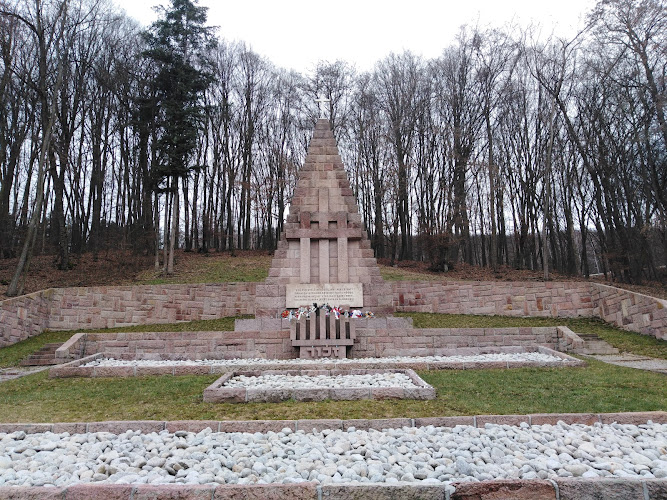
Pamätník obetiam fašizmu
About Pamätník obetiam fašizmu
Description
Imagine a place where the weight of history hangs in the air, yet wildflowers bloom on either side of the path. That’s the vibe at the Pamätník obetiam fašizmu, a memorial park that’s both touching and strangely calming, tucked away on the edge of Banská Bystrica. This place isn’t just another tourist stop—it’s a real piece of Slovakia’s heart and conscience. I remember hearing birdsong over the sculptures, standing there and just... thinking, you know?
Here, time slows down. Broken stone, stark statues, and rolling green grass create a peaceful setting for reflection on the dark period it commemorates, but also a real sense of hope. If you’re a traveler who tries to connect with places that truly matter, rather than just ticking sights off a list, you’ll feel at home in this memorial park. There’s quiet dignity here—a mix of sorrow and beauty so characteristic of Slovak history. And on a more practical note, it's set up well. Families wander through, dogs snuffle the grass, and it's all accessible, so anyone can come and pay their respects, young or old, walking or rolling.
It’s not flashy or bustling. If you want rollercoasters, look elsewhere. But if you want to stand in someone else's shoes for an hour or two and maybe leave with a better sense of the world, then you shouldn't skip it. Genuinely, it changed how I thought about memorials—and about visiting Slovakia.
Key Features
- Thought-Provoking Memorials: The evocative sculptures and minimalist designs tell poignant stories without a single word—powerful even for folks with little Slovak history at hand.
- Accessible for All: With wheelchair-friendly entrances and parking, everyone can experience the site’s solemn beauty independently.
- Kid-Friendly: Young visitors can walk, run, or bike safely around the well-kept grounds, sparking questions and quiet moments of learning.
- Dog-Friendly: You don’t have to leave canine companions behind. Dogs are welcome—on leash, of course! My spaniel is a big fan of the grassy stretches.
- Ample Green Space: This isn’t a cramped city memorial; it’s an entire park, perfect for an unhurried stroll.
- Natural Beauty and Tranquility: The setting is genuinely peaceful, with wildflowers, landscaping and the soft rise and fall of the surrounding hills. Some mornings you might even catch a bit of mist lingering among the statues—feels almost cinematic.
- Good Signage and Information: Clear, respectful displays give visitors context, but don’t overwhelm with details—ideal for casual travelers and history buffs alike.
- Frequent Community Visits: Locals use the park as a space for remembrance and quiet walks, and you’ll often spot Slovak families visiting together.
Best Time to Visit
I’ll be honest, you really can’t go wrong with timing here, but let’s get specific. Spring and early summer carry that fresh, living-green look, with flowers pushing up through the grass and the air full of birdsong. That contrast—life bursting next to solemn reminders of past tragedy—sticks with you. Fall, on the other hand, drapes the landscape in gold and rust, and the brilliance of autumn leaves amplifies the park’s natural beauty.
Personally, I’m partial to weekdays in late afternoon. The site isn’t crowded, the light’s soft, and you can really sit with your thoughts. If you’re into photography, sunrise sets a moody scene, while sunset washes everything in long shadows—a perfect backdrop for reflection or just a moment of quiet. If you catch a rainy day, don't be put off; somehow the monument under clouds feels even more profound, and you’ll often have the place to yourself.
Special dates, especially during local commemorations or memorial events, are when you can quietly join locals in honoring the park’s significance. But fair warning: those days can get a little busier, so if solitude is what you want, aim for off-peak times.
How to Get There
Let’s demystify the travel logistics because they can make or break an outing, right? The memorial park sits just beyond the downtown buzz, and getting there is refreshingly straightforward. If you’re coming by car, parking is a breeze—plenty of space and no tricky maneuvers, even if (like me) you hate parallel parking with an audience. Plus, parking’s close enough for folks with mobility concerns, not something I take for granted in older European cities.
Public transport’s quite accessible too. Local buses run from central Banská Bystrica frequently. Ask for the stop nearest to Kremnička; drivers and locals are friendly—don’t hesitate to ask for a nudge when your stop nears. If you’re coming by bike (go you!), there are safe cycle routes and you can lock your bike up at the entrance if you’d rather wander on foot.
Walking from the city center is also doable for those who like a little urban explore as a warm-up. It’s not a strenuous hike, but you’ll pass neighborhoods that show more of local everyday life than guidebooks ever will.
Tips for Visiting
Let me give you some inside scoop for making the most out of your visit. First off, give yourself time. I once planned to "dash in and dash out"—big mistake. An hour flew by without me noticing, between reading plaques and just soaking in the emotion of the place. Let the park work its quiet magic on you.
Wear comfortable shoes, because you'll want to wander the whole park. There aren’t tons of benches, so if you're a serial sitter, maybe pack a light blanket. If traveling with kids, bring water and snacks—there are no flashy kiosks nearby. The lack of commercialization is actually one of the spot's charms, but it means no quick vending machines.
Photography is welcomed (but be respectful—this isn’t the place for jumping selfies). If you want those dramatic shadowy statue shots, mornings and evenings are your friend. Cloudy skies also add an extra punch.
Here’s a money-saver: there’s no entrance fee, so you can wander, reflect, and breathe in history for free. I think that’s exactly as it should be for places like this.
One random but important point: the park’s openness to leashed pets makes it a wonderful stop for travelers with dogs. But, hey, please remember to pick up after your furry friend—let’s keep it beautiful for everyone.
Lastly, approach the park as a “living memorial,” not a dusty history lesson. Engage—let yourself feel. If you speak a little Slovak (or are learning), strike up a gentle chat or ask for locals' thoughts. Often, you’ll leave not just with photos, but with a deeper understanding of why remembrance matters.
In all honesty, the Pamätník obetiam fašizmu isn’t your typical tourist lure—it’s a pocket of peace and memory, quietly powerful, and all the better for its sincerity. I hope you find it as moving, grounding, and unexpectedly uplifting as I did.
Key Features
- Key Features
- Best Time to Visit
- How to Get There
- Tips for Visiting
More Details
Updated July 1, 2025
Table of Contents
Description
Imagine a place where the weight of history hangs in the air, yet wildflowers bloom on either side of the path. That’s the vibe at the Pamätník obetiam fašizmu, a memorial park that’s both touching and strangely calming, tucked away on the edge of Banská Bystrica. This place isn’t just another tourist stop—it’s a real piece of Slovakia’s heart and conscience. I remember hearing birdsong over the sculptures, standing there and just… thinking, you know?
Here, time slows down. Broken stone, stark statues, and rolling green grass create a peaceful setting for reflection on the dark period it commemorates, but also a real sense of hope. If you’re a traveler who tries to connect with places that truly matter, rather than just ticking sights off a list, you’ll feel at home in this memorial park. There’s quiet dignity here—a mix of sorrow and beauty so characteristic of Slovak history. And on a more practical note, it’s set up well. Families wander through, dogs snuffle the grass, and it’s all accessible, so anyone can come and pay their respects, young or old, walking or rolling.
It’s not flashy or bustling. If you want rollercoasters, look elsewhere. But if you want to stand in someone else’s shoes for an hour or two and maybe leave with a better sense of the world, then you shouldn’t skip it. Genuinely, it changed how I thought about memorials—and about visiting Slovakia.
Key Features
- Thought-Provoking Memorials: The evocative sculptures and minimalist designs tell poignant stories without a single word—powerful even for folks with little Slovak history at hand.
- Accessible for All: With wheelchair-friendly entrances and parking, everyone can experience the site’s solemn beauty independently.
- Kid-Friendly: Young visitors can walk, run, or bike safely around the well-kept grounds, sparking questions and quiet moments of learning.
- Dog-Friendly: You don’t have to leave canine companions behind. Dogs are welcome—on leash, of course! My spaniel is a big fan of the grassy stretches.
- Ample Green Space: This isn’t a cramped city memorial; it’s an entire park, perfect for an unhurried stroll.
- Natural Beauty and Tranquility: The setting is genuinely peaceful, with wildflowers, landscaping and the soft rise and fall of the surrounding hills. Some mornings you might even catch a bit of mist lingering among the statues—feels almost cinematic.
- Good Signage and Information: Clear, respectful displays give visitors context, but don’t overwhelm with details—ideal for casual travelers and history buffs alike.
- Frequent Community Visits: Locals use the park as a space for remembrance and quiet walks, and you’ll often spot Slovak families visiting together.
Best Time to Visit
I’ll be honest, you really can’t go wrong with timing here, but let’s get specific. Spring and early summer carry that fresh, living-green look, with flowers pushing up through the grass and the air full of birdsong. That contrast—life bursting next to solemn reminders of past tragedy—sticks with you. Fall, on the other hand, drapes the landscape in gold and rust, and the brilliance of autumn leaves amplifies the park’s natural beauty.
Personally, I’m partial to weekdays in late afternoon. The site isn’t crowded, the light’s soft, and you can really sit with your thoughts. If you’re into photography, sunrise sets a moody scene, while sunset washes everything in long shadows—a perfect backdrop for reflection or just a moment of quiet. If you catch a rainy day, don’t be put off; somehow the monument under clouds feels even more profound, and you’ll often have the place to yourself.
Special dates, especially during local commemorations or memorial events, are when you can quietly join locals in honoring the park’s significance. But fair warning: those days can get a little busier, so if solitude is what you want, aim for off-peak times.
How to Get There
Let’s demystify the travel logistics because they can make or break an outing, right? The memorial park sits just beyond the downtown buzz, and getting there is refreshingly straightforward. If you’re coming by car, parking is a breeze—plenty of space and no tricky maneuvers, even if (like me) you hate parallel parking with an audience. Plus, parking’s close enough for folks with mobility concerns, not something I take for granted in older European cities.
Public transport’s quite accessible too. Local buses run from central Banská Bystrica frequently. Ask for the stop nearest to Kremnička; drivers and locals are friendly—don’t hesitate to ask for a nudge when your stop nears. If you’re coming by bike (go you!), there are safe cycle routes and you can lock your bike up at the entrance if you’d rather wander on foot.
Walking from the city center is also doable for those who like a little urban explore as a warm-up. It’s not a strenuous hike, but you’ll pass neighborhoods that show more of local everyday life than guidebooks ever will.
Tips for Visiting
Let me give you some inside scoop for making the most out of your visit. First off, give yourself time. I once planned to “dash in and dash out”—big mistake. An hour flew by without me noticing, between reading plaques and just soaking in the emotion of the place. Let the park work its quiet magic on you.
Wear comfortable shoes, because you’ll want to wander the whole park. There aren’t tons of benches, so if you’re a serial sitter, maybe pack a light blanket. If traveling with kids, bring water and snacks—there are no flashy kiosks nearby. The lack of commercialization is actually one of the spot’s charms, but it means no quick vending machines.
Photography is welcomed (but be respectful—this isn’t the place for jumping selfies). If you want those dramatic shadowy statue shots, mornings and evenings are your friend. Cloudy skies also add an extra punch.
Here’s a money-saver: there’s no entrance fee, so you can wander, reflect, and breathe in history for free. I think that’s exactly as it should be for places like this.
One random but important point: the park’s openness to leashed pets makes it a wonderful stop for travelers with dogs. But, hey, please remember to pick up after your furry friend—let’s keep it beautiful for everyone.
Lastly, approach the park as a “living memorial,” not a dusty history lesson. Engage—let yourself feel. If you speak a little Slovak (or are learning), strike up a gentle chat or ask for locals’ thoughts. Often, you’ll leave not just with photos, but with a deeper understanding of why remembrance matters.
In all honesty, the Pamätník obetiam fašizmu isn’t your typical tourist lure—it’s a pocket of peace and memory, quietly powerful, and all the better for its sincerity. I hope you find it as moving, grounding, and unexpectedly uplifting as I did.
Key Highlights
- Key Features
- Best Time to Visit
- How to Get There
- Tips for Visiting
Location
Places to Stay Near Pamätník obetiam fašizmu
Find and Book a Tour
Explore More Travel Guides
No reviews found! Be the first to review!
Traveler Reviews for Pamätník obetiam fašizmu
There are no reviews yet. Be the first one to write one.
Have you visited Pamätník obetiam fašizmu? Help other travelers by sharing your review.
You Might Also Like

Župný dom
Slavín

Mountain Park
Find Accommodations Nearby
Recommended Tours & Activities
Visitor Reviews
There are no reviews yet. Be the first one to write one.
Share Your Experience
Have you visited Pamätník obetiam fašizmu? Help other travelers by leaving a review.