
Paleontology Museum
About Paleontology Museum
Description
The Paleontology Museum is one of those places that quietly takes your breath away before you even realize it. Tucked within a university science building, it’s not the kind of flashy museum with neon signs or endless souvenir shops. Instead, it’s a space that feels personal, almost like stepping into a time capsule curated by people who genuinely love what they do. There’s something oddly comforting about the faint smell of stone and fossil dust that lingers in the air — the scent of deep time, if that makes sense.
Walking through the museum feels like being guided through Earth’s memory. Every fossil, every bone, every reconstructed skeleton tells a story that’s millions of years old. You don’t have to be a paleontology geek to appreciate it — though if you are, you’ll probably lose track of time here. The exhibits are thoughtfully arranged, with just enough information to spark curiosity without overwhelming you. And that’s what makes it special: it’s educational, yes, but also deeply human. You can sense the passion of the researchers behind each display.
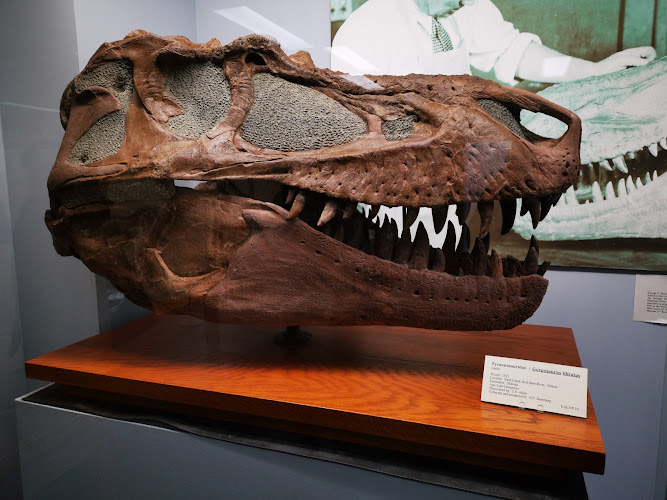
Families often stop by with kids who stare wide-eyed at the massive dinosaur skeletons. I remember my first visit — I stood under a towering Albertosaurus fossil and felt so small, like a blip in the grand timeline of Earth. That feeling of awe doesn’t fade, even after multiple visits. The museum isn’t huge, but it’s packed with detail, and you can easily spend a couple of hours exploring if you let yourself slow down and really look.
Accessibility is another thing the museum does right. The entrance, restrooms, and parking are all wheelchair-friendly, and the staff are genuinely helpful. It’s clear they care about making the space welcoming for everyone. While there’s no restaurant inside, there’s a restroom available, and plenty of nearby spots for a quick bite if you’re hungry after your fossil-filled adventure.
Key Features
- Extensive fossil collection showcasing prehistoric life from Alberta and beyond
- Life-sized dinosaur skeletons and interactive displays for both kids and adults
- Educational exhibits curated by paleontologists and Earth science experts
- Wheelchair accessible entrance, restrooms, and parking lot
- Good for families and school groups, with engaging activities for children
- Located within a university setting, offering a more authentic, research-based atmosphere
- Quiet and uncrowded environment ideal for curious travelers and science enthusiasts
Best Time to Visit
If you ask me, the best time to visit is during the weekdays, especially in the late morning or early afternoon. That’s when the museum tends to be quieter, and you can really take your time without feeling rushed. Weekends can get a bit busier, especially when families bring their kids for a day out. Avoid exam seasons if you can — since it’s part of a university building, the area can get lively with student activity around those times.
Spring and fall are particularly nice because the weather outside is mild, making it easy to combine your visit with a stroll around the campus or nearby parks. Winter visits have their own charm, though — there’s something cozy about stepping into a warm museum while snow falls outside. And honestly, fossils look even more dramatic when it’s gloomy out. Maybe that’s just me romanticizing it, but it’s true.
How to Get There
Getting to the Paleontology Museum is pretty straightforward. If you’re staying in or around Edmonton, public transit is a convenient option — several bus routes stop near the university campus. For those driving, there’s accessible parking close by, though spaces can fill up during peak hours. Taxis and rideshares work well too, especially if you’re visiting as a group or carrying gear like cameras or sketchbooks.
Once you’re on campus, signs for the Earth Sciences Building will guide you right to the museum. It’s located in the basement, which adds a bit of mystery to the experience. There’s something oddly fitting about descending underground to explore the ancient world — like you’re digging into the layers of time itself. I always get a little thrill walking down those stairs, knowing what’s waiting below.
Tips for Visiting
Here’s the thing — the museum might not be massive, but it’s easy to miss the details if you rush through. Take your time. Read the little info cards beside each fossil; some of them have fascinating tidbits about how the bones were discovered or what kind of environment the creature lived in. Bring a notebook if you’re the kind of traveler who likes jotting things down — there’s a lot to learn here, and it’s all surprisingly digestible.
If you’re visiting with kids, encourage them to ask questions. The staff are approachable and love sharing stories about their research. I once overheard a guide explaining how a particular fossilized fish still had traces of its last meal — you could see the spark in the kid’s eyes. It’s those small moments that make the visit memorable.
Since there’s no restaurant inside, plan to grab lunch before or after your visit. There are plenty of cafés nearby, and some even have fossil-themed desserts if you look hard enough. Also, wear comfortable shoes. The museum may not be huge, but you’ll likely end up wandering around longer than you expect. And if you’re into photography, bring your camera — the lighting is great for capturing textures and details, though be mindful of flash restrictions.
Lastly, don’t be afraid to go solo. There’s something meditative about walking through the exhibits alone, letting your mind drift through millennia of history. I’ve done it more than once, and every time I leave, I feel a little more connected to the planet’s story — and to my own place in it. Whether you’re a traveler chasing new experiences, a science lover, or just someone who appreciates the quiet wonder of discovery, this museum is worth the detour. It’s not loud or flashy, but it’s real. And sometimes, that’s exactly what we need.
Key Features
- Extensive fossil collection showcasing prehistoric life from Alberta and beyond
- Life-sized dinosaur skeletons and interactive displays for both kids and adults
- Educational exhibits curated by paleontologists and Earth science experts
- Wheelchair accessible entrance, restrooms, and parking lot
- Good for families and school groups, with engaging activities for children
- Located within a university setting, offering a more authentic, research-based atmosphere
- Quiet and uncrowded environment ideal for curious travelers and science enthusiasts
More Details
Updated October 9, 2025
Table of Contents
Description
The Paleontology Museum is one of those places that quietly takes your breath away before you even realize it. Tucked within a university science building, it’s not the kind of flashy museum with neon signs or endless souvenir shops. Instead, it’s a space that feels personal, almost like stepping into a time capsule curated by people who genuinely love what they do. There’s something oddly comforting about the faint smell of stone and fossil dust that lingers in the air — the scent of deep time, if that makes sense.
Walking through the museum feels like being guided through Earth’s memory. Every fossil, every bone, every reconstructed skeleton tells a story that’s millions of years old. You don’t have to be a paleontology geek to appreciate it — though if you are, you’ll probably lose track of time here. The exhibits are thoughtfully arranged, with just enough information to spark curiosity without overwhelming you. And that’s what makes it special: it’s educational, yes, but also deeply human. You can sense the passion of the researchers behind each display.
Families often stop by with kids who stare wide-eyed at the massive dinosaur skeletons. I remember my first visit — I stood under a towering Albertosaurus fossil and felt so small, like a blip in the grand timeline of Earth. That feeling of awe doesn’t fade, even after multiple visits. The museum isn’t huge, but it’s packed with detail, and you can easily spend a couple of hours exploring if you let yourself slow down and really look.
Accessibility is another thing the museum does right. The entrance, restrooms, and parking are all wheelchair-friendly, and the staff are genuinely helpful. It’s clear they care about making the space welcoming for everyone. While there’s no restaurant inside, there’s a restroom available, and plenty of nearby spots for a quick bite if you’re hungry after your fossil-filled adventure.
Key Features
- Extensive fossil collection showcasing prehistoric life from Alberta and beyond
- Life-sized dinosaur skeletons and interactive displays for both kids and adults
- Educational exhibits curated by paleontologists and Earth science experts
- Wheelchair accessible entrance, restrooms, and parking lot
- Good for families and school groups, with engaging activities for children
- Located within a university setting, offering a more authentic, research-based atmosphere
- Quiet and uncrowded environment ideal for curious travelers and science enthusiasts
Best Time to Visit
If you ask me, the best time to visit is during the weekdays, especially in the late morning or early afternoon. That’s when the museum tends to be quieter, and you can really take your time without feeling rushed. Weekends can get a bit busier, especially when families bring their kids for a day out. Avoid exam seasons if you can — since it’s part of a university building, the area can get lively with student activity around those times.
Spring and fall are particularly nice because the weather outside is mild, making it easy to combine your visit with a stroll around the campus or nearby parks. Winter visits have their own charm, though — there’s something cozy about stepping into a warm museum while snow falls outside. And honestly, fossils look even more dramatic when it’s gloomy out. Maybe that’s just me romanticizing it, but it’s true.
How to Get There
Getting to the Paleontology Museum is pretty straightforward. If you’re staying in or around Edmonton, public transit is a convenient option — several bus routes stop near the university campus. For those driving, there’s accessible parking close by, though spaces can fill up during peak hours. Taxis and rideshares work well too, especially if you’re visiting as a group or carrying gear like cameras or sketchbooks.
Once you’re on campus, signs for the Earth Sciences Building will guide you right to the museum. It’s located in the basement, which adds a bit of mystery to the experience. There’s something oddly fitting about descending underground to explore the ancient world — like you’re digging into the layers of time itself. I always get a little thrill walking down those stairs, knowing what’s waiting below.
Tips for Visiting
Here’s the thing — the museum might not be massive, but it’s easy to miss the details if you rush through. Take your time. Read the little info cards beside each fossil; some of them have fascinating tidbits about how the bones were discovered or what kind of environment the creature lived in. Bring a notebook if you’re the kind of traveler who likes jotting things down — there’s a lot to learn here, and it’s all surprisingly digestible.
If you’re visiting with kids, encourage them to ask questions. The staff are approachable and love sharing stories about their research. I once overheard a guide explaining how a particular fossilized fish still had traces of its last meal — you could see the spark in the kid’s eyes. It’s those small moments that make the visit memorable.
Since there’s no restaurant inside, plan to grab lunch before or after your visit. There are plenty of cafés nearby, and some even have fossil-themed desserts if you look hard enough. Also, wear comfortable shoes. The museum may not be huge, but you’ll likely end up wandering around longer than you expect. And if you’re into photography, bring your camera — the lighting is great for capturing textures and details, though be mindful of flash restrictions.
Lastly, don’t be afraid to go solo. There’s something meditative about walking through the exhibits alone, letting your mind drift through millennia of history. I’ve done it more than once, and every time I leave, I feel a little more connected to the planet’s story — and to my own place in it. Whether you’re a traveler chasing new experiences, a science lover, or just someone who appreciates the quiet wonder of discovery, this museum is worth the detour. It’s not loud or flashy, but it’s real. And sometimes, that’s exactly what we need.
Key Highlights
- Extensive fossil collection showcasing prehistoric life from Alberta and beyond
- Life-sized dinosaur skeletons and interactive displays for both kids and adults
- Educational exhibits curated by paleontologists and Earth science experts
- Wheelchair accessible entrance, restrooms, and parking lot
- Good for families and school groups, with engaging activities for children
- Located within a university setting, offering a more authentic, research-based atmosphere
- Quiet and uncrowded environment ideal for curious travelers and science enthusiasts
Location
Places to Stay Near Paleontology Museum
Find and Book a Tour
Explore More Travel Guides
No reviews found! Be the first to review!
Traveler Reviews for Paleontology Museum
There are no reviews yet. Be the first one to write one.
Have you visited Paleontology Museum? Help other travelers by sharing your review.
You Might Also Like

Terwillegar Park

Talus Dome
Royal Alberta Museum
Find Accommodations Nearby
Recommended Tours & Activities
Visitor Reviews
There are no reviews yet. Be the first one to write one.
Share Your Experience
Have you visited Paleontology Museum? Help other travelers by leaving a review.