Paleis op de Meir (Koninklijk Paleis)
About Paleis op de Meir (Koninklijk Paleis)
Description
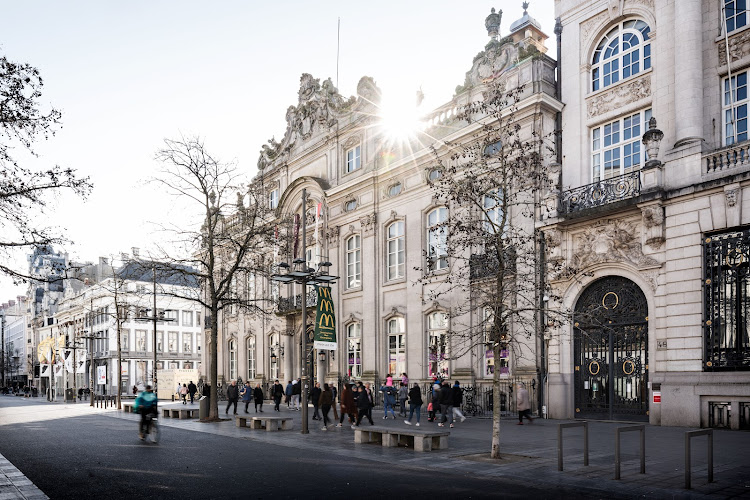
The Paleis op de Meir, also known as the Royal Palace of Antwerp, stands as one of Belgium's most impressive 18th-century architectural treasures right in the heart of the city. This isn't just another museum you'll wander through half-asleep – it's a genuine royal residence that still gets used for official state functions today. Walking through these gilded halls gives visitors an authentic glimpse into how European royalty actually lived, worked, and entertained guests during different periods of history. Built originally as a private residence for a wealthy merchant family in the 1740s, the palace was later purchased by Napoleon Bonaparte himself, who had grand plans to transform it into his northern headquarters. Though Napoleon's empire crumbled before he could spend much time here, the palace retained its imperial grandeur and eventually became property of the Belgian royal family after the country gained independence in 1830. What makes this palace particularly special is how it's been preserved and restored. You're not looking at recreations or replicas here – these are the actual rooms, furniture, and decorations that royalty surrounded themselves with. The palace underwent a massive 10-year restoration project that was completed in 2010, bringing back the original splendor while making it accessible to the public for the first time in decades. The building itself spans an entire city block along the Meir, Antwerp's main shopping street. And honestly? From the outside, it's easy to walk right past it if you're not paying attention, since it blends in with the surrounding architecture. But step through those doors and you'll find yourself transported to a completely different world of opulence and refinement.Key Features
The Paleis op de Meir offers visitors an extraordinary collection of rooms and features that showcase different periods of European design and royal life:- The Empire Rooms – These chambers showcase Napoleon's preferred neoclassical style, with furniture and decorations commissioned specifically during his brief ownership of the palace
- The Grand Salon – An absolutely breathtaking ballroom with crystal chandeliers, ornate ceiling frescoes, and mirrors that seem to multiply the space infinitely
- The Royal Apartments – Private quarters used by Belgian monarchs including King Leopold I and King Leopold II, featuring personal items and original furnishings
- The Dining Rooms – Formal spaces set with period-appropriate table settings that show how elaborate royal dinner parties actually were
- The Small Salon – A more intimate space decorated in Rococo style with delicate pastel colors and intricate woodwork
- The State Rooms – Official reception areas where important political and diplomatic meetings took place throughout Belgian history
- The Palace Gardens – Though smaller than you might expect for a royal residence, these carefully maintained green spaces provide a peaceful retreat from the busy shopping district outside
- Period Artwork Collection – Paintings, sculptures, and decorative objects spanning from the 18th century through the early 20th century
- The Grand Staircase – An architectural masterpiece in itself, with marble steps and ornamental railings that make quite the entrance
Best Time to Visit
Timing your visit to the Paleis op de Meir can really make or break your experience. I've learned through various travels that even the most magnificent places lose some of their magic when you're shoulder-to-shoulder with tour groups. The palace tends to be quietest on weekday mornings, particularly Tuesday through Thursday. Most tourists haven't quite made it out of their hotels yet, and school groups typically arrive after lunch. If you can get there right when the doors open, you'll have those first 45 minutes or so with relatively few other people around. There's something almost eerie about walking through empty royal chambers – in a good way. Summer months from June through August see the heaviest crowds, as expected. European school holidays bring families from across the continent, and Antwerp becomes quite the tourist destination. But summer also means longer opening hours and sometimes special exhibitions, so there's a trade-off to consider. Autumn, specifically September and October, might actually be the sweet spot. The weather in Antwerp is still pleasant enough for walking around the city, but the peak summer rush has died down. Plus the light coming through the palace windows during autumn afternoons creates this golden glow that photographs beautifully. Winter visits have their own charm. December brings holiday decorations to parts of the palace, and there's something fitting about seeing a grand European palace dressed up for winter festivities. Just be aware that the building can get a bit chilly in some of the less-heated areas – those 18th-century heating systems weren't exactly efficient. One thing worth mentioning: the palace occasionally closes for official state functions. These closures aren't always announced far in advance, which has frustrated some visitors. Getting tickets ahead of time is really recommended, not just to secure your spot but also to confirm the palace is actually open that day.How to Get There
Getting to the Paleis op de Meir couldn't be much easier, honestly. The palace sits right on the Meir, which is basically Antwerp's version of Oxford Street or Fifth Avenue – the main shopping drag everyone knows. If you're arriving by train at Antwerp Central Station, you're in luck because that's only about a 10-minute walk away. Head out the front entrance of the station (pausing to admire that incredible railway cathedral architecture if it's your first time), then walk down the Meir toward the old city center. The palace will be on your left. You literally cannot get lost – just follow the crowds of shoppers. The Antwerp metro system has a stop called Meir that's even closer, maybe a 3-minute walk. The metro in Antwerp is actually a pre-metro tram system that goes underground in the city center, and it's quite efficient for getting around quickly. For those taking trams, lines 3, 5, 9, and 15 all stop near the palace. The nearest tram stop is called Meir, same as the metro station. Antwerp's public transit uses the same tickets across trams, buses, and the metro, which makes life simpler. Driving and parking near the palace is honestly more trouble than it's worth. Parking in central Antwerp gets expensive quickly, and the surrounding streets have restricted access during certain hours. There are some parking garages within a few blocks, but you'll pay premium prices for the convenience. The public transit really is your friend here. If you're staying somewhere in the historic center of Antwerp, walking is probably your best option. The city center is compact and pedestrian-friendly, and you'll stumble upon interesting shops, cafes, and architecture along the way. For visitors with mobility concerns, I should mention that wheelchair accessibility at the palace is somewhat limited. There's no wheelchair accessible parking directly at the building according to the official information. The historic nature of the building means not all areas can accommodate mobility devices easily, though the palace staff do their best to assist where possible. It's worth calling ahead to discuss specific accessibility needs.Tips for Visiting
Here's where I'll share some practical wisdom that'll help you make the most of your visit to the Paleis op de Meir. First off, buy your tickets online in advance. This isn't just a suggestion – it's pretty much essential. The palace limits the number of visitors allowed in at any given time to preserve the interiors and maintain a quality experience. During busy periods, they sometimes sell out completely. Buying ahead also means you can skip any ticket queues and head straight in. Plan for about 90 minutes to two hours for your visit. Some people rush through in an hour, but you'd be missing a lot. The audio guide is included with admission and provides fascinating context about the rooms, the objects, and the historical figures who lived here. Don't be that person who skips the audio guide and then complains there wasn't enough information. Photography is allowed in most areas, but flash photography isn't. The natural light in these rooms is actually beautiful for photos anyway. And please, put down the iPad for taking pictures – nobody needs to photograph historic interiors on a 10-inch tablet while blocking everyone else's view. Wear comfortable shoes. This might seem obvious, but you'll be standing and walking on various surfaces including marble floors for a couple hours. Those gorgeous period floors aren't exactly ergonomic. I've seen people hobbling around in brand-new shoes or high heels looking miserable by the halfway point. The palace doesn't have a cafe or restaurant inside, which surprises some visitors. But you're on the Meir, one of Antwerp's busiest shopping streets, so there are literally dozens of cafes and restaurants within a five-minute walk in any direction. Consider this when planning your visit time. Coat check and bag storage are available and free to use. Larger bags and backpacks aren't allowed in the exhibition rooms anyway, so you'll need to check them. Don't try to sneak in a big backpack – the staff will politely but firmly send you back to check it. If you're visiting Antwerp for multiple attractions, look into the Antwerp City Card. It provides access to several museums and attractions including the Paleis op de Meir, plus unlimited public transit. Whether it's worth it depends on how many places you plan to visit, but it can work out cheaper than buying individual tickets. Temperature regulation in historic buildings is always tricky. Some rooms might feel warmer than others, and in summer the upper floors can get quite warm since air conditioning is limited to protect the historic furnishings. Dress in layers if possible. The gift shop near the exit has some genuinely nice items if you're into that sort of thing. Books about Belgian royal history, reproductions of period decorative items, and some locally-made products. It's not just generic tourist junk, though there's some of that too obviously. Don't expect extensive English signage throughout. The audio guide handles this, but if you're the type who likes to read plaques and wall texts, be aware that some are only in Dutch and French. Not a dealbreaker, but worth knowing beforehand. Lastly, combine your palace visit with exploring the surrounding area. The Stadsfeestzaal, an absolutely stunning shopping gallery that was once a party hall, is just down the street and free to walk through. The fashion district and diamond quarter are also nearby. Antwerp deserves more than just a quick palace visit before rushing off to Brussels or Bruges.Key Features
- 18th-century rococo architecture and richly decorated interiors
- Historical connections to Napoleon and Belgian royalty
- Centrally located on the Meir shopping street in Antwerp
- Restored period rooms with ornate staircases and frescoes
- Flexible event and exhibition spaces bringing changing displays
More Details
Updated March 30, 2026
Table of Contents
- Description
- Key Features
- Best Time to Visit
- How to Get There
- Tips for Visiting
- Key Highlights
- Location
- Places to Stay Near Paleis op de Meir (Koninklijk Paleis)
- Find and Book a Tour
- Explore More Travel Guides
- Nearby Places You Might Like
- Traveler Reviews for Paleis op de Meir (Koninklijk Paleis)
- Share Your Experience
Description
The Paleis op de Meir, also known as the Royal Palace of Antwerp, stands as one of Belgium’s most impressive 18th-century architectural treasures right in the heart of the city. This isn’t just another museum you’ll wander through half-asleep – it’s a genuine royal residence that still gets used for official state functions today. Walking through these gilded halls gives visitors an authentic glimpse into how European royalty actually lived, worked, and entertained guests during different periods of history.
Built originally as a private residence for a wealthy merchant family in the 1740s, the palace was later purchased by Napoleon Bonaparte himself, who had grand plans to transform it into his northern headquarters. Though Napoleon’s empire crumbled before he could spend much time here, the palace retained its imperial grandeur and eventually became property of the Belgian royal family after the country gained independence in 1830.
What makes this palace particularly special is how it’s been preserved and restored. You’re not looking at recreations or replicas here – these are the actual rooms, furniture, and decorations that royalty surrounded themselves with. The palace underwent a massive 10-year restoration project that was completed in 2010, bringing back the original splendor while making it accessible to the public for the first time in decades.
The building itself spans an entire city block along the Meir, Antwerp’s main shopping street. And honestly? From the outside, it’s easy to walk right past it if you’re not paying attention, since it blends in with the surrounding architecture. But step through those doors and you’ll find yourself transported to a completely different world of opulence and refinement.
Key Features
The Paleis op de Meir offers visitors an extraordinary collection of rooms and features that showcase different periods of European design and royal life:
- The Empire Rooms – These chambers showcase Napoleon’s preferred neoclassical style, with furniture and decorations commissioned specifically during his brief ownership of the palace
- The Grand Salon – An absolutely breathtaking ballroom with crystal chandeliers, ornate ceiling frescoes, and mirrors that seem to multiply the space infinitely
- The Royal Apartments – Private quarters used by Belgian monarchs including King Leopold I and King Leopold II, featuring personal items and original furnishings
- The Dining Rooms – Formal spaces set with period-appropriate table settings that show how elaborate royal dinner parties actually were
- The Small Salon – A more intimate space decorated in Rococo style with delicate pastel colors and intricate woodwork
- The State Rooms – Official reception areas where important political and diplomatic meetings took place throughout Belgian history
- The Palace Gardens – Though smaller than you might expect for a royal residence, these carefully maintained green spaces provide a peaceful retreat from the busy shopping district outside
- Period Artwork Collection – Paintings, sculptures, and decorative objects spanning from the 18th century through the early 20th century
- The Grand Staircase – An architectural masterpiece in itself, with marble steps and ornamental railings that make quite the entrance
Best Time to Visit
Timing your visit to the Paleis op de Meir can really make or break your experience. I’ve learned through various travels that even the most magnificent places lose some of their magic when you’re shoulder-to-shoulder with tour groups.
The palace tends to be quietest on weekday mornings, particularly Tuesday through Thursday. Most tourists haven’t quite made it out of their hotels yet, and school groups typically arrive after lunch. If you can get there right when the doors open, you’ll have those first 45 minutes or so with relatively few other people around. There’s something almost eerie about walking through empty royal chambers – in a good way.
Summer months from June through August see the heaviest crowds, as expected. European school holidays bring families from across the continent, and Antwerp becomes quite the tourist destination. But summer also means longer opening hours and sometimes special exhibitions, so there’s a trade-off to consider.
Autumn, specifically September and October, might actually be the sweet spot. The weather in Antwerp is still pleasant enough for walking around the city, but the peak summer rush has died down. Plus the light coming through the palace windows during autumn afternoons creates this golden glow that photographs beautifully.
Winter visits have their own charm. December brings holiday decorations to parts of the palace, and there’s something fitting about seeing a grand European palace dressed up for winter festivities. Just be aware that the building can get a bit chilly in some of the less-heated areas – those 18th-century heating systems weren’t exactly efficient.
One thing worth mentioning: the palace occasionally closes for official state functions. These closures aren’t always announced far in advance, which has frustrated some visitors. Getting tickets ahead of time is really recommended, not just to secure your spot but also to confirm the palace is actually open that day.
How to Get There
Getting to the Paleis op de Meir couldn’t be much easier, honestly. The palace sits right on the Meir, which is basically Antwerp’s version of Oxford Street or Fifth Avenue – the main shopping drag everyone knows.
If you’re arriving by train at Antwerp Central Station, you’re in luck because that’s only about a 10-minute walk away. Head out the front entrance of the station (pausing to admire that incredible railway cathedral architecture if it’s your first time), then walk down the Meir toward the old city center. The palace will be on your left. You literally cannot get lost – just follow the crowds of shoppers.
The Antwerp metro system has a stop called Meir that’s even closer, maybe a 3-minute walk. The metro in Antwerp is actually a pre-metro tram system that goes underground in the city center, and it’s quite efficient for getting around quickly.
For those taking trams, lines 3, 5, 9, and 15 all stop near the palace. The nearest tram stop is called Meir, same as the metro station. Antwerp’s public transit uses the same tickets across trams, buses, and the metro, which makes life simpler.
Driving and parking near the palace is honestly more trouble than it’s worth. Parking in central Antwerp gets expensive quickly, and the surrounding streets have restricted access during certain hours. There are some parking garages within a few blocks, but you’ll pay premium prices for the convenience. The public transit really is your friend here.
If you’re staying somewhere in the historic center of Antwerp, walking is probably your best option. The city center is compact and pedestrian-friendly, and you’ll stumble upon interesting shops, cafes, and architecture along the way.
For visitors with mobility concerns, I should mention that wheelchair accessibility at the palace is somewhat limited. There’s no wheelchair accessible parking directly at the building according to the official information. The historic nature of the building means not all areas can accommodate mobility devices easily, though the palace staff do their best to assist where possible. It’s worth calling ahead to discuss specific accessibility needs.
Tips for Visiting
Here’s where I’ll share some practical wisdom that’ll help you make the most of your visit to the Paleis op de Meir.
First off, buy your tickets online in advance. This isn’t just a suggestion – it’s pretty much essential. The palace limits the number of visitors allowed in at any given time to preserve the interiors and maintain a quality experience. During busy periods, they sometimes sell out completely. Buying ahead also means you can skip any ticket queues and head straight in.
Plan for about 90 minutes to two hours for your visit. Some people rush through in an hour, but you’d be missing a lot. The audio guide is included with admission and provides fascinating context about the rooms, the objects, and the historical figures who lived here. Don’t be that person who skips the audio guide and then complains there wasn’t enough information.
Photography is allowed in most areas, but flash photography isn’t. The natural light in these rooms is actually beautiful for photos anyway. And please, put down the iPad for taking pictures – nobody needs to photograph historic interiors on a 10-inch tablet while blocking everyone else’s view.
Wear comfortable shoes. This might seem obvious, but you’ll be standing and walking on various surfaces including marble floors for a couple hours. Those gorgeous period floors aren’t exactly ergonomic. I’ve seen people hobbling around in brand-new shoes or high heels looking miserable by the halfway point.
The palace doesn’t have a cafe or restaurant inside, which surprises some visitors. But you’re on the Meir, one of Antwerp’s busiest shopping streets, so there are literally dozens of cafes and restaurants within a five-minute walk in any direction. Consider this when planning your visit time.
Coat check and bag storage are available and free to use. Larger bags and backpacks aren’t allowed in the exhibition rooms anyway, so you’ll need to check them. Don’t try to sneak in a big backpack – the staff will politely but firmly send you back to check it.
If you’re visiting Antwerp for multiple attractions, look into the Antwerp City Card. It provides access to several museums and attractions including the Paleis op de Meir, plus unlimited public transit. Whether it’s worth it depends on how many places you plan to visit, but it can work out cheaper than buying individual tickets.
Temperature regulation in historic buildings is always tricky. Some rooms might feel warmer than others, and in summer the upper floors can get quite warm since air conditioning is limited to protect the historic furnishings. Dress in layers if possible.
The gift shop near the exit has some genuinely nice items if you’re into that sort of thing. Books about Belgian royal history, reproductions of period decorative items, and some locally-made products. It’s not just generic tourist junk, though there’s some of that too obviously.
Don’t expect extensive English signage throughout. The audio guide handles this, but if you’re the type who likes to read plaques and wall texts, be aware that some are only in Dutch and French. Not a dealbreaker, but worth knowing beforehand.
Lastly, combine your palace visit with exploring the surrounding area. The Stadsfeestzaal, an absolutely stunning shopping gallery that was once a party hall, is just down the street and free to walk through. The fashion district and diamond quarter are also nearby. Antwerp deserves more than just a quick palace visit before rushing off to Brussels or Bruges.
Key Highlights
- 18th-century rococo architecture and richly decorated interiors
- Historical connections to Napoleon and Belgian royalty
- Centrally located on the Meir shopping street in Antwerp
- Restored period rooms with ornate staircases and frescoes
- Flexible event and exhibition spaces bringing changing displays
Location
Places to Stay Near Paleis op de Meir (Koninklijk Paleis)
Find and Book a Tour
Explore More Travel Guides
No reviews found! Be the first to review!
Paleis op de Meir (Koninklijk Paleis) is a prominent attractions located in Antwerp.
Visit us at: Meir 50, 2000 Antwerpen, Belgien.
Traveler Reviews for Paleis op de Meir (Koninklijk Paleis)
There are no reviews yet. Be the first one to write one.
Have you visited Paleis op de Meir (Koninklijk Paleis)? Help other travelers by sharing your review.
Nearby Attractions
Find Accommodations Nearby
Recommended Tours & Activities
Visitor Reviews
There are no reviews yet. Be the first one to write one.
Share Your Experience
Have you visited Paleis op de Meir (Koninklijk Paleis)? Help other travelers by leaving a review.
