
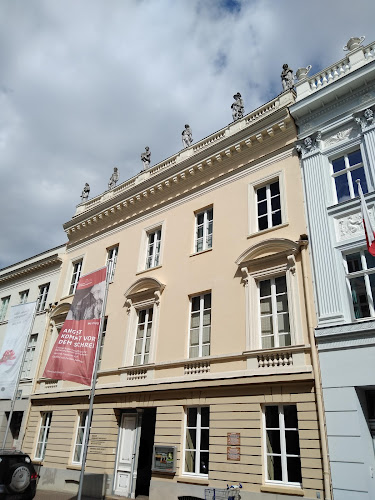
Museum Behnhaus Drägerhaus
About Museum Behnhaus Drägerhaus
Description
The Museum Behnhaus Drägerhaus presents Romantic and early modern art inside two elegant 18th-century townhouses that still whisper old Lübeck life. Visitors discover a carefully assembled collection that emphasizes 19th-century German Romanticism alongside select early 20th-century works. The highlight that tends to catch attention — and rightly so — is a group of paintings by Edvard Munch, shown with restraint in rooms that suit the intimacy of the canvases. The setting matters here: galleries are not anonymous, white-box spaces but historic rooms and parlors where painted light meets real daylight through tall windows. That combination often makes artworks feel more like conversation partners than museum exhibits.
The atmosphere is quietly refined. The Behnhaus and the adjacent Drägerhaus were built as residences for Lübeck’s merchant class, and many visitors remark on how the architectural details — ornate moldings, parquet floors, the scale of doorways — change the way the collection is experienced. Rooms are smaller than in a metropolitan modern art museum, so the experience is paced and domestic rather than overwhelming. This is not a place to rush; it rewards those who slow down. People who like to linger, who enjoy noticing brushwork and background details, will likely leave feeling they’ve had a meaningful encounter.
It’s fair to say the museum is well-regarded for the quality of its holdings and for the way the curators arrange works across two connected mansions. Yet, because the space is compact and curated with care, expectations should be calibrated: this is a focused, often contemplative visit rather than a long, blockbuster-art-marathon. Some visitors love that. Others, expecting a large modern or national gallery experience, might find it modest in scale. Either way, the Behnhaus Drägerhaus has character and an old-house charm that tends to linger in memory — especially on a rainy Lübeck afternoon when the city takes on a particular northern light.
Beyond paintings, the museum also preserves historical interiors and decorative arts that illustrate bourgeois life in the Hanseatic city. That interplay between quotidian historical objects and high art is part of the museum’s distinct personality. And yes, there’s an element of storytelling: the buildings themselves tell chapters of Lübeck’s social history, which adds texture to the art on the walls. For someone planning their Lübeck itinerary, the museum makes an efficient, enriching stop just outside the core of the old town, yet close enough to combine with other cultural sights.
Key Features
- A focused collection of 19th-century Romantic and early 20th-century modern paintings, including several works by Edvard Munch
- Exhibition space spread across two 1700s mansions with preserved historical rooms and original interior details
- Curatorial emphasis on atmosphere: intimate galleries and period settings that alter the way art is perceived
- Rotating special exhibitions that frame local and European art histories, often linking Romanticism to later modern movements
- Informal, approachable displays — suitable for visitors who prefer depth over breadth
- Accessibility-friendly features in parts of the museum, though historic architecture can mean some limitations; staff can advise on access routes
- Short recommended visit time of roughly 60–90 minutes for most visitors, more for those who like to read every label
- Located within walking distance of Lübeck’s major historic quarter, making it easy to pair with nearby museums and coffee spots
Best Time to Visit
The best time to visit is often weekday mornings, soon after opening, when the rooms are most likely to be quiet and the light through the windows is clean and flattering. If one can, avoid late-afternoon weekends — those tend to be busier, especially during summer tourist season. Spring and early autumn are particularly pleasant: Lübeck’s weather is mild, the city draws fewer large tour groups than in midsummer, and light can be lovely through the mansion’s windows, which matters more here than in many museums.
During the colder months, the museum’s domestic scale actually becomes an advantage. There is a certain coziness to viewing Romantic landscapes and intimate portraits inside historic rooms while rain taps on the leaded glass outside. On the other hand, if a traveler is after special temporary exhibitions, checking the museum’s calendar ahead of time is essential — some shows are short runs and attract significant local crowds. For those with a flexible itinerary, aim for off-peak days or the first week of a new exhibition opening, when guided tours may be available but the space is still relatively empty.
How to Get There
The museum is situated within Lübeck’s central area, a short walk from the old town core. From the main train station, it is an easy stroll or a brief taxi ride; many travelers find it pleasant to walk and soak up the city’s Hanseatic architecture en route. Public buses also run regularly through the center, with stops close to the museum district. For visitors arriving by car, there are municipal parking options around the historic center, but it’s worth noting that the old town area restricts traffic in places, and walking a few blocks from a designated lot is usually the simplest approach.
Those coming from the harbor or from neighboring towns often combine a museum visit with a wander through Lübeck’s streets, perhaps passing by the famous Holstentor gate or the cathedral. If a visitor plans multiple museum stops in one day, the Behnhaus Drägerhaus pairs well with other nearby cultural institutions — walking routes between them show off narrow lanes, small squares, and plenty of cafés for refueling.
Tips for Visiting
Plan for a focused visit. Most guests report that 60 to 90 minutes is ample to appreciate both the permanent collection and any temporary exhibitions without feeling rushed. But if someone really loves Romantic or early modern art, setting aside two hours can let them savor details and the architectural setting.
Photography policies can vary by exhibition. Flash photography is generally avoided in historic interiors and around older paintings; quiet phone snaps for personal use are often tolerated but better to ask staff if in doubt. And, please, no large tripods — those feel out of place in small rooms and are often not allowed.
Accessibility: the museum attempts to be visitor-friendly, but remember that the buildings are historic. There are accessible routes and staff support, but some rooms or levels might require alternative approaches. Contacting the museum ahead of arrival for specific accessibility needs is a good idea — it saves time and ensures the best possible route through the collection.
Guided tours and audio guides: these are periodically offered and can illuminate the connections between the architecture and the art. For many people, a short guided talk about the Behnhaus and the Drägerhaus history dramatically enhances appreciation of the period interiors and why certain works are displayed where they are. If a traveler is short on time, brief highlights tours are often available and give a compact, richer experience.
Combine with a stroll. One little habit the locals love: visit the museum and then step outside to walk a few blocks of the old town, stopping at a bakery or café. The transition from the hush of historic rooms to the hum of Lübeck streets helps process impressions and makes the art feel part of the city’s living story. It’s a simple ritual but an effective one: art, then coffee, then more wandering.
Buy tickets in advance during high season if the museum lists timed entries. Even when not sold out, reserving a slot can smooth a travel day, particularly for those on tight schedules. Check opening hours before you go; historic houses sometimes close for special events or maintenance.
Bring curiosity, not expectation of scale. Some visitors come hoping for a massive national collection and leave slightly surprised by the museum’s modest footprint. That modesty is actually a selling point for many: it makes for contemplation rather than a race through galleries. If someone enjoys intimate encounters with Romantic landscapes, expressive modern works, or the quiet drama of Munch’s brushwork in a domestic setting, they’ll likely find the visit memorable.
Finally, take a moment in those quieter rooms to notice small things: a detail of a frame, the way light grazes a corner, a period furnishing that makes a painting look as if it has been in that space for a century. Those are the experiences that stick around, long after the postcards are gone. The Museum Behnhaus Drägerhaus is not about shouting headlines; it’s about those softer, more stubborn impressions that make travel worth the trouble.
Key Features
- A focused collection of 19th-century Romantic and early 20th-century modern paintings, including several works by Edvard Munch
- Exhibition space spread across two 1700s mansions with preserved historical rooms and original interior details
- Curatorial emphasis on atmosphere: intimate galleries and period settings that alter the way art is perceived
- Rotating special exhibitions that frame local and European art histories, often linking Romanticism to later modern movements
- Informal, approachable displays — suitable for visitors who prefer depth over breadth
- Accessibility-friendly features in parts of the museum, though historic architecture can mean some limitations; staff can advise on access routes
- Short recommended visit time of roughly 60–90 minutes for most visitors, more for those who like to read every label
- Located within walking distance of Lübeck’s major historic quarter, making it easy to pair with nearby museums and coffee spots
More Details
Updated August 30, 2025
Table of Contents
Description
The Museum Behnhaus Drägerhaus presents Romantic and early modern art inside two elegant 18th-century townhouses that still whisper old Lübeck life. Visitors discover a carefully assembled collection that emphasizes 19th-century German Romanticism alongside select early 20th-century works. The highlight that tends to catch attention — and rightly so — is a group of paintings by Edvard Munch, shown with restraint in rooms that suit the intimacy of the canvases. The setting matters here: galleries are not anonymous, white-box spaces but historic rooms and parlors where painted light meets real daylight through tall windows. That combination often makes artworks feel more like conversation partners than museum exhibits.
The atmosphere is quietly refined. The Behnhaus and the adjacent Drägerhaus were built as residences for Lübeck’s merchant class, and many visitors remark on how the architectural details — ornate moldings, parquet floors, the scale of doorways — change the way the collection is experienced. Rooms are smaller than in a metropolitan modern art museum, so the experience is paced and domestic rather than overwhelming. This is not a place to rush; it rewards those who slow down. People who like to linger, who enjoy noticing brushwork and background details, will likely leave feeling they’ve had a meaningful encounter.
It’s fair to say the museum is well-regarded for the quality of its holdings and for the way the curators arrange works across two connected mansions. Yet, because the space is compact and curated with care, expectations should be calibrated: this is a focused, often contemplative visit rather than a long, blockbuster-art-marathon. Some visitors love that. Others, expecting a large modern or national gallery experience, might find it modest in scale. Either way, the Behnhaus Drägerhaus has character and an old-house charm that tends to linger in memory — especially on a rainy Lübeck afternoon when the city takes on a particular northern light.
Beyond paintings, the museum also preserves historical interiors and decorative arts that illustrate bourgeois life in the Hanseatic city. That interplay between quotidian historical objects and high art is part of the museum’s distinct personality. And yes, there’s an element of storytelling: the buildings themselves tell chapters of Lübeck’s social history, which adds texture to the art on the walls. For someone planning their Lübeck itinerary, the museum makes an efficient, enriching stop just outside the core of the old town, yet close enough to combine with other cultural sights.
Key Features
- A focused collection of 19th-century Romantic and early 20th-century modern paintings, including several works by Edvard Munch
- Exhibition space spread across two 1700s mansions with preserved historical rooms and original interior details
- Curatorial emphasis on atmosphere: intimate galleries and period settings that alter the way art is perceived
- Rotating special exhibitions that frame local and European art histories, often linking Romanticism to later modern movements
- Informal, approachable displays — suitable for visitors who prefer depth over breadth
- Accessibility-friendly features in parts of the museum, though historic architecture can mean some limitations; staff can advise on access routes
- Short recommended visit time of roughly 60–90 minutes for most visitors, more for those who like to read every label
- Located within walking distance of Lübeck’s major historic quarter, making it easy to pair with nearby museums and coffee spots
Best Time to Visit
The best time to visit is often weekday mornings, soon after opening, when the rooms are most likely to be quiet and the light through the windows is clean and flattering. If one can, avoid late-afternoon weekends — those tend to be busier, especially during summer tourist season. Spring and early autumn are particularly pleasant: Lübeck’s weather is mild, the city draws fewer large tour groups than in midsummer, and light can be lovely through the mansion’s windows, which matters more here than in many museums.
During the colder months, the museum’s domestic scale actually becomes an advantage. There is a certain coziness to viewing Romantic landscapes and intimate portraits inside historic rooms while rain taps on the leaded glass outside. On the other hand, if a traveler is after special temporary exhibitions, checking the museum’s calendar ahead of time is essential — some shows are short runs and attract significant local crowds. For those with a flexible itinerary, aim for off-peak days or the first week of a new exhibition opening, when guided tours may be available but the space is still relatively empty.
How to Get There
The museum is situated within Lübeck’s central area, a short walk from the old town core. From the main train station, it is an easy stroll or a brief taxi ride; many travelers find it pleasant to walk and soak up the city’s Hanseatic architecture en route. Public buses also run regularly through the center, with stops close to the museum district. For visitors arriving by car, there are municipal parking options around the historic center, but it’s worth noting that the old town area restricts traffic in places, and walking a few blocks from a designated lot is usually the simplest approach.
Those coming from the harbor or from neighboring towns often combine a museum visit with a wander through Lübeck’s streets, perhaps passing by the famous Holstentor gate or the cathedral. If a visitor plans multiple museum stops in one day, the Behnhaus Drägerhaus pairs well with other nearby cultural institutions — walking routes between them show off narrow lanes, small squares, and plenty of cafés for refueling.
Tips for Visiting
Plan for a focused visit. Most guests report that 60 to 90 minutes is ample to appreciate both the permanent collection and any temporary exhibitions without feeling rushed. But if someone really loves Romantic or early modern art, setting aside two hours can let them savor details and the architectural setting.
Photography policies can vary by exhibition. Flash photography is generally avoided in historic interiors and around older paintings; quiet phone snaps for personal use are often tolerated but better to ask staff if in doubt. And, please, no large tripods — those feel out of place in small rooms and are often not allowed.
Accessibility: the museum attempts to be visitor-friendly, but remember that the buildings are historic. There are accessible routes and staff support, but some rooms or levels might require alternative approaches. Contacting the museum ahead of arrival for specific accessibility needs is a good idea — it saves time and ensures the best possible route through the collection.
Guided tours and audio guides: these are periodically offered and can illuminate the connections between the architecture and the art. For many people, a short guided talk about the Behnhaus and the Drägerhaus history dramatically enhances appreciation of the period interiors and why certain works are displayed where they are. If a traveler is short on time, brief highlights tours are often available and give a compact, richer experience.
Combine with a stroll. One little habit the locals love: visit the museum and then step outside to walk a few blocks of the old town, stopping at a bakery or café. The transition from the hush of historic rooms to the hum of Lübeck streets helps process impressions and makes the art feel part of the city’s living story. It’s a simple ritual but an effective one: art, then coffee, then more wandering.
Buy tickets in advance during high season if the museum lists timed entries. Even when not sold out, reserving a slot can smooth a travel day, particularly for those on tight schedules. Check opening hours before you go; historic houses sometimes close for special events or maintenance.
Bring curiosity, not expectation of scale. Some visitors come hoping for a massive national collection and leave slightly surprised by the museum’s modest footprint. That modesty is actually a selling point for many: it makes for contemplation rather than a race through galleries. If someone enjoys intimate encounters with Romantic landscapes, expressive modern works, or the quiet drama of Munch’s brushwork in a domestic setting, they’ll likely find the visit memorable.
Finally, take a moment in those quieter rooms to notice small things: a detail of a frame, the way light grazes a corner, a period furnishing that makes a painting look as if it has been in that space for a century. Those are the experiences that stick around, long after the postcards are gone. The Museum Behnhaus Drägerhaus is not about shouting headlines; it’s about those softer, more stubborn impressions that make travel worth the trouble.
Key Highlights
- A focused collection of 19th-century Romantic and early 20th-century modern paintings, including several works by Edvard Munch
- Exhibition space spread across two 1700s mansions with preserved historical rooms and original interior details
- Curatorial emphasis on atmosphere: intimate galleries and period settings that alter the way art is perceived
- Rotating special exhibitions that frame local and European art histories, often linking Romanticism to later modern movements
- Informal, approachable displays — suitable for visitors who prefer depth over breadth
- Accessibility-friendly features in parts of the museum, though historic architecture can mean some limitations; staff can advise on access routes
- Short recommended visit time of roughly 60–90 minutes for most visitors, more for those who like to read every label
- Located within walking distance of Lübeck’s major historic quarter, making it easy to pair with nearby museums and coffee spots
Location
Places to Stay Near Museum Behnhaus Drägerhaus
Find and Book a Tour
Explore More Travel Guides
No reviews found! Be the first to review!
Traveler Reviews for Museum Behnhaus Drägerhaus
There are no reviews yet. Be the first one to write one.
Have you visited Museum Behnhaus Drägerhaus? Help other travelers by sharing your review.
You Might Also Like
Lübeck Cathedral

Museumsquartier St. Annen

Dräger Park
Find Accommodations Nearby
Recommended Tours & Activities
Visitor Reviews
There are no reviews yet. Be the first one to write one.
Share Your Experience
Have you visited Museum Behnhaus Drägerhaus? Help other travelers by leaving a review.