
Miniature Museum of Amasya
About Miniature Museum of Amasya
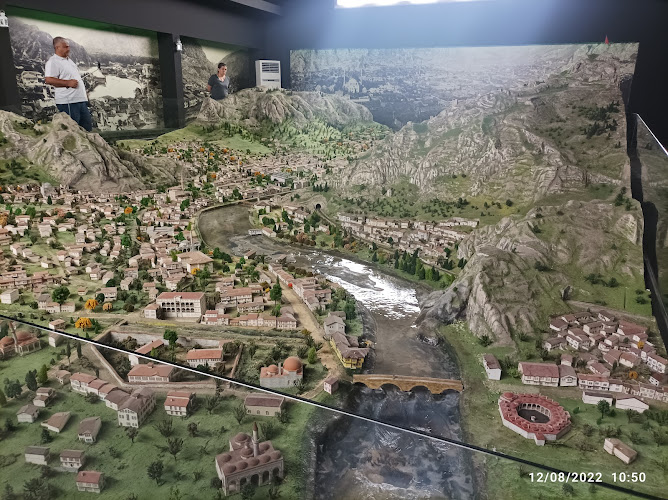
The Miniature Museum of Amasya is a compact but surprisingly deep museum that gives visitors a fast, charming overview of Amasya's architectural and cultural highlights — presented as meticulous scale models. It sits in the heart of the city and offers a neat way to understand complex layers of local history without spending days reading plaques. The tone here is curious and, at times, gently playful: models that replicate Ottoman houses, mosques, bridges and the dramatic rock-cut tombs of the Black Sea highlands are arranged so that even someone who normally zones out in museums will find moments that catch the eye and spark imagination.
Visitors report a range of reactions — from delighted surprise at the craftsmanship to mild disappointment from those expecting a sprawling exhibition. The truth lies somewhere in the middle. The Miniature Museum of Amasya is not a giant institution; it is more like a well-made storybook of the city, told in three-dimensional detail. Models are realistic and often intricately detailed, with tiny courtyards, staircases, and roof tiles that reward a slow look. It appeals to model-enthusiasts, families with curious kids, photographers hunting for unique compositions, and travelers who like to orient themselves visually before exploring the real streets outside. And yes, it can be wonderfully handy: spend an hour here, and you will likely leave with a far clearer mental map of Amasya.
Accessibility is an actual plus here. The museum is set up with a wheelchair accessible entrance and an accessible parking lot, which is not something every small museum can boast about. This makes it easier for travelers with mobility needs to enjoy the displays without the usual stress of steep steps or narrow doorways. Restroom facilities are available on site, though visitors should not expect a cafe or restaurant inside — plan accordingly. Families with children will find this museum kid-friendly; many exhibits are easy to view at different heights and the models tend to engage younger minds better than long text panels might.
One of the understated strengths of the Miniature Museum of Amasya is how it orients you. The city itself can feel like a maze — narrow streets, sudden views of the river, historic facades, and tombs perched high on cliffs. The miniature dioramas act like a guidebook on display: rotate through a handful of scenes and you’ll start recognizing corners of the real city from a different angle. For travelers who love to plan a walking route, that is gold. This writer remembers stepping out after a short visit and finding the real-life view of a centuries-old mosque suddenly familiar, as if meeting an old friend. That sense of recognition — odd, warm, almost silly — is one of the museum’s quiet pleasures.
There are aspects that may frustrate perfectionists. Some displays reflect older restoration styles, and lighting can be uneven in parts of the gallery, creating shadows that hide small details. The interpretive signage is mostly clear but never exhaustive; expect short captions rather than long historical essays. But these limitations are also part of the character: the museum expects the visitor to be curious and to follow up outside, in the streets of Amasya, where the models come to life. For travelers who prefer long, text-heavy exhibits, this might feel a little light. For the majority, the balance of visual storytelling and concise information works well.
What makes the museum stand out is its concentrated storytelling. Instead of spreading artifacts across multiple rooms, the curators focus on the built environment — how homes, mosques, bridges and tombs looked, how they sat in the landscape, and how people moved among them. There’s an almost urban-planner’s logic to the arrangement, which helps visitors see relationships between different eras and styles. The museum is, quietly, a lesson in continuity: how a street from the Ottoman period flows into a more modern structure, how public spaces evolved, and how the natural topography shaped human settlement. For someone who likes to connect dots, that is deeply satisfying.
For photographers or social-media-minded travelers, the miniatures provide unexpected angles. Macro shots of tiled roofs, or wide shots that show a model against the museum’s subtle backdrops, can be surprisingly striking. That said, the museum’s interior is intimate and not always ideal for large tripods or crowded photo shoots. A small handheld camera or a phone will do fine, and the best photos often come from close observation rather than elaborate staging.
Practicalities matter here too. The museum tends to attract a steady stream of visitors — local families, school groups, and tourists — so it’s rarely empty. That’s good and bad. Good, because a little hum of people makes the place feel alive; bad, because some displays are popular and you might wait for a clear view. This writer once visited with a child who pointed and laughed at a model of a busy market square; it turned a short visit into a half-day of wandering because the child wanted to see the real market after seeing the miniature one. Moments like that are exactly why this museum works for travelers: it sparks real-world exploration beyond its walls.
In terms of educational value, the Miniature Museum of Amasya plays a smart role. It is an approachable primer on local architecture and urban development. Teachers and parents will find it an effective way to introduce younger visitors to historical concepts without boring them. Adults who appreciate design, scale, or historical continuity will find satisfying details. There is also value in the tactile imagination the models encourage: seeing a street in miniature can change how one notices that street in actual life, from the pattern of a pavement to the curve of a bridge.
Finally, a note on expectations: come ready to be curious rather than to be overwhelmed. This is not the grand national museum with tens of thousands of artifacts; it is a focused, human-scale experience. If a traveler pairs a visit here with a walk through Amasya’s historic neighborhoods, and maybe a stop at one or two of the real sites represented in the miniatures, the overall day becomes richer and more coherent. In short, the Miniature Museum of Amasya rewards the inquisitive visitor, the planner who likes to peek at a model before stepping into the real thing, and the family that wants a gentle, visual introduction to the city’s heritage.
Key Features
Miniature Museum of Amasya
You Might Also Like

*BDT BELEK DOGA TOUR | Daily Tours, Day Trips and Excursions in Antalya*
1464. Sk. No:55
2006. Sk. No:2
Tours & Activities
GetYourGuide provides this tour inventory. We may earn a commission if you book through it; verify current availability, prices, and terms with the provider.
Visitor Reviews
There are no reviews yet. Be the first one to write one.
Share Your Experience
Have you visited Miniature Museum of Amasya? Help other travelers by leaving a review.